Emerging Market Currency Resilience in a Strong Dollar Era
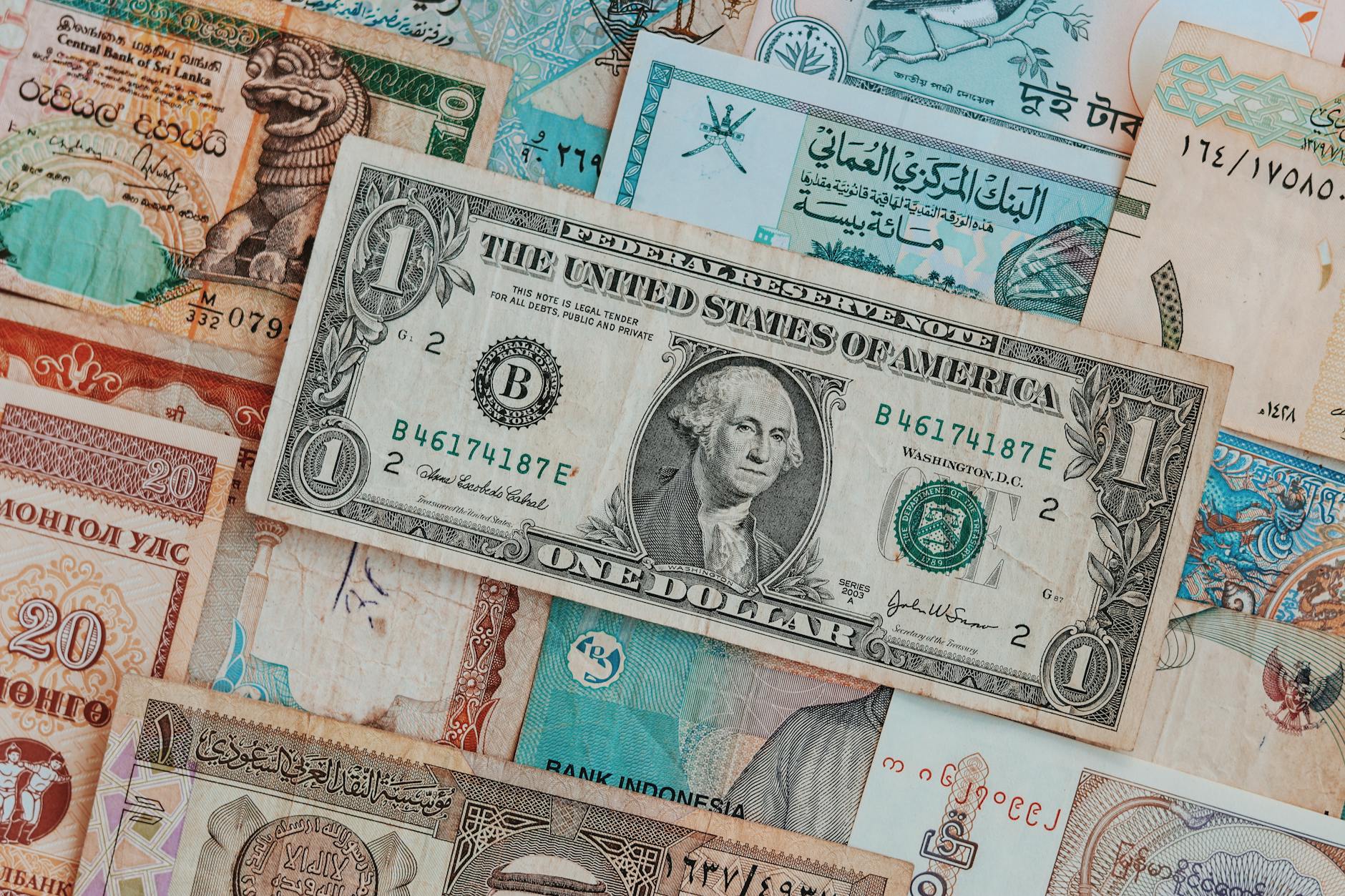
As the Federal Reserve's extended tightening cycle continues to export financial pressure across developing economies, a select cohort of emerging market currencies has demonstrated remarkable structural durability, underpinned by disciplined fiscal frameworks, commodity export windfalls, and increasingly sophisticated central bank intervention strategies. Investors and sovereign wealth managers who look beyond the superficial volatility to examine the deeper macroeconomic architecture of markets such as the Gulf Cooperation Council states, Indonesia, and India will find compelling asymmetric opportunities that reward both patience and rigorous due diligence.…

The dollar's resurgence in 2025 and into 2026 was supposed to break emerging market currencies. Again. It did not quite play out that way. Across the Gulf, Central Asia, and sub-Saharan Africa, a quieter and more consequential story has been unfolding — a structural reorientation of trade, capital flows, and bilateral agreements that is giving select emerging market currencies and economies a degree of insulation that would have seemed implausible a decade ago. For the private investors, family offices, and sovereign institutions watching these shifts closely, several of the implications are immediately actionable.
The Architecture of Resilience Is Being Built Right Now
Currency resilience in emerging markets is rarely the product of monetary policy alone. It gets built through trade diversification, hard-currency inflows from investment agreements, and the steady deepening of financial infrastructure. Three events in the first half of 2026 illustrate exactly this dynamic.
The GCC–UK Free Trade Agreement, formally signed on May 20 in London by GCC Secretary-General Jasem Mohamed Albudaiwi and UK representative Sir Chris Bryant, is more than a bilateral trade milestone. It anchors Gulf currencies within a new web of sterling-denominated trade flows at precisely the moment when the dollar's dominance is being tactically managed rather than abandoned. For the UAE dirham and Saudi riyal — both dollar-pegged — the significance is not exchange rate volatility. It is the diversification of demand-side exposure for Gulf exports and services. That matters for underlying economic stability in ways that don't show up cleanly in currency screens.
Then there is the June 2026 launch of the Africa–Middle East Corridor at the Global Banking and Markets Middle East conference in Dubai. Backed by sovereign wealth funds, commercial banks, and development finance institutions, this is capital mobilisation moving from aspiration to hard commitments. When AD Ports signed an agreement in February 2026 to develop a multipurpose terminal at Matadi on the Congo River, and DP World committed a further $3 billion in African port infrastructure on top of the $3 billion already deployed, these were not symbolic gestures. They were hard capital commitments generating hard-currency revenue streams — precisely the kind of anchor that insulates local financial systems against dollar-driven volatility.
Gulf Capital as a Stabilising Force Across Corridors
Saudi Arabia has put an estimated $15.6 billion to work across East Africa — in energy, infrastructure, and agriculture. That has introduced a new dynamic into how East African currencies absorb external shocks. Gulf capital flowing into frontier markets through long-duration infrastructure projects behaves very differently from hot-money portfolio positions. It creates a fundamentally different base for currency stability. The UAE–Nigeria Comprehensive Economic Partnership Agreement, deepened through 2026, operates on the same logic: it channels Gulf capital into Africa's largest economy through a structured framework that lowers the transaction costs of doing business and builds durable economic interdependency. That supports the naira's longer-term structural position, even as near-term volatility persists.
Islam Zekry, Group CFO and Executive Board Member at CIB — Commercial International Bank — put it plainly in March 2026, describing how GCC–Africa partnerships are driving a transformative era of South-South cooperation, with Egypt positioned as a central corridor hub. Egypt's role here is instructive. The Egyptian pound has faced extraordinary pressure over the past three years. Yet the country sits at the intersection of Gulf capital, African trade flows, and European energy demand — structural anchors that pure macroeconomic metrics consistently understate. Masdar's $10 billion commitment to develop 10 gigawatts of renewable energy capacity across sub-Saharan Africa by 2030 — executed in part through Infinity Power, the joint venture with Egypt's Infinity that is now Africa's largest pure-play renewable energy company with 1.3 gigawatts already operating — is not merely an energy story. It is a foreign direct investment story. One that generates dollar-denominated revenue in markets whose local currencies are otherwise exposed.
Central Asia's $68 Billion Moment
Asian foreign direct investment into Central Asia reached $68 billion as of February 2026. That number reframes the region's monetary story entirely. Kazakhstan, Uzbekistan, and Azerbaijan are no longer peripheral beneficiaries of Russian or Chinese capital flows. They are active nodes in a reconfigured Eurasian investment network — one that increasingly draws in Gulf sovereign wealth, South Korean industrial capital, and Indian conglomerates hunting supply chain diversification. Few outside the region have been paying close attention. They should be.
The Kazakhstani tenge and Uzbekistani som have both benefited from this inflow pattern, not through dramatic currency intervention, but through the structural improvement of their current account positions and the gradual deepening of domestic financial systems. For family offices and private investors with exposure to Central Asian real assets — energy infrastructure, agribusiness, logistics — the currency risk calculus in 2026 looks materially different than it did in 2022. That is a significant shift, and it has happened largely beneath the radar of mainstream institutional allocators.
What Smart Capital Is Watching
The investors best positioned in this environment are not chasing currency appreciation directly. They have identified the corridors where hard-currency-generating assets are being built at scale, and where bilateral trade agreements are cutting the cost of doing business in local currency terms. The GCC–UK FTA opens service sector opportunities — financial services, logistics, professional services — where margins are far less exposed to raw material price cycles. The Africa–Middle East Corridor creates a template for infrastructure co-investment that generates dollar-linked returns in markets including Nigeria, Kenya, and the DRC, without requiring investors to take naked exposure to local currency movements. The numbers here tell a complicated story, but the direction of travel is clear.
Southeast Asia runs a parallel track worth watching. Vietnam and Indonesia have both maintained relative currency stability through 2025 and into 2026 by deepening intra-ASEAN trade settlement mechanisms and attracting manufacturing FDI that generates export revenue independent of dollar-denominated commodity cycles. For family offices managing diversified emerging market exposure, the allocation case increasingly rests not on individual currency plays but on identifying the institutional infrastructure — free trade agreements, port concessions, energy joint ventures — that gives certain emerging economies a durable structural advantage in a world where the dollar remains strong but no longer goes unchallenged.
The Forward View for Private Capital
The strong dollar era is not ending. But the terms on which emerging markets engage with dollar dominance are shifting — and those shifts are creating genuine opportunity for long-horizon private capital. The deals being signed in 2026, from Matadi to London to Dubai, are building the connective tissue of a new economic order in which Gulf, African, and Central Asian markets grow increasingly interdependent rather than individually exposed. For wealthy families, foundation principals, and institutional investors across these regions, the priority is not predicting currency movements. It is being positioned in the corridors where the next decade of trade and investment infrastructure is being built. Right now.

Written by
Sophie Aldridge
Global Economics Editor · Geopolitics
Sophie spent a decade advising governments on trade policy before deciding the story was more interesting than the memo. She covers global economics, geopolitics, and the power transitions reshaping emerging markets. Sharpest on sanctions, supply chains, and the politics behind the price of everything. Based in Washington, D.C. Reach out at sophie.aldridge@theplatinumcapital.com.