Global Trade Realignment and Its Economic Consequences
As geopolitical fractures reshape the architecture of international commerce, the strategic reallocation of supply chains and trade corridors is quietly redistributing economic power across emerging and established markets alike. For those managing significant capital or sovereign interest, understanding the velocity and direction of this realignment is no longer a matter of academic interest but a critical imperative for preserving wealth and securing long-term strategic positioning.…
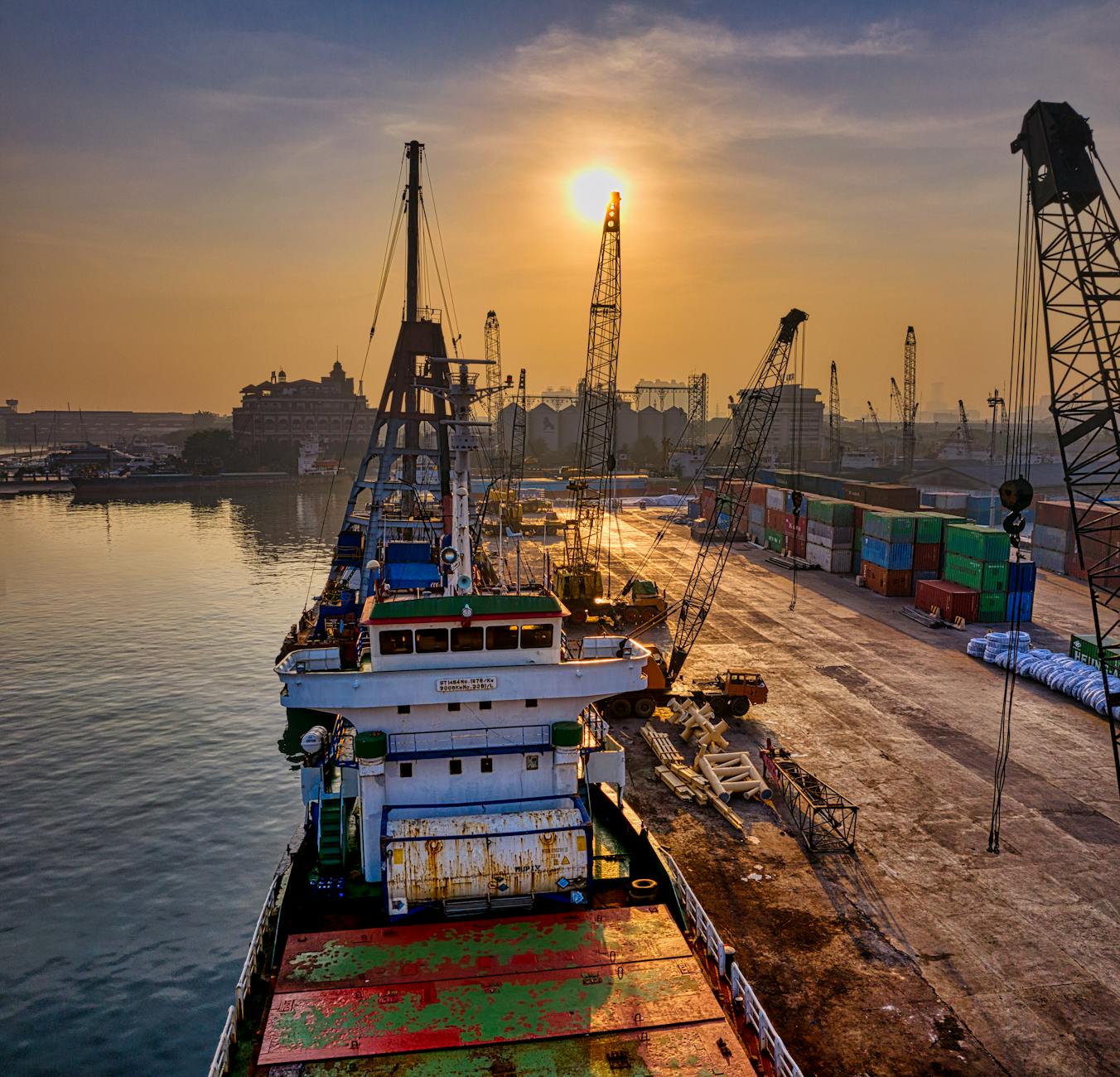
The architecture of global trade is being redrawn faster than most institutional investors anticipated. What began as a post-pandemic supply chain recalibration has hardened into something structurally permanent: a fragmentation of the rules-based trading order into competing blocs, bilateral corridors, and sovereign-led investment frameworks that reward proximity, alignment, and resource leverage over pure price efficiency. For the Gulf's sovereign funds, family offices, and private capital allocators, this is not a crisis to endure. It is a generational repositioning opportunity — provided the capital is deployed with precision and the geopolitical read is correct.
The End of Frictionless Globalisation
The numbers tell a complicated story. The IMF's April 2026 World Economic Outlook revised global trade volume growth down to 2.3% for the year — roughly half the pre-2018 average — citing what its economists now formally describe as "geoeconomic fragmentation." US tariff structures have reshaped sourcing decisions across electronics, semiconductors, and automotive supply chains. Meanwhile, the EU's Carbon Border Adjustment Mechanism, now in full enforcement, is pulling industrial investment away from high-emission exporters across South and Southeast Asia. What is replacing the old model is not chaos. It is a more complex geometry: regional hubs, corridor-based logistics, and sovereign capital stepping in as anchor investor where private markets will not follow. The Gulf sits at the intersection of several of these emerging corridors. Its largest institutions have already moved.
Abu Dhabi's L'imad and the Infrastructure Corridor Play
The clearest expression of this strategic shift came in May 2026, when Abu Dhabi's L'imad — the emirate's newly consolidated sovereign investment powerhouse, formed in January 2026 through the absorption of ADQ into a $300 billion vehicle chaired by Crown Prince Sheikh Khaled bin Mohamed bin Zayed Al Nahyan — unveiled a $30 billion consortium targeting energy, transportation, and logistics assets across the Middle East and Central Asia. The consortium includes BlackRock's Global Infrastructure Partners and Singapore's Temasek Holdings. That combination signals something worth paying attention to: this is not sovereign capital filling a gap left by reluctant private investors. It is sovereign capital setting the terms and pulling institutional co-investors who have independently reached the same conclusion.
Central Asia is the underpublicised centrepiece of this bet. Kazakhstan, Uzbekistan, and Azerbaijan are positioning themselves as transit and processing nodes along what analysts are calling the Middle Corridor — the overland and Caspian-linked route connecting China to Europe that bypasses Russia entirely. Cargo volumes through the Trans-Caspian International Transport Route grew by over 80% between 2022 and 2025. That is a significant shift. L'imad's move into this corridor is deliberate: a calculated wager that trade route infrastructure will command premium returns as freight patterns harden around geopolitical reality rather than legacy logistics networks built for a different era.
Saudi Arabia Pivots from Spectacle to Substance
The suspension of The Line is the most symbolically significant strategic correction in Gulf economic policy in a decade. As of March 2026, construction on NEOM's flagship linear city remains halted following the Public Investment Fund's September 2025 pause. An internal audit put projected total costs at $8.8 trillion, with a completion horizon stretching to 2080. The PIF has since recorded an $8 billion write-down on its giga-project portfolio. Governor Yasir Al Rumayyan has confirmed that the fund's revised 2026–2030 strategy will be explicitly returns-driven, with capital spending expected to fall by approximately 15%.
What replaces the spectacle is more economically coherent — and frankly more investable. At the PIF Private Sector Forum in February 2026, Investment Minister Khalid Al Falih was direct: Expo 2030 Riyadh and the 2034 FIFA World Cup sit at the top of the funding stack. Both are time-bound, infrastructure-intensive, and commercially structured in ways that open-ended mega-city concepts never were. For private investors and family offices tracking Saudi deal flow, the direction is clear — hospitality, transport infrastructure, retail, and urban logistics are the active sectors now. Assets tied to events with fixed deadlines, not visions with unlimited capital requirements.
Critical Minerals and the Resource Leverage Premium
The most consequential long-term development in the GCC's trade realignment strategy may be the formal push into critical minerals. Few outside specialist circles have tracked this closely. They should. In January 2025, Aramco and Ma'aden — the largest multi-commodity mining and metals group across the Middle East and North Africa — signed non-binding Heads of Terms to establish a minerals exploration and mining joint venture targeting commercial lithium production by 2027. The strategic logic is direct: as the energy transition accelerates demand for battery-grade lithium, Saudi Arabia is positioning to become a producer rather than a buyer, extending resource leverage into the clean energy supply chain the same way it has exercised it in hydrocarbons for five decades.
This reshapes the calculus across multiple asset classes. A Saudi Arabia producing lithium at commercial scale changes the competitive reality for battery manufacturers in Southeast Asia — particularly Vietnam, Indonesia, and Malaysia, where EV assembly and battery production are scaling fast. It also repositions African lithium producers in Zimbabwe, Namibia, and the Democratic Republic of Congo, who currently compete on cost rather than geopolitical alignment. The Aramco-Ma'aden joint venture drops a Gulf sovereign into that competitive dynamic with capital depth and offtake relationships that no junior miner can match.
What This Means for Private Capital in 2026 and Beyond
For family offices and private investors with meaningful allocations across the Gulf, Central Asia, and emerging markets, the trade realignment underway produces three distinct opportunity vectors. First, corridor infrastructure — ports, rail, cold chain logistics, and energy transmission assets along the Middle Corridor and the Gulf-to-Africa maritime route — will attract sovereign co-investment at scale, creating deal structures that allow private capital to participate alongside institutions like L'imad and Temasek at risk-adjusted returns that were simply not accessible at reasonable entry sizes before now.
Second, the critical minerals supply chain — from exploration through processing to offtake — is moving from frontier-market risk to strategic-asset status. Deals in this space will increasingly price on geopolitical alignment as much as commodity assumptions, which advantages investors who carry regional relationships and can hold through a full cycle. Third, the PIF's shift toward returns discipline opens Saudi Arabia's mid-market to a different quality of private equity transaction — less speculative, more operationally grounded, and priced against real cash flows rather than the vision-era multiples that made many deals untouchable.
Trade fragmentation is compressing the premium that passive, diversified exposure once enjoyed. It is rewarding investors who can identify which corridors, resources, and sovereign partnerships sit at the new fault lines of economic power. In the Gulf, those fault lines are being mapped right now. The institutions drawing the maps have already begun to invest.
Written by
Amelia Rowe
Senior correspondent · Banking & Economy
Amelia spent eight years inside a sovereign wealth fund before deciding she'd rather write about institutional money than allocate it. She covers central banking, insurance, and the macro decisions that quietly choose which markets get the next decade. Sharp on monetary policy; impatient with anyone who confuses noise with signal. Based in London. Reach out at amelia.rowe@theplatinumcapital.com.