

Indian Real Estate: Residential Recovery and Commercial Expansion
India's residential real estate sector is staging a formidable comeback, driven by surging domestic demand, infrastructure-led urbanization, and a renewed appetite among high-net-worth buyers for premium and luxury housing across Tier 1 and emerging Tier 2 cities. Simultaneously, the commercial segment is entering an era of structural expansion, with multinational corporations deepening their India footprint, Grade A office absorption reaching record levels, and institutional capital increasingly treating the subcontinent as a core allocation rather than a peripheral bet.…
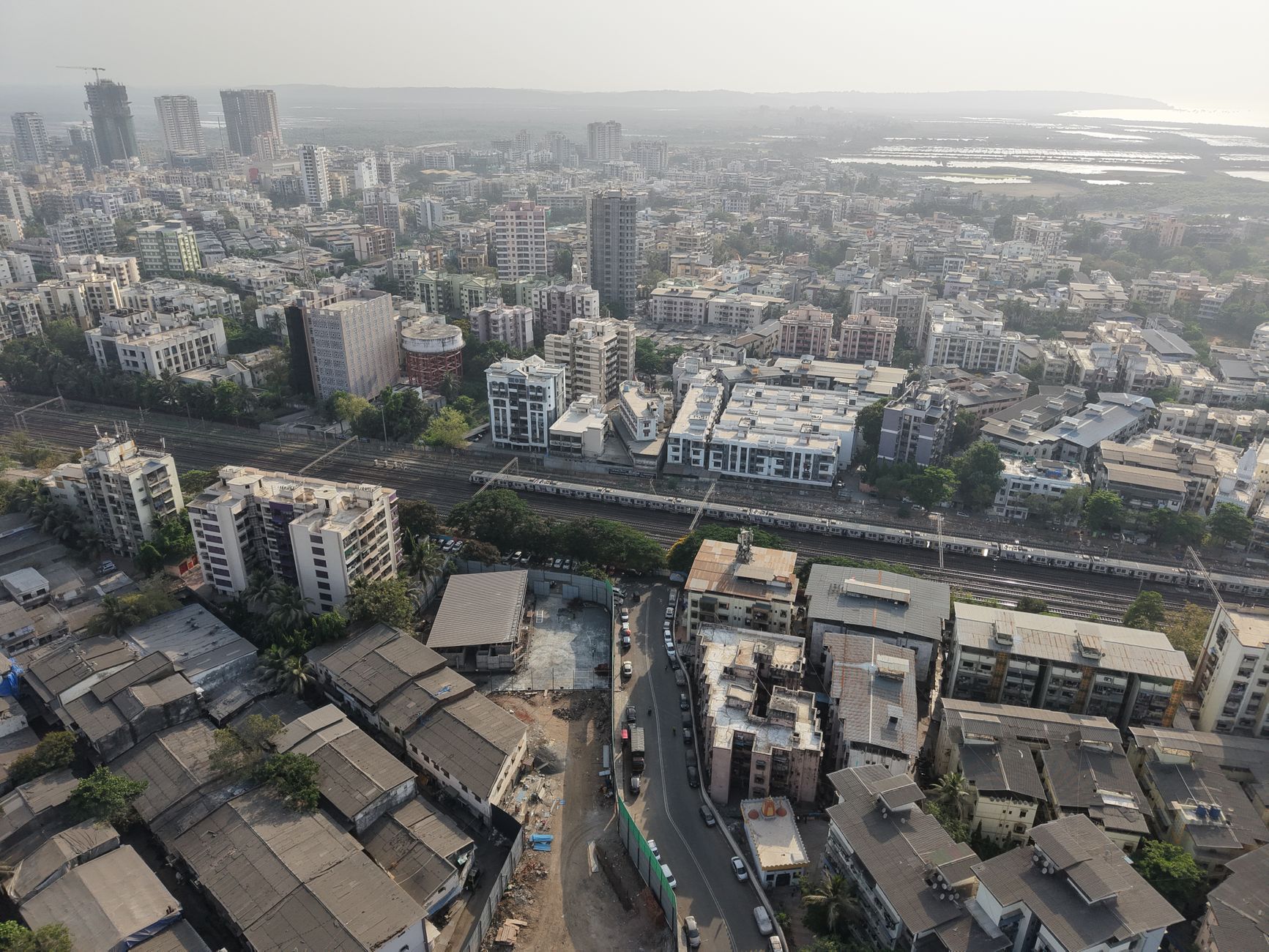
India's real estate sector is rewriting itself — not recovering, reconfiguring. After years of inventory glut, regulatory chaos, and pandemic-era paralysis, the market has moved past mere stabilisation into something more interesting. Residential demand is surging on the back of urbanisation, rising household incomes, and a generational shift in how Indians think about homeownership. The commercial segment is expanding fast enough to draw serious capital from family offices and institutional investors across the Gulf, Southeast Asia, and beyond. For private investors who have watched Dubai's super-prime market record a 25.1% increase in luxury property values in 2025 — as documented in the Knight Frank Wealth Report 2026 — India now presents a complementary thesis: higher yield potential, structural demographic tailwinds, and a regulatory environment that, while still maturing, has grown substantially more transparent since RERA arrived and actually stuck.
Residential Recovery: From Distress to Demand
India's residential market put up its strongest numbers in over a decade in 2024 and has carried that momentum cleanly into 2025 and 2026. According to PropEquity and Anarock Property Consultants, new residential launches across the top eight Indian cities crossed 550,000 units in 2024. Sales absorption hit approximately 90%. That figure would have seemed delusional as recently as 2021. Mumbai Metropolitan Region, Pune, Hyderabad, and Bengaluru led the charge, with average residential prices in premium micro-markets appreciating between 18% and 26% over a 24-month window. The luxury segment — units priced above INR 5 crore, roughly USD 600,000 — has been the standout, driven by Non-Resident Indians, first-generation technology entrepreneurs, and senior corporate executives rotating capital out of equities and into brick and mortar.
This is not speculative froth. The fundamentals are structural, and the numbers back it up. India's urban population is projected to exceed 600 million by 2036. The working-age demographic bulge is peaking precisely as disposable incomes rise across Tier 1 and increasingly Tier 2 cities. Developers like Godrej Properties, Macrotech (Lodha), and Prestige Estates have responded with product lines calibrated to the lifestyle expectations of aspirational upper-middle-class buyers — larger floor plates, integrated amenities, branded residential towers engineered for premium positioning. Lodha's partnership with international luxury brands across its Mumbai developments signals something telling: a convergence with the brand-led residential model that has defined super-prime supply in Dubai for a decade.
Commercial Expansion: Grade A Supply Meets Global Occupier Demand
India's office market has become one of the most compelling commercial real estate stories in Asia. Full stop. Net absorption of Grade A office space across Bengaluru, Hyderabad, Chennai, Mumbai, and Delhi-NCR crossed 60 million square feet in 2024, with global capability centres — GCCs — accounting for nearly 45% of all leasing activity. JPMorgan, Goldman Sachs, Nvidia, and over 1,700 other multinationals now operate significant technology and operations hubs across the country, generating sustained, recurring demand for institutionally managed workspace. Bengaluru alone absorbed more than 15 million square feet of Grade A office space in 2024. That makes it one of the highest-performing commercial markets in the entire Asia-Pacific region. Few outside the region have noticed. They should.
REITs have done the heavy lifting in professionalising this segment. Embassy Office Parks REIT, India's first listed REIT when it debuted in 2019, now manages over 45 million square feet of assets and has delivered consistent distributions to unitholders. Mindspace Business Parks REIT and Brookfield India REIT have followed with institutional-grade portfolios of comparable seriousness. These vehicles give private investors and family offices liquid, yield-generating exposure to Indian commercial real estate at scale — without the operational headaches of direct ownership. For wealth managers in Riyadh or Abu Dhabi advising clients who want emerging market real estate exposure without the drama, Indian REITs offer a credible entry point: quarterly income, listed liquidity, institutional governance.
Capital Flows and the Gulf Connection
Gulf capital and Indian real estate have always intersected. What is changing is the depth of that relationship. Indian diaspora communities across the UAE, Saudi Arabia, Qatar, and Bahrain collectively represent one of the largest sources of remittances and real estate investment flowing back into the subcontinent. The India-UAE Comprehensive Economic Partnership Agreement, signed in 2022 and now fully operational, has reduced friction for bilateral investment in ways that are only beginning to show up in deal flow. Several UAE-based family offices with Indian-origin principals have moved well beyond residential purchases in their home cities and are actively exploring commercial and logistics real estate alongside Indian development partners.
That mirrors a broader pattern worth watching. While Riyad Capital and Naif AlRajhi Investment Company's USD 400 million Dar Al Salam fund in Riyadh pursues transit-oriented development near the Al-Takhassusi Metro Station, a structurally identical investment thesis is playing out in Indian cities — transit-corridor development in Hyderabad's Financial District, Bengaluru's ORR corridor, and Mumbai's BKC extension, where infrastructure-led appreciation is already generating returns for early institutional entrants. Savills, JLL, and Knight Frank have all expanded their India advisory practices materially over the past 18 months. That is not a coincidence. Institutional capital is engaging with this market in earnest, and the advisors are following the money.
Industrial and Logistics: The Underappreciated Opportunity
Here is where things get genuinely interesting for a certain kind of private capital allocator. India's industrial and logistics real estate segment has quietly become one of the highest-conviction sectors in the country. The government's Production Linked Incentive schemes across 14 manufacturing sectors, combined with the China-plus-one supply chain reconfiguration, have created demand for modern warehousing, cold chain facilities, and light industrial parks that the existing stock simply cannot absorb. ESR Group, Welspun One, and Indospace — the latter backed by GIC of Singapore and other sovereign wealth funds — have committed billions to this segment. Vacancy rates for Grade A logistics assets in the Mumbai-Pune and Delhi-NCR corridors have already compressed below 8%, supporting rental growth of 10–15% annually in prime locations.
For investors thinking across a longer capital deployment cycle — which most family offices and private wealth principals should be — logistics and industrial offers an attractive yield premium over residential, with lower execution risk than large-scale mixed-use development. Co-investment structures alongside established platform developers are increasingly accessible to anchor investors committing USD 25 million and above. That entry point matters.
Positioning for the Decade Ahead
India's real estate market carries real complexity. Approvals remain slow in certain states. Land title risk is a genuine concern outside institutionally assembled portfolios. Currency exposure demands active management for any foreign investor writing meaningful checks. None of that is trivial. But the directional case is compelling, and for those with the sophistication to structure entries correctly, this cycle represents a meaningful window — one that does not stay open indefinitely. Residential absorption is at decade highs. Commercial demand sits on the foundation of global occupier expansion with multi-year lease commitments. Logistics assets generate yields that compare favourably to more mature Asian markets. India offers private capital something rare: scale, growth, and structural demand operating simultaneously. Family offices and private investors currently deploying into Dubai's super-prime residential market or Riyadh's mixed-use development pipeline would be well served to examine India not as an alternative, but as a parallel allocation — one built for the decade ahead, not the quarter.

Written by
Tom Whitmore
Senior correspondent · Real Estate & Private Companies
Tom has interviewed most of the operators reshaping the Gulf skyline — and a few of the ones who tried and didn't. His beat is real estate, commodities, manufacturing, and the founder-led private companies that never bother to list. He knows which buildings and balance sheets survive a downturn before the spreadsheet does. Based in Dubai. Reach out at tom.whitmore@theplatinumcapital.com.