

Jet Card and Fractional Ownership: How Gulf HNWIs Are Flying in 2026
As Gulf-based family offices and sovereign-aligned investors recalibrate their mobility strategies in 2026, the choice between jet card flexibility and fractional ownership equity has evolved from a lifestyle preference into a calculated capital decision. With regional ultra-high-net-worth demand intensifying across Riyadh, Dubai, and Abu Dhabi, understanding the structural, fiscal, and operational distinctions between these two access models has become as essential as any line item in a diversified portfolio.…

There was a time when owning a private jet was the clearest statement a Gulf businessman could make about his position in the world. That era has not ended — but it has evolved. Across Dubai, Riyadh, and Abu Dhabi, a quiet but significant shift is underway in how ultra-high-net-worth individuals structure their access to private aviation. The question for 2026 is no longer simply whether to fly private. It is whether to own, share, or subscribe — and the answers are reshaping an industry worth billions across the region.
The Corridor Data Tells the Story
VistaJet's latest operational data offers a striking snapshot of Gulf mobility in motion. The Jeddah–Riyadh corridor recorded a 269% increase in private jet movements. That single figure captures the sheer velocity of Saudi Arabia's domestic business activity as Vision 2030 initiatives, sovereign wealth restructuring, and private sector expansion all drive executive movement at pace. The Abu Dhabi–London corridor surged 238% — a clear signal that UAE-based principals are deepening their engagement with European capital markets, family office structures, and luxury property holdings, often simultaneously. These are not leisure flights. They are boardroom extensions at altitude.
VistaJet placed a firm order for 40 Bombardier Challenger 3500 jets in February 2026 — with options for 120 more — betting heavily on sustained demand across exactly these corridors. The company is simultaneously upgrading its Global 7500 fleet to the faster Global 8000 model, a move that speaks directly to a client base demanding intercontinental reach without the inefficiencies of scheduled connections. Nearly half of all first-time private flyers tracked by VistaJet in 2025 were under 45. That demographic signal will define the market for the next two decades.
Jet Cards: The Access Model for the New Wealth Generation
Among Gulf HNWIs entering private aviation for the first time — or those rationalising ownership costs during a period of portfolio reallocation — jet card programmes have become the instrument of choice. A jet card provides pre-purchased flight hours on a defined aircraft category, typically priced between USD 150,000 and USD 500,000 per block depending on cabin class and geographic scope, with guaranteed availability and fixed or capped hourly rates. For principals who fly 50 to 150 hours per year, the economics are considerably more favourable than whole ownership once maintenance reserves, crew costs, hangar fees, and depreciation are fully modelled. Few bother to run those numbers honestly. They should.
The appeal in the Gulf context is also one of flexibility. Family offices managing wealth across multiple jurisdictions — UAE, Saudi Arabia, London, Geneva — routinely find that the range and routing demands of their principals shift substantially from quarter to quarter. A jet card anchored to a Global 6000 or Challenger 650 category lets those families match aircraft capability to mission without the institutional commitment of ownership. Several Dubai-based multi-family offices have quietly moved senior principals onto structured jet card arrangements with VistaJet and Air Charter Service as part of broader travel policy professionalisation — mirroring what European family offices implemented a decade ago.
Fractional Ownership: The Structure for the Serious Flyer
For Gulf principals flying above 200 hours annually — a threshold common among founders, senior dealmakers, and patriarchs with assets spread across Saudi Arabia, the UAE, and international markets — fractional ownership remains a compelling structure. A fractional share, typically one-eighth to one-quarter of an aircraft, delivers guaranteed access, a consistent cabin experience, and a degree of asset participation that jet cards simply do not offer. NetJets and Flexjet dominate the Western market, though the Gulf has seen growing appetite for bespoke regional structures administered through local operators and aviation advisory firms.
ExecuJet Africa's expansion into ultra-long-range jets — targeting the Gulfstream G550 and Dassault Falcon 7X — deserves attention from anyone with Gulf exposure. As a division of Luxembourg-based Luxaviation Group, ExecuJet's move signals that the Africa–Gulf–Europe triangle is being treated as a sustained commercial aviation corridor, not a cyclical trend. Africa-to-Asia private jet movements rose 42% in 2025, making it the world's fastest-growing private aviation corridor. Gulf-connected principals with African business interests are increasingly demanding aircraft capable of serving Nairobi, Lagos, or Casablanca alongside Riyadh and London on the same trip rotation. The operators who can deliver that are building real competitive advantage.
What the Shifting Saudi Wealth Signals Mean for Aviation Demand
PIF Governor Yasir Al-Rumayyan's April 2026 signals around reduced government funding for large-scale tourism projects — including a recalibration of NEOM's timeline in favour of AI infrastructure priorities — are already producing secondary effects in the private aviation market. Central Asian and African UHNW principals who had structured Gulf itineraries heavily around Saudi destination visits are reassessing their routing priorities. Dubai is absorbing a measurable share of that redirected traffic. According to Knight Frank's 2026 Wealth Report, the UAE's UHNW population — those holding more than USD 30 million in assets — is projected to grow 36% by 2031, rising from 4,851 to 6,588 individuals. Each of those arrivals represents a potential new entrant to the private aviation ecosystem, whether through charter, jet card, or fractional participation. That is not an abstraction. It is a pipeline.
Arabian Acres' closure of a Dh400 million Jumeirah beachfront land deal in March 2026 — acting as exclusive broker for both buyer and seller — illustrates the speed at which capital moves through Dubai's premium asset classes. The principals acquiring beachfront land in Jumeirah are, in most cases, the same principals structuring their aviation access to support a life genuinely split across multiple continents. Private aviation is not a luxury adjunct to that life. It is operational infrastructure.
The Calculus for 2026
Gulf family offices and UHNW principals reviewing their aviation arrangements this year should approach the decision with the same rigour they apply to any capital allocation. Whole ownership remains the right answer for those requiring maximum scheduling control and consistent cabin branding across 300 or more annual hours. Fractional structures suit the serious but not institutional flyer. Jet cards serve the emerging generation of wealth — mobile, globally minded, and unwilling to carry fixed costs that don't match variable usage patterns.
The corridor growth figures, the fleet expansion orders, and the demographic data all point in the same direction. The Gulf's private aviation market is structurally deepening — not cycling through another boom. For the principals, family offices, and advisors who understand the difference between access models, the opportunity to fly smarter — not just fly private — has rarely been this well-defined.
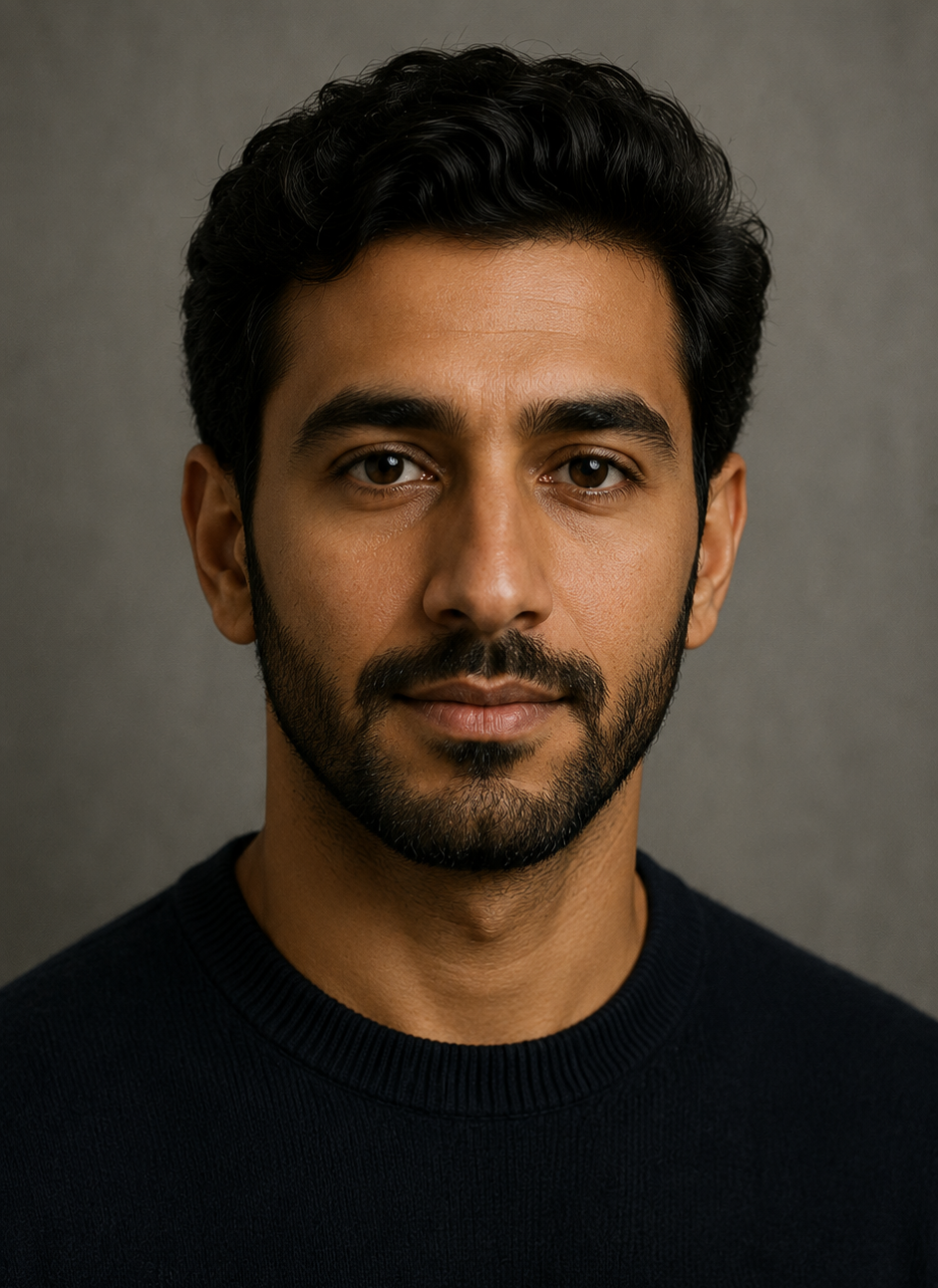
Written by
Khalid Al-Rashidi
Gulf & Middle East Correspondent · Emerging & Strategic Wealth
Khalid covers the family offices, luxury operators, and strategic capital moving across the GCC and wider Arab world — often before the rest of the region notices. He's spent years tracking how Gulf wealth structures itself for the next generation, from residency programmes to private aviation. Based between Dubai and Riyadh. Reach out at khalid.al-rashidi@theplatinumcapital.com.