

Private Aviation in the Gulf: The Charter Operators Flying the Wealthy
In the Gulf's hyper-competitive landscape of ultra-high-net-worth mobility, a new generation of charter operators is redefining what it means to move capital, influence, and power across borders with surgical precision and absolute discretion. From Riyadh to Dubai, the private aviation market has quietly evolved from a symbol of status into a critical infrastructure of wealth preservation, deal-making, and geopolitical access — one that family offices and sovereign-aligned investors can no longer afford to overlook.…
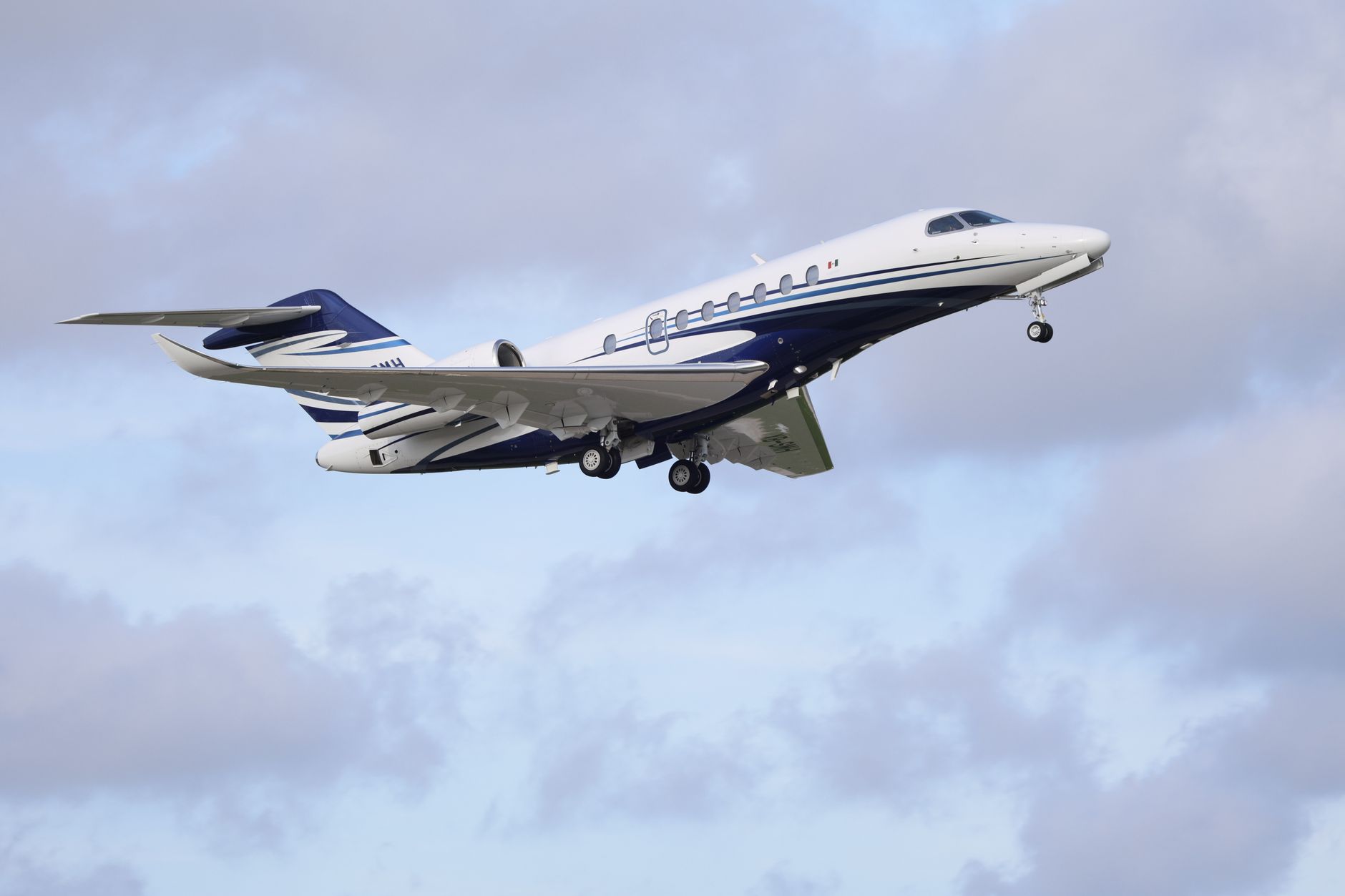
When a principal from a Kazakh family office lands in Dubai for a week of deal meetings, the first call his executive assistant makes is not to a hotel concierge — it is to a preferred aircraft operator. Private aviation in the Gulf has quietly become one of the most consequential sectors in the regional luxury economy, not merely as a transport service but as an operational extension of how serious wealth moves, meets, and conducts business across time zones. The UAE's ultra-high-net-worth population is projected to grow 36% by 2031 — reaching 6,588 individuals holding more than $30 million in assets, according to Knight Frank's 2026 Wealth Report. Charter operators servicing this segment are expanding fast, and the sharpest among them are building propositions that go well beyond seat-hours.
A Market Redefined by Residency and Relocation
Dubai's emergence as a permanent base for globally mobile wealth has structurally altered demand patterns for private aviation. Where charter activity was once episodic — deal trips, holiday travel, royal circuit movements — it is now continuous. The same families relocating capital into Jumeirah beachfront developments, including the Dh400 million land transaction closed by Arabian Acres in March 2026, are the same principals requiring consistent, scheduled access between Dubai, Riyadh, Doha, Abu Dhabi, and beyond. The corridor between Dubai International and King Khalid International in Riyadh has become one of the most heavily trafficked routes in regional private aviation, rivalling European city pairs that once dominated operator yield tables. That is a significant shift. Operators who built their infrastructure around seasonal peaks — winter in the Gulf, summer in Europe — are now reconfiguring for year-round utilisation rates that would have seemed unrealistic five years ago.
The Operators Setting the Standard
The Gulf's charter market runs on a layered ecosystem — large institutional players at one end, boutique firms built around discretion and client relationships at the other. DC Aviation Al Futtaim, operating out of Al Maktoum International, has established itself as one of the most capable full-service providers in the region, managing aircraft for principals while offering charter access to a fleet that includes large cabin jets suited to intercontinental missions. Jetex, headquartered in Dubai, has built a genuinely global fixed-base operation network while keeping a strong Gulf identity. Its FBO infrastructure at Dubai International ranks among the most refined in the world — the kind of ground-side experience that UHNW travellers now treat as a baseline expectation, not a premium. Regional carriers such as Falcon Aviation Services, operating from Abu Dhabi, and Air Arabia's private arm hold competitive positioning on intra-GCC routes, where turnaround efficiency and crew familiarity with local operational requirements carry real weight. Few outside the region have paid close attention to how quickly these operators have matured. They should.
What Sophisticated Clients Actually Want
The conversation among serious charter operators in 2026 has moved decisively beyond aircraft type and pricing. The principals chartering heavy jets across the Gulf are not comparing Gulfstream G650ERs against Bombardier Global 7500s on range specs alone — they are evaluating the operator's ability to manage the entire movement. Ground coordination with royal protocol offices. Medical personnel on standby for family travel. Secure communications infrastructure on board. The quiet handling of sensitive cargo: artworks, documents, personal security details. One senior broker active in the Riyadh market put it plainly: the aircraft is thirty percent of the service. The remaining seventy is everything that happens before and after the door closes. The numbers tell a complicated story. Family offices managing principals across Central Asia and Africa — a cohort that has grown substantially in Gulf footprint as Saudi Arabia has broadened its investment relationships — have become particularly demanding in this regard, regularly requiring operators to coordinate movements across three or four countries inside a single forty-eight hour window.
Saudi Arabia's Opening and the Route Premium
Vision 2030 may be recalibrating. PIF Governor Yasir Al-Rumayyan signalled in April 2026 a reorientation toward AI infrastructure spending, with reduced direct government funding for large-scale tourism projects, including NEOM. But the Kingdom's opening to private capital and international business has generated a structural increase in private aviation traffic that no policy statement reverses. The Sindalah superyacht island — the $2 billion-plus Luca Dini-designed project within NEOM — remains on a 2026 delivery trajectory. The class of ultra-wealthy visitor it is designed to attract will arrive overwhelmingly by private aircraft, not commercial terminal. Operators with established relationships at Prince Mohammed bin Salman Airport near NEOM, and at Tabuk Regional Airport serving the wider region, are positioning now for what they expect to be a multi-year demand ramp. The broader pattern is clear: as Saudi Arabia pulls more private sector capital into its luxury and hospitality proposition, the aviation demand generated will increasingly benefit UAE-based operators who already hold the relationships and the fleet positioning.
Fleet, Capital, and the Next Phase of Gulf Aviation
Serious institutional capital is beginning to flow into the Gulf's private aviation sector. That signals maturation, not speculation. Family offices in Abu Dhabi and Riyadh have been quietly acquiring equity positions in mid-tier operators, recognising that managed fleet models — where aircraft ownership transfers to an operator in exchange for revenue sharing and guaranteed availability — represent an asset class carrying both yield and utility value. For a principal running a $200 million family office who already spends $3 million annually on charter, the economics of partial ownership or a fractional arrangement through a credible Gulf-based operator have become genuinely compelling. ExecuJet Aviation Group, with its strong Dubai presence, and Empire Aviation Group have both reported increased enquiry from this segment. The trajectory runs through fleet modernisation — the Gulf's serious operators are transitioning to ultra-long-range aircraft capable of connecting Dubai to Lagos, Nairobi, Jakarta, or Almaty without technical stops — and through technology integration, with several operators investing in mission control software that gives principals' family office teams real-time visibility over aviation logistics, the same way they monitor financial portfolios. Private aviation in the Gulf is no longer simply about getting somewhere. It is about operating at the speed and discretion that genuine wealth demands.

Written by
Khalid Al-Rashidi
Gulf & Middle East Correspondent · Emerging & Strategic Wealth
Khalid covers the family offices, luxury operators, and strategic capital moving across the GCC and wider Arab world — often before the rest of the region notices. He's spent years tracking how Gulf wealth structures itself for the next generation, from residency programmes to private aviation. Based between Dubai and Riyadh. Reach out at khalid.al-rashidi@theplatinumcapital.com.