

Private Members Clubs Arriving in Dubai and Riyadh
As sovereign wealth flows reshape the Gulf's social infrastructure, a new generation of invitation-only clubs is emerging across Dubai and Riyadh — offering ultra-high-net-worth individuals not merely exclusivity, but curated access to the deal rooms, diplomatic circles, and cultural institutions that define regional power. For family offices and government principals navigating an increasingly relationship-driven capital landscape, membership in these establishments is fast becoming less a luxury and more a strategic imperative.…

Something quiet is happening in the most conspicuous cities on earth. Across Dubai and Riyadh, behind unmarked doors and through invitation-only channels, a new category of private members club is taking shape — one that has little interest in visibility and everything to do with access. This is not the hospitality industry chasing the wealthy. This is the wealthy quietly building the rooms they actually want to be in.
A New Architecture of Exclusivity
The Gulf's appetite for world-class leisure infrastructure has never been in question. What has changed in 2025 and 2026 is the specificity of that appetite. The region's most affluent residents and visitors are no longer satisfied with hotel lobbies dressed up as private experiences. They want genuine curation — curated membership, curated peers, curated conversation. The private members club, long a fixture of London, New York, and Singapore, is now being reengineered for a Gulf context that is wealthier, younger, and far more internationally mobile than the format has ever encountered before.
Several significant projects are either open or in advanced development. In Dubai, operators from London's Core Club network and Asia-Pacific's 1880 have held exploratory conversations with local development groups about establishing flagship Gulf outposts. In Riyadh, the momentum is stronger still — driven in part by the Kingdom's deliberate repositioning of its hospitality sector toward private, relationship-driven leisure rather than mass tourism. The Public Investment Fund's strategic recalibration of Vision 2030, redirecting capital toward AI infrastructure and away from large-scale public tourism builds, has paradoxically accelerated interest in high-margin, low-footprint private hospitality. NEOM's Trojena ski resort contracts were cancelled in March 2026. Broader government tourism funding was trimmed. The vacuum that followed is now being filled by private capital operating on an entirely different philosophy: fewer guests, dramatically higher spend per head.
What These Clubs Are Actually Offering
The clubs arriving in the Gulf are not Western replicas transplanted into desert heat. Operators are structuring them around a membership base that includes family office principals, sovereign-adjacent investors, second and third-generation inheritors of regional fortunes, and the growing cohort of internationally mobile ultra-high-net-worth individuals who now split their year between Dubai, London, Geneva, and Singapore. The design brief is specific because the client is specific.
Membership fees for the most exclusive propositions under discussion in Riyadh range between $150,000 and $250,000 annually, with initiation fees layered on top. Dubai's market runs broader — annual fees in the $50,000 to $120,000 range represent the entry point for anything serious. The numbers tell a complicated story about how quickly Gulf private wealth has matured as a consumer category.
The offering goes well beyond dining rooms and cigar lounges. Leading concepts include dedicated deal flow sessions connecting members with vetted private equity and alternative investment opportunities, private aviation coordination, superyacht charter facilitation, curated cultural programming tied to art acquisition and philanthropy, and discretionary concierge services that function more like a family office extension than a hotel amenity. One concept being developed inside Dubai's DIFC ecosystem would embed a licensed family office advisory function directly within the club's membership infrastructure — effectively dissolving the line between social club and wealth management. That is not an incremental upgrade. That is a different product category entirely.
The Real Estate Signal
The macroeconomic backdrop writes itself. Dubai's so-called Golden Triangle — the Palm Jumeirah, Emirates Hills, and Downtown corridor — posted record residential transactions through 2025 and into 2026, with multiple deals closing above AED 100 million for single units. The concentration of ultra-high-net-worth individuals now resident in or regularly transiting Dubai has reached a density that makes the private members club model not merely viable but long overdue.
The Sajwani family's recent moves are worth watching closely. Abbas Sajwani's near-finalised acquisition of The Holme in London — a historic Regent's Park mansion priced at approximately £190 million — illustrates precisely how Gulf-origin family wealth now operates across geographies simultaneously. Hussain Sajwani, whose fortune Forbes estimates at $15.3 billion, has simultaneously invested in Elon Musk's SpaceX and xAI ventures, positioning the DAMAC family across real estate, technology, and international capital markets in a single strategic sweep. Families operating at this altitude do not need a hotel. They need a room where the person across the table is working from the same altitude. That is exactly what the better private members club concepts are selling.
The Saudi Moment
Riyadh's emergence as a serious destination for this category of club is newer and, in some ways, more significant. The city has compressed a decade of social and commercial transformation into roughly thirty-six months. Few outside the region have tracked this shift with the attention it deserves. They should.
With the broader NEOM project recalibrating, private hospitality investors have shifted their focus toward the capital rather than the giga-projects of the northwest. Sindalah Island's $2 billion superyacht marina and luxury resort complex remains one of the few NEOM components proceeding substantially on schedule for its 2026 opening — but that is the exception. Riyadh is where the serious conversations are now happening.
Several Riyadh-based family offices with exposure to hospitality and real estate have begun exploring anchor memberships and co-investment structures in club concepts, treating early involvement as both a social positioning exercise and a legitimate alternative asset. The model under discussion is not unlike how private aviation terminals have been structured across the Gulf: the facility generates revenue, but the real value lies in what membership signals and enables. For families whose networks span the GCC, Central Asia — Kazakhstan and Azerbaijan in particular, where significant private wealth has been accumulating quietly — and increasingly sub-Saharan Africa, a Riyadh-anchored private club with reciprocal arrangements in Dubai and beyond represents genuinely useful infrastructure. Not a perk. A tool.
What Comes Next
The window for establishing the definitive private members club brand in the Gulf is open. It will not stay open. Operators who move in the next eighteen to twenty-four months will anchor their membership rosters before the market fragments into competing mid-tier concepts chasing the same names.
For family offices and private investors watching this space, the more interesting question is not which clubs will open — it is which ones will attract the membership concentrations that make them genuinely valuable as relationship and deal infrastructure. In a region where a single introduction can redefine the economics of an entire portfolio, the private members club is not a luxury amenity. It is a strategic asset. The Gulf's most sophisticated capital already understands this. The clubs are being built accordingly.
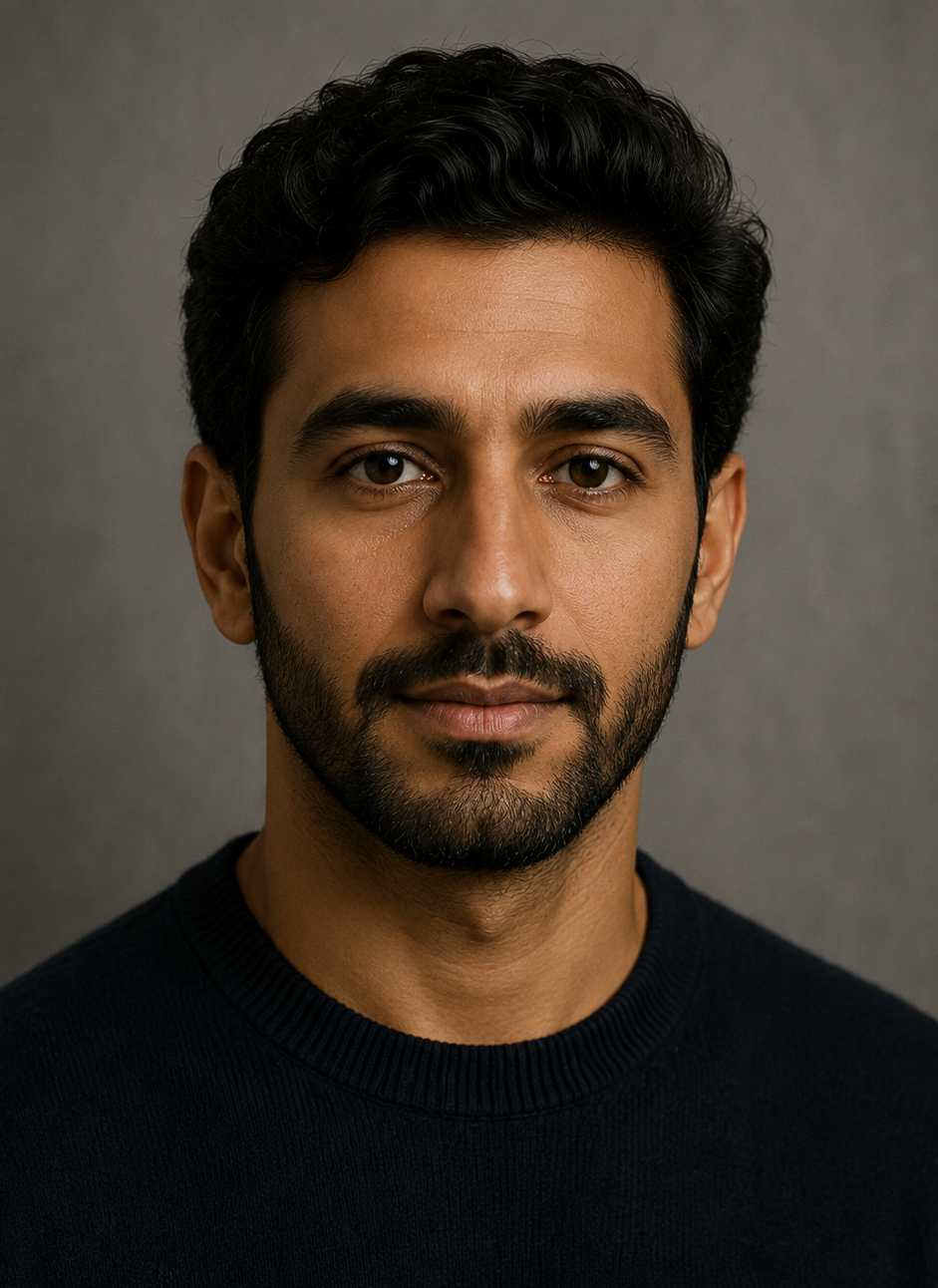
Written by
Khalid Al-Rashidi
Gulf & Middle East Correspondent · Emerging & Strategic Wealth
Khalid covers the family offices, luxury operators, and strategic capital moving across the GCC and wider Arab world — often before the rest of the region notices. He's spent years tracking how Gulf wealth structures itself for the next generation, from residency programmes to private aviation. Based between Dubai and Riyadh. Reach out at khalid.al-rashidi@theplatinumcapital.com.