

Private Residences and Branded Apartments: The Gulf's New Status Asset
Across the Gulf's most coveted addresses, a new class of ultra-prime residential asset is quietly redefining the architecture of wealth preservation, as branded residences bearing the names of Four Seasons, Armani, and Bulgari command premiums of 30 to 50 percent above conventional luxury stock. For family offices and sovereign-adjacent capital navigating an era of heightened fiscal scrutiny, these properties represent something beyond square footage — they are liquid-adjacent stores of value wrapped in the reputational armor of globally recognized hospitality brands.…

When a single beachfront land assembly in Jumeirah commands Dh400 million before a single brick has been laid, the message to the global wealth community is unambiguous: the Gulf's super-prime residential market has entered a category of its own. These are no longer property transactions. They are statements of permanence, legacy, and positioning — and the families and principals behind them know exactly what they are acquiring.
Land as a Finite Luxury
In March 2026, Arabian Acres completed one of the most consequential private coastal land assemblies in Dubai's history. Three adjacent freehold plots spanning more than 113,000 square feet and 160 metres of private Arabian Gulf frontage were consolidated in a single transaction valued at Dh400 million. The gross development value of the site is expected to exceed Dh1 billion, with plans for three ultra-luxury villas offering direct beachfront access and private marina docking. Arabian Acres acted as exclusive broker for both buyer and seller — a rare dual mandate, and a telling signal of the firm's standing at this tier of the market.
Weeks later, Dubai Sotheby's International Realty closed an even larger beachfront estate transaction — a parcel exceeding 80,000 square feet, described as among the last remaining private beachfront landholdings of its scale available anywhere in the emirate. No public listing. No open-market exposure. Senior leadership handled it directly, between trusted parties, at a pace that suited the buyer. That is now the defining characteristic of super-prime Gulf real estate. The scarcity argument, so routinely overstated in property markets elsewhere, is genuinely structural here. Once this coastal land is gone, it is gone.
Naïa Island and the LVMH Effect
No single development better captures the convergence of branded luxury and private residential ambition than Naïa Island Dubai, the landmark project being developed by Shamal Holding, the Dubai-based diversified investment firm. At its heart will sit the region's first Cheval Blanc Maison — the LVMH hospitality marque whose only other global addresses are Paris, Courchevel, Saint-Barth, and the Maldives. The Maison is being designed as an intimate retreat of approximately 30 suites and 40 private-pool villas, each with direct beach access. Completion is targeted for 2029.
The numbers tell a complicated story. Between January 2025 and April 2026, Naïa alone accounted for 40 percent of all Dubai ultra-prime seaside transactions above Dh150 million. That concentration of capital into a single project reflects something worth sitting with. For ultra-high-net-worth buyers — particularly those from Saudi Arabia, the wider GCC, Central Asia, and increasingly from Africa's emerging wealth centres — the brand halo of a Cheval Blanc, a Bulgari, or an Aman is not incidental to the investment thesis. It is the investment thesis. These buyers are not purchasing square footage. They are purchasing association with a curated world that fewer than a few hundred families globally can access.
The Branded Residence Premium — and Why It Holds
Across the Gulf, branded residences have moved from novelty to institutional asset class with remarkable speed. Knight Frank's 2025 Wealth Report identified the Middle East as the fastest-growing region for branded residential supply, with Dubai, Riyadh, and Abu Dhabi collectively accounting for more than 30 percent of all new branded residence pipeline globally. Price premiums for branded product over comparable non-branded stock in prime Dubai locations now range between 25 and 40 percent. That premium has widened, not compressed, as supply has increased. The explanation lies in who is buying.
Family offices across the Gulf — many of them managing second and third-generation wealth from Saudi Arabia, Kuwait, and Qatar — have increasingly carved out a formal allocation within their real estate books for super-prime branded residential. The rationale is multi-layered. These assets offer lifestyle utility. They retain liquidity among a global peer group. And they carry a degree of brand protection that generic ultra-luxury stock simply does not. A principal in Riyadh or a family office manager in Abu Dhabi can acquire a private residence within a Cheval Blanc Maison knowing that the brand's global reputation functions as a structural floor on the asset's value. That matters more than yield.
Who Is Buying — and From Where
The buyer profile at the very top of the Gulf residential market has diversified considerably over the past three years. Saudi nationals — historically cautious about holding primary wealth in real estate outside the Kingdom — have emerged as a dominant force in Dubai's super-prime segment. Vision 2030's push for wealth diversification has played a role, as has the growing sophistication of Saudi family offices. Emirati buyers remain the most consistent presence in the Dh100 million-plus category, often structuring acquisitions through holding vehicles for estate planning purposes.
Beyond the GCC, the Gulf's super-prime market is absorbing capital from a broader geography than at any previous point. Buyers from Kazakhstan, Azerbaijan, and Uzbekistan — frequently principals of energy, mining, or agribusiness conglomerates — have become notable participants in the branded residential segment, drawn by Dubai's legal framework, its political neutrality, and the practical reality of frequent business transit through the emirate. Few outside the region have tracked this shift closely. They should. Nigerian and Kenyan family wealth, particularly from second-generation principals educated in the UK or US, is also appearing with greater regularity in the Dh30 million to Dh80 million bracket. For many of these buyers, a Dubai residence functions simultaneously as a lifestyle asset, a liquidity reserve, and a geographic hedge.
Where the Market Moves From Here
The structural argument for Gulf super-prime real estate is intact — and in several respects, it is getting stronger. Dubai's freehold coastal land stock is genuinely finite. The back-to-back landmark deals of early 2026 are not repeatable at scale because the underlying supply does not exist. Riyadh's emerging luxury residential market, while earlier-stage, is beginning to attract serious institutional attention as the city's expatriate and diplomatic population grows rapidly. Abu Dhabi's Jubail Island and Saadiyat Cultural District continue to draw discreet capital from buyers who prioritise long-term stability over yield. That is a significant shift in how Abu Dhabi is perceived by serious money.
For family offices and private investors calibrating their real estate allocations, the signal from the first half of 2026 is clear enough. Speculative off-plan acquisition for yield arbitrage is giving way to something more deliberate. The buyers assembling beachfront land in Jumeirah or securing a villa within Naïa Island are not thinking in two-year horizons. They are thinking in generations. In the Gulf, that is precisely the kind of capital that moves markets for decades.
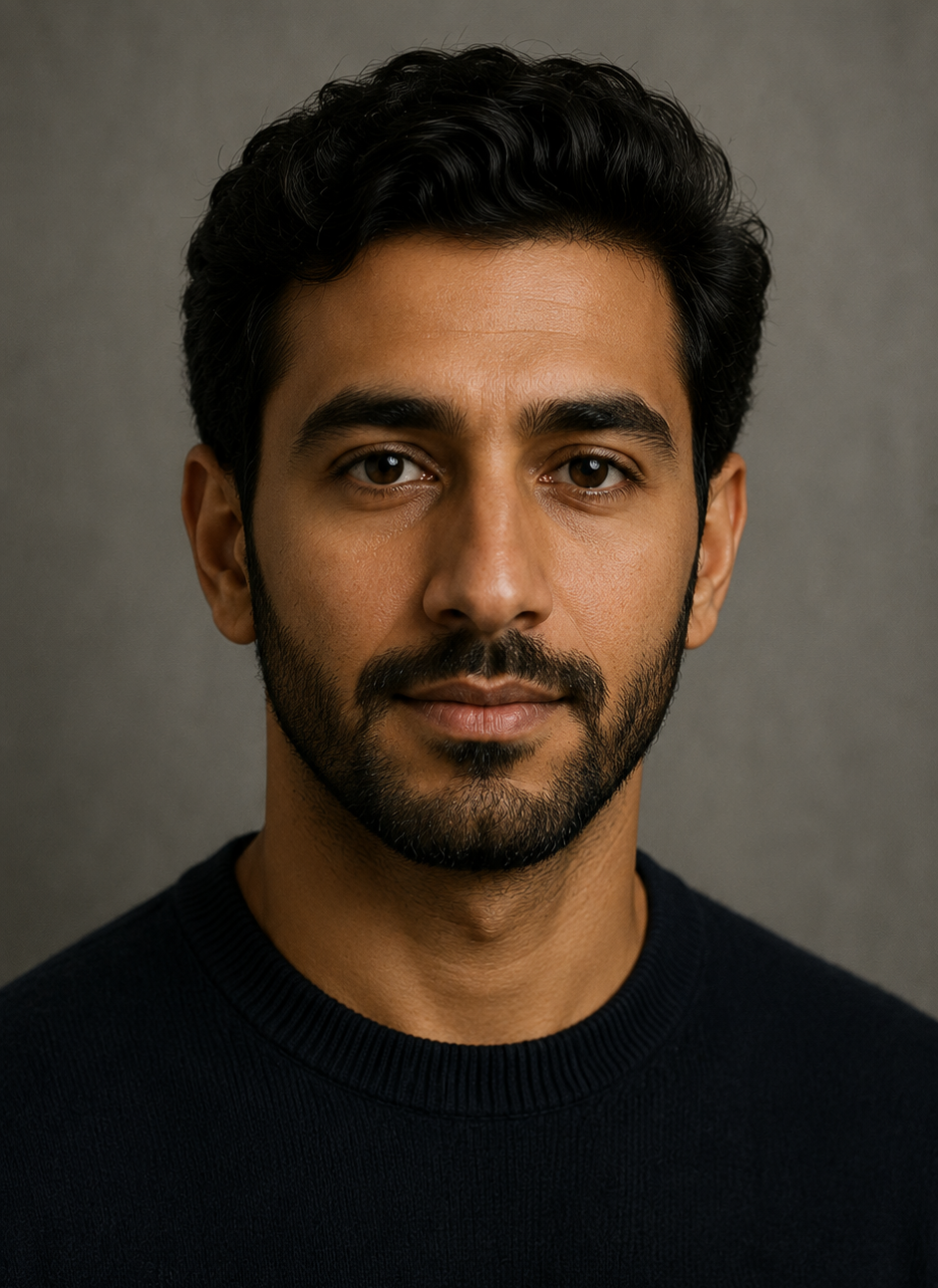
Written by
Khalid Al-Rashidi
Gulf & Middle East Correspondent · Emerging & Strategic Wealth
Khalid covers the family offices, luxury operators, and strategic capital moving across the GCC and wider Arab world — often before the rest of the region notices. He's spent years tracking how Gulf wealth structures itself for the next generation, from residency programmes to private aviation. Based between Dubai and Riyadh. Reach out at khalid.al-rashidi@theplatinumcapital.com.