

Frontier Markets Investing: Where the Risk Premium Pays
Frontier markets represent the final asymmetric opportunity in a world where traditional alpha has been systematically compressed by algorithmic trading and institutional overcrowding, offering sophisticated capital allocators access to demographic tailwinds, untapped consumer markets, and sovereign growth trajectories that emerging market indices have long since priced into oblivion. For family offices and institutional principals willing to apply rigorous due diligence frameworks alongside patient capital horizons, the structural risk premium embedded in markets from Nairobi to Karachi to Ho Chi Minh City continues to reward conviction with returns that dwarf anything a saturated developed market can responsibly promise.…
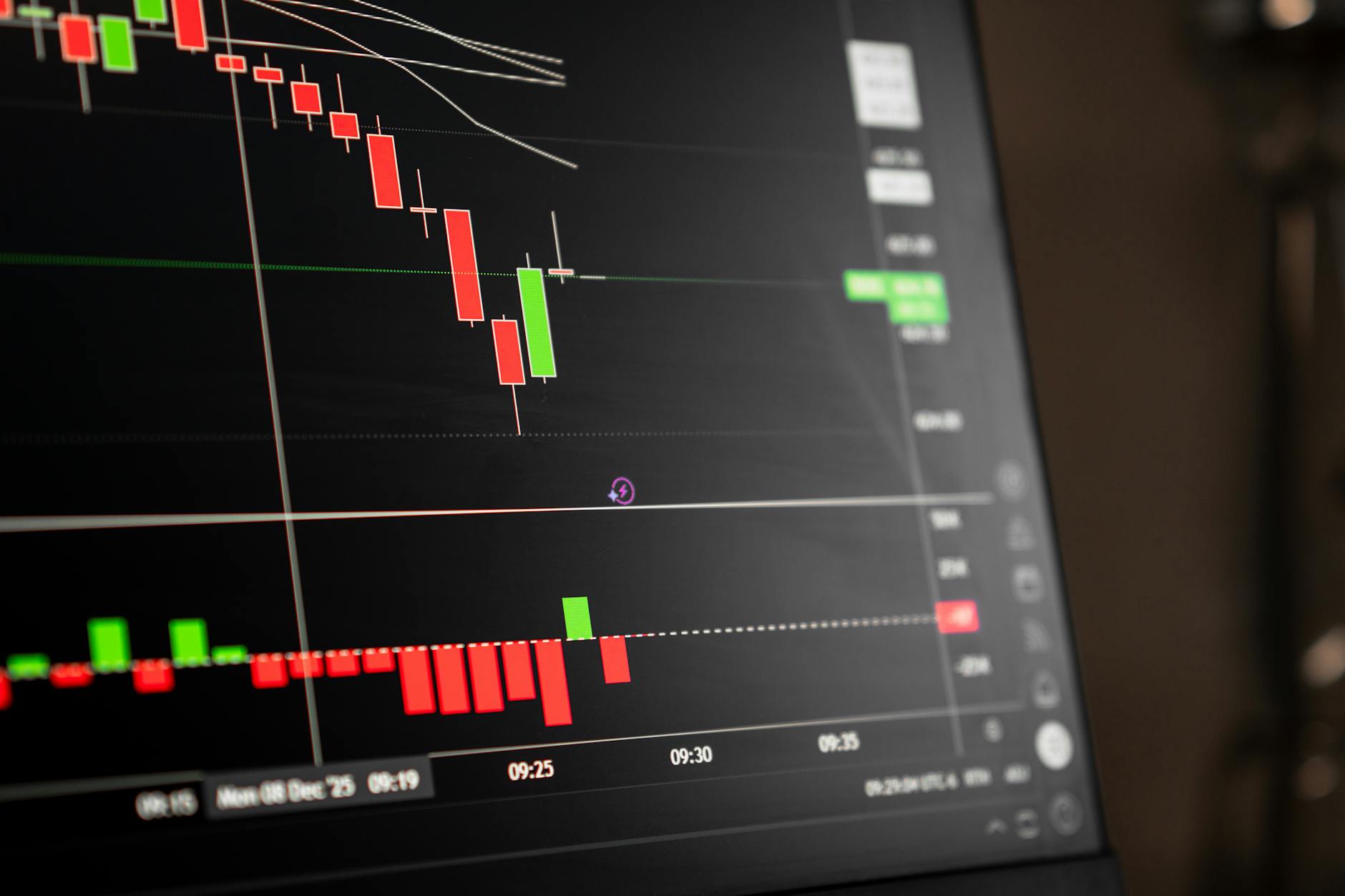
For decades, frontier markets were the province of specialists — analysts who could read a Lagos bourse ticker alongside a Karachi central bank bulletin and still sleep soundly at night. That era is ending. Regulatory reform, geopolitical realignment, and capital scarcity in developed markets are pushing serious money — family offices, sovereign-adjacent vehicles, and private wealth managers — toward exchanges that most Bloomberg terminals treat as footnotes. The question for 2026 is no longer whether frontier and emerging market equities deserve a place in a sophisticated portfolio. It is whether investors who delay are about to miss the cycle entirely.
Tadawul's Open Door: The Most Significant Emerging Market Reform of the Year
On February 1, 2026, the Saudi Capital Market Authority executed what may prove to be the most consequential single regulatory act in Gulf capital markets since Aramco's IPO. The QFI regime — the Qualified Foreign Investor framework that had governed external access to the Tadawul since 2015 — was abolished outright. The $500 million AUM threshold that effectively restricted direct participation to the world's largest institutional houses is gone. Any foreign investor, institutional or individual, can now access the Main Market of the Saudi Exchange without regulatory qualification or pre-approval.
The structural implication is stark. Foreign ownership of Saudi equities currently sits at just 6.8%. Compare that with 25.3% in India and 58.3% in Brazil — two markets the CMA explicitly references in its own benchmarking. The headroom for inflows is not marginal. It is generational. The CMA is simultaneously lobbying for higher index weightings at both MSCI and FTSE Russell, which would create mandatory allocation pressure from passive vehicles running into the trillions. For private investors and family offices sitting on liquidity in the UAE or across Central Asia and Southeast Asia, the window to accumulate ahead of institutional forced buying is narrow and closing fast.
War Premium, Valuation Rotation, and the Saudi Institutions That Moved First
The outbreak of conflict involving Iran introduced the kind of volatility that typically clears retail investors from a market entirely. On the Tadawul, the opposite occurred. Saudi institutional buyers — pension funds, sovereign-linked vehicles, and domestic family conglomerates — stepped into the sell-off with conviction, reversing a 14-month trend during which those same institutions had shed approximately $7.5 billion in Riyadh-listed equities. The result was a 5% TASI gain in March 2026. That is a significant shift — one that stood in sharp contrast to steep declines across most other Gulf bourses, with Oman the only comparable exception.
Julian Bruce, Managing Director at EFG Hermes' UAE brokerage operation, framed the opportunity with unusual directness: "The Saudi market had underperformed massively... there should be some rotation out of the UAE and into Saudi Arabia based on valuations, especially in the banks." By April, foreign investors had become net buyers of nearly $1 billion in Saudi equities, bourse data confirms. Ali El Adou, head of asset management at Entrust Capital in Dubai, pointed to a specific thesis: Saudi Arabia's demonstrated capacity to sustain oil export volumes and rationalise government expenditure simultaneously — a combination that insulates corporate earnings in ways most peer markets cannot replicate under regional stress. For investors who understand that geopolitical risk in the Gulf is often asymmetric — punishing the headline-sensitive and rewarding the structurally informed — the March dislocation was a gift.
Beyond the Gulf: Where Frontier Risk Premium Is Genuinely Compensatory
The Saudi story is exceptional in scale. But the underlying logic — regulatory reform plus structural underownership plus institutional inertia creating a timing arbitrage — applies across multiple frontier contexts at once. In Vietnam, the State Securities Commission's push toward emerging market reclassification by FTSE Russell is entering what officials describe as a final compliance phase, with the omnibus account framework now operational across major custodians. Vietnamese equities trade at a price-to-earnings discount of roughly 30% relative to ASEAN peers despite GDP growth projections that consistently outpace the region. The Ho Chi Minh Stock Exchange has recorded net foreign selling for three consecutive years. Reclassification would reverse that overhang rapidly. Few outside the region have noticed. They should.
In Kazakhstan, the Astana International Exchange — operating under AIFC jurisdiction with English common law — has quietly become the most credible capital markets venue between Frankfurt and Shanghai. Kazakh sovereign wealth flows through Samruk-Kazyna continue to seed domestic listings, and the exchange has attracted genuine secondary-market interest from Gulf family offices seeking commodity-linked exposure without direct commodity price risk. In Nigeria, the NGX All Share Index delivered returns exceeding 40% in naira terms in 2024. Currency risk remains a legitimate concern. But family offices with longer time horizons and existing West African commercial relationships are finding the risk-adjusted case increasingly compelling, particularly across financial services and consumer sector listings.
What Sophisticated Investors Are Actually Doing
The capital moving into frontier and emerging markets in 2026 is not naive. It is structured carefully, concentrated deliberately, and often paired with currency hedging arrangements or natural hedges through existing business exposure. Gulf family offices are increasingly allocating through managed accounts with regional brokers — EFG Hermes, Arqaam Capital, and Mubasher Financial among them — rather than through generalist emerging market funds that smooth returns by over-diversifying across 30 countries simultaneously. The numbers tell a complicated story when you look at what broad EM funds actually capture: not much. Frontier market alpha is almost entirely country-specific and often sector-specific within that country. A broad EM fund captures none of the Tadawul QFI reform thesis. A directed allocation to Saudi financials and industrials, sized appropriately and entered at current valuations, captures it almost entirely.
Liquidity management remains the primary risk discipline. Unlike developed market equities, frontier positions require exit planning from day one. Investors who entered the Egyptian Exchange ahead of the March 2024 IMF agreement and pound devaluation absorbed severe mark-to-market pain before the subsequent 80%-plus recovery — a sequence that would have been catastrophic for any portfolio requiring quarterly liquidity. The investors who survived and profited had structured their overall portfolio to treat the Egyptian position as genuinely illiquid for 18 to 24 months. That discipline is the difference between a thesis that works and one that wipes you out before it can.
The Forward View: What the Next 18 Months Reward
The structural case for frontier and select emerging market equities has rarely been this concrete. Tadawul's open access reform, Vietnam's reclassification trajectory, Kazakhstan's exchange maturation, Nigeria's demographic dividend — these are not speculative narratives. They are policy-backed, institutionally supported processes unfolding on observable timelines. The risk premium these markets offer is real, but it is compressing. The investors who extracted the largest returns from India's MSCI reclassification, from Saudi Aramco's index inclusion, from Gulf bank re-ratings after the 2023 rate cycle — they were positioned before consensus, not during it.
For private investors, family offices, and next-generation principals managing inherited capital across the Gulf, Central Asia, and Southeast Asia, the calculus is straightforward: the markets offering the most significant structural upside in 2026 are the ones still carrying frontier labels. Those labels are being removed, one regulatory reform at a time. The risk premium pays — but only for those who arrive before the reclassification is complete.
Written by
Charlotte Reeve
Senior correspondent · Capital Markets & Fintech
Charlotte cut her teeth on an equities desk before moving to the other side of the notebook. She covers capital markets, stock exchanges, and the fintech operators trying to disintermediate the banks that trained her. Sharpest on market microstructure and payments infrastructure; still reads a prospectus for fun. Based in Singapore. Reach out at charlotte.reeve@theplatinumcapital.com.