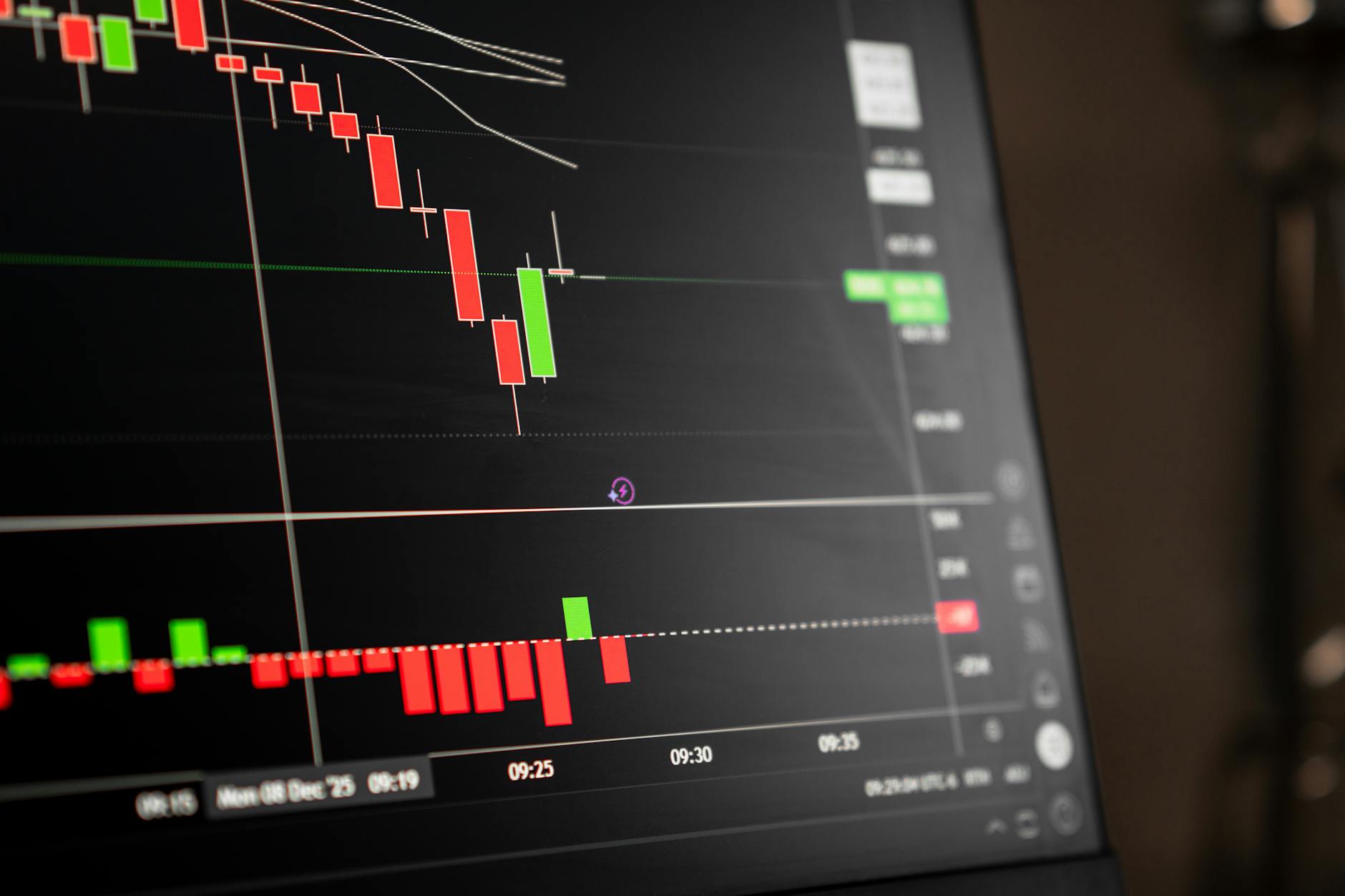

Passive Flows Into Emerging Markets: Blessing or Distortion
As passive investment vehicles continue to channel hundreds of billions of dollars into emerging markets with mechanical indifference to fundamentals, the very architecture of price discovery in these economies is being quietly dismantled, leaving sovereign asset valuations increasingly hostage to the rebalancing decisions of distant index committees rather than local economic realities. For family offices and institutional allocators navigating this landscape, understanding the structural distortions embedded within benchmark-driven capital flows is no longer an academic exercise but an urgent prerequisite for preserving wealth in markets where liquidity can evaporate with the same algorithmic speed with which it arrived.…

When global index providers sneeze, emerging market exchanges catch a cold — or sometimes a windfall. Passive investing now commands trillions of dollars across exchange-traded funds and index-tracking mandates, and it has fundamentally reshaped how capital moves into developing economies. The results are powerful and deeply imprecise in equal measure. Saudi Arabia has thrown open its equity market to all foreign investors with no qualification thresholds. Abu Dhabi just watched a landmark delisting strip a major constituent from passive portfolios overnight. The question pressing on family offices, sovereign wealth managers, and institutional allocators across the Gulf, Central Asia, and beyond is sharper than ever: are passive flows a structural gift to emerging markets, or are they quietly distorting the very markets they claim to democratise?
The Index Effect: Capital That Follows Rules, Not Reasoning
Passive capital does not pick winners. It mirrors weightings determined by MSCI, FTSE Russell, and S&P Dow Jones — committees that make decisions based on market capitalisation, liquidity thresholds, and investability criteria. When a market receives an upgrade or a new stock joins an index, billions flow in automatically. Not because fund managers assessed the company's fundamentals. Because the rules require it.
Saudi Arabia's Tadawul felt this acutely during its MSCI Emerging Markets inclusion beginning in 2019. Passive inflows drove considerable price appreciation in key index constituents regardless of company-level performance. Now the Saudi Capital Market Authority's February 2026 decision to abolish the Qualified Foreign Investor regime — which previously required a minimum of $500 million in assets under management — may well trigger a fresh round of reclassification discussions and index rebalancing. Analysts are already projecting an additional $10 billion in inflows as a direct consequence. A meaningful slice of that will be passive, automatic, and indifferent to valuations.
Saudi Arabia's Open Door: Opportunity or Overexposure?
The CMA's reform is genuinely historic. Since 2015, the QFI framework functioned as a selective filter, ensuring that foreign capital arriving on Tadawul came primarily from large, regulated institutions with sufficient scale and sophistication. Dismantling that threshold entirely from 1 February 2026 signals a mature confidence in the market's depth and resilience. That confidence is not misplaced — international investors already held positions exceeding SAR 590 billion, approximately $157.3 billion, by the close of Q3 2025.
But the removal of the QFI floor also means that smaller, less informed, and more reactive foreign capital can now participate directly. Retail investors from markets with entirely different risk appetites and time horizons will join the Tadawul for the first time. That is the classic passive and retail inflow paradox: access broadens, but so does potential volatility from indiscriminate selling when global sentiment turns. The question for the kingdom's regulators is not whether this capital is welcome — it clearly is — but whether the domestic institutional infrastructure is sufficiently robust to absorb reversals when the next global stress event forces passive funds to redeem and reweight simultaneously. That moment will come. It always does.
The TAQA Delisting: What Happens When the Index Loses a Major Constituent
Abu Dhabi offers a compelling parallel — passive distortion running in reverse.
When L'IMAD Holding and Abu Dhabi Power Corporation completed their squeeze-out of TAQA's remaining minority shareholders — paying AED 2.70 per share, a meaningful premium to the last traded price of AED 2.33 — the company's final trading day on the ADX was recorded as 6 August 2026. Passive funds tracking the MSCI UAE or FTSE ADX indices faced mandatory rebalancing immediately. TAQA had been a significant constituent of Gulf equity benchmarks. Its sudden removal forced index-tracking funds to sell positions at predetermined dates, irrespective of the prevailing price environment.
The numbers tell a complicated story. This mechanical selling pressure is a textbook illustration of how passive capital, while elegant in theory, can create predictable, exploitable distortions. Active managers and family offices who understood the delisting timeline in advance were positioned to absorb those passive outflows at advantageous prices. That is precisely the kind of sophisticated opportunity that passive investors, by design, cannot pursue. They were the ones selling.
Emerging Markets Beyond the Gulf: A Pattern Replicated Across Regions
Riyadh and Abu Dhabi are not outliers. The same dynamic runs across emerging markets globally, and few outside those regions have paid it sufficient attention. They should.
In Southeast Asia, Vietnam's long-anticipated potential MSCI upgrade has generated speculative inflows for years ahead of any formal reclassification, as investors attempt to pre-position before passive mandates are forced to follow. In Africa, the Nairobi Securities Exchange and the Egyptian Exchange have both seen index-related flows overwhelm local market liquidity, pushing valuations temporarily beyond what domestic fundamentals justified. Kazakhstan's KASE and Indonesia's IDX have faced the same. The common thread is that passive capital enters and exits according to schedules and thresholds that bear no relationship to a country's macroeconomic trajectory, corporate earnings cycle, or geopolitical posture.
For private investors and family offices operating across these regions, this creates a persistent gap between index-driven price movements and underlying asset value. Disciplined active allocators have historically monetised that gap. The opportunity has not closed.
What This Means for Private Capital in 2026 and Beyond
For the wealthy families, family office principals, and private investors who form the backbone of capital allocation across the Gulf, Central Asia, and emerging Southeast Asia, rising passive ownership in their home markets cuts both ways. The near-term pricing opportunity is real. So is the medium-term structural risk.
In markets where passive funds command a growing share of total market capitalisation, price discovery deteriorates. Fewer active participants means fewer informed buyers and sellers stress-testing valuations against real-world data. Over time, that produces crowded trades, compressed liquidity during stress events, and index constituents that trade at a permanent premium to their non-indexed peers. The distortion becomes baked in.
The immediate opportunity lies in selectivity. As Saudi Arabia's newly opened Tadawul draws fresh passive and retail inflows following the QFI abolition, active investors with deep regional expertise and direct management relationships will find that non-index or underweight-index constituents offer the most compelling risk-adjusted returns. The same logic applies wherever delisting events — like TAQA's exit from the ADX — create temporary dislocation. Private capital unconstrained by index mandates, redemption cycles, or ESG screening filters can move with a speed and conviction that passive funds structurally cannot match.
In the current environment, that flexibility is not merely an advantage. It is the edge.
Written by
Charlotte Reeve
Senior correspondent · Capital Markets & Fintech
Charlotte cut her teeth on an equities desk before moving to the other side of the notebook. She covers capital markets, stock exchanges, and the fintech operators trying to disintermediate the banks that trained her. Sharpest on market microstructure and payments infrastructure; still reads a prospectus for fun. Based in Singapore. Reach out at charlotte.reeve@theplatinumcapital.com.