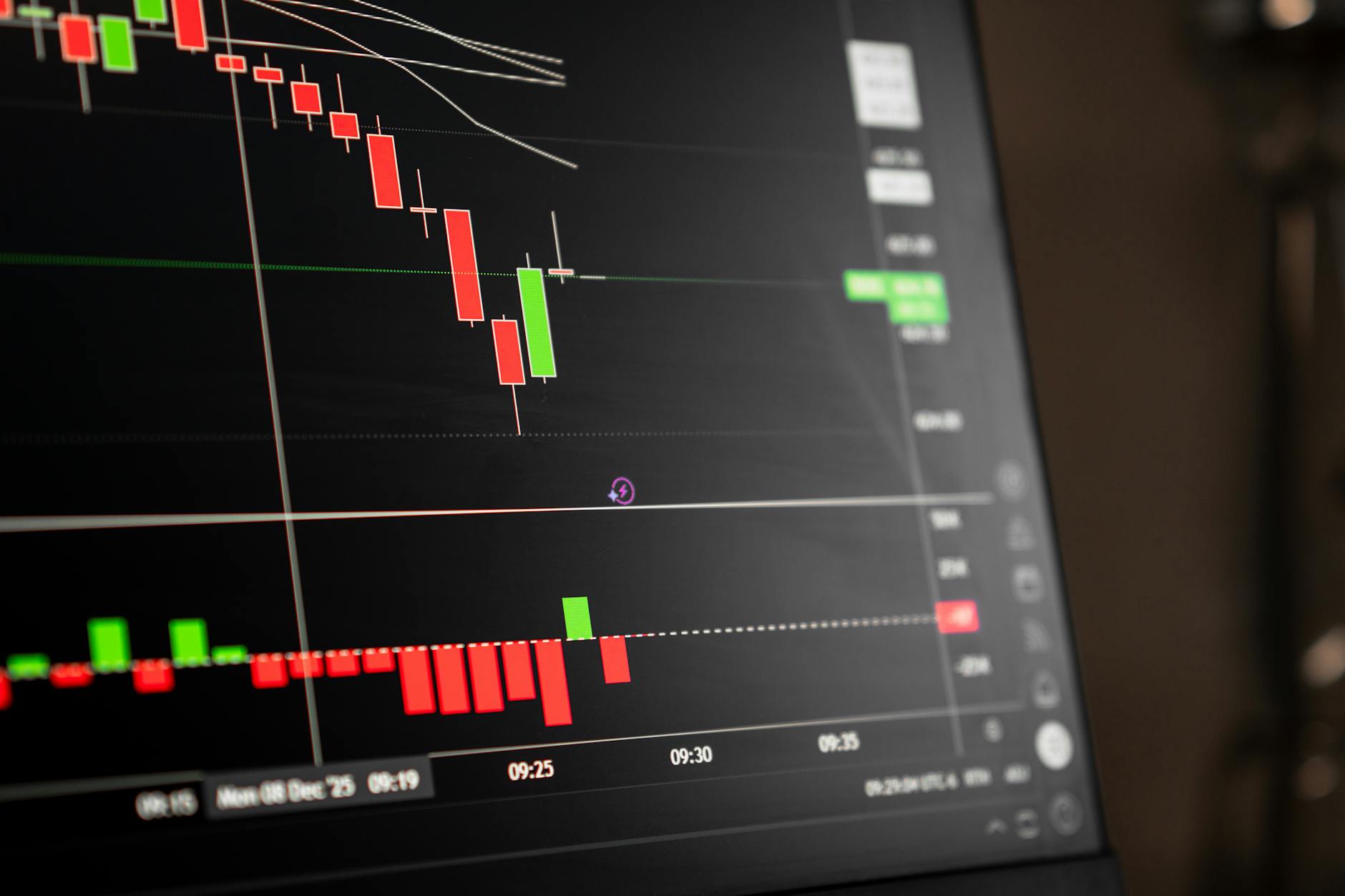

The Rise of Regional Retail Investors in Gulf Markets
As Gulf markets undergo a structural transformation driven by domestic capital mobilization and regulatory modernization, a new class of regionally rooted retail investors is quietly reshaping liquidity dynamics across bourses from Riyadh to Abu Dhabi. For family offices and institutional stakeholders navigating this evolving landscape, understanding the behavioral patterns and capital flows of this emerging investor cohort has become less a matter of academic interest and more an urgent strategic imperative.…

For most of the past decade, Gulf equity markets ran on two engines: deep-pocketed institutional capital and a surge of foreign money chasing frontier-market returns. The retail investor — the Riyadh business owner, the Dubai professional, the Kuwaiti family patriarch quietly allocating savings — was an afterthought. A secondary participant. That assumption is now dead. Across the GCC, a structurally significant wave of regional retail participation is reshaping how these markets move, who sets the tone in IPO books, and what companies choose to list in the first place.
A Market Opened, A Signal Sent
The clearest inflection point arrived on February 1, 2026, when Saudi Arabia formally opened the Tadawul Main Market to all categories of foreign investors, dismantling the legacy Qualified Foreign Investor framework that had long restricted direct participation. The removal of the swap-based exposure workaround was equally consequential. It simplified ownership structures and sent an unambiguous signal that Tadawul was ready to compete as a genuinely global exchange. Foreign investors responded immediately: in January 2026 alone, net foreign buying reached approximately SR5 billion — roughly $1.33 billion — marking the strongest monthly inflow since 2022.
But the more quietly consequential story was happening domestically. Regional retail investors, particularly Saudi nationals and Gulf residents with discretionary savings, had already been building positions ahead of the formal opening. They had watched the IPO cycle accelerate, recognised that institutional selling had created valuation gaps in marquee names, and began allocating with a conviction that belied their historic reputation for short-term speculation. The foreign opening did not diminish retail relevance. It gave retail investors better-priced counterparts to trade against.
The IPO Cycle as a Retail Catalyst
Nothing has galvanised GCC retail participation more than the sheer pace of new listings. Between January 2025 and March 2026, the Saudi Exchange recorded 43 IPOs across its main market and the Nomu parallel growth market, raising a combined $14.8 billion in proceeds. At least 25 additional listings are in various stages of preparation for the remainder of 2026. At that clip, Tadawul is on course to rank among the busiest exchanges globally by listing volume — a reality that even the most optimistic Capital Market Authority projections of two years ago would have found ambitious.
Consider Power Tower Company, which specialises in power transmission infrastructure, substations, and renewable energy systems. The company announced plans to list on the Tadawul main market in February 2026, appointing Yaqeen Capital as financial advisor and lead manager. It sits squarely within the infrastructure buildout that Vision 2030 demands, and its listing attracted retail attention precisely because the underlying business is tangible, domestically anchored, and strategically visible. That is the profile of IPO that resonates with regional retail investors: a company they understand, operating in a sector they can see being built around them. Subscription rates in recent Saudi IPOs have confirmed that retail appetite is anything but passive — oversubscriptions in the double-digit multiples have become routine, and regulators have had to calibrate retail allocation tranches accordingly.
Institutions Sell, Retail Absorbs — Then the Cycle Turns
The relationship between institutional behaviour and retail positioning became sharply visible during the regional turbulence of early 2026. From the start of 2025 through the end of February 2026, Saudi institutional investors were net sellers of approximately $7.5 billion in Riyadh-listed equities. That sustained drawdown suppressed the TASI and created what many analysts read as structural undervaluation in the kingdom's banking and industrial sectors. Retail investors, rather than following institutions out of the door, absorbed a meaningful share of that selling. They held.
When geopolitical stress escalated across the region, Saudi institutions reversed course sharply — stepping back in as buyers and helping the TASI rise 5% in March 2026, outperforming most other Gulf indices ahead of the ceasefire agreed in early April. Julian Bruce, Managing Director of EFG Hermes UAE brokerage, was direct: "The Saudi market had underperformed massively, and the index had reached the stage where it was already sold off and so it already seemed there should be some rotation out of the UAE and into Saudi Arabia based on valuations, especially in the banks." Retail investors who had held through the institutional selling phase found themselves on the right side of that rotation. That is a formative experience. And one that is unlikely to be forgotten quickly.
The Infrastructure Behind the Participation
Regional retail growth is not spontaneous. It is being engineered. Across the UAE, Saudi Arabia, and increasingly Qatar and Bahrain, digital brokerage infrastructure has matured to the point where opening a trading account, funding it, and executing a trade in a Nomu-listed company can be completed in under an hour on a mobile device. Saudi fintech firms operating under the CMA's regulatory sandbox have introduced fractional investing, robo-advisory overlays, and Arabic-language market education tools built specifically for first-generation equity investors — the children and grandchildren of families whose wealth historically sat in real estate, gold, or private business.
The generational dimension is significant. Across the Gulf, the transfer of family wealth to younger cohorts — many of whom studied in London, Singapore, or New York — is producing a class of investors who are comfortable with listed equities in a way their parents simply were not. Family offices that once allocated exclusively to direct private assets are now building out liquid market sleeves. The retail investor sitting in Riyadh or Abu Dhabi in 2026 is often not an individual acting alone. They are the designated market participant for a family unit with considerably more capital behind them than their individual account suggests. Few outside the region have fully grasped this. They should.
What This Means for Capital Allocators
For family offices, private wealth managers, and institutional players operating across the GCC, the rise of regional retail is not background noise. It is a structural market reality. Retail flows are increasingly capable of sustaining IPO valuations, providing secondary market liquidity in mid-cap names, and amplifying momentum in thematic sectors tied to Vision 2030, the UAE's industrial diversification agenda, and Qatar's post-World Cup economic expansion.
The numbers tell a complicated story — but the direction is clear. The opportunity for sophisticated private investors lies partly in getting ahead of those flows: identifying companies and sectors where retail conviction will build before it hardens into consensus. The Nomu market, still under-analysed relative to Tadawul's main board, deserves serious attention from family offices willing to accept growth-market volatility for the potential of early-entry positioning. Meanwhile, as Bahrain and Oman develop their own retail participation frameworks — with the Muscat Stock Exchange implementing phased reforms aligned with Oman Vision 2040 — the pattern emerging in Saudi Arabia today may well serve as the template for the broader Gulf within three years. Regional retail is no longer the market's footnote. It is fast becoming one of its most consequential forces.
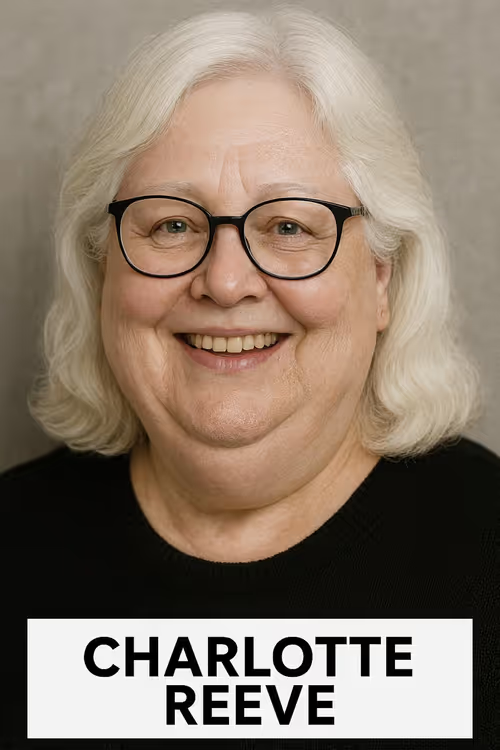
Written by
Charlotte Reeve
Senior correspondent · Capital Markets & Fintech
Charlotte cut her teeth on an equities desk before moving to the other side of the notebook. She covers capital markets, stock exchanges, and the fintech operators trying to disintermediate the banks that trained her. Sharpest on market microstructure and payments infrastructure; still reads a prospectus for fun. Based in Singapore. Reach out at charlotte.reeve@theplatinumcapital.com.