

Residency and Citizenship Advisory Firms Serving Gulf HNWIs
As Gulf high-net-worth individuals navigate an increasingly complex landscape of geopolitical uncertainty and evolving tax frameworks, specialist residency and citizenship advisory firms have emerged as indispensable architects of global mobility strategies, offering far more than passport procurement. The most sophisticated practices now deliver holistic sovereign positioning — integrating real estate structuring, wealth preservation mandates, and multi-jurisdictional estate planning into a single, discreet advisory mandate tailored to the intergenerational ambitions of Gulf family offices and ultra-high-net-worth principals.…

When a family office principal from Riyadh quietly acquires a second passport, or a Kuwaiti entrepreneur restructures her holdings across three jurisdictions ahead of a liquidity event, the firm arranging those moves rarely appears in any press release. That is precisely the point. Across the Gulf, a sophisticated and largely invisible industry has matured around one of the most consequential decisions a wealthy individual can make: where, legally and strategically, they choose to belong. Residency and citizenship advisory — once the preserve of immigration lawyers and modest relocation firms — has become a high-stakes professional services category attracting specialised boutiques, private bank partnerships, and discreet global consultancies with dedicated Gulf desks. Dubai's ultra-high-net-worth population is projected to grow by 36 percent by 2031, according to Knight Frank's latest Wealth Report. The demand for structured global mobility advice has never been more acute.
A Market Shaped by Strategic Necessity, Not Lifestyle Whim
Lifestyle media frames second citizenship as a luxury acquisition — something filed alongside yacht berths and Gstaad chalets. Gulf HNWIs and their advisors see it differently. Citizenship and residency decisions now get structured alongside estate planning, succession frameworks, and asset protection strategies. Sometimes all three at once. A Bahraini family office managing third-generation wealth across real estate, private equity, and listed securities is not acquiring a Maltese or Grenadian passport for the travel convenience. They are building a legal architecture designed to survive political turbulence, tax reform, and generational transition. The advisory firms that serve this cohort understand the distinction. They compete on it.
Firms such as Henley & Partners, Fragomen, and CS Global Partners have maintained Gulf presences for years. But 2025 and 2026 have brought a sharper professionalisation of the sector. Smaller, relationship-driven boutiques — often founded by former private bankers or legal counsel to sovereign wealth vehicles — are capturing mandates that larger firms cannot service with sufficient discretion. In the UAE alone, several have opened offices or expanded teams in the DIFC and ADGM free zones, positioning themselves explicitly at the intersection of wealth structuring and global mobility. That is a meaningful shift in how this market is organising itself.
The Real Estate Connection: Property as Passport Gateway
The Dh400 million Jumeirah beachfront land transaction closed by Arabian Acres in March 2026 is instructive — not merely as a real estate story, but as a window into how Gulf family office capital actually moves. The buyer, backed by sovereign-adjacent capital, acquired prime land for a bespoke sub-ten-unit residential project intended for direct private placement within known UHNW networks. This pattern is repeating across the Emirates. High-value property acquisition and citizenship strategy are no longer parallel conversations. They are the same conversation.
Portugal's Golden Visa programme, Greece's residency scheme, and Malta's citizenship-by-naturalisation route all hinge, at various thresholds, on qualifying investments — real estate among them. Gulf advisors now routinely structure transactions so that a qualifying European property acquisition serves simultaneously as a portfolio asset and a residency anchor. The same logic runs in the opposite direction. The UAE's own Golden Visa — granting ten-year residency to property investors who clear the Dh2 million threshold — has become a standard instrument for wealthy families from Nigeria, Egypt, Pakistan, and Kazakhstan seeking UAE tax residency as part of a broader restructuring. Advisory firms with credibility in both the GCC and these feeder markets command a measurable premium. Few outside the region have fully absorbed that dynamic. They should.
Programme Selection: Where the Real Complexity Lies
From the outside, the citizenship-by-investment market can look straightforward. Pay a sum, receive a document. The numbers tell a more complicated story. For Gulf HNWIs carrying complex holding structures, multiple nationalities within a single family unit, or business interests in jurisdictions with US FATCA or OECD BEPS implications, selecting the right programme is genuinely technical work. The best advisory firms deploy legal, tax, and due diligence specialists in coordinated teams, often working in tandem with a family's existing legal counsel or private bank.
Caribbean programmes — Grenada, Saint Kitts and Nevis, Dominica, Antigua — remain popular for their speed and relative affordability, with investment thresholds starting around $100,000 for the National Development Fund route in certain jurisdictions. But Gulf clients at the upper end are pulling toward Europe. Malta's Community Malta Agency offers a pathway to full EU citizenship. Montenegro, before its programme formally closed, attracted serious GCC interest, and emerging options in Serbia and Albania are now drawing investors with European business ambitions. For those with longer time horizons and US exposure, the EB-5 investor visa continues to generate structured advisory mandates — though the processing timelines and compliance requirements demand real specialist handling, not generalist guidance.
Sindalah, Saudi Vision, and the Shifting Calculus of Gulf Domicile
Saudi Arabia's transformation under Vision 2030 has introduced a nuance that rarely gets discussed openly. As Riyadh becomes a genuinely competitive global city, the reasoning that drives Saudi HNWIs toward second residency is changing. Previously, a Saudi entrepreneur maintaining a UAE Golden Visa or a European residency was primarily managing optionality — hedging against domestic uncertainty. Today, some are formalising dual-domicile structures not as hedges but as operational strategies. Saudi residency for its domestic advantages. A complementary jurisdiction to anchor the international wealth structure. Both, simultaneously, by design.
The regional ambition is visible in NEOM's Sindalah Island. The project has absorbed an estimated $4 billion — roughly triple initial projections — and has encountered significant contractor terminations, including the $4.7 billion Webuild contract and Hyundai's $1 billion tunnel project for The Line. And yet it remains positioned as a future anchor for international UHNW engagement with the Kingdom. When Sindalah eventually opens its 86-berth superyacht marina and Luca Dini-designed hotels, it will represent a new kind of Saudi asset: one built to attract and retain global wealth on Saudi soil, rather than watch that capital flow to Dubai or Abu Dhabi. Advisory firms reading this shift are already counselling clients on how a formal Saudi presence — through the Premium Residency programme or business registration — slots into a wider multi-jurisdiction strategy.
What Distinguishes the Best Advisory Firms in This Space
For a UHNW individual or family office evaluating citizenship and residency advisors, the differentiators are specific and worth interrogating carefully. Due diligence capability sits at the top. Programmes can be revoked. Individuals with business interests in sanctioned jurisdictions require rigorous pre-screening before any application moves forward. Beyond that, ongoing relationship management — rather than transactional placement — separates the firms that genuinely serve long-term client interests from those running volume. And the ability to coordinate across wealth structuring, tax advisory, and mobility planning, treating citizenship as an integrated decision rather than an isolated product, defines the firms capturing the most sophisticated Gulf mandates.
Knight Frank projects the UAE's UHNW population approaching 15,000 individuals by the end of this decade. The advisory firms positioned at the intersection of mobility, capital, and legacy are not in the immigration business. They are in the business of building the legal and structural foundations that families expect to last three generations. That is a different service entirely. The Gulf's wealthiest families are beginning to insist on the distinction.
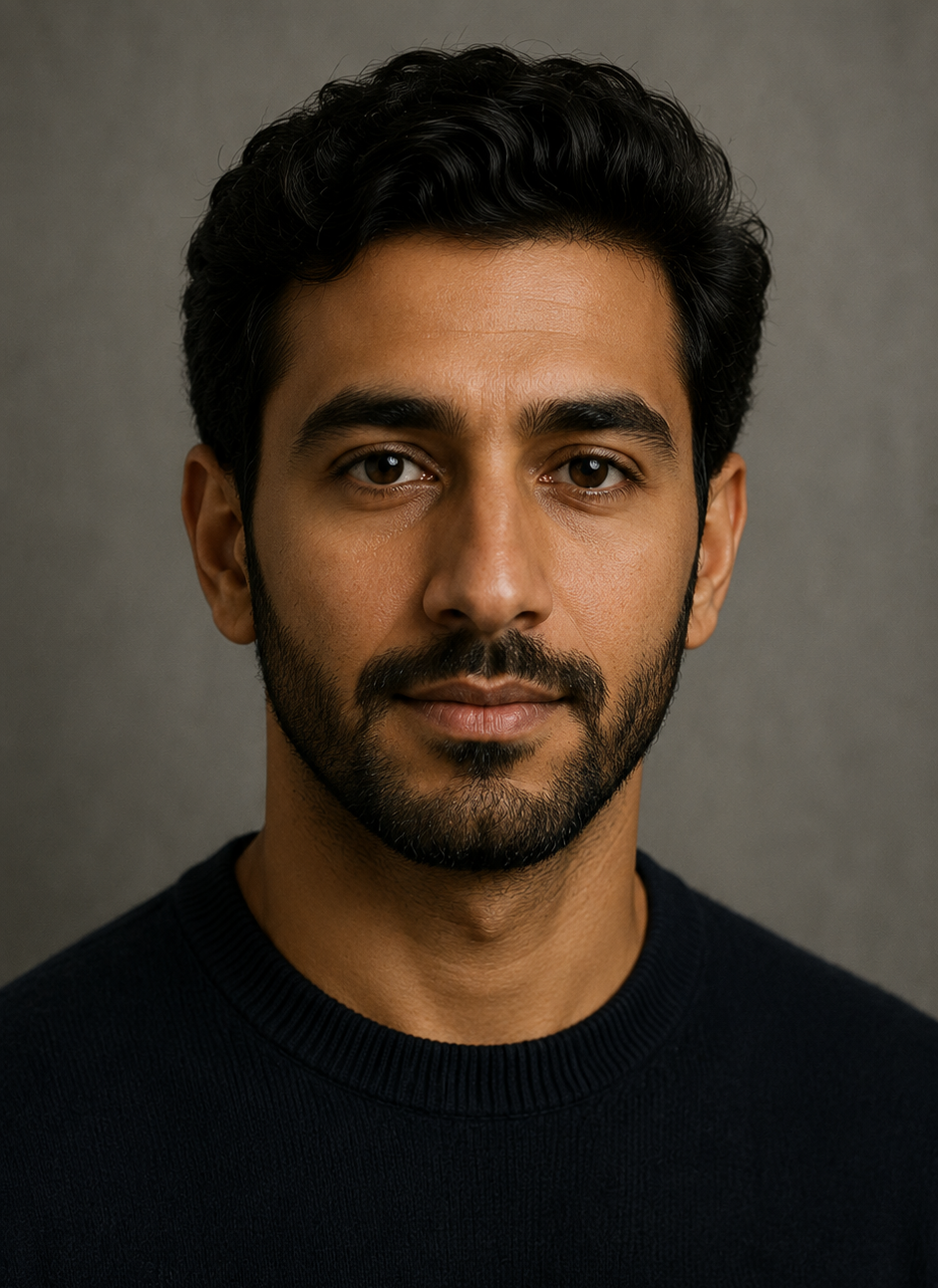
Written by
Khalid Al-Rashidi
Gulf & Middle East Correspondent · Emerging & Strategic Wealth
Khalid covers the family offices, luxury operators, and strategic capital moving across the GCC and wider Arab world — often before the rest of the region notices. He's spent years tracking how Gulf wealth structures itself for the next generation, from residency programmes to private aviation. Based between Dubai and Riyadh. Reach out at khalid.al-rashidi@theplatinumcapital.com.