
The Gulf Contracting Giants Behind the Giga Projects
As Saudi Arabia and the UAE pour hundreds of billions of dollars into transformational giga projects, a select group of privately held contracting dynasties have quietly positioned themselves at the epicenter of the region's most consequential buildout in modern history. Understanding which firms hold the critical subcontracting relationships, the balance sheet resilience, and the sovereign backing to deliver at scale is no longer a matter of academic interest — it is a defining variable in any serious capital allocation strategy across the Gulf.…
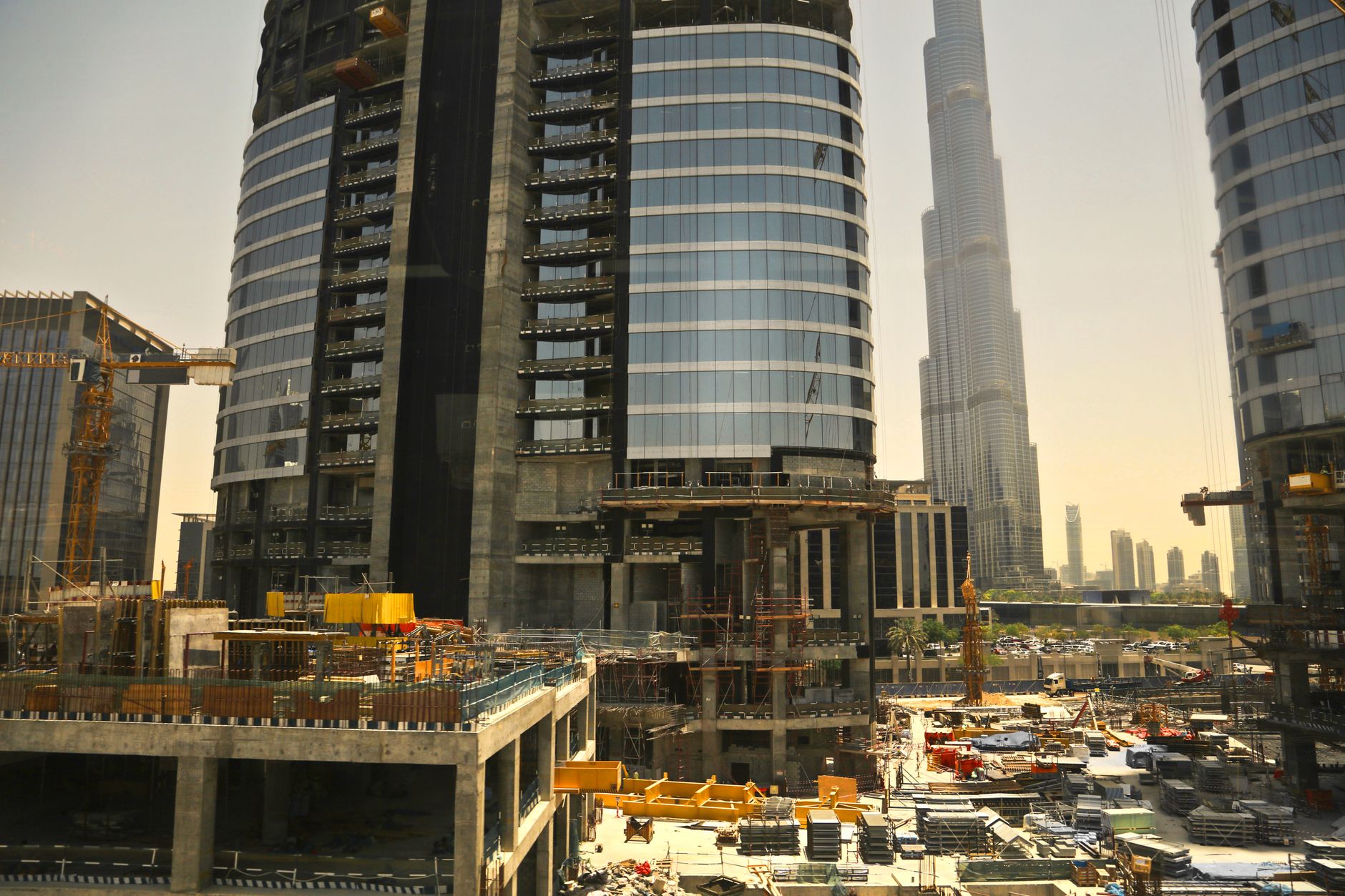
Somewhere between the announcement of a giga project and the first photograph of a gleaming skyline, there is a quieter story. It involves concrete, steel, logistics corridors, and the family-owned contracting groups that make the spectacle possible. As Saudi Arabia accelerates NEOM, as Abu Dhabi layers infrastructure across its industrial zones, and as Qatar solidifies its post-World Cup built environment, the companies moving the most earth and pouring the most foundations are rarely the ones gracing the covers of international business publications. They are, instead, a distinctive cohort of Gulf-rooted contracting giants — many still privately held, many founder-led — whose revenue figures rival mid-cap listed companies but whose names remain largely unfamiliar outside the region's procurement offices and family office boardrooms.
The Scale of What Is Being Built
The numbers are almost difficult to process. Saudi Arabia's Vision 2030 programme encompasses an estimated USD 1.3 trillion in planned infrastructure and development investment. Giga projects alone — NEOM, Red Sea Global, Qiddiya, Diriyah — collectively account for hundreds of billions in construction contracts. The UAE's industrial and logistics masterplan, anchored by Abu Dhabi's Khalifa Economic Zones (KEZAD) and Dubai's expanding free zone ecosystem, represents tens of billions in annual capital expenditure. Qatar, Bahrain, and Oman are running parallel infrastructure cycles. The result is one of the most concentrated construction booms in modern economic history — and private, regionally rooted contractors are executing a substantial portion of it. These are companies that have been building in this environment for decades. That distinction matters.
These are not opportunistic newcomers. Groups such as Saudi Binladin Group, Almabani General Contractors, El Seif Engineering Contracting, Nesma & Partners, and the UAE's Arabtec successor entities carry balance sheets, bonding capacity, and subcontractor networks that took generations to assemble. Several are structured as family holding companies with diversified interests in real estate, manufacturing, and industrial services — private conglomerates, in effect, that happen to lead with construction.
Logistics as the New Infrastructure Frontier
What has shifted in the last eighteen months is the convergence of construction and logistics capital. The clearest signal came in July 2025, when Abu Dhabi sovereign wealth fund ADQ completed its USD 1.2 billion acquisition of Aramex, bringing its combined stake alongside AD Ports Group to 63.16% of the regional courier. That is a significant consolidation. ADQ Deputy Group CEO Mansour AlMulla described the move as "a strategic step toward advancing our vision to build a globally integrated logistics platform anchored in the UAE." Aramex brings more than 60 countries of network reach, 800,000 square metres of warehousing, and a well-established GCC trucking operation — giving ADQ a last-mile and regional distribution capability that slots directly alongside the port, airport, and industrial zone infrastructure already sitting under its umbrella.
For Gulf contracting groups, this has concrete commercial implications. Sovereign capital is aggregating around integrated logistics ecosystems. The contractors best placed to benefit are not simply those with civil construction expertise, but those who can build to industrial specification, manage complex phasing across active port environments, and align with sovereign mandates on timeline and localisation content. The Aramex-ADQ deal is effectively a template: the contractors who serve these ecosystems are being drawn into longer-term, higher-value relationships with state-linked anchors. A transactional vendor relationship is becoming something closer to a structural dependency — and for the right contractor, that is exactly where you want to be.
African Corridors and the Gulf Connection
The strategic logic does not stop at the Arabian Peninsula. Gulf sovereign and private capital is moving aggressively into African infrastructure, and the construction and logistics disciplines refined on giga projects are finding direct application across the continent. On June 25, 2026, Africa Global Logistics — the MSC Group subsidiary operating as AGL — broke ground on a CFA 2.6 billion third-phase expansion of its Kribi Logistics Hub in Cameroon. The facility spans 2.9 hectares and incorporates a 9,000-square-metre warehouse, container yard, weighbridge infrastructure, and a bypass road, with completion targeted for April 2027. AGL Cameroon Managing Director Thibaut Lamé called it the project's "transition into maturity," with Kribi positioned as the logistics gateway connecting Cameroon with Chad, the Central African Republic, and the Republic of Congo.
Few outside the region have paid close attention. They should. This development, alongside the February 2026 launch of the Kribi Port Industrial Zone by a consortium anchored by the Autonomous Port of Kribi, illustrates the speed at which African port-adjacent industrial zones are being formalised. UAE-based contracting groups — particularly those with free zone industrial construction experience — are well-positioned to participate as these corridors scale. Several Abu Dhabi and Dubai contracting families are already exploring joint venture frameworks with African developers. The procurement discipline, phasing management, and specification rigour developed on UAE and Saudi mega-projects translate directly into competitive advantage in emerging market infrastructure delivery. The opportunity is real. The window is early.
The Private Company Advantage in a Sovereign-Dominated Market
There is a structural reason why privately held contracting groups keep outmanoeuvring listed peers on major Gulf projects: decision-making speed and relationship continuity. When a project owner at NEOM or Masdar City needs to modify a scope at short notice, reaching a family principal directly — rather than waiting on a listed company's procurement committee — is commercially meaningful. The difference can be weeks. On a giga project timeline, weeks carry real cost. Several of the region's largest contracting families have built multi-generational relationships with sovereign project offices, relationships that function far more like strategic partnerships than vendor arrangements.
Family offices and private investors have started taking note. A growing number of Gulf and Central Asian family offices are acquiring minority positions in contracting groups as a way of accessing infrastructure-linked revenue streams without the volatility of listed construction equities. The numbers support the interest. EBITDA margins in specialist civil and industrial contracting run between 8% and 14% for well-managed regional groups, with order books extending five to seven years on current project pipelines. Against conventional real estate and private equity allocations, the asset class makes a compelling case — particularly for investors who already have sovereign-adjacent relationships and can conduct proper due diligence on what are, almost universally, opaque private structures.
What Investors and Family Offices Should Watch
The next twelve to eighteen months will separate the contracting groups that have genuinely institutionalised from those still running on founder instinct and relationship capital alone. Watch for three things. First, whether a group has established a dedicated project finance function — not just access to bank facilities, but internal capacity to structure and manage complex financing arrangements. Second, whether it has pursued ISO and international safety certifications that qualify it for World Bank and multilateral-funded projects in Africa and Southeast Asia. Third, and most telling, whether second-generation leadership has formalised governance without destroying the founder-driven agility that made the business competitive in the first place. That last transition is where most family-owned industrial businesses stumble.
For family offices with exposure to Gulf real assets, the contracting sector offers something increasingly hard to find: genuine scarcity value. The combination of bonding capacity, skilled workforce, equipment fleets, and sovereign relationships that defines a Tier 1 Gulf contractor cannot be assembled quickly. It cannot be bought off a shelf. As the giga project cycle moves from design and enabling works into full-scale construction delivery across the coming decade, the privately held groups sitting at the centre of that cycle represent one of the region's most consequential — and least scrutinised — concentrations of private wealth and industrial capability. The smart money is starting to look. Most of the public coverage has not caught up yet.
Written by
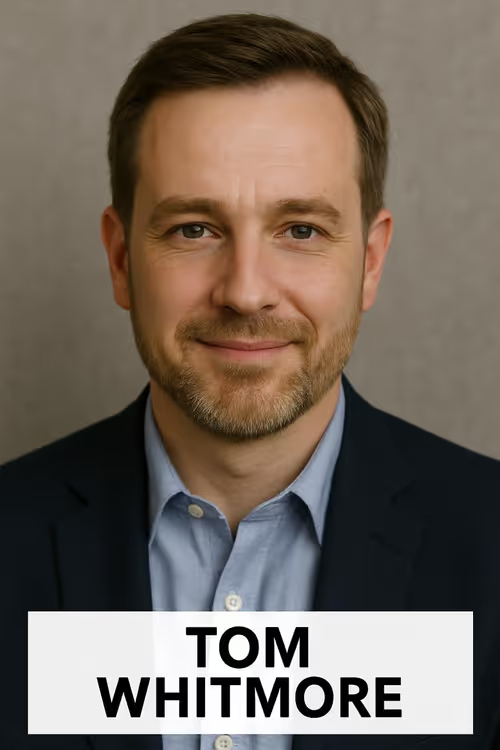
Tom Whitmore
Senior correspondent · Real Estate & Private Companies
Tom has interviewed most of the operators reshaping the Gulf skyline — and a few of the ones who tried and didn't. His beat is real estate, commodities, manufacturing, and the founder-led private companies that never bother to list. He knows which buildings and balance sheets survive a downturn before the spreadsheet does. Based in Dubai. Reach out at tom.whitmore@theplatinumcapital.com.