

The Private Terminal Business: VIP Aviation Services Across the Middle East
The Middle East's private terminal sector has evolved far beyond mere convenience, emerging as a sophisticated infrastructure play where sovereign wealth funds and family offices are quietly acquiring stakes in fixed-base operators from Riyadh to Dubai, drawn by the convergence of surging ultra-high-net-worth travel demand and the region's aggressive aviation liberalization agenda. For discerning capital allocators, the business of seamless skies — purpose-built lounges, dedicated customs channels, and white-glove ground handling commanding premium fees largely immune to commercial aviation cycles — represents one of the Gulf's most defensible and underappreciated yield-generating asset classes.…

Anyone who has moved serious capital knows the moment. The commercial terminal becomes untenable — the queues, the exposure, the erosion of time. For the genuinely wealthy, these are not inconveniences. They are operational liabilities. Across the Gulf and wider Middle East, a sophisticated ecosystem of private terminal operators, FBO networks, and VIP aviation service providers has quietly matured into one of the region's most strategically valuable luxury infrastructure plays. In 2026, with regional aviation traffic surging and a new class of ultra-high-net-worth traveller emerging from Saudi Arabia, the UAE, and beyond, that ecosystem is attracting serious money.
The Architecture of Discretion
Private terminal operations in the Gulf occupy a distinct position in the luxury services market. Unlike a five-star hotel or a superyacht charter — both of which carry visible prestige markers — the private terminal business sells something far more prized among UHNW individuals: invisibility combined with velocity. At its highest tier, this means arriving by vehicle directly onto the apron, completing formalities in under eight minutes, and boarding without a single member of the general public witnessing the movement. Dubai, Riyadh, Doha, and Abu Dhabi have each invested heavily in this infrastructure. The competition between them has driven standards upward at pace.
Dubai Airports' Al Majlis terminal at Dubai International remains the region's most recognised ultra-private arrival and departure facility, processing an estimated 60,000 to 70,000 VIP movements annually. Across the city at Al Maktoum International — the airport around which Dubai's next chapter of aviation infrastructure is being built — new FBO capacity is being developed to serve the ultra-private segment as EXPO-era visitor patterns harden into permanent demand. In Abu Dhabi, Jetex and Jetaviation both operate full-service FBOs at ADNEC-adjacent facilities, competing directly for the government delegation and family office principal market that the capital continues to attract.
Saudi Arabia: The Market Everyone Is Watching
No development in regional private aviation carries more long-term weight than what is happening in Saudi Arabia right now. The Kingdom's Vision 2030 agenda has generated not only new airports — Riyadh's King Salman International, when complete, will rank among the largest in the world — but an entirely new domestic UHNW class with genuine appetite for private aviation. Saudi private jet movements grew by an estimated 34 percent between 2022 and 2025. That trajectory shows no sign of decelerating.
The appetite is real. The infrastructure is still catching up. At King Khalid International in Riyadh and King Abdulaziz International in Jeddah, VIP terminal operations have historically been managed with a degree of opacity that international operators find challenging to work within. That is now changing. Jetex — a Dubai-headquartered FBO and private aviation services group — has been expanding aggressively into the Saudi market, as have regional competitors positioning themselves ahead of what industry insiders estimate could be a doubling of private terminal capacity requirements in the Kingdom by 2028. Few outside the sector have fully registered the scale of that number. They should.
The April 2026 announcement from PIF Governor Yasir Al-Rumayyan adds another layer to this. His confirmation that the Public Investment Fund is repositioning priorities — with AI infrastructure taking precedence over large-scale tourism megaprojects, including elements of NEOM — does not diminish private aviation demand. If anything, a recalibrated NEOM programme that moves more slowly on the tourism side may accelerate the need for efficient private terminal infrastructure connecting Riyadh and Jeddah to international business hubs. The Kingdom's relationship with foreign capital is becoming more operationally intensive and less ceremonially driven. That shift has real implications for how — and where — executives and principals move.
The Superyacht Convergence and Multi-Modal Wealth Infrastructure
The wealthiest families no longer think in single-modality terms. A private jet arrival into a Gulf hub is frequently the first leg of a journey that continues by tender to a superyacht, or by helicopter to a coastal estate. This is one of the more consequential trends reshaping Gulf luxury services — the increasing convergence between private aviation terminals and superyacht marina infrastructure.
NEOM's Sindalah Island is the most ambitious expression of this logic in the region. An 86-berth superyacht marina — capable of hosting vessels up to 75 metres and designed by Italian naval architect Luca Dini — sits at the centre of what is positioned as the Gulf's most complete luxury maritime destination when it opens in late 2026. The $4 billion that Sindalah has consumed to date — roughly triple initial projections — reflects the true cost of building multi-modal luxury infrastructure from scratch in a remote Red Sea location. That is a significant number. It is also, for the right operators, a signal.
For private terminal operators watching from Dubai and Riyadh, Sindalah's eventual opening creates immediate demand for dedicated VIP air links between the island's helipad facilities and major GCC gateways. Several regional FBO operators are already in preliminary discussions about preferred service agreements with Sindalah's hospitality management teams. The families who berth there will not arrive through commercial channels. Somebody will service that movement. The question is who.
Capital Interest and the Investment Thesis
Private terminal and FBO businesses are showing up on Gulf family office deal screens as direct investment targets — not merely as service providers. The economics hold up under scrutiny. High barriers to entry through slot access, regulatory approvals, and airport authority relationships. Recurring revenue from handling fees and fuel uplift. A client base that is structurally price-insensitive. EBITDA margins at well-operated FBOs in premium Gulf locations run between 22 and 30 percent, according to industry participants. In a region where family offices are actively hunting yield from hard asset businesses, those figures command attention.
The model is not without complexity. Airport authority concession structures across the GCC vary significantly, and political relationships remain as important as operational excellence in determining who wins — and retains — FBO licences at the most coveted terminals. Operators without established local partnerships have found the Saudi market particularly demanding to penetrate at the tier required to serve government-adjacent traffic. This is not a market that rewards the impatient or the under-connected.
The Next Generation of Private Terminal Demand
Three forces will shape the private terminal business across the next 24 to 36 months. The first is the continued growth of the Saudi UHNW population and its demand for seamless intra-Gulf and international private travel. The second is the opening of new luxury destination infrastructure — Sindalah among them — and the kind of landmark residential development that signals permanent wealth concentration, such as Arabian Acres' recent AED 400 million beachfront land acquisition in Dubai's Jumeirah Coastline, the emirate's largest residential land transaction to date. The third, and perhaps least discussed, is the rising cohort of Central Asian and African UHNW families — from Kazakhstan, Nigeria, and Egypt in particular — who are routing both capital and travel through Gulf hubs as their primary international nexus.
For family offices evaluating the sector and for UHNW individuals who have come to regard private terminal access as a basic operating requirement, the message from the Gulf in 2026 is consistent: this infrastructure is being built with permanence in mind. The private terminal business will scale across the region. That much is settled. The only open question is who owns it when it does.
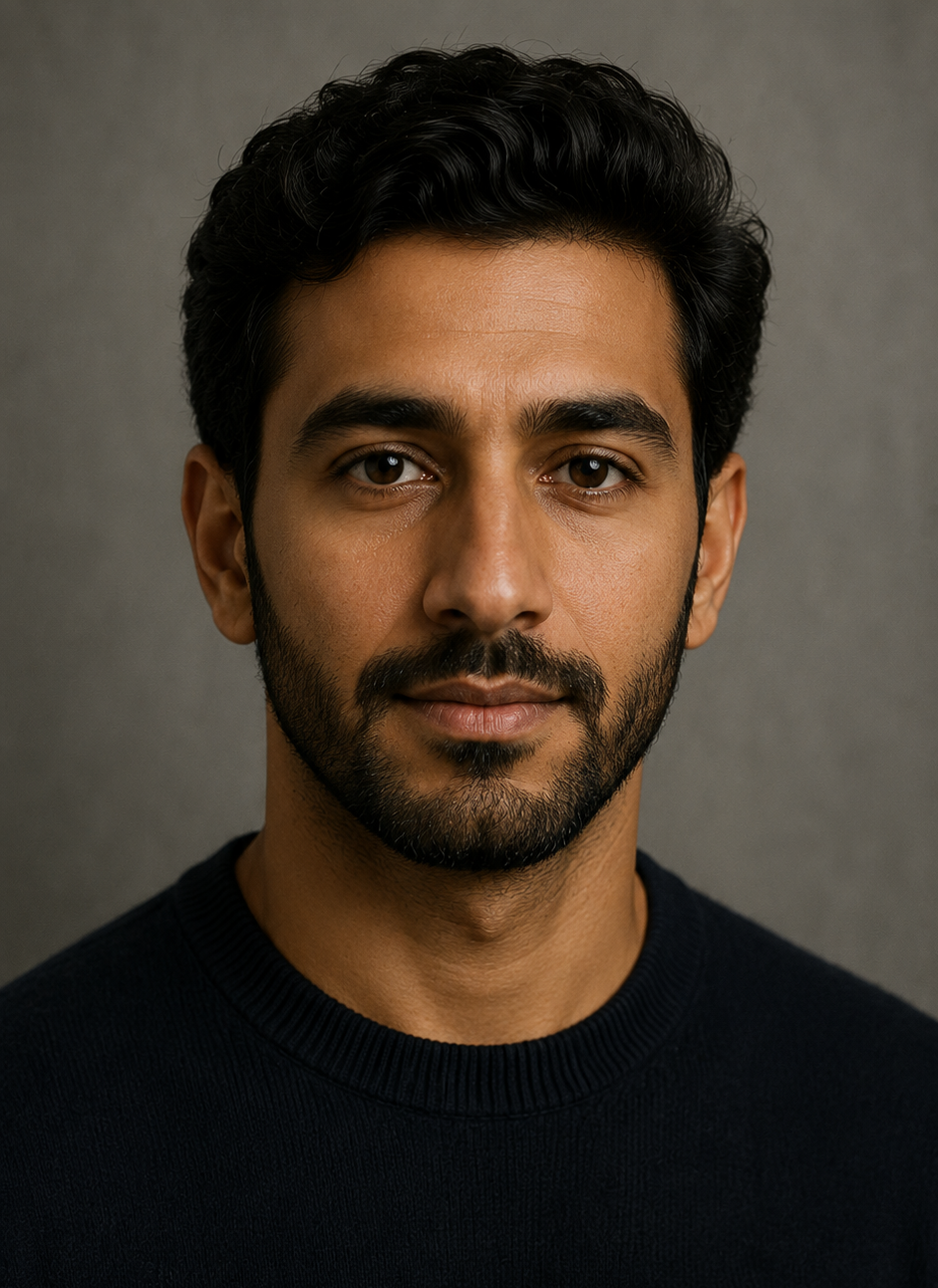
Written by
Khalid Al-Rashidi
Gulf & Middle East Correspondent · Emerging & Strategic Wealth
Khalid covers the family offices, luxury operators, and strategic capital moving across the GCC and wider Arab world — often before the rest of the region notices. He's spent years tracking how Gulf wealth structures itself for the next generation, from residency programmes to private aviation. Based between Dubai and Riyadh. Reach out at khalid.al-rashidi@theplatinumcapital.com.