

Vietnam Banking Modernisation and the Foreign Capital Arriving
Vietnam's banking sector is undergoing a structural transformation of rare magnitude, as sweeping regulatory reforms and accelerating digital infrastructure investment position the country as Southeast Asia's most compelling frontier opportunity for sophisticated capital deployment. Foreign institutional investors and family offices are moving decisively to establish early positions, recognising that the convergence of a young consumer base, rising middle-class wealth, and state-backed modernisation creates a generational entry point into one of the region's last underbanked markets of genuine scale.…
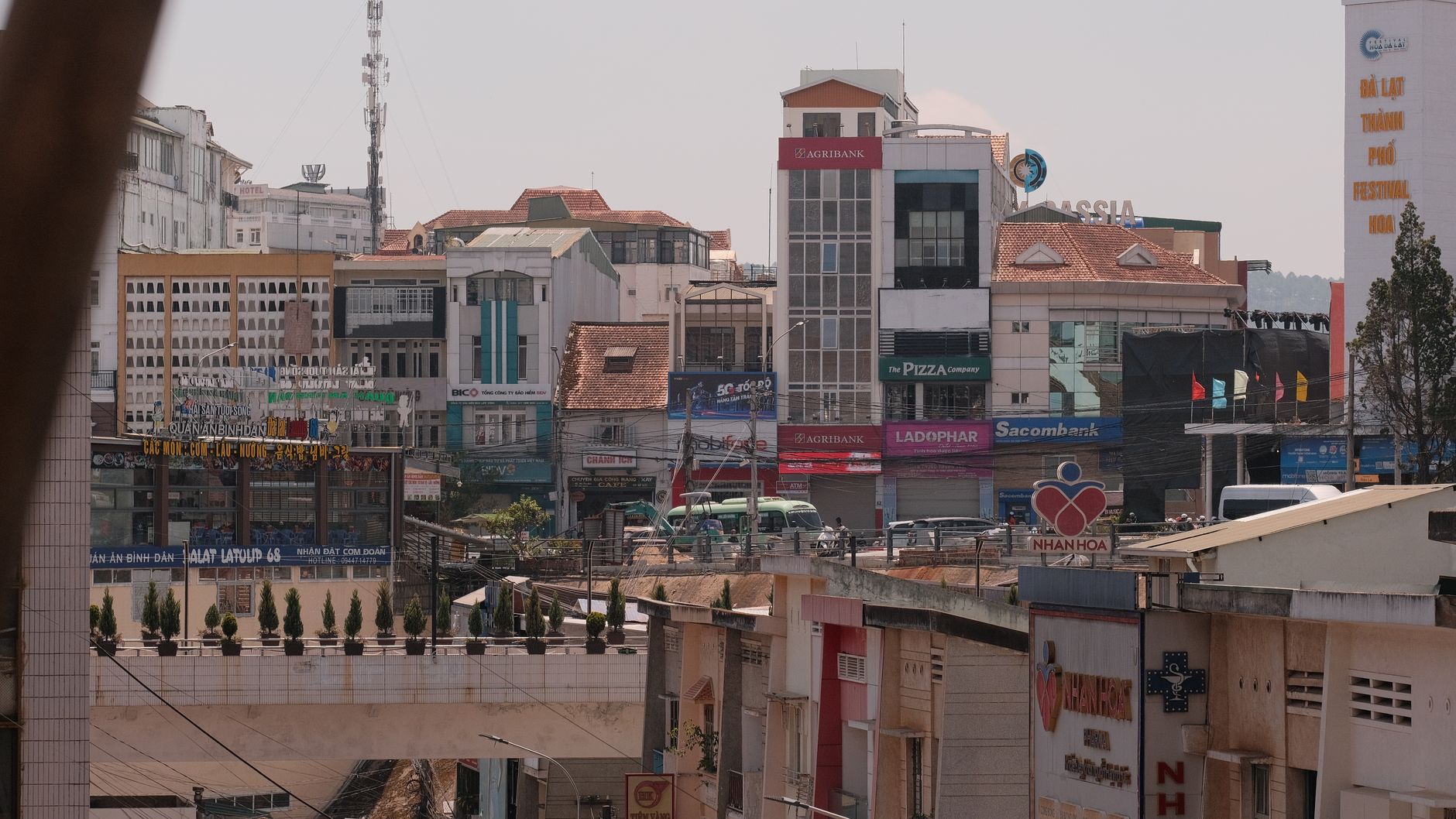
Vietnam's banking sector is quietly becoming one of the more serious emerging market investment stories in Asia — and sovereign wealth funds, family offices, and private capital from the Gulf, Central Asia, and Southeast Asia are starting to pay attention. After years of grinding internal work — clearing non-performing loans, recapitalising state-owned lenders, rebuilding payment infrastructure from the ground up — Vietnamese banks have arrived at an inflection point. Foreign capital is now arriving with conviction, and the institutions receiving it are growing bolder by the quarter.
A System Built for the Next Decade
Vietnam runs a commercial banking system of over 30 lenders, anchored by state-owned giants Vietcombank, BIDV, and VietinBank, which together hold the dominant share of system assets. Over the past three years, the State Bank of Vietnam has pushed hard on credit quality — pressuring lenders to cut NPL ratios, tighten provisioning, and move faster on digital infrastructure. The results show. Vietcombank, the system's most profitable institution, posted a return on equity above 20% in 2025. That figure holds up against Malaysia, Indonesia, and the Philippines without apology. For investors hunting yield in emerging markets, that kind of performance is hard to walk past.
The SBV has kept policy broadly accommodative even as global rates stayed elevated. With the US Federal Reserve holding rates steady into 2026 — a posture mirrored across GCC central banks, including SAMA's repo rate sitting at 4.25% following its December 2025 cut — Vietnamese monetary authorities had room to prioritise credit expansion over inflation control. The SBV's benchmark refinancing rate was cut multiple times through 2023 and 2024. Lending rates have stayed suppressed relative to the country's growth trajectory, which has delivered attractive net interest margins to well-capitalised domestic banks. That is not an accident. It is a policy choice, and it has worked.
Foreign Stakes and Strategic Partnerships
Foreign capital enters Vietnamese banking through a structured but constrained channel. Aggregate foreign ownership in any commercial bank is capped at 30%, with a single strategic investor limited to 15%. Those restrictions have historically cooled enthusiasm from large institutional buyers seeking controlling positions. But within those limits, deal flow has accelerated sharply.
The transaction that changed the conversation happened in late 2024. Japan's SMBC Group committed USD 1.5 billion to VPBank — one of Vietnam's most aggressively expanding private lenders — for a 15% stake. At the time, it was the largest single foreign banking investment in Vietnam's history. The message to the broader investor community was clear: the sector could absorb large, strategic capital at credible valuations. SMBC's move was part of a wider Japanese push into Southeast Asian banking — MUFG and Mizuho already hold positions across the region — but its scale set a new benchmark.
Gulf institutions have been watching. Family offices in Dubai and Abu Dhabi, many managing capital generated from the extraordinary profitability of UAE banking — the country's five largest banks recorded combined net profit of AED 38.1 billion in H1 2026, up 7.8% year-on-year — are actively evaluating Southeast Asian banking exposure as part of broader diversification mandates. Vietnam keeps coming up in those conversations. The demographic profile, the urbanisation rate, the under-penetrated retail banking market — it checks the right boxes.
Digital Banking and the Fintech Infrastructure Shift
The structural story inside Vietnamese banking that deserves the most attention is digital adoption — not as a talking point, but as a revenue driver. Vietnam has one of Southeast Asia's highest smartphone penetration rates. Mobile banking transaction volumes grew by over 50% year-on-year in 2024. The SBV's National Financial Inclusion Strategy has explicitly targeted the unbanked population — estimated at around 40% of adults as recently as 2022 — through digital account opening, QR payment infrastructure, and interoperable payment rails. The plumbing is being built at speed.
Techcombank and MB Bank have separated themselves from the pack in this transition. Both have invested heavily in data infrastructure, API banking, and non-branch customer acquisition. Techcombank's partnership model — embedding financial services within Vietnam's largest property developer ecosystems — has been particularly effective. Gulf investors familiar with the cross-selling and bancassurance strategies that have defined Emirates NBD or Mashreq's digital evolution will recognise the playbook immediately. It works here too.
Singapore-based venture funds and several Korean strategic investors have already moved capital into adjacent payment and lending infrastructure companies. For private investors who find the formal banking equity caps too restrictive, those adjacent fintech positions offer real exposure to Vietnam's credit growth story with considerably more flexible ownership structures. Few outside the region have explored this angle seriously. They should.
Credit Growth, Consumer Finance, and the SME Opportunity
Vietnam's loan-to-GDP ratio has expanded fast over the past decade and now sits among the highest in ASEAN, approaching 130%. The SBV has periodically applied credit growth caps — typically between 14% and 15% annually — to manage overheating risk, particularly in real estate lending. Those guardrails are real. But the consumer finance and SME segments remain structurally under-served relative to what the economy actually needs.
Home Credit Vietnam, FE Credit — now partly owned by SMBC — and a growing cluster of licensed consumer finance companies have moved quickly to fill the gap between formal banking and informal credit markets. The returns in this segment are not subtle. Net interest margins in excess of 15% remain achievable for well-managed portfolios. That is a figure that stops conversations in Gulf and Central Asian investment offices, where domestic market saturation has compressed equivalent returns well below that level.
The numbers tell a complicated story for Kazakhstani and Uzbekistani financial groups in particular. Many of them have spent the past decade building high-volume, technology-enabled small-ticket lending operations across Central Asia — exactly the model that consumer finance in Vietnam demands. They are operationally better positioned to execute here than most Western peers. Whether they move fast enough to capture the opportunity is a different question.
What Sophisticated Investors Should Watch
Three variables will determine the near-term trajectory of Vietnamese banking as an investment destination. First, the pace at which the SBV liberalises foreign ownership caps — signals from Hanoi in 2025 pointed to cautious openness around raising thresholds for specific banks under recapitalisation pressure, which would unlock a category of control-oriented investment that is currently off the table. Second, the government's appetite to accelerate equitisation of remaining state-owned bank stakes. Third, the trajectory of domestic real estate credit, which carries embedded risk inside several mid-tier lender balance sheets. That last variable warrants careful scrutiny before any commitment.
For Gulf sovereign wealth funds, private investors managing capital above USD 50 million, and family offices with existing Southeast Asia allocations, this is no longer a market for passive observation. The capital arriving in Vietnam's banking sector today is establishing relationships, valuations, and deal access that will define the next decade. What gets built now determines who gets the call later.

Written by
Amelia Rowe
Senior correspondent · Banking & Economy
Amelia spent eight years inside a sovereign wealth fund before deciding she'd rather write about institutional money than allocate it. She covers central banking, insurance, and the macro decisions that quietly choose which markets get the next decade. Sharp on monetary policy; impatient with anyone who confuses noise with signal. Based in London. Reach out at amelia.rowe@theplatinumcapital.com.