
Africa Agribusiness Champions Scaling Across Borders
Africa's most formidable agribusiness operators are no longer content with domestic dominance, deploying sophisticated cross-border expansion strategies that are quietly reshaping regional food systems and generating the kind of durable, inflation-resistant returns that institutional capital has historically struggled to access on the continent. For discerning investors and sovereign stakeholders seeking meaningful exposure to Africa's USD 1 trillion agricultural opportunity, understanding which private champions possess the operational discipline and market intelligence to scale beyond borders is no longer a matter of curiosity — it is a matter of strategic urgency.…
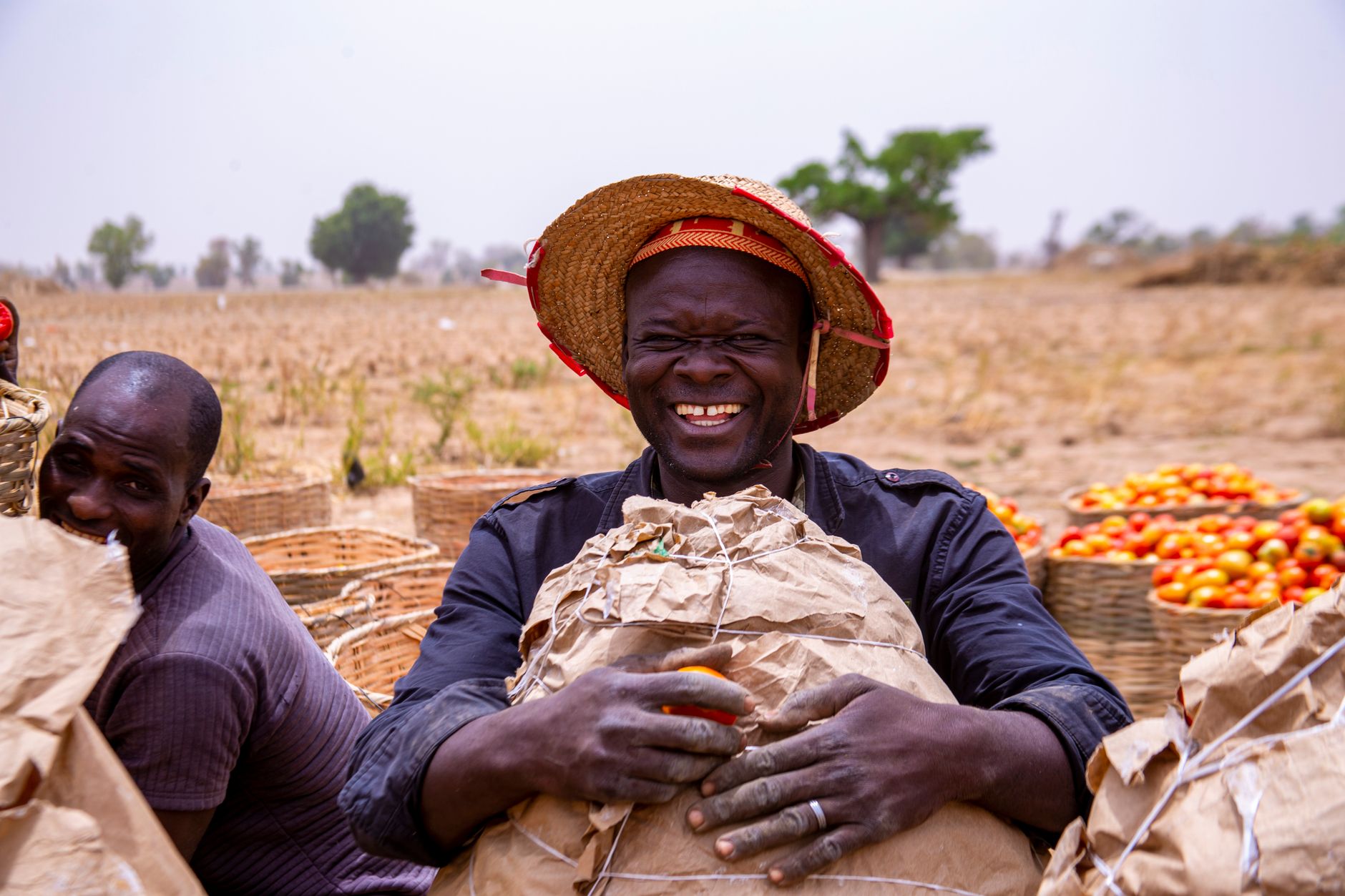
Across sub-Saharan Africa, something significant is happening in the fields, processing plants, and cold storage facilities that feed a continent of 1.4 billion people. A generation of founder-led agribusiness companies — many built over decades with limited access to international capital — are now scaling aggressively across borders, pulling in institutional attention, and repositioning Africa not merely as a raw commodity supplier but as a serious processor, exporter, and food systems innovator. The timing is not accidental. Institutional capital is following deepening logistics infrastructure southward, and the conditions for transformative scale have, finally, arrived.
The Founders Building at Scale
The most consequential agribusiness growth in Africa today is not happening inside listed conglomerates. It is happening inside privately held, founder-led businesses that have survived currency shocks, infrastructure failures, and policy reversals that would have broken lesser operators. Few outside the region have noticed. They should.
Companies such as Tolaro Global in Benin — which has built one of West Africa's most sophisticated cashew processing operations — and Export Trading Group, the Tanzania-headquartered commodities powerhouse with origination assets spanning more than a dozen African markets, represent a model of patient, operationally intensive value creation that mainstream financial media rarely registers. Family offices and development finance institutions that have tracked African agriculture closely for years know these names well. Everyone else is catching up.
In Nigeria, private agribusiness players are contending with structural reforms that have simultaneously squeezed short-term margins and cracked open long-term opportunity. The removal of fuel subsidies and naira liberalisation — brutal in execution — have rebalanced the economics of domestic processing versus raw export, creating real incentives for companies willing to invest in value addition. Founders who held their nerve through 2023 and 2024 are now watching downstream margins improve as the cost of importing processed alternatives rises sharply. That is a meaningful shift in competitive positioning.
Logistics as the Unlocking Variable
No agribusiness story in Africa is complete without confronting logistics. And 2026 has delivered some of the most significant infrastructure signals in years.
In February, A.P. Moller Capital held a final close on APM Capital Morocco Fund at MAD 2.24 billion — approximately $243 million — making it one of the largest private capital pools ever dedicated specifically to Morocco's transport and logistics sector. The Mohammed VI Investment Fund anchored the raise alongside leading Moroccan and foreign institutional investors. CEO Ghislane Guedira runs the operation on the ground through APM Capital Morocco S.A., and the fund carries an active pipeline spanning cold storage, air cargo handling, and third-party logistics — precisely the infrastructure that agribusiness exporters need to move perishable and semi-processed goods into European and Gulf markets at competitive cost.
The significance extends well beyond Morocco. This is institutional-grade logistics capital flowing into African markets with the seriousness and structure previously reserved for Southeast Asia or Eastern Europe. For agribusiness founders attempting to scale across borders, reliable cold chain and last-mile distribution have historically been the hard ceiling on ambition. That ceiling is beginning to lift.
Gulf Market Access: A Strategic Priority
The GCC remains one of the most underexploited export destinations for African agribusiness operators. The numbers tell a complicated story. Food import bills exceed $50 billion annually across the bloc, and national food security agendas are now written into the economic visions of Saudi Arabia, the UAE, and Qatar. The appetite for reliable African supply partnerships is not theoretical — it is acute, and it is funded.
Several African agribusiness founders have quietly built trading relationships with Gulf-based family offices and sovereign-linked entities over the past three years, structuring offtake agreements that provide the revenue visibility needed to justify processing plant expansions back home. These are not exploratory conversations. Deals are getting done.
The infrastructure investment flowing into Saudi Arabia sharpens the opportunity further. ASMO — the joint venture between Saudi Aramco and DHL — broke ground in May 2026 on a 1.4 million square metre logistics hub at King Salman Energy Park, including 43,000 square metres of temperature-controlled Grade-A warehouse space and dedicated chemical storage. As Saudi Arabia builds a logistics spine capable of handling complex, temperature-sensitive supply chains at volume, the practical barriers for African exporters shipping into the Kingdom shrink meaningfully. Agribusiness founders investing now in certification, food safety standards, and logistics partnerships will be the ones holding offtake relationships when this infrastructure comes fully online between 2027 and 2030. Everyone else will be knocking on a closed door.
Capital Structures Evolving to Match Ambition
The financing available to African agribusiness champions has matured considerably. Development finance institutions — the IFC, British International Investment, and the African Development Bank — remain active, but they are increasingly joined by Gulf sovereign wealth vehicles, Moroccan institutional funds, and a growing cohort of family offices from Nigeria, Kenya, South Africa, and Egypt deploying capital into agriculture as both a returns play and a generational asset. Blended finance structures, where concessional capital from development lenders absorbs first-tranche risk for commercial investors, have become the preferred architecture for deals above $20 million in the sector.
In East Africa, several Kenyan agribusiness groups have accessed this expanded capital stack to fund cross-border expansion into Ethiopia, Uganda, and Rwanda — markets where land availability, water resources, and growing urban middle classes create compelling fundamentals. Deal sizes remain modest by global standards, typically ranging from $15 million to $80 million. But the operational complexity and strategic positioning embedded in these transactions is anything but modest. Founders who built these businesses understand supply chain risk, climate variability, and regulatory negotiation at a depth that purely financial buyers simply cannot replicate. That matters when things go wrong — and in African agriculture, things occasionally go wrong.
What Sophisticated Investors Should Watch
For family offices and private investors tracking African agribusiness, the most actionable reading of 2026 is this: three forces are converging simultaneously. Institutional logistics capital is arriving at scale. Gulf food security spending is creating durable, policy-backed demand. And a generation of operationally proven founders is actively seeking growth capital — not exits. This combination has historically preceded significant value creation in emerging market agriculture. It happened in Southeast Asia through the 1990s. It happened in Brazil through the 2000s. The pattern is recognisable to anyone who has seen it before.
The businesses worth examining most closely carry integrated models — origination, processing, and distribution under a single ownership structure — and operate in markets where regulatory frameworks have stabilised enough to support long-term planning. Morocco, Kenya, Ghana, Côte d'Ivoire, and Egypt present the most credible near-term entry points. Founders in these markets are not looking for passive capital. They want partners with networks, market access, and the patience to grow alongside businesses that have already proven they can absorb the worst and keep building. At this moment in the continent's development, that combination of resilience and ambition is genuinely rare. Rare, and worth paying attention to.
Written by
Tom Whitmore
Senior correspondent · Real Estate & Private Companies
Tom has interviewed most of the operators reshaping the Gulf skyline — and a few of the ones who tried and didn't. His beat is real estate, commodities, manufacturing, and the founder-led private companies that never bother to list. He knows which buildings and balance sheets survive a downturn before the spreadsheet does. Based in Dubai. Reach out at tom.whitmore@theplatinumcapital.com.