
UAE Food and Beverage Groups Feeding the Region
The UAE's most ambitious food and beverage conglomerates are quietly reshaping the region's consumer landscape, deploying capital across verticals that span farm-to-table supply chains, premium dining concepts, and large-scale distribution networks that extend from the Levant to Sub-Saharan Africa. For discerning investors and sovereign wealth strategists, these privately held groups represent one of the Gulf's most compelling long-term plays, combining resilient domestic demand with the structural tailwinds of a region adding 50 million middle-class consumers by 2035.…

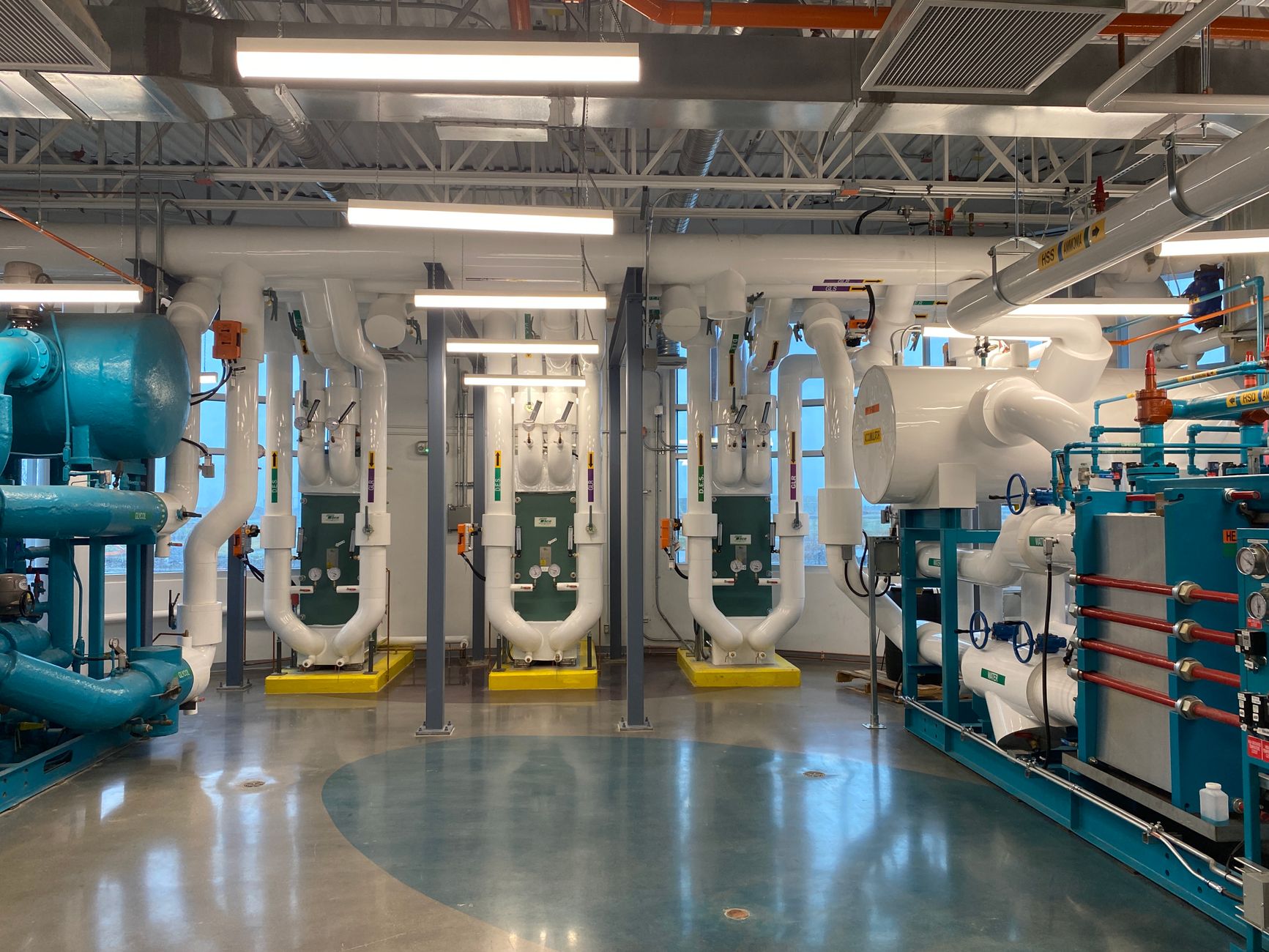
From the cold storage facilities of Abu Dhabi's Khalifa Economic Zones to the distribution corridors stretching toward East Africa and the Levant, the UAE's food and beverage sector is changing — quietly, consequentially, and largely off the radar of the international financial press. The country's private F&B groups — family-founded, owner-operated, and deliberately low-profile — are becoming serious regional forces, supplying supermarket chains, hotel groups, quick-service restaurant networks, and government food security programmes across more than thirty markets. What began as a logistics story has become a capital story.
A Region That Cannot Afford to Get Food Supply Wrong
The GCC imports approximately 85 percent of its food requirements. That single statistic has pushed billions of dirhams into cold-chain infrastructure, food manufacturing, and distribution networks over the past decade — and the pace is accelerating in 2026. The UAE sits at the centre of this effort, functioning simultaneously as a production hub, a re-export gateway, and a proving ground for the region's most ambitious food businesses. For private investors and family offices evaluating the sector, the question is no longer whether demand exists. It is which operators have built the supply chain depth to capture it at scale.
Recent infrastructure moves have sharpened the competitive picture considerably. In January 2026, AD Ports Group completed the AED 295 million sale of KEZAD Logistics Park to Mair Group — a transaction that signals how aggressively asset-heavy logistics real estate is being repriced in Abu Dhabi. Separately, Agility Logistics secured a significant investment to develop a new multi-commodity bonded warehouse complex at Jebel Ali Free Zone, infrastructure that directly benefits perishable goods operators moving product across the Gulf and into Africa. These are not incidental developments. They are the hard backbone on which the UAE's most ambitious F&B groups are building their next phase of growth.
The Manufacturers Moving Quietly Upstream
Several UAE-based F&B manufacturers have spent the past three years methodically expanding production capacity while most of the financial media looked elsewhere. Operators across dairy processing, frozen foods, packaged snacks, beverages, and halal-certified meat products have added production lines, extended shelf-life capability through modified atmosphere packaging, and invested in proprietary cold-chain fleets. The result is a cohort of mid-market manufacturers generating between AED 200 million and AED 2 billion annually — most of them privately held, none of them obligated to disclose a word of it.
What separates the strongest operators is vertical integration. Those who control their own procurement — working directly with suppliers in Morocco, India, Pakistan, and increasingly Kazakhstan and Uzbekistan — have insulated themselves from the margin compression that has squeezed more dependent players. Central Asia, in particular, has emerged as a meaningful sourcing corridor. Uzbekistan's agricultural exports to the Gulf have grown substantially since 2022, and UAE-based buyers with established relationships in Tashkent and Almaty are capturing price advantages that newer entrants simply cannot replicate. Few outside the region have noticed. They should.
Distribution as the Defining Competitive Edge
Manufacturing quality matters. But in this region, distribution is the moat. The UAE companies generating the most durable returns have invested in last-mile and cross-border distribution infrastructure rather than farming that function out to third-party logistics providers. This matters acutely in Saudi Arabia, where February 2026 saw CJ Logistics launch a global distribution centre in Riyadh's Special Integrated Logistics Zone — handling more than 20,000 parcels daily — and SISCO complete its SAR 230 million acquisition of Transcorp to strengthen cold-chain and last-mile warehousing. The Saudi market is consolidating rapidly around operators with genuine infrastructure. UAE-based F&B groups running their own distribution arms in the Kingdom are in a categorically different position from those relying on shared networks.
Beyond Saudi Arabia, the African corridor is gaining urgency. Africa Global Logistics announced plans in May 2026 to invest nearly €1 billion in logistics infrastructure this year. Deputy CEO Mohamed Diop, speaking at Biashara Afrika 2026 in Lomé, identified three critical gaps holding the continent back: underdeveloped inland corridors, absent multimodal infrastructure near farming regions, and limited digital tracking for perishable cargo. An MOU with AfCFTA Secretary-General Wamkele Mene followed shortly after, aimed at advancing intra-African trade facilitation. For UAE food groups already active in Egypt, Kenya, and Nigeria, that infrastructure spend translates directly into lower costs and reduced risk when serving those markets at volume. That is a significant shift.
The Family Office Opportunity Within the Sector
Gulf family offices — and those elsewhere evaluating the region — tend to misread this sector. These are not high-growth technology businesses with uncertain unit economics and a hope story. They are asset-intensive, cash-generative operations with established customer relationships, recurring revenue from institutional buyers — hotel groups, airline caterers, government food programmes — and real barriers to entry built from regulatory approvals, cold-chain assets, and hard-won supplier contracts. Well-run operators achieve EBITDA margins in the 12 to 18 percent range. Several of the region's more sophisticated family offices have been quietly building minority positions in such businesses over the past 24 months.
The valuation entry point remains attractive relative to comparable businesses in Europe and North America. A UAE-based halal food manufacturer supplying five GCC markets with AED 500 million in annual revenue and owned cold-chain capacity might transact at six to eight times EBITDA in a private deal — a meaningful discount to what equivalent businesses command in developed markets. The numbers tell a complicated story, and strategic acquirers from Southeast Asia and South Korea have already read it. CJ Logistics' expanding Gulf footprint is one illustration. Private investors who move ahead of that consolidation wave will likely find themselves very well placed.
What the Next Three Years Will Determine
The UAE F&B groups with genuine regional ambition face a clear near-term test: whether they can convert domestic operational excellence into exportable systems that work across radically different regulatory environments — from Morocco's evolving food standards to Indonesia's halal certification requirements. Those that succeed will increasingly resemble regional platforms rather than national operators. The capital required to reach that scale — estimated at between AED 150 million and AED 500 million for leading mid-market players — will almost certainly come from private equity and family office co-investment rather than public markets. The companies worth watching are not the ones announcing the loudest expansion plans. They are the ones that have already moved product quietly, built the cold chain, and are simply waiting for the right partner to accelerate what they have already proven works.

Written by
Tom Whitmore
Senior correspondent · Real Estate & Private Companies
Tom has interviewed most of the operators reshaping the Gulf skyline — and a few of the ones who tried and didn't. His beat is real estate, commodities, manufacturing, and the founder-led private companies that never bother to list. He knows which buildings and balance sheets survive a downturn before the spreadsheet does. Based in Dubai. Reach out at tom.whitmore@theplatinumcapital.com.