
Saudi Family Trading Houses Entering New Industries
Saudi Arabia's most influential family trading houses are quietly reshaping the Kingdom's economic landscape, deploying generations of accumulated capital and institutional relationships into sectors far beyond their traditional strongholds in construction materials, consumer goods, and industrial distribution. As Vision 2030 unlocks unprecedented opportunities across technology, healthcare, logistics, and renewable energy, these dynasties are leveraging their deep government ties and vast balance sheets to position themselves at the center of the next phase of Saudi Arabia's transformation.…
For generations, Saudi Arabia's great trading families built their fortunes on agency agreements, import distribution, and construction contracts tied to the Kingdom's oil-fuelled expansion. That era is not ending — it is evolving. Across Riyadh, Jeddah, and the Eastern Province, a quiet but decisive shift is underway as established family trading houses redirect capital, management talent, and decades of relationship equity into sectors their founders never anticipated: logistics infrastructure, manufacturing, agri-processing, and industrial technology. This transformation is neither accidental nor reactive. It is strategic, generational, and — for those watching closely — one of the most significant private capital stories in the Gulf today.
The Catalyst: Vision 2030 Creates Industrial White Space
Saudi Vision 2030 has done something that mainstream financial coverage has consistently underplayed: it has created legitimate, government-backed demand for private sector participation in industries that were previously either state-dominated or simply nonexistent at scale. Non-oil GDP now accounts for approximately 52% of the Kingdom's economic output. The National Industrial Development and Logistics Programme has committed to attracting over $430 billion in industrial investment by 2035. That is not a rounding error.
For family trading houses — many of which already hold long-standing relationships with government ministries, royal establishments, and international principals — this is not an abstract policy target. It is a direct commercial invitation. Families that once earned their margins distributing foreign goods are now positioning themselves as the manufacturers, operators, and logistics owners that Vision 2030 explicitly requires. The regulatory architecture has aligned with their ambitions at precisely the moment the next generation is ready to lead. The timing is not coincidental.
Logistics: Infrastructure Spending Opens Private Entry Points
The logistics sector offers the clearest read on where Saudi family capital is moving. Saudi Arabia Railways reported a record 30 million tonnes of freight transported in 2025 — up from approximately 24 million tonnes in 2023 — eliminating two million truck journeys from Saudi roads in the process. In April 2026, SAR announced five new freight logistics corridors linking Arabian Gulf ports with central and northern Saudi Arabia and extending through to the Red Sea, with an ambition to move freight-equivalent containers through the Kingdom's ports within a 36-hour transit window.
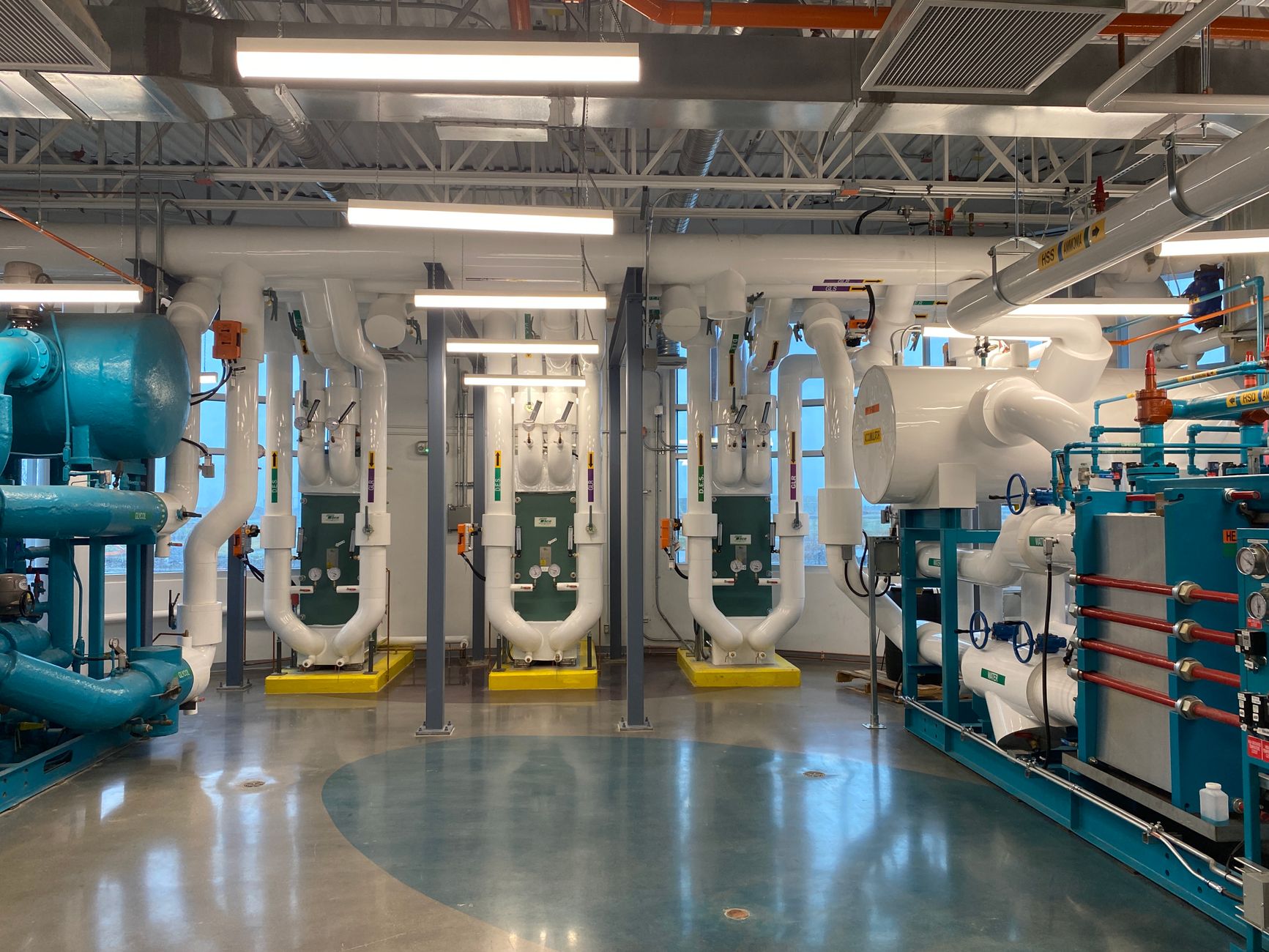
That state-scale infrastructure commitment creates a downstream ecosystem of warehousing, last-mile delivery, cold chain management, and freight brokerage that private operators are positioned to capture. Several established Saudi trading families — operating through private holding structures that rarely attract public attention — have been acquiring or establishing licensed logistics subsidiaries to serve the industrial and mining sectors feeding these new corridors. Few outside the region have noticed. They should.
The ADQ acquisition of Aramex in a $1.2 billion deal in July 2025 sent a clear signal to regional family capital: logistics consolidation is investable, institutional, and strategically valued. For families with existing fleet assets, bonded warehouses, or port agency relationships, that message landed hard.
Manufacturing: From Distributor to Domestic Producer
The transition from trading to manufacturing is not simple. It demands patient capital, operational expertise, and tolerance for longer payback horizons than import margins typically require. And yet a growing number of Saudi family groups are making precisely this move — often through joint ventures with Asian and European manufacturers seeking local production partners to comply with Saudi content requirements.
The Kingdom's In-Kingdom Total Value Add programme and the local content mandates embedded in Vision 2030 procurement rules have structurally advantaged those who manufacture locally over those who simply import. That is a significant shift. Family-owned groups across industrial packaging, building materials, food processing, and electrical components are establishing production facilities in the Special Economic Zones at NEOM, Ras Al-Khair, and Jazan — locations where land costs, utilities incentives, and export access are engineered to make domestic manufacturing competitive.
This is not a pivot driven by patriotism. It is driven by margin logic. Locally produced goods increasingly attract preferential treatment in government and semi-government procurement, and Saudi family businesses have spent decades learning exactly how that procurement ecosystem operates. They are not learning a new game. They are playing the same game on a different board.
The Next Generation as the Execution Layer
What makes this industrial diversification durable — rather than a cyclical reaction to oil prices — is who is driving it. Across the Kingdom's established family trading houses, second and third generation heirs are returning from graduate programmes at Wharton, INSEAD, LSE, and King Fahd University carrying both international frameworks and deep local networks. They are not rejecting their families' legacy businesses. They are restructuring them.
Holding companies are being reorganised to separate legacy trading income from new industrial ventures, with distinct capital structures, management teams, and performance metrics. Family offices, once focused primarily on real estate and listed equities, are being professionalised into internal investment committees with formal sector mandates. Several Jeddah-based family groups have brought in external CEOs with SABIC, Aramco, or Maaden operational backgrounds to run new manufacturing subsidiaries. That is a meaningful cultural shift in businesses where family control was previously absolute at every level.
The governance upgrade is not cosmetic. Sovereign wealth funds, development finance institutions, and international strategic partners will not engage without it. The families that understand this are moving fast. The ones that don't are watching deals walk out the door.
Regional Connectivity and the Cross-Border Opportunity
Saudi family groups expanding into logistics and manufacturing are also riding a broader regional connectivity story — one that the numbers support. Egypt's Damietta Alliance Container Terminal opened for commercial operations in February 2026 with a capacity of 3.3 million TEU and integrated rail infrastructure, reinforcing the Red Sea corridor as a trade spine connecting the Gulf to Africa and Europe. For Saudi family businesses with existing trading relationships in Egypt, Jordan, and East Africa, improved infrastructure cuts friction costs and opens viable distribution economics for goods manufactured in the Kingdom.
The Gulf's emerging role as a genuinely multi-modal trade hub — anchored by Saudi rail, UAE air freight, and Qatari port investment — hands a substantial platform to family trading houses with multi-decade relationship networks across the region. They did not build those networks for this moment. But this moment rewards them for it.
What This Means for Private Investors and Family Offices
The numbers tell a complicated story. For family offices, private investors, and institutional capital seeking exposure to Saudi Arabia's industrial transition, the most compelling opportunities are not in publicly listed entities or sovereign-backed megaprojects. They sit inside the private co-investment structures being quietly assembled by established Saudi family groups — businesses that combine political access, sector knowledge, and generational capital with a genuine need for sophisticated equity partners.
Direct investment in unlisted Saudi manufacturing or logistics ventures remains complex. Regulatory familiarity and relationship access are non-negotiable prerequisites. But for family offices in the Gulf, Central Asia, or Southeast Asia with the right networks, the businesses being built by Saudi Arabia's trading dynasties today represent exactly the kind of founder-led, below-the-radar value creation that defines the most compelling private market opportunities of the next decade. The families building these businesses are not waiting for outside validation. The question is whether outside capital arrives early enough to matter.
Written by
Tom Whitmore
Senior correspondent · Real Estate & Private Companies
Tom has interviewed most of the operators reshaping the Gulf skyline — and a few of the ones who tried and didn't. His beat is real estate, commodities, manufacturing, and the founder-led private companies that never bother to list. He knows which buildings and balance sheets survive a downturn before the spreadsheet does. Based in Dubai. Reach out at tom.whitmore@theplatinumcapital.com.