

China and the Gulf: Economic Ties Beyond Oil Purchases
As China accelerates its strategic pivot toward the Gulf, bilateral trade has evolved far beyond hydrocarbon transactions into a sophisticated web of infrastructure investment, digital economy partnerships, and sovereign wealth collaboration that is quietly reshaping the architecture of global capital flows. For discerning investors and policymakers, understanding the depth and velocity of this realignment is no longer optional — it is the defining geopolitical intelligence advantage of the decade.…
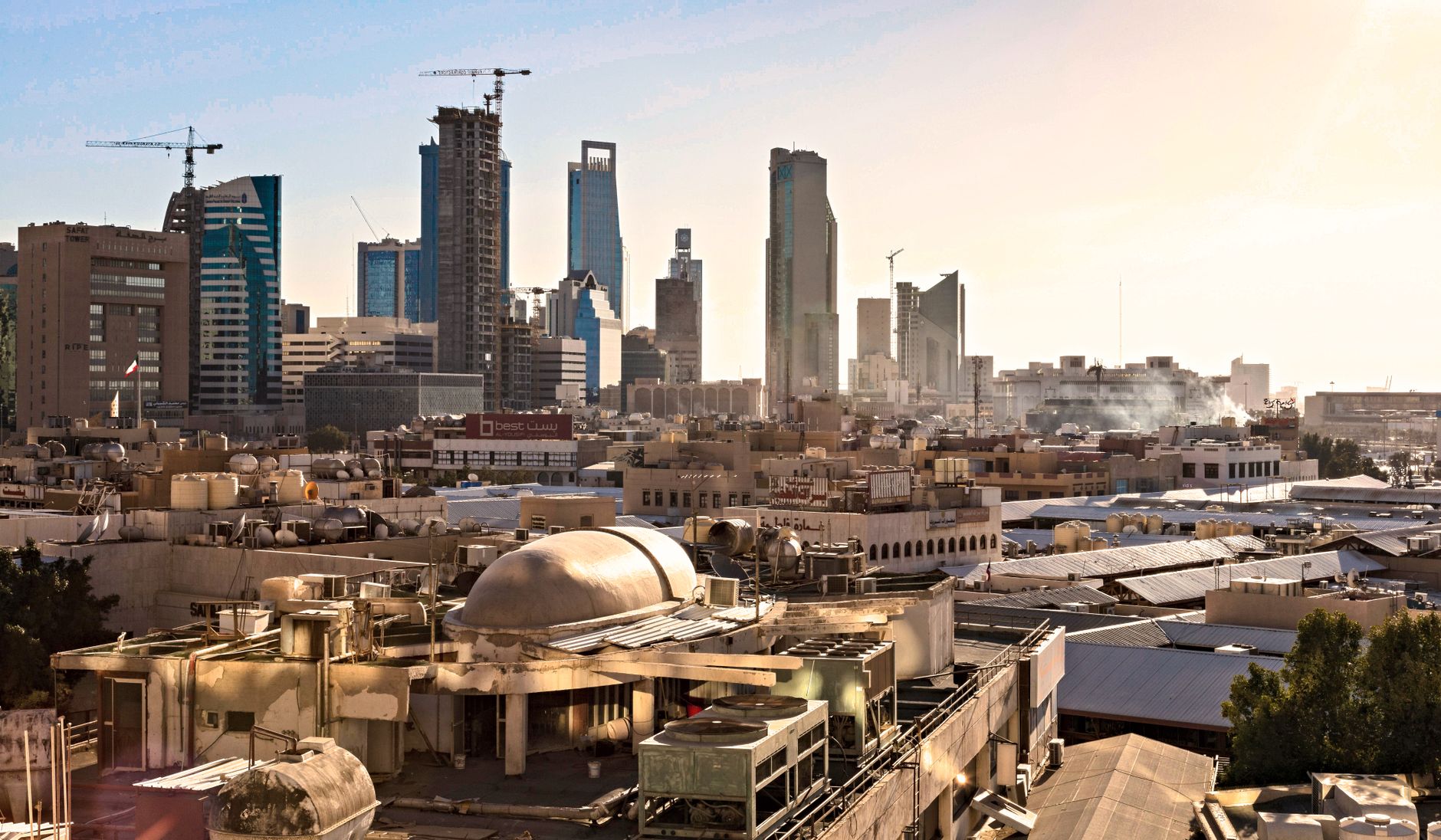
When Gulf sovereign wealth funds began quietly expanding their positions in Chinese technology and infrastructure in the early 2020s, most Western analysts called it a hedge — pragmatic diversification away from dollar-denominated assets. By mid-2026, that reading looks not just insufficient but embarrassingly thin. What has taken shape between China and the Gulf Cooperation Council is something far more structural: a multi-layered economic partnership that runs well beyond crude oil transactions and deep into finance, technology, logistics, food security, and the architecture of a genuinely multipolar trade system. Western observers have been slow to grasp its scale. That is their problem — and, potentially, yours.
The Oil Baseline — And Why It No Longer Tells the Full Story
China remains the Gulf's largest energy customer by volume. Saudi Arabia alone exported roughly 1.7 million barrels per day to China in 2025, and ADNOC has deepened long-term supply commitments with Chinese state refiners including Sinopec and CNOOC. But the hydrocarbon fixation misses the more consequential story. Non-oil bilateral trade between China and the GCC crossed $280 billion in 2025, according to figures from the China-Arab States Cooperation Forum. A decade ago, that number would have seemed fictional.
The composition of that trade is where things get interesting. Chinese exports to the Gulf now include electric vehicles, industrial equipment, solar panels, telecommunications infrastructure, and consumer electronics. Gulf exports to China, meanwhile, increasingly include petrochemicals, aluminium, and processed food products — not raw crude alone. The relationship has industrialised. That is a significant shift, and most energy-desk analysts are still catching up to what it means.
Finance and Currency: The Quiet Architecture of Dedollarisation
Beneath the trade volumes sits a financial infrastructure being steadily and deliberately built. Saudi Arabia's decision to participate in the mBridge project — the cross-border central bank digital currency platform developed alongside China, the UAE, Hong Kong, and Thailand — was formalised in late 2024. By early 2026, transaction volumes on mBridge had grown substantially, with Gulf-based institutions piloting renminbi-settled energy trades that bypass SWIFT entirely.
The UAE Central Bank has been among the most active participants. For family offices and private investors carrying significant dollar exposure, the implications deserve serious attention. This is not ideological dedollarisation. It is pragmatic settlement infrastructure being built in parallel to existing systems. The two can coexist — until, perhaps, they cannot. At that point, positioning will matter enormously.
China's state-owned banks have meanwhile expanded their Gulf presence with purpose. ICBC's Abu Dhabi branch has become a meaningful conduit for Chinese corporate lending into the region's real estate and infrastructure sectors. The Bank of China has followed a similar path. For private investors and family offices in the UAE and Saudi Arabia, access to renminbi-denominated instruments — previously cumbersome at best — is becoming materially easier. The friction is coming down fast.
Technology and Infrastructure: Where the Real Integration Is Happening
Huawei's footprint across Gulf telecommunications networks remains extensive, Western pressure notwithstanding. In Saudi Arabia, Huawei is a primary partner in the infrastructure underpinning NEOM and several Vision 2030 smart city initiatives. In the UAE, its partnership with e& spans 5G deployment across multiple emirates. These are not merely commercial contracts. They represent deep technical integration — the kind that creates long-term dependencies and long-term relationships that geopolitical headwinds alone are unlikely to sever. Anyone expecting a clean decoupling here has not looked closely at the architecture.
Chinese logistics firms are embedding themselves into Gulf trade corridors with considerable ambition. COSCO Shipping has expanded its port operations across the region, and the strategic implications of Chinese logistics infrastructure connecting Gulf hubs to African and Southeast Asian markets run deeper than most investment committees have modelled. The UAE — which simultaneously signed a CEPA with the Democratic Republic of Congo in early 2026 and activated its CEPA with Vietnam in February of the same year — is positioning itself as a trade bridge. Chinese firms are exceptionally well-placed to operate across it. The UAE's target of reaching $1.1 trillion in non-oil foreign commerce by 2031 cannot be hit without Chinese manufacturing, logistics, and capital playing a substantial role. The numbers make that plain.
Food Security, Agriculture, and the Strategic Commodity Beneath Oil
Water scarcity makes food security an existential issue for Gulf states. Full stop. China has emerged as a serious partner in addressing it. The Public Investment Fund has co-invested with Chinese agri-technology firms in food production ventures spanning Central Asia and East Africa — regions where Chinese agricultural expertise and Gulf capital have proved genuinely complementary. Kazakhstan and Uzbekistan, both of which have deepened trade ties with Beijing and Riyadh in recent years, are becoming important nodes in a Gulf-China food supply architecture that barely registers in Western financial media. Few outside the region have noticed. They should.
Egypt sits at the intersection of Gulf investment and Chinese infrastructure financing through the Belt and Road Initiative, and the dynamic there is particularly pronounced. Chinese-funded industrial zones in the Suez Canal Economic Zone now house dozens of manufacturers exporting into African and Middle Eastern markets, with Gulf logistics firms handling significant portions of onward distribution. The GCC–UK free trade agreement, struck in May 2026 and celebrated as the Gulf's first FTA with a G7 nation, will lift bilateral trade volumes with London. Good. But in terms of structural economic integration — the kind that reshapes supply chains at a foundational level — the China-Gulf axis is in a different category entirely.
What This Means for Private Capital in the Gulf and Beyond
For family offices, sovereign-adjacent funds, and high-net-worth investors based across the GCC and emerging markets, the China-Gulf convergence presents opportunities that are both concrete and time-sensitive. The window is open. It will not stay open indefinitely.
Chinese private equity and venture capital firms are increasingly seeking Gulf co-investors for deals in Southeast Asia and Africa — markets where Gulf capital carries reputational and relational advantages that Chinese firms alone cannot replicate. The reverse dynamic is equally real. Gulf-based investors with positions in Chinese technology, clean energy, or logistics are finding that those investments now carry strategic weight well beyond their financial returns.
The numbers tell a complicated story on renminbi internationalisation. Gulf participation in mBridge, combined with bilateral currency swap agreements, points in one direction: allocators who can operate fluidly across both dollar and renminbi financial systems will carry a structural edge over the next decade. Private banks in Dubai and Abu Dhabi are already offering renminbi-denominated wealth management products. They are doing so because sophisticated clients are demanding them.
The China-Gulf relationship is not a geopolitical alignment. It is a business partnership of extraordinary scale and growing depth, built on complementary interests that neither side has any near-term incentive to disrupt. For investors positioned at that intersection — in the Gulf, in Central Asia, in Africa, in Southeast Asia — the question is no longer whether this relationship matters. That debate is over. The only question worth asking now is how quickly you can move to understand and act within it.

Written by
Sophie Aldridge
Global Economics Editor · Geopolitics
Sophie spent a decade advising governments on trade policy before deciding the story was more interesting than the memo. She covers global economics, geopolitics, and the power transitions reshaping emerging markets. Sharpest on sanctions, supply chains, and the politics behind the price of everything. Based in Washington, D.C. Reach out at sophie.aldridge@theplatinumcapital.com.


