

Abu Dhabi Branded Residences: The Premium Buyers Are Paying
Abu Dhabi's branded residence market has emerged as one of the Gulf's most sophisticated investment frontiers, where discerning buyers are routinely paying premiums of 30 to 50 percent above comparable unbranded stock for the privilege of a globally recognised hospitality name above the door. For family offices and sovereign-aligned investors recalibrating their real estate allocations, understanding the precise anatomy of that premium — what drives it, what sustains it, and where it is beginning to erode — has become a matter of portfolio discipline rather than lifestyle preference.…
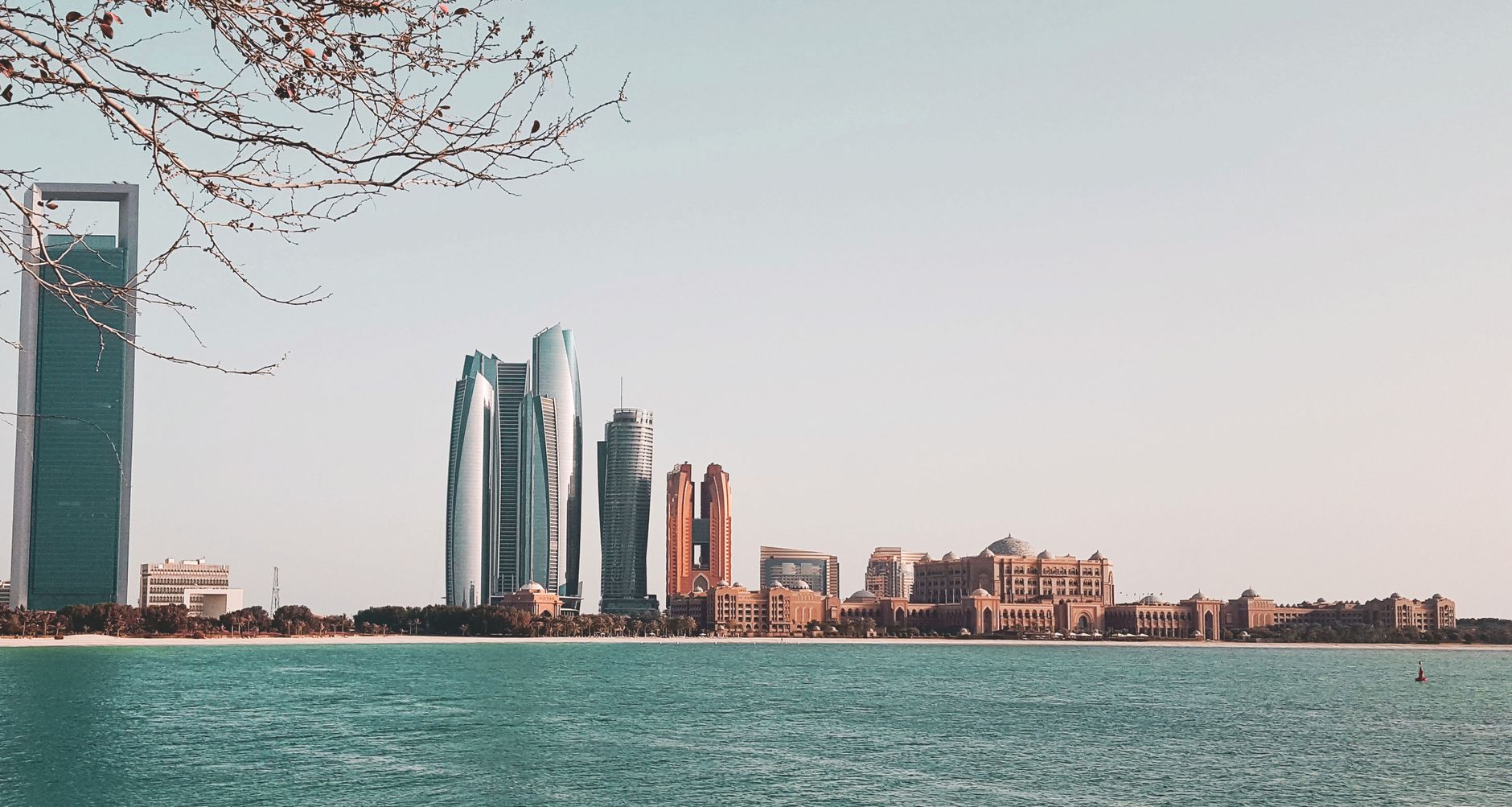
Branded residences in Abu Dhabi have stopped being a luxury add-on. They are now a structural repricing of what private capital considers safe, appreciating, and worth displaying. Across Saadiyat Island, Yas Island, and the emerging corridors of Al Maryah and Al Reem, internationally affiliated residential products are commanding premiums of 30% to 60% above comparable non-branded inventory. For family offices, sovereign-adjacent wealth structures, and ultra-high-net-worth buyers from the Gulf, Central Asia, and Southeast Asia, the question has shifted. It is no longer whether to pay the premium — it is whether buyers fully understand what they are actually purchasing.
What the Premium Actually Buys
The branded residence model in Abu Dhabi bundles four distinct value propositions into a single transaction: architectural identity, operator management, global network signal, and liquidity optionality. A Four Seasons or Rosewood affiliation does more than elevate the interiors. It compresses the buyer's due diligence timeline, delivers internationally recognised service infrastructure, and creates a secondary market shorthand that resonates with buyers from Riyadh to Kuala Lumpur. In a world where private buyers are increasingly mobile and multi-domiciled, that shorthand carries measurable monetary weight. Independent valuers active in the Abu Dhabi market report branded units on Saadiyat Island transacting at between AED 6,000 and AED 11,500 per square foot for premium configurations — figures that felt aspirational as recently as 2022. That is a significant shift in a short window.
The Brand Hierarchy and Its Price Differentials
Not all brand affiliations carry equivalent weight, and sophisticated buyers are increasingly price-literate about the distinction. In Abu Dhabi's current supply pipeline, tier-one ultra-luxury brands — Bulgari, Four Seasons, and Rosewood — command the widest premiums, typically 45% to 60% above the baseline for equivalent unbranded space in the same micro-location. Mid-tier luxury hotel brands produce premiums in the 25% to 35% range. Newer or regionally unfamiliar brand affiliations face harder buyer scrutiny. This stratification matters enormously for investors allocating across the GCC.
The momentum visible in Dubai — where AHS Properties acquired the Shangri-La Hotel on Sheikh Zayed Road for AED 1.1 billion in June 2026, a clear signal of enduring institutional conviction in branded hospitality assets at scale — is replicating itself in Abu Dhabi, but with a distinctly different buyer composition. Abu Dhabi draws a higher proportion of end-users and long-term holders than Dubai's more transactional investor base. That structural difference supports brand premium retention across multi-year hold periods in ways that Dubai's faster-moving market simply cannot guarantee.
Saadiyat Island: Where the Premium Is Most Concentrated
Saadiyat Island is the single most compelling concentration of branded residential premium in the emirate. Full stop. The island's cultural district positioning — anchored by the Louvre Abu Dhabi, the forthcoming Guggenheim, and the Natural History Museum — creates a soft-power adjacency that no other Abu Dhabi sub-market can replicate. Residences within walking distance of these institutions are not selling square footage. They are selling access to a curated civic identity. Few comparable offers exist anywhere in the region.
The Rosewood Residences Saadiyat Island project, with unit prices opening above AED 10 million for entry configurations, has drawn documented buyer interest from across the UAE, Saudi Arabia, Egypt, Kazakhstan, and Indonesia. That buyer profile reflects both the island's international positioning and Abu Dhabi's broader ambition to attract mobile capital from non-Western wealth corridors. Absorption rates for released phases have consistently outpaced developer projections, with several tranches reported as fully subscribed within weeks of launch. The market is not waiting.
The Riyadh Parallel and What It Reveals About Regional Pricing Logic
To read Abu Dhabi's branded premium correctly, you have to place it inside the broader GCC repricing now reshaping how Gulf capital values affiliated luxury property. In Riyadh, DarGlobal awarded a SAR 338 million infrastructure contract in June 2026 for its Rayana community in Wadi Safar — a project anchoring ultra-luxury branded mansions with built-up areas reaching 7,000 square metres. The scale of that commitment signals a regional market in which branded residential product has moved from niche offering to institutional asset class.
The numbers tell a complicated story, and a convincing one. DarGlobal's development portfolio has reached $23 billion, serving investors from over 125 nationalities. Its FY2025 revenue rose 124% to $539 million. Branded luxury residential is no longer an experiment in the Gulf — it is a proven capital allocation strategy with operating history behind it. Abu Dhabi sits within that same investment logic, but adds a more stable regulatory environment, a deeper pool of long-term resident wealth, and direct proximity to Abu Dhabi Global Market's expanding financial ecosystem on Al Maryah Island.
What Sophisticated Buyers Must Weigh Before Committing
The premium is real. It is not unconditional. Buyers entering Abu Dhabi's branded residence market at current pricing must interrogate three variables before committing capital.
First, the operator agreement. The management contract underpinning a branded residence determines service quality, rental pool economics, and the brand's operational continuity. Terms vary significantly between projects and demand independent legal review — not a summary from the developer's sales team. Second, exit market depth. Premium pricing holds only if a future buyer pool exists at equivalent or higher valuations. In Abu Dhabi's case, that pool is increasingly supported by the emirate's long-term residency reforms and its deliberate attraction of global family office structures. Third, the developer's delivery track record. With several new entrants bringing branded concepts to market simultaneously, the distinction between a developer with institutional capital backing and one relying on off-plan proceeds to fund construction has rarely carried higher stakes.
For family offices and private investors allocating into the region across a five-to-ten year horizon, Abu Dhabi branded residences offer something that pure yield plays rarely deliver: capital preservation, lifestyle optionality, and a reputational signal that travels across borders. The premium is not a cost. For the buyer who reads it correctly, the premium is the product. As Abu Dhabi pursues its measured but deliberate transformation into a globally recognised private wealth hub, the gap between what a brand affiliation costs today and what it delivers in resale credibility tomorrow is, for the right buyer, exactly where the value lives.

Written by
Tom Whitmore
Senior correspondent · Real Estate & Private Companies
Tom has interviewed most of the operators reshaping the Gulf skyline — and a few of the ones who tried and didn't. His beat is real estate, commodities, manufacturing, and the founder-led private companies that never bother to list. He knows which buildings and balance sheets survive a downturn before the spreadsheet does. Based in Dubai. Reach out at tom.whitmore@theplatinumcapital.com.