Saudi Iran Detente: The Investment Flows Following the Politics
As Saudi Arabia and Iran navigate their landmark diplomatic rapprochement brokered by Beijing, astute capital allocators are quietly repositioning portfolios to capture the asymmetric opportunities emerging across energy corridors, regional logistics networks, and sovereign wealth convergence points that this historic thaw is beginning to unlock. For family offices and institutional players with the patience and geopolitical literacy to move ahead of consensus, the gradual normalization between Riyadh and Tehran represents one of the most consequential reconfigurations of Middle Eastern capital flows in a generation.…
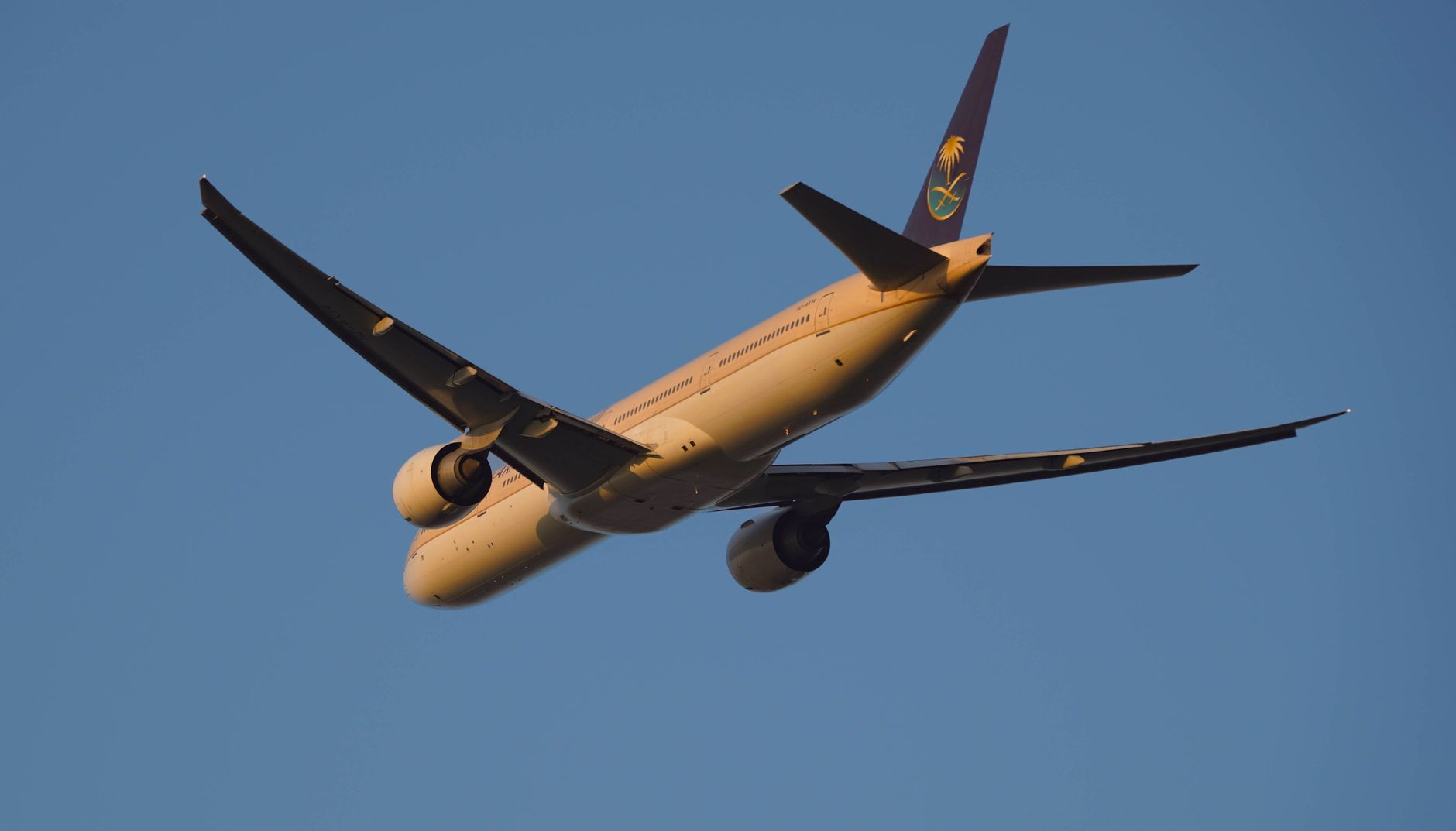
The handshake between Riyadh and Tehran in March 2023, brokered by Beijing, was always going to mean more than diplomats acknowledging each other across a table. Three years on, the real story is not the politics. It is the capital. Investment flows frozen for decades are beginning to move — quietly, deliberately — through intermediaries in Muscat, Doha, and Kuala Lumpur. For family offices and private investors positioned in the Gulf, understanding the architecture of this détente is no longer optional. It is foundational to where returns get generated across the next decade.
A Fractured Gulf, A Redirected Flow
The emergence in June 2026 of a new Saudi-led diplomatic grouping — bringing together Foreign Ministers Faisal bin Farhan of Saudi Arabia, Hakan Fidan of Turkey, Ishaq Dar of Pakistan, and Badr Abdel Ati of Egypt in Cairo — signals that the post-conflict regional order is being actively redrawn. The UAE's absence from this alignment is not incidental. Abu Dhabi and Riyadh have been quietly diverging on Iran policy for some time. The UAE has moved faster toward commercial re-engagement. Saudi Arabia is pursuing a more structured, politically conditioned approach. That divergence matters to investors because it produces two distinct Gulf capital corridors — different risk profiles, different sector priorities, different counterparty networks.
The war in Iran, which reshaped regional calculations with devastating speed, paradoxically accelerated the détente rather than ending it. Saudi Arabia emerged from that period with a stronger regional hand and a sharper strategic interest in a stable Iranian periphery. The question now is how Riyadh monetises that position — and where it chooses to deploy influence through investment rather than arms.
The Sectors Opening Up
Petrochemical supply chains represent the most immediate opportunity. Iran holds the world's second-largest proven natural gas reserves, and Saudi Arabia's SABIC — majority owned by Saudi Aramco — has long targeted feedstock diversification. Formal joint ventures remain legally and politically complex. But third-country structures involving Omani and Qatari intermediaries are already facilitating early-stage deals. Oman's Port of Sohar and the Duqm Special Economic Zone have quietly established themselves as the preferred neutral ground for Saudi-Iranian commercial engagement, with Malaysian and Indonesian trading houses entering as facilitators. Few outside the region have noticed. They should.
Agriculture and food security form the second major corridor. Iran's agricultural production capacity, combined with Saudi Arabia's water scarcity and its food security drive under Vision 2030, creates a natural commercial logic. Private Saudi family offices — particularly those with roots in the Hejaz trading tradition — have begun exploratory engagements in Iranian agri-processing through Dubai-registered holding companies. The scale is not large yet. But the direction is unambiguous.
Pharmaceuticals and healthcare infrastructure form the third channel. Iran runs a substantial domestic pharmaceutical industry, and Gulf sovereign wealth interest in healthcare assets — visible in Mubadala's global acquisitions and the Saudi Public Investment Fund's domestic buildout — could eventually extend eastward. For now, Iranian pharmaceutical exports to Gulf markets move through third-country re-labelling structures. It is a fragile arrangement. It is also functional, which tells you something about the appetite on both sides.
Where the Gulf's Trillion-Dollar AI Pivot Connects
The Gulf states' collective commitment of approximately $2.5 trillion to U.S. technology infrastructure — Google's $10 billion deployment into Saudi AI, Microsoft's $7.9 billion in the UAE, Amazon's $5.3 billion in Saudi data centres — is more geopolitically calculated than its commercial framing suggests. For Riyadh specifically, locking in deep technology partnerships with Washington provides strategic cover to simultaneously expand regional commercial ties with Tehran without triggering U.S. secondary sanctions concerns. The logic is deliberate: cement the Western relationship at the technology and security layer, then diversify economic relationships at the trade and investment layer.
Saudi Humain and Qatar's $20 billion AI infrastructure joint venture with Brookfield, announced in December 2025, follow the same reasoning. Building sovereign digital infrastructure reduces long-term dependency on any single power bloc, including the United States. For Iran — which has spent years developing domestic digital infrastructure under sanctions pressure — the eventual question is whether Gulf AI platforms become the gateway to broader regional digital integration. That outcome is years away. But investors building positions in Gulf technology operators should be pricing in that optionality now, not later.
Syria as a Rehearsal for Iran
The race to invest in post-sanctions Syria in early 2026 is functioning as a strategic rehearsal for the larger question of Iranian market re-entry. The numbers tell a complicated story. Qatar has committed approximately $7 billion to Syrian energy projects and is investing in Damascus International Airport. The UAE is backing a planned $2 billion Damascus metro system and exploring port development in Tartus through DP World. Saudi Arabia has pledged capital across aviation, energy, and infrastructure. These are not purely commercial decisions. They are sovereignty-projection exercises — establishing institutional presence and political goodwill in a country being rebuilt from the ground up.
The lesson being learned in Damascus will be applied in Tehran. Gulf investors who are building contractor relationships, working through sanctions compliance architecture, and establishing regional legal structures through the Syria experience are effectively training for the larger opportunity. Family offices with exposure to regional construction, logistics, and energy services should be watching the Syria investment playbook with serious attention. Right now, it is the most accurate available template for how Gulf-Iran commercial normalisation will proceed.
The Investor's Forward Position
For private investors and family office principals with significant Gulf exposure, the Saudi-Iran détente is best read as a slow-moving structural shift rather than a sequence of discrete events. Capital does not yet flow freely or transparently between the two countries. The risk of political reversal — given internal pressures in both states — remains real and should not be discounted. The intelligent positioning sits in the intermediary layer: Omani logistics operators, Qatari financial institutions carrying dual exposure, Malaysian and Indonesian commodity traders already embedded in the Iranian supply chain, UAE-based holding structures capable of activating quickly when regulatory conditions shift.
The Central Asian dimension deserves attention too. Kazakhstan and Uzbekistan are both expanding trade relationships with Iran, opening additional pathways for Gulf capital to access Iranian commercial networks indirectly. Investors already active in Almaty or Tashkent are closer to this opportunity than most of them realise. The détente will not deliver returns through headlines. It will deliver them through patient, structurally sound positioning — built now, before the architecture becomes obvious to everyone else.
Written by
Sophie Aldridge
Global Economics Editor · Geopolitics
Sophie spent a decade advising governments on trade policy before deciding the story was more interesting than the memo. She covers global economics, geopolitics, and the power transitions reshaping emerging markets. Sharpest on sanctions, supply chains, and the politics behind the price of everything. Based in Washington, D.C. Reach out at sophie.aldridge@theplatinumcapital.com.