

Red Sea Shipping Security and Its Commercial Consequences
The strategic waterway connecting Europe and Asia through the Suez Canal has become a theater of escalating maritime risk, forcing global shipping conglomerates to reroute vessels thousands of nautical miles around the Cape of Good Hope at extraordinary cost to supply chain timelines and insurance premiums. For institutional investors and sovereign wealth funds with exposure to energy logistics, bulk commodities, and emerging market trade corridors, the compounding disruptions in the Red Sea represent not merely an operational inconvenience but a structural repricing of geopolitical risk across the most capital-intensive sectors of the global economy.…
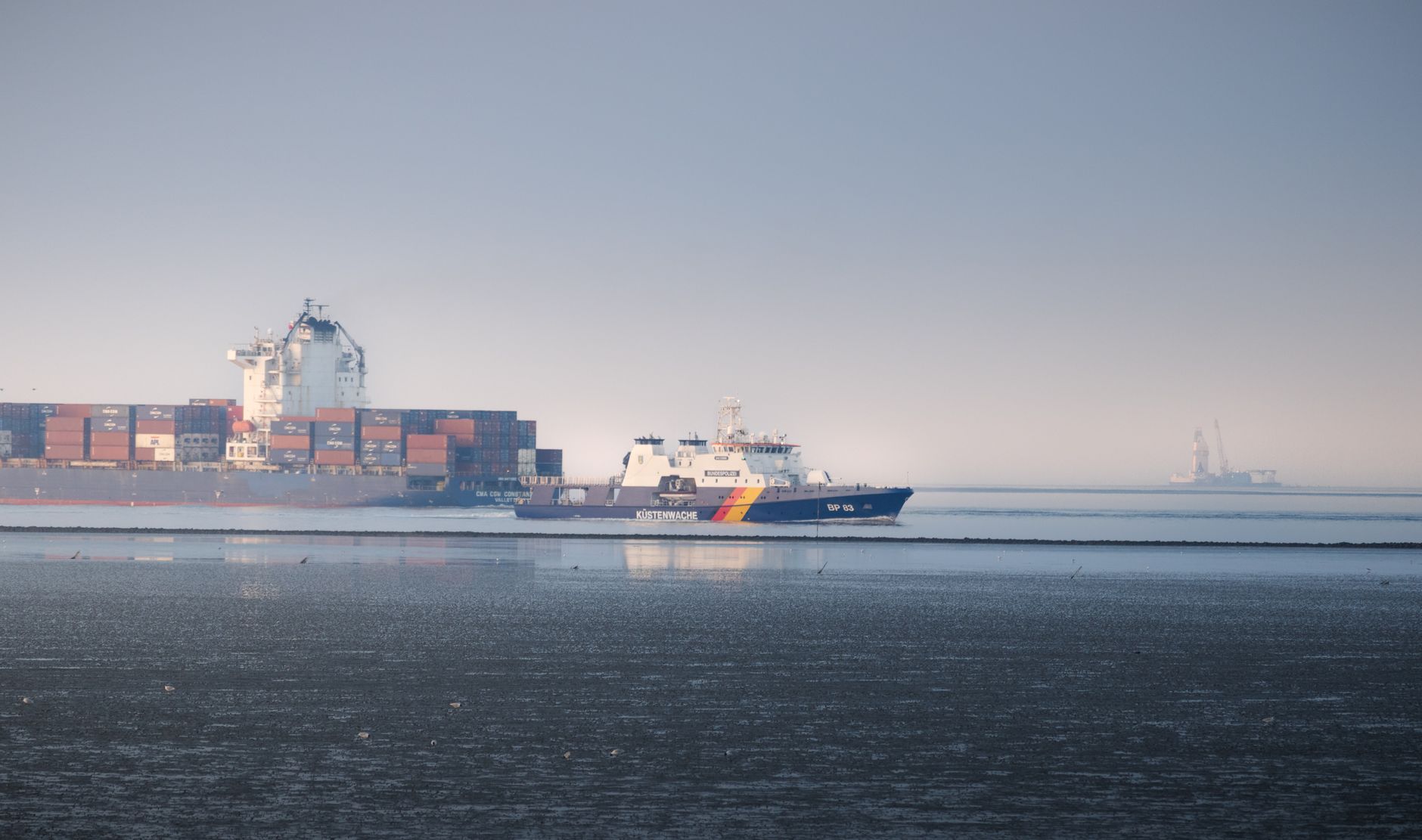
When Houthi forces began targeting commercial vessels in the Red Sea in late 2023, most analysts called it a short-lived disruption. Two and a half years on, that judgment looks badly wrong. The strategic and commercial fallout has reshaped global shipping economics, accelerated infrastructure investment across emerging markets, and quietly redistributed influence among the Gulf states in ways that are only now becoming fully readable. For private investors, family offices, and sovereign wealth managers watching this region, the Red Sea crisis stopped being a conflict story some time ago. It is a capital allocation story.
The Rerouting Premium and What It Actually Costs
When Maersk, MSC, and CMA CGM made the call to divert vessels around the Cape of Good Hope rather than transit the Suez Canal, they added roughly 10 to 14 days to Asia-Europe journeys and pushed freight rates to levels not seen since the pandemic supply chain chaos. At the peak of the disruption in early 2024, spot rates on the Asia-to-Northern-Europe corridor broke $6,000 per forty-foot container. Rates have since pulled back. They have not normalized. Structurally elevated costs persist, war-risk surcharges on Red Sea voyages remain a real line item, and for high-volume commodity traders and manufacturers running lean logistics, the cumulative global bill has run into tens of billions of dollars.
Egypt has taken the sharpest hit. Suez Canal revenues fell more than 60 percent year-on-year through much of 2024 and 2025 — stripping Cairo of a foreign currency lifeline with no obvious substitute. The canal had been generating over $9 billion annually at its peak. That figure now reads as a historical artifact. What the canal's collapse illustrates, with uncomfortable clarity, is how geopolitical instability originating in Yemen, amplified through Gulf tensions, and underwritten ultimately by Tehran can gut the economic architecture of nations nowhere near the fighting. Egypt's seat at the table in the Saudi-led diplomatic grouping that convened in Cairo in June 2026 — alongside Qatar, Turkey, and Pakistan — reflects both shared vulnerability and a collective urgency to stabilize the broader regional operating environment before the damage compounds further.
Gulf Infrastructure Beneficiaries and the New Trade Corridors
Here is the paradox: the disruption of the Suez corridor has actively accelerated investment in alternative trade infrastructure across the Gulf. Saudi Arabia's NEOM-linked logistics ambitions, long dismissed in sophisticated circles as visionary overreach, now carry genuine strategic weight. The Kingdom's push to build out King Salman International Airport and expand port capacity at Jeddah Islamic Port and King Abdullah Port positions Riyadh as a serious node in any reconfigured Asia-Europe trade architecture — one that bypasses or supplements Suez rather than depending on it.
In the UAE, DP World has moved fastest and most deliberately. The company operates across more than 80 terminals globally, and its expansion into Tartus in Syria — part of a broader $2 billion Damascus-linked infrastructure initiative — is a calculated bet that post-sanctions Syria emerges as a meaningful transit economy connecting the Gulf to the Eastern Mediterranean. The portfolio logic is not complicated: if Red Sea instability persists in any meaningful form, the value of alternative port infrastructure compounds. That same calculus is driving Emirati interest in African port assets from Berbera in Somaliland to Luanda in Angola, where both DP World and AD Ports Group have made significant moves. Few outside the region have tracked just how systematically this accumulation is proceeding. They should.
The Fracturing of Gulf Solidarity and Its Shipping Implications
The emergence of a Saudi-Qatar-Egypt-Turkey-Pakistan diplomatic axis in mid-2026 — and the UAE's conspicuous absence from it — introduces a new variable for commercial operators trying to read the political risk map. This is not a diplomatic footnote. It reflects genuine divergence between Abu Dhabi and Riyadh in how each is positioning itself relative to Iran, and by extension relative to the Houthi question that sits at the center of Red Sea insecurity. That is a significant split, and its commercial implications have barely registered in Western financial media.
Qatar's role as mediator — drawing on pre-war channels with Tehran that Doha has carefully maintained — gives it unusual leverage in any negotiated arrangement that might eventually allow safer Red Sea transit. Qatar's $7 billion energy investment commitment in Syria and its direct involvement in Damascus International Airport signal that Doha is thinking well beyond mediation. It wants to be the economic architect of the post-conflict order. For shipping companies and cargo insurers, the prospect of Qatar-brokered arrangements that reduce Houthi targeting incentives would be commercially transformative. Sophisticated risk managers are watching the Qatar diplomatic channel with genuine attention. They are right to.
Emerging Market Winners: East Africa and South Asia Reprice
The Cape of Good Hope rerouting has done something concrete for East African port infrastructure: it has made it matter more. Kenya's Mombasa port and Tanzania's Dar es Salaam have absorbed increased vessel traffic. Ethiopia's Red Sea access ambitions remain a long-term variable complicated by its own geopolitical entanglements. For family offices with exposure to East African logistics, retail, or cold chain assets, the structural increase in Cape route traffic has produced tangible revenue uplift for port-adjacent businesses. Nairobi-based logistics operators running cross-border operations into Uganda and Rwanda have reported margin improvements as regional supply chains adapted to longer ocean lead times by holding more local buffer stock. The numbers are real.
In South Asia, the disruption has sharpened India's appetite for port modernisation and deepened New Delhi's enthusiasm for the India-Middle East-Europe Economic Corridor — a project that, if realized, would route goods overland through the UAE, Saudi Arabia, and Jordan to Mediterranean ports, cutting out the Suez chokepoint entirely. With $2.5 trillion in Gulf capital already committed to U.S. technology partnerships as geopolitical insurance, the appetite among Gulf sovereign wealth vehicles to also anchor physical trade corridor infrastructure is substantial. The two strategies — financial hedging and physical infrastructure — are converging.
What Investors and Family Offices Should Watch Now
Freight rates are the visible symptom. The disease runs deeper. The Red Sea crisis is actively reshaping which ports matter, which corridors attract long-term capital, and which nations gain durable diplomatic leverage from geographic positioning. For principals with exposure to trade-linked assets — Gulf, East Africa, Southeast Asia, or emerging Europe — the wrong question is when normalcy returns. The right question is which infrastructure assets benefit from a permanently higher-risk Red Sea environment, and which diplomatic channels are most likely to produce the partial security arrangements that commercial operators need to plan around.
Four storylines deserve close tracking: Qatar's mediating role and its expanding economic footprint in Syria, Saudi Arabia's infrastructure buildout along alternative trade corridors, DP World's systematic global port accumulation, and India's corridor ambitions linking South Asia to European markets overland. The investors who get ahead of any meaningful stabilization — or who position correctly ahead of the next escalation — will be those who read the Red Sea crisis for what it always was beneath the surface: a story about who controls the future geography of global trade.

Written by
Sophie Aldridge
Global Economics Editor · Geopolitics
Sophie spent a decade advising governments on trade policy before deciding the story was more interesting than the memo. She covers global economics, geopolitics, and the power transitions reshaping emerging markets. Sharpest on sanctions, supply chains, and the politics behind the price of everything. Based in Washington, D.C. Reach out at sophie.aldridge@theplatinumcapital.com.