

Saudi Giga Projects: Construction Progress and Investment Reality
Saudi Arabia's giga-projects represent the most ambitious built-environment undertaking in modern history, with NEOM, Diriyah, and the Red Sea Project collectively commanding over $1 trillion in planned capital deployment across landscapes that were largely untouched desert just five years ago. For sophisticated investors and sovereign capital allocators, separating the extraordinary vision from construction realities, timeline revisions, and evolving investment structures has become the defining due diligence challenge of the decade.…
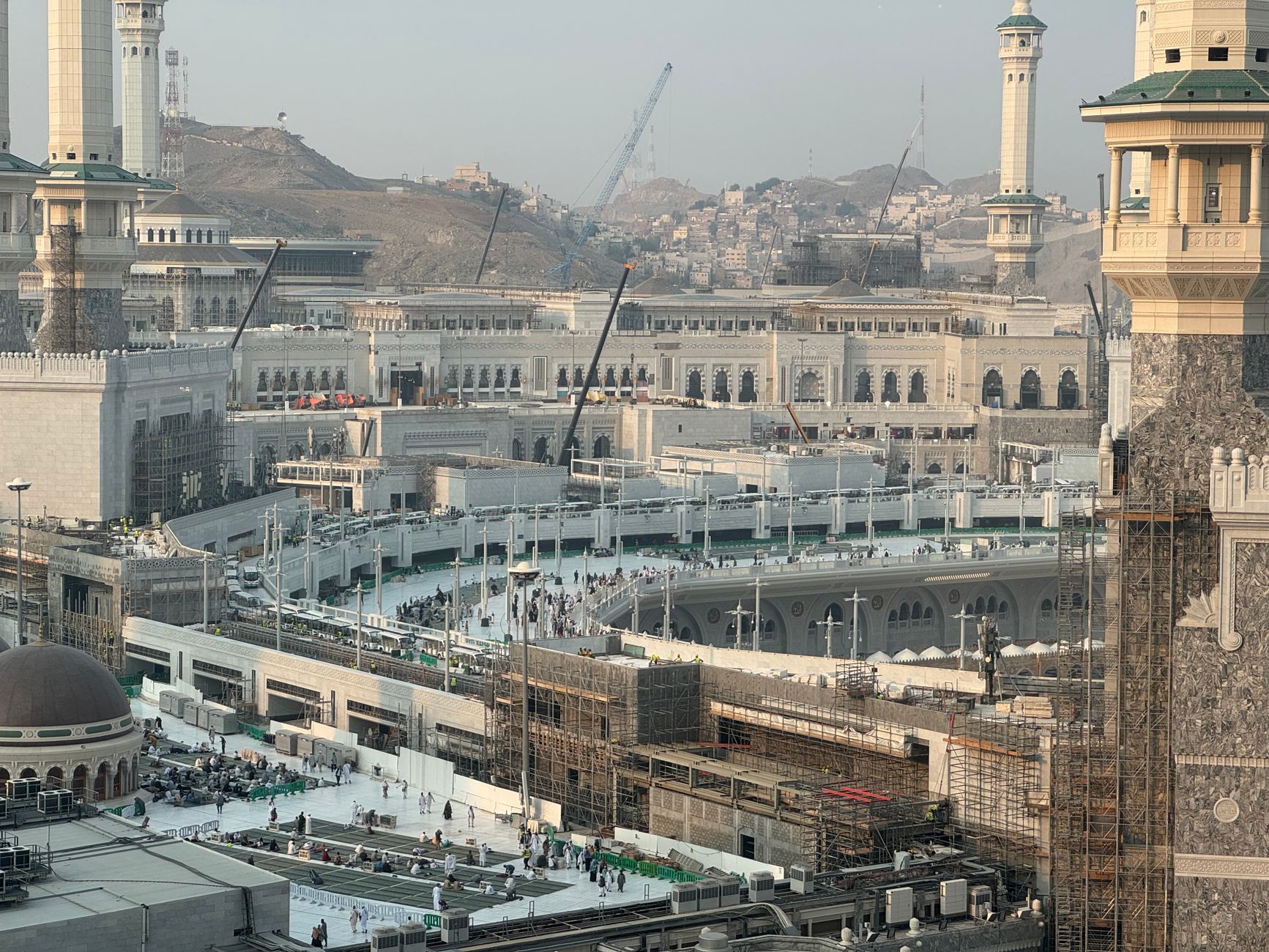
Saudi Arabia's giga-projects — those audacious, multi-hundred-billion-dollar developments that spent years as renderings and royal ambition — are now breaking ground, signing contracts, and beginning to reshape how serious capital thinks about the Kingdom. For years, international investors conditioned to treat megaproject timelines with caution kept their distance. That calculus is shifting. By 2025 and into 2026, something more credible has arrived: steel in the ground, revised delivery schedules rooted in operational reality, and a construction ecosystem maturing faster than most outsiders expected. The question is no longer whether these projects will be built. It is how, and at what return.
From Vision to Verified Progress
NEOM remains the flagship of Saudi Arabia's giga-project portfolio, and by mid-2026 its various components sit at meaningfully different stages of development. The Line — the 170-kilometre linear city that captured global imagination and global scepticism in roughly equal measure — has seen its initial phase scaled back significantly. Internal NEOM documents and contractor briefings confirm that the first delivery target covers a far more modest urban footprint than originally presented. Call it engineering reality meeting political ambition. That is not a failure. Every serious infrastructure programme of this scale has gone through the same reckoning. What matters is what survives it.
What has survived — and advanced with genuine momentum — is Sindalah. The luxury island destination in the Gulf of Aqaba has marine infrastructure, hospitality fit-outs, and marina access works progressing under contracts awarded to a mix of Saudi, European, and South Korean construction groups. Progress here is visible and measurable.
Diriyah tells a different story — and in some ways a more investor-legible one. The Diriyah Gate Development Authority has advanced multiple hospitality and residential clusters, with several hotel openings confirmed for late 2026 and early 2027. For family offices and private investors with exposure to branded hospitality real estate, Diriyah sits at one of the more bankable intersections in the Kingdom right now: Saudi tourism growth meeting genuine cultural differentiation. Visitor numbers to the At-Turaif district hit 4.2 million in 2024. That is a demand foundation. Giga-project critics tend to ignore it.
The Construction Ecosystem Is Catching Up
Among the most material developments of the past eighteen months has been the maturation of Saudi Arabia's construction contracting and project delivery infrastructure. Bechtel, Consolidated Contractors Company, and Samsung C&T have all deepened their in-Kingdom operational footprints. Saudi Aramco's supply chain development programmes have built a more capable local subcontractor base. Labour mobilisation — which plagued early giga-project timelines — has improved substantially after the Saudi government expanded its international workforce agreements. These are not cosmetic changes. They are the unglamorous mechanics that determine whether a project delivers or drifts.
The parallel in Dubai is instructive. The July 2026 award of the AED 3 billion DIFC Heights Tower contract to Al Basti & Muktha LLC — a deal that brought together DIFC Authority CEO Arif Amiri and ABM Chairman Tushar Pathak — demonstrated precisely what happens when institutional backing, private capital, and capable contractors converge. The 366-unit luxury tower, targeting completion in 2029, is emblematic of the broader GCC construction cycle: expensive, ambitious, and increasingly deliverable. Saudi Arabia's giga-project sponsors are watching exactly these benchmarks as they recalibrate their own phasing strategies. The region is learning from itself in real time.
Investment Reality: Where the Opportunities Actually Sit
Here is where the conversation gets sharper. For private investors and family office principals assessing Saudi exposure in 2026, the most actionable opportunities do not sit at the headline level of NEOM or Qiddiya. They sit one tier beneath. Logistics, hospitality, healthcare, and residential real estate — the supporting infrastructure that mega-developments require and cannot function without. The Red Sea Project's operational launch of its first resort island has already catalysed a secondary market for serviced accommodation, marina management, and luxury ground transport. That market remains substantially undercapitalised relative to projected demand.
Riyadh itself increasingly deserves to be read as a standalone investment thesis. The capital is absorbing a significant share of corporate relocation activity driven by the Kingdom's Regional Headquarters programme, which mandated that multinationals operating in Saudi Arabia establish their Middle East headquarters in Riyadh rather than Dubai. The effect on real estate is direct and measurable. Grade-A office vacancy in Riyadh's central business districts has tightened to levels not seen in a decade. Luxury residential prices in Al Olaya and Al Malqa have appreciated an estimated 18 to 22 percent over the twenty-four months to June 2026. That is a significant shift — and it is being driven by policy, not speculation.
The broader GCC luxury signal is unambiguous. Engel & Völkers Middle East recorded 2,148 transactions exceeding AED 10 million in Q1 2026 alone — a 62.6 percent year-on-year increase — with landmark deals including an AED 422 million off-plan residence at Aman Residences and an AED 350 million villa at Jumeirah Asora Bay. CEO Daniel Hadi described the market as entering a more mature phase. That maturity — institutional grade, internationally liquid, price-discovery-driven — is exactly what Saudi Arabia's residential segments are now beginning to develop, particularly as the Kingdom relaxes foreign ownership restrictions in designated zones.
The Sovereign Credibility Factor
Sophisticated investors consistently underweight one dimension of the Saudi giga-project story: the sovereign balance sheet backstopping all of it. The Public Investment Fund, with assets under management exceeding USD 700 billion, is not a passive financier sitting behind these deals. It is an active co-developer, equity holder, and demand guarantor across virtually every significant project in the portfolio. That changes the risk calculus entirely — and not in a subtle way. Compare it to private developer exposure in a Southeast Asian emerging market, or even some European urban regeneration schemes. When the PIF is both your anchor investor and your sovereign, project discontinuation risk belongs in a different category.
Investors from Kazakhstan, Nigeria, and Indonesia — markets where TPC's readership has substantial representation — have historically been underweight Saudi Arabia. Access limitations and unfamiliarity with the Kingdom's foreign investment frameworks kept them on the sidelines. That is changing. The Real Estate General Authority's foreign ownership guidelines and the expansion of the Premium Residency programme have created entry mechanisms that simply did not exist three years ago. Few outside the region have fully registered this. They should.
What Comes Next for Patient Capital
The Saudi giga-project story will not resolve in a single investment cycle. What it will produce over the next five to seven years is an increasingly differentiated set of asset classes — branded ultra-luxury residential in Diriyah and Sindalah, logistics real estate serving the Red Sea corridor, hospitality assets anchored in genuine tourism demand. The range is real, and so is the sequencing risk. Not every segment matures at the same pace.
Family offices and private investors who begin positioning now — through direct participation in project-linked real estate, through relationships with Saudi-licensed advisories, or through PIF-adjacent private equity — will be better placed than those waiting for stabilisation before engaging. By the time these projects reach that stage, the entry economics look very different.
The construction cranes are up. The contracts are signed. The capital is committed. For investors who have been watching from a distance, the early-mover window is narrowing — and at a pace that the sheer scale of these projects can easily obscure.
Written by
Tom Whitmore
Senior correspondent · Real Estate & Private Companies
Tom has interviewed most of the operators reshaping the Gulf skyline — and a few of the ones who tried and didn't. His beat is real estate, commodities, manufacturing, and the founder-led private companies that never bother to list. He knows which buildings and balance sheets survive a downturn before the spreadsheet does. Based in Dubai. Reach out at tom.whitmore@theplatinumcapital.com.