Dubai Financial Market Revival: What Is Driving New Listings
Dubai's financial markets are experiencing a structural renaissance, fueled by a convergence of sovereign-backed privatisation mandates, regulatory modernisation under the Securities and Commodities Authority, and an accelerating influx of regional capital seeking liquid, transparent alternatives to private markets. For sophisticated investors and family offices navigating the Gulf's evolving capital landscape, understanding the precise mechanics behind this listings surge is no longer optional — it is a prerequisite for strategic positioning in one of the world's most consequential emerging market corridors.…
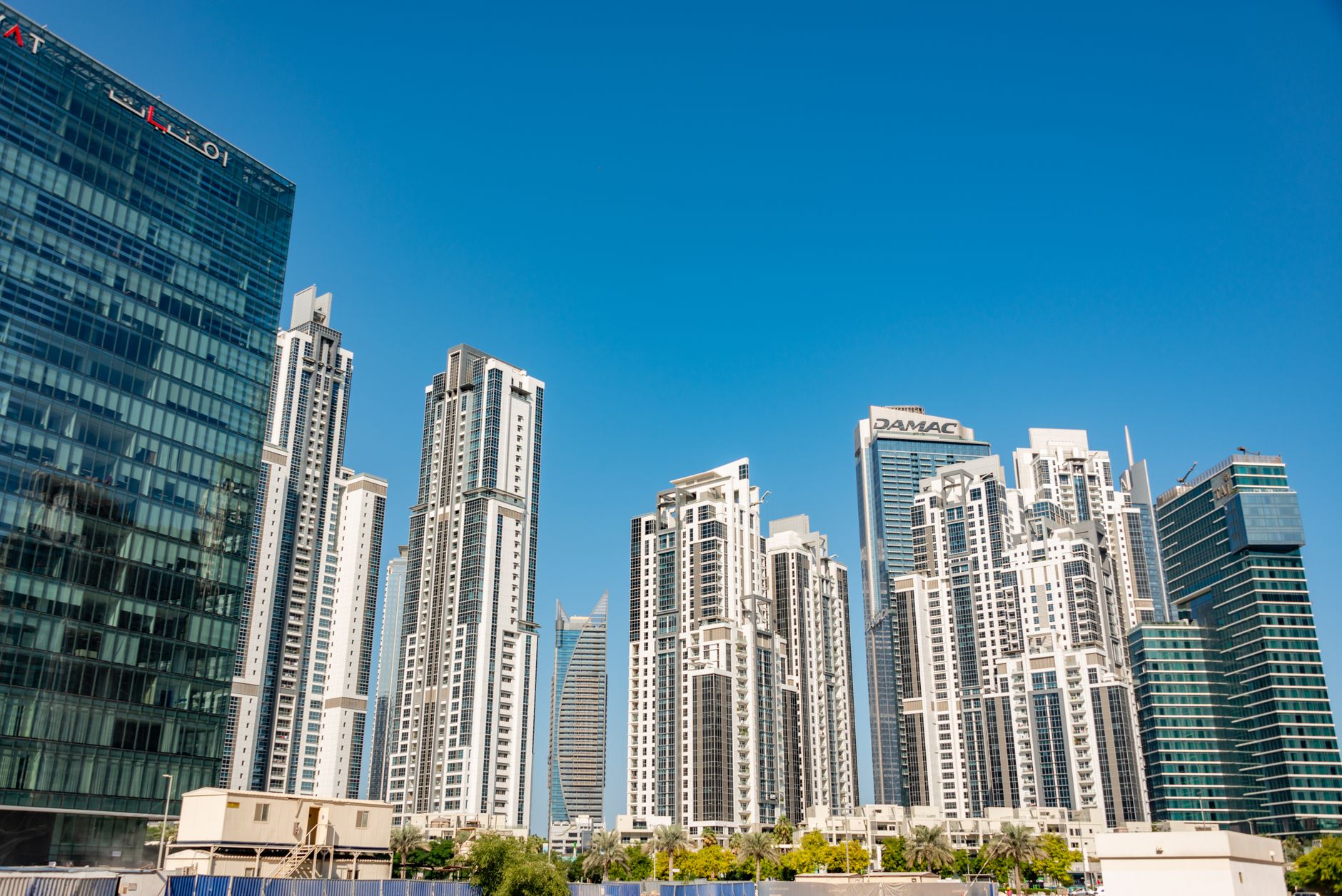
The Dubai Financial Market has never sat quietly through regional turbulence, and 2026 has done nothing to change that. The broader GCC IPO market has contracted sharply — just over $1 billion in first-time share sales through the first half of the year, the lowest figure since 2021 — yet Dubai's equity market has been doing something more interesting than simply weathering the slowdown. It has been recalibrating. Different issuers are coming to market. A more selective class of investor is showing up. What reads as a regional retreat from the outside is, on closer inspection, a structural sorting exercise — one that is reshaping who lists, who invests, and what patient capital in the Gulf actually looks like.
The Iran Conflict Premium: Risk Repriced, Not Abandoned
The Iran war's impact on Gulf equity issuance has been direct and measurable. Saudi Arabia's Arabian Dyar and Mutlaq Al Ghowairi have both pushed their planned listings to the post-summer window. So has Dubai Investment Parks, a name that had generated serious family office interest ahead of its anticipated debut. These are deferrals, not cancellations. That distinction matters, and sophisticated investors are tracking it carefully. Bankers who have worked on several of the paused mandates describe order books that remain warm — held in reserve, not withdrawn.
What the conflict has actually done is introduce a geopolitical risk premium that simply did not exist during the post-pandemic listing boom of 2022 and 2023. For private investors and family office principals across the UAE, that repricing is not entirely unwelcome. Valuations that had stretched uncomfortably during the boom are now anchored to more defensible fundamentals. The investors who waited — rather than rushed — are now positioning themselves to enter at levels that reflect genuine business value rather than speculative momentum. Discipline, it turns out, has its rewards.
What Dar El Balad Revealed About Market Depth
The most instructive data point of the past three months came not from Dubai, but from Riyadh. Dar El Balad, a small-cap Saudi IT services firm, became the first GCC listing since the Iran war broke out, debuting on Tadawul in May with an institutional book 66.6 times oversubscribed and a first-day surge of 28.21 percent. Several international commentary desks had declared the market dormant. This was a clarifying moment.
The listing confirmed two things that Dubai market participants had suspected but needed external validation to assert with confidence. Domestic and regional capital — family offices, sovereign-adjacent funds, high-net-worth individuals across the Gulf — has not retreated from equities. It has simply become more discriminating. And the technology and services segment commands a premium in investor perception that traditional sectors no longer enjoy automatically. For Dubai, where the composition of listed entities has been shifting toward technology and financial services, that is structurally positive. The market is not waiting for global risk appetite to return. It is building a local one.
Sovereign Capital Sets the Floor
Any honest read of the DFM revival has to account for the role sovereign and quasi-sovereign capital plays in setting market confidence. Saudi Arabia's Public Investment Fund raised $7 billion in a three-tranche dollar bond offering in May. The combined order book peaked at $23.8 billion. The 30-year tranche, priced at 135 basis points over benchmark with a 6.25 percent coupon, pulled in long-duration investors from Asia, Europe, and North America. International capital has not abandoned the Gulf story. It has repriced its entry.
That sovereign debt appetite has a direct bearing on equity markets. When institutions buy 30-year Gulf paper, their risk committees are implicitly signalling long-term confidence in regional stability and governance frameworks. Dubai benefits from that halo. Family offices in Kazakhstan, Nigeria, and Indonesia — all markets where The Platinum Capital's readers are active — watch Gulf sovereign signals carefully before committing to regional listed equities. The PIF bond outcome gave those investors a meaningful reference point. Several regional private banks report a measurable uptick in inbound interest in GCC equity exposure since May. Few outside the region have noticed. They should.
The Listings Pipeline: What Is Actually Coming
Dubai Investment Parks remains one of the more anticipated deferred listings in the UAE pipeline. Beyond that, the DFM is drawing from a broader structural push by Dubai's economic development authorities to deepen the exchange's sectoral range. Hospitality, logistics, and healthcare-adjacent businesses — sectors where Dubai carries genuine operational scale and international revenue — are understood to be in various stages of IPO preparation, with several mandates already assigned to regional and international banks ahead of a post-summer window.
The GCC listing impulse is not confined to Saudi Arabia. Oman's Omifco has priced its upcoming IPO following an oversubscribed bookbuild ahead of its Muscat Exchange listing. Qatar's Dandy has priced at QAR 1.37 to 1.42 per share. The numbers tell a complicated story — one of distributed activity across exchanges, not a single dominant market. For Dubai, that is constructive. Gulf investors are actively rotating across the region, and the DFM is competing for quality issuers against a backdrop of genuine capital market development. Hamza Girach, Head of MEA Investment Banking at Citi, has stated publicly that equity markets are expected to remain strong and active as the region emerges from the conflict. That view reflects a consensus forming among regional dealmakers — not wishful thinking.
What Sophisticated Investors Should Be Positioning For
For family office principals and private investors with real capital to deploy, the current window in Dubai's listed markets presents a specific type of opportunity that tends to close fast once sentiment normalises. Deferred quality issuers. A geopolitical risk premium already beginning to compress. Sovereign capital actively anchoring the floor. That combination produces an asymmetric entry point. It does not repeat itself often in a market of the DFM's maturity and liquidity profile.
The post-summer window — expected between September and November 2026 — will likely bring a concentration of pent-up listings across the UAE and Saudi Arabia simultaneously. Investors who have spent this period building familiarity with pending issuers, establishing relationships with lead arrangers, and taking pre-IPO positions where available will be in a materially different position than those reacting to headlines. Dubai's market revival is not a one-listing story, or a one-quarter story. It is the story of a market that used a difficult period to mature. What comes next will reflect that maturity — and the investors who understood that early will be the ones who benefited most.
Written by
Charlotte Reeve
Senior correspondent · Capital Markets & Fintech
Charlotte cut her teeth on an equities desk before moving to the other side of the notebook. She covers capital markets, stock exchanges, and the fintech operators trying to disintermediate the banks that trained her. Sharpest on market microstructure and payments infrastructure; still reads a prospectus for fun. Based in Singapore. Reach out at charlotte.reeve@theplatinumcapital.com.