
Remittance Economies: How Gulf Wages Power South Asia
Every year, tens of billions of dollars flow silently from Gulf construction sites and corporate towers into the villages and cities of South Asia, sustaining entire national economies through a financial artery that most institutional investors have yet to fully price into their emerging market strategies. For family offices and sovereign wealth managers seeking asymmetric exposure to demographic-driven growth, understanding the structural mechanics of remittance corridors between the GCC and countries such as Bangladesh, India, Nepal, and Pakistan is no longer a peripheral consideration — it is a foundational one.…

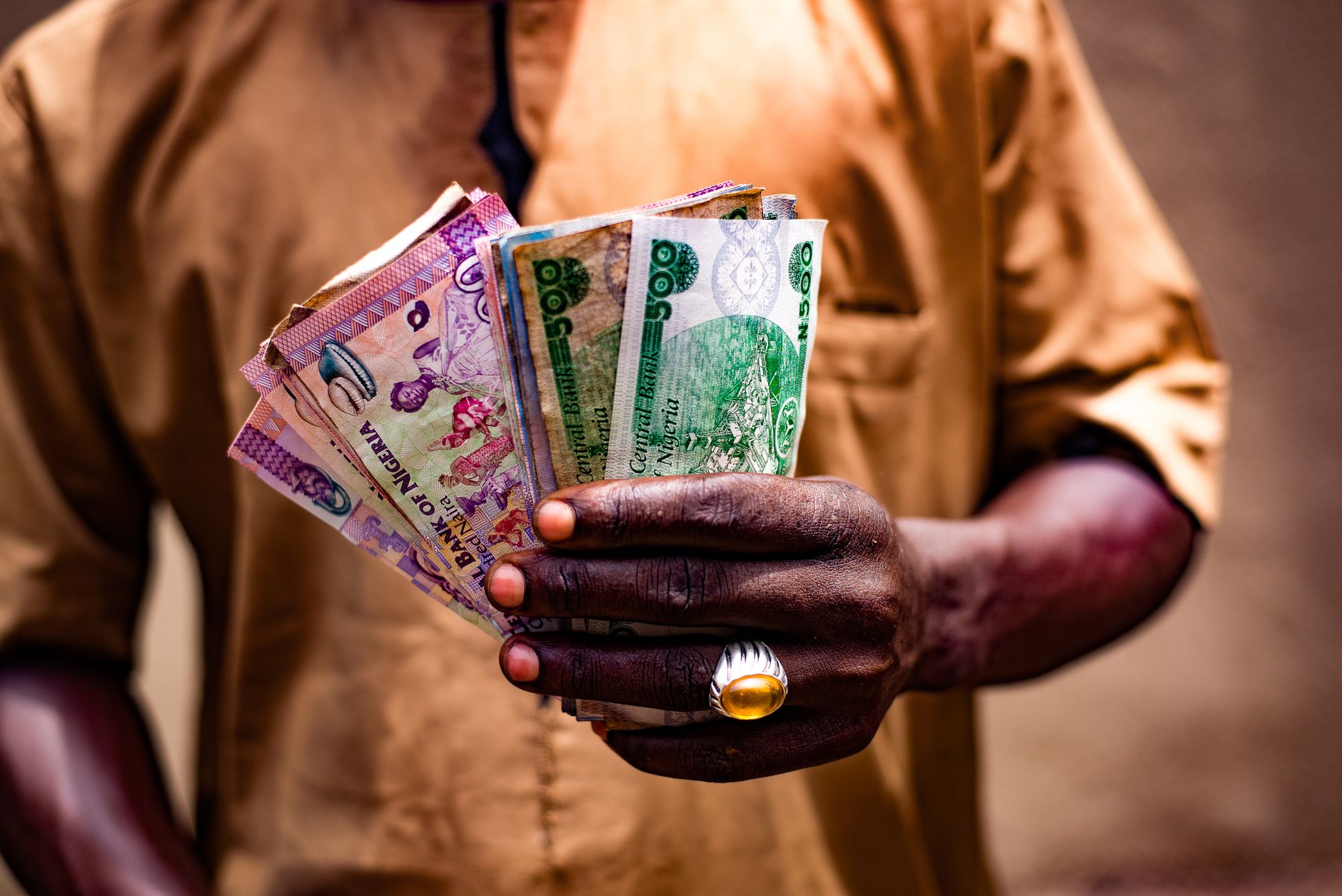
Every month, across construction sites in Riyadh, hospital wards in Dubai, and logistics hubs in Doha, millions of South Asian workers collect their wages, walk to a remittance counter or open a mobile app, and send a portion of what they have earned back to families in Bangladesh, India, Nepal, Pakistan, and Sri Lanka. The amounts are modest individually — a few hundred dollars at a time. Collectively, they constitute one of the most consequential financial flows in the global economy, quietly underpinning household consumption, real estate markets, and national foreign exchange reserves across an entire subcontinent. As the Gulf states accelerate their economic transformation in 2026, investors and policymakers are asking the same question: is this system evolving fast enough to serve the people who depend on it — and what do structural shifts in GCC labour demand actually mean for its future?
The Scale of the Flow
The World Bank estimates that South Asia received approximately $189 billion in remittances in 2024, making it the largest remittance-receiving region on earth. India alone absorbed over $120 billion, retaining its position as the world's top recipient nation. Pakistan received $27 billion, Bangladesh $22 billion, and Nepal roughly $9 billion. In each case, those figures exceed the country's foreign direct investment inflows by a considerable margin. That is worth sitting with for a moment.
The GCC drives a substantial share of these numbers. The UAE, Saudi Arabia, Qatar, Oman, and Kuwait collectively account for an estimated 35 to 40 percent of all remittances entering South Asia, with the UAE and Saudi Arabia dominant among them. For Nepal and Bangladesh, Gulf remittances are not supplementary income. They are the primary stabiliser of the national balance of payments.
What makes this flow structurally significant is its consistency. Unlike portfolio capital, remittances do not reverse sharply during market downturns. Workers tend to send more, not less, when families face pressure — creating a counter-cyclical buffer that no bilateral aid programme or development loan has managed to replicate at equivalent scale. For private investors and family offices operating in frontier and emerging markets, that stability deserves serious attention. Remittance-dependent economies carry a risk profile that aggregate GDP statistics alone do not fully capture.
The Gulf's Transformation and Its Labour Implications
The context in which these flows are generated is changing fast. Saudi Arabia's Vision 2030 Annual Report, released on April 28, 2026, confirmed that the Kingdom's non-oil sectors now contribute 55 percent of GDP, with non-oil growth running at 4.9 percent in 2025. The private sector accounts for 51 percent of GDP. More than 1.7 million SMEs are now registered — triple the number recorded when the programme launched. Crown Prince Mohammed bin Salman has confirmed that Vision 2030 enters its third and final phase in 2026, with the emphasis shifting to consolidating structural gains rather than announcing new megaprojects.
For the South Asian labour diaspora, that transition cuts both ways. The construction and infrastructure programmes that drove Gulf labour demand for decades are being scaled back. Saudi Arabia's Public Investment Fund cut its construction and infrastructure budget from approximately $71 billion in 2024 to $30 billion in 2025 — a reduction of nearly 58 percent — as capital shifts toward AI, digital infrastructure, financial services, and entertainment. In March 2026, PIF signed a $2.7 billion contract with Hexagon for a 480-megawatt AI data centre in Riyadh, the largest single AI infrastructure commitment in GCC history. Total Saudi AI-related investment commitments now exceed $20 billion, including capital from Microsoft and Google Cloud alongside domestic entities. These facilities employ engineers and data specialists. Not the mass labour cohorts that built the hotels and highways of the previous decade.
The net effect is not a collapse in Gulf labour demand. It is a bifurcation. Demand for lower-skilled construction workers is softening. Demand for technicians, healthcare workers, logistics professionals, and service sector employees is rising — partly driven by Saudi Arabia's tourism surge to 123 million visitors annually and the UAE's continued expansion as a regional services hub. South Asian workers with vocational credentials in medical support, facility management, and hospitality are well-positioned. Those without transferable skills face a considerably harder market.
The Infrastructure of the Transfer
The mechanics of how money moves have improved considerably, though unevenly. The UAE's Central Bank has pushed hard for digital remittance adoption. Platforms such as LuLu Exchange, Al Ansari Financial Services — which listed on the Abu Dhabi Securities Exchange in 2023 — and a growing cohort of fintech operators including Now Money and Pyypl have compressed costs and expanded access. The global average cost of sending $200 still sits above 6 percent according to World Bank data, but Gulf-to-South Asia corridors have in many cases fallen below 4 percent for digital channels. Further compression is likely as mobile wallet penetration deepens on the receiving end.
The receiving end has been transformed too. Bangladesh's bKash, Pakistan's Easypaisa, and India's UPI infrastructure now allow remittances to reach households in rural areas that previously depended entirely on physical agent networks. Few outside the payments industry have registered how dramatically this changes the economics. They should. For family offices and investors evaluating financial infrastructure plays in South and Southeast Asia, these corridors represent high-volume, low-margin businesses with significant scale advantages — a sector that has attracted strategic interest from regional banks and global payment networks alike.
What It Means for Receiving Economies
Remittances in South Asia do not simply sustain household consumption. They capitalise it. In Pakistan's Punjab province and Bangladesh's Sylhet region, remittance inflows are visibly reflected in real estate values, private school enrolment rates, and small business formation. Nepal's economy would contract materially without Gulf wages — the country's trade deficit is almost entirely covered by worker remittances. The Gulf's economic model and South Asia's development trajectory are structurally intertwined in ways that bilateral diplomatic relationships rarely formally acknowledge.
Egypt, while not South Asian, offers an instructive parallel. More than 3 million Egyptians work in GCC states. Remittance inflows exceeded $22 billion in 2024. Cairo's ability to manage its foreign exchange position is partially contingent on Gulf labour market conditions — a dependency that Egyptian policymakers and international creditors both factor into sovereign risk assessments. The same logic applies, at varying degrees of intensity, across Colombo, Dhaka, and Kathmandu.
The Investment and Policy Horizon
For high-net-worth individuals and family offices with exposure to South Asian real estate, consumer finance, or retail banking, the trajectory of Gulf remittances is a macro variable that warrants deliberate monitoring. A sustained reduction in Gulf labour demand — whether driven by Saudisation targets, automation, or PIF's pivot to capital-intensive technology sectors — would transmit directly into household income levels across remittance-dependent regions. Property values, retail credit performance, SME lending books: all of them feel it. Aggregate economic forecasts tend to understate that transmission effect considerably.
The other side of that equation is equally worth watching. As the Gulf states deepen their service economies and expand healthcare, education, and tourism infrastructure, they will require a more credentialled South Asian workforce for longer than the infrastructure build-out phase might have suggested. Governments in Bangladesh, Nepal, and Sri Lanka that invest in targeted vocational training aligned with GCC sectoral demand are effectively hedging their remittance streams. The numbers tell a complicated story — but the direction is clear. Investors who identify and back the private training institutions, digital credentialing platforms, and migration services companies facilitating this skills pipeline are positioning themselves at the intersection of two of the most consequential economic systems in the developing world. A system that moves $189 billion a year with the quiet precision of a mechanism that almost nobody outside of it fully understands.

Written by
Amelia Rowe
Senior correspondent · Banking & Economy
Amelia spent eight years inside a sovereign wealth fund before deciding she'd rather write about institutional money than allocate it. She covers central banking, insurance, and the macro decisions that quietly choose which markets get the next decade. Sharp on monetary policy; impatient with anyone who confuses noise with signal. Based in London. Reach out at amelia.rowe@theplatinumcapital.com.