

Gulf Industrial and Logistics Real Estate: The E-Commerce Effect
As e-commerce penetration across the Gulf Cooperation Council accelerates beyond pre-pandemic trajectories, the demand for grade-A industrial and logistics assets is reshaping capital allocation strategies for institutional investors and sovereign-backed funds alike. The convergence of last-mile delivery infrastructure, cold chain expansion, and free zone development is quietly engineering one of the most compelling risk-adjusted return profiles in the region's real estate landscape.…
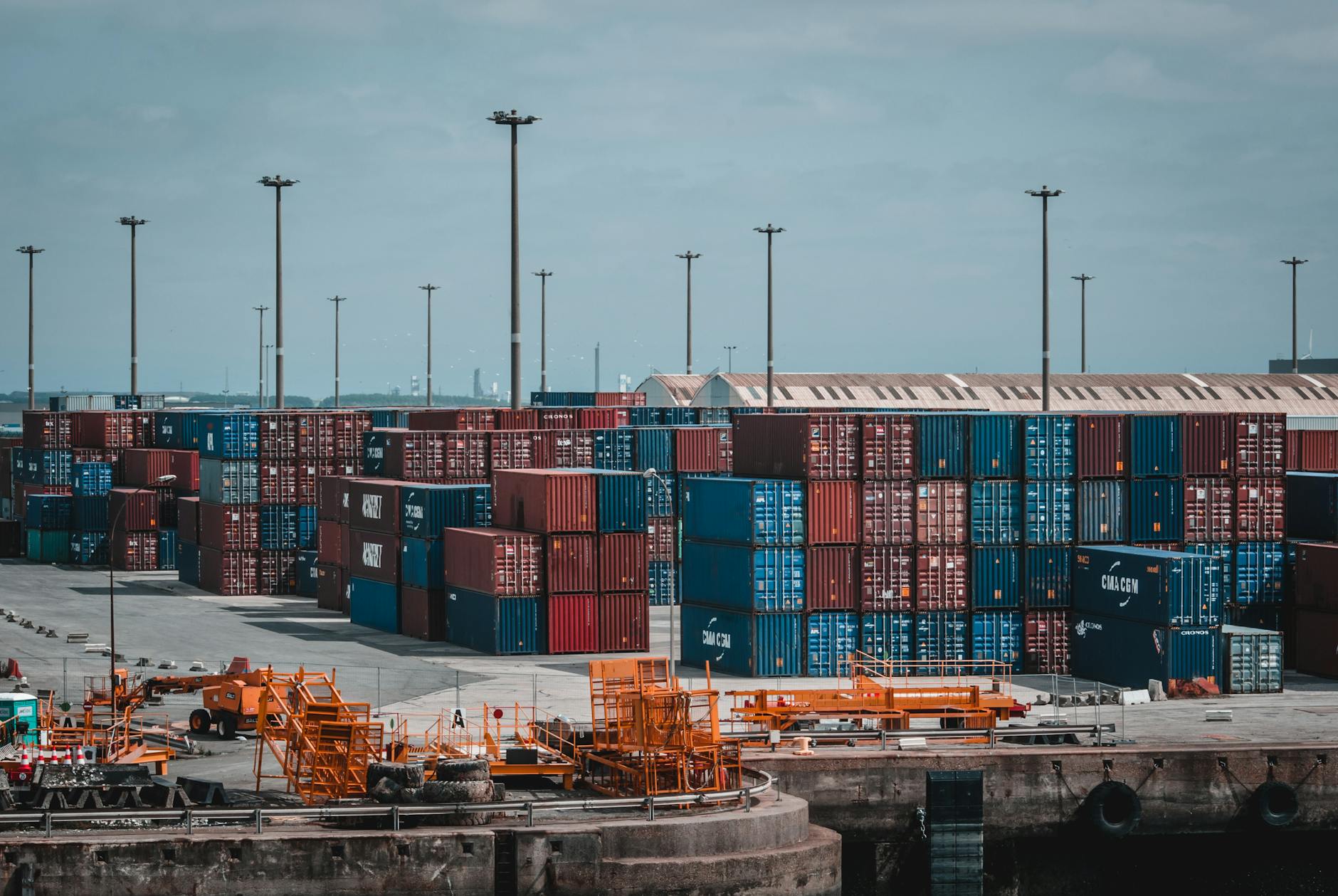
The headlines from Dubai's luxury residential market remain impossible to ignore. Binghatti's Bugatti Residences recorded AED 270 million in penthouse sales in June 2026 alone. Knight Frank confirmed 296 home sales above $10 million in H1 2026, worth a combined $5.1 billion. Dazzling numbers. But while that story dominates the conversation, a quieter transformation is reshaping how serious capital thinks about the Gulf's built environment — and it has nothing to do with penthouses. Industrial and logistics real estate, turbocharged by the rapid expansion of e-commerce across the Middle East, is pulling in family offices, sovereign-adjacent investors, and institutional allocators who have long understood a simple truth: the infrastructure behind commerce tends to outperform the commerce itself.
The E-Commerce Surge Driving Structural Demand
The GCC e-commerce market is projected to surpass $50 billion in gross merchandise value by 2027. Saudi Arabia and the UAE will account for the bulk of that volume. In 2025, online retail penetration in the UAE reached approximately 12% of total retail sales. Compare that to the United Kingdom at roughly 26%, and the growth runway becomes obvious. Saudi Arabia's Vision 2030 agenda has accelerated digital retail adoption sharply — platforms including Noon, Amazon.sa, and a proliferating ecosystem of last-mile delivery operators are collectively driving demand for warehousing, fulfilment centres, and cold-chain logistics facilities at a pace existing supply simply cannot match.
The consequences for industrial real estate are direct and measurable. According to JLL's Middle East research, Grade A logistics vacancy rates in Dubai fell below 5% through much of 2025, prompting rental growth of between 8% and 14% across prime logistics corridors — Dubai South, JAFZA, and the emerging nodes around Al Quoz and Dubai Industrial City. Riyadh tells the same story. Occupancy across modern logistics parks ran consistently above 95% as 3PL operators, FMCG distributors, and e-commerce fulfilment providers competed for scarce, specification-grade space. That is not a cyclical blip. That is a structural squeeze.
Dubai South and the Logistics Corridor Premium
No sub-market better illustrates what is happening than Dubai South. The 145-square-kilometre free zone and urban district, anchored by Al Maktoum International Airport, was once defined primarily by aviation-adjacent tenants. It has since evolved into one of the Gulf's most strategically positioned logistics hubs — and the reason is geography. Its proximity to Jebel Ali, the largest port in the Middle East and among the ten busiest globally, creates a rare intermodal adjacency that e-commerce operators prize above almost any other factor when evaluating warehouse locations. Air, sea, and road in one corridor. Operators know what that is worth.
Rental rates for Grade A logistics space at Dubai South have risen to between AED 35 and AED 45 per square foot annually. Tenants including Aramex, Agility, and a growing cohort of direct-to-consumer brands establishing regional distribution infrastructure for the first time are driving that demand. Developers have taken notice. Aldar Properties — which completed its strategic expansion into Dubai through its acquisition of a commercial asset portfolio in 2024 — and Emirates REIT have both signalled renewed interest in logistics development pipelines. The arithmetic is not complicated: residential yields are compressing in prime areas while industrial yields hold firm between 7% and 9% on stabilised assets. The risk-adjusted case for logistics real estate is increasingly hard to argue against.
Riyadh's Industrial Awakening
Saudi Arabia presents a different but equally compelling proposition. The Kingdom's National Industrial Development and Logistics Program — one of Vision 2030's flagship economic pillars — has catalysed billions of riyals in logistics infrastructure investment across Riyadh, Jeddah, and the emerging industrial corridors of the Eastern Province. NEOM's Oxagon, the floating industrial and logistics city, represents the most ambitious articulation of that ambition. But nearer-term capital flows are concentrated where the population already is.
In Riyadh, the logistics real estate market has attracted serious attention from regional developers including Sabic Real Estate and private operators backed by Saudi family conglomerates. Warehouse rents in prime Riyadh locations rose approximately 18% over the two years to end-2025, according to Colliers International data — driven by e-commerce growth, manufacturing reshoring under Vision 2030, and expanding pharmaceutical and cold-chain requirements arriving simultaneously. Then there is the regulatory shift that too few outside the Kingdom have properly absorbed. The government's removal of restrictions on foreign ownership of certain commercial real estate categories has opened the asset class to international capital in ways that were structurally impossible as recently as 2021. That is a significant shift, and it has not yet been fully priced.
The Last-Mile Premium and Urban Logistics Innovation
The most sophisticated opportunity within Gulf industrial real estate right now is urban logistics. Smaller, strategically positioned facilities designed to enable same-day and next-day delivery to dense urban populations. In Dubai, where residential towers cluster across Business Bay, Downtown, and Dubai Marina, the economics of last-mile delivery have pushed operators toward dark store facilities, micro-fulfilment centres, and repurposed ground-floor retail units within a 15-minute drive of major population clusters. Retail space that struggled to let three years ago is now being recast as urban logistics infrastructure. The irony is not lost on landlords who sat on those vacancies.
The same dynamic is playing out across other markets, at varying stages of maturity. In Cairo, Majid Al Futtaim's logistics subsidiary has been expanding its Egyptian footprint ahead of accelerating e-commerce penetration. In Nairobi, cold-chain logistics investment tied to food delivery and pharmaceutical distribution has drawn East African family offices looking beyond traditional commercial property. In Jakarta and Kuala Lumpur, regional logistics REITs are actively sourcing last-mile assets as consumer behaviour shifts durably toward online purchasing. Few outside the region have noticed. They should. The Gulf is the most mature of these markets, but the investment thesis is consistent across all of them: population density plus rising digital adoption plus inadequate existing supply equals rental growth and capital appreciation for well-located industrial assets.
What Sophisticated Investors Are Watching Now
Family offices and private investors currently overweight in Gulf residential — where trophy assets continue to transact at remarkable prices, including the record Dh400 million Jumeirah beachfront land deal brokered by Arabian Acres in March 2026 — will find in industrial and logistics real estate a meaningful diversification avenue with contractual income streams, longer lease tenures, and lower management intensity than comparable retail or residential portfolios. The numbers tell a compelling story on their own.
The most astute capital entering this space is not simply buying warehouses. It is acquiring land banks adjacent to infrastructure nodes, structuring build-to-suit arrangements with anchor tenants, and establishing positions ahead of the next wave of e-commerce penetration growth. GCC internet penetration now exceeds 95% in the UAE and sits above 85% in Saudi Arabia. Smartphone commerce has become the default retail channel for consumers under 40. These are not speculative demand drivers. They are structural ones — baked into the demographics and the digital infrastructure of the region's fastest-growing economies. The window to enter at current valuations, before institutional capital fully reprices the asset class, is narrowing. Faster, frankly, than most observers yet appreciate.

Written by
Tom Whitmore
Senior correspondent · Real Estate & Private Companies
Tom has interviewed most of the operators reshaping the Gulf skyline — and a few of the ones who tried and didn't. His beat is real estate, commodities, manufacturing, and the founder-led private companies that never bother to list. He knows which buildings and balance sheets survive a downturn before the spreadsheet does. Based in Dubai. Reach out at tom.whitmore@theplatinumcapital.com.