

Riyadh Housing Demand: The Supply Race Under Vision 2030
Riyadh's residential market is entering a structural inflection point, where an unprecedented surge in expatriate arrivals, accelerated giga-project employment, and a government-mandated homeownership target of 70 percent by 2030 are collectively outpacing the Kingdom's most ambitious construction pipelines. For family offices and institutional capital seeking asymmetric exposure to one of the Gulf's most supply-constrained urban corridors, the window to position ahead of the next demand cycle is narrowing with each quarterly delivery shortfall.…
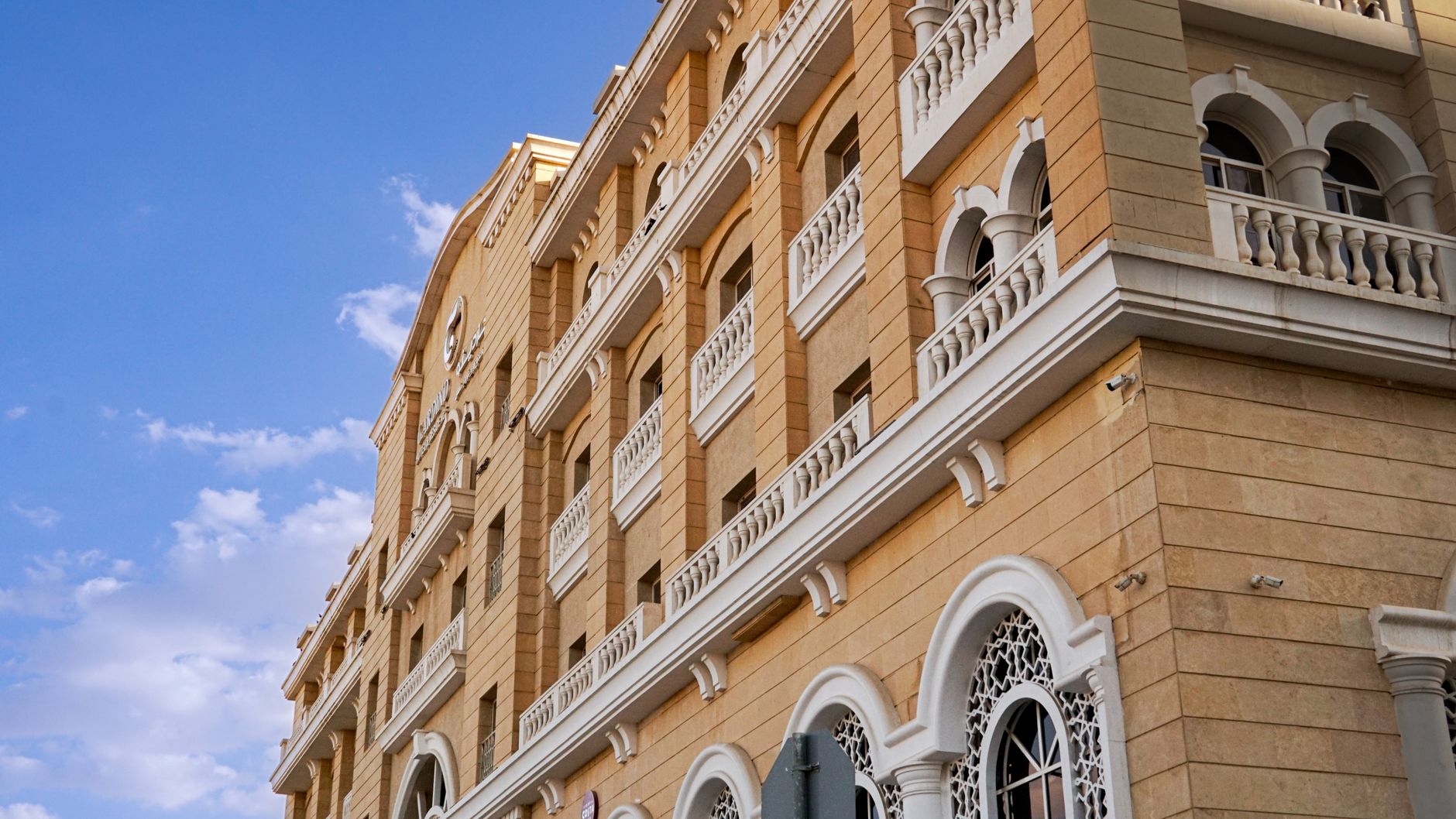
Riyadh is building at a pace rarely seen outside wartime reconstruction. Cranes dot the skyline from King Abdullah Financial District to the expanding suburbs of Diriyah, and demand for housing is still outrunning supply by a margin wide enough to reshape how investors, developers, and family offices think about the Saudi capital. With Vision 2030 now in its defining decade, the pressure to house a young, urbanising population — alongside the influx of expatriate professionals, regional headquarters relocations, and tourism infrastructure workers — has turned Riyadh's residential market into one of the most consequential real estate stories in the emerging world. The numbers tell a complicated story. But the direction of travel is unmistakable.
The Demand Equation: Population, Migration, and the Expat Surge
Riyadh's population currently sits at approximately 7.5 million. The Kingdom's own planning targets project that figure reaching 15 to 20 million by 2030. That trajectory is not organic growth alone.
Saudi Arabia's Regional Headquarters Programme has compelled more than 200 multinational corporations to establish their Middle East bases in Riyadh, bringing with them senior executives, legal teams, and financial professionals who require premium accommodation. The programme works through hard incentives — government contracts are effectively conditioned on local presence — and it has introduced a new, persistent class of housing demand that simply did not exist at scale five years ago. That is a significant shift, and most external investors have been slow to price it in.
Then there is tourism. Vision 2030 targets 150 million visitors annually by the end of the decade, and that ambition is generating demand for branded residences and serviced apartments that blur the line between hospitality and residential real estate. For family offices and private investors from the Gulf, Central Asia, and Southeast Asia — investors trained to evaluate hotel and residential assets as entirely separate categories — Riyadh is forcing a rethink. In this market, increasingly, they are one asset class.
Supply Constraints: Why Construction Is Not Keeping Pace
The development activity is real. The supply gap is also real. These two facts coexist, and understanding why matters for anyone allocating capital here.
The Kingdom's National Housing Company has committed to delivering 300,000 affordable units across Saudi cities. That pipeline addresses one segment of the market. The mid-to-premium residential stock — the segment that matters most to expatriates, professionals, and upper-income Saudi families — remains materially undersupplied. Land costs in prime districts such as Al Olaya, Al Malqa, and the emerging Diriyah Gate corridor have escalated sharply, compressing margins for developers already absorbing elevated construction costs driven by global commodity pressures. Building more does not automatically mean building what the market needs most.
Knight Frank's broader Gulf research documented a 14% year-on-year rise in $10 million-plus residential transactions in Dubai during H1 2026. The dynamic behind that figure — luxury supply absorbed faster than it can be built — is now beginning to replicate in Riyadh's upper-mid and premium segments, though transaction transparency here remains thinner than in the UAE. What developer and agent conversations across the market make clear is that vacancy rates in quality housing stock, particularly villa compounds and serviced apartment towers, have tightened considerably since 2023. The market is not waiting for perfect data.
Giga-Projects and the Halo Effect on Surrounding Residential Markets
NEOM, Diriyah, Qiddiya, the Red Sea Project — these attract attention as tourism and infrastructure plays. Their indirect effect on Riyadh's housing market receives far less analysis. Few outside the region have connected these dots. They should.
Each giga-project draws a substantial workforce: engineers, architects, project managers, specialist consultants. Many are based in Riyadh and commute or rotate to project sites. That creates sustained housing demand in the capital tied directly to the pace of giga-project execution — and despite timeline revisions in 2024 and 2025, that pace remains ambitious. The workforce does not disappear when delivery schedules slip. It stays, and it needs somewhere to live.
The Diriyah Gate Development Authority alone oversees a $20 billion cultural and tourism destination on Riyadh's outskirts, with phased openings now materialising. As hospitality assets in that corridor come online, premium residential development nearby will follow. The precedent is established. In Dubai's Hills Estate, Knight Frank recorded 51 homes sold above $10 million in H1 2026 alone — the emirate's strongest luxury location by that measure — precisely because master-planned infrastructure arrived before residential appetite peaked. Riyadh's Diriyah corridor is tracing a similar arc, earlier in the cycle.
Who Is Investing: Regional Capital and the Family Office Calculus
Private capital flowing into Riyadh real estate is increasingly regional. Saudi family offices, historically conservative in their domestic property allocations relative to their international holdings, are recalibrating. Dollar-pegged returns, a young domestic consumer base, and government-backed demand underpin an investment case that is genuinely difficult to replicate elsewhere in the emerging world. Kuwaiti and Bahraini investors have long been active in Saudi residential and commercial assets. That participation is deepening as inter-GCC capital mobility grows.
Beyond the Gulf, early signals are coming from Kazakh and Azerbaijani family offices that have already diversified into Dubai and are now sizing up Riyadh as a second Gulf allocation. The logic is clean: Dubai offers liquidity and transparency; Riyadh offers scale, government-aligned growth, and earlier-stage pricing. For investors operating on a five-to-ten year horizon — the standard frame for a family office principal — the risk-adjusted case for Riyadh premium residential is strengthening, particularly in branded residences and mixed-use developments where institutional-grade management structures absorb operational complexity that private investors would rather not carry themselves.
Where the Opportunity Concentrates
The most defensible positions in Riyadh's residential market over the next three to five years sit in two distinct segments. Premium serviced apartments and branded residences targeting the corporate expatriate community carry structural demand support from the Regional Headquarters Programme against a backdrop of limited quality supply. That is a durable combination. In the second segment — mid-market villa and townhouse developments in well-connected suburban districts — Saudi household formation rates and government mortgage subsidies are generating demand that is less cyclical and less dependent on external sentiment than anything you will find in a comparable emerging market.
For private investors and family offices evaluating entry, the current moment has one defining characteristic: Riyadh's premium residential market remains significantly less liquid and less internationally legible than Dubai's. Pricing has not yet fully absorbed the structural demand drivers now in place. That gap will close. The developers, institutional investors, and sovereign vehicles who move while data remains opaque and competition stays thin are positioning ahead of a repricing that Vision 2030's trajectory makes increasingly hard to avoid. In a market of this scale, moving early is not speculation. It is preparation.
Written by
Tom Whitmore
Senior correspondent · Real Estate & Private Companies
Tom has interviewed most of the operators reshaping the Gulf skyline — and a few of the ones who tried and didn't. His beat is real estate, commodities, manufacturing, and the founder-led private companies that never bother to list. He knows which buildings and balance sheets survive a downturn before the spreadsheet does. Based in Dubai. Reach out at tom.whitmore@theplatinumcapital.com.