Disaster Response Giving: Gulf Donors and Global Crises
As catastrophic floods, conflict zones, and climate-driven emergencies increasingly destabilize emerging markets and disrupt global supply chains, Gulf-based family offices and sovereign-aligned philanthropists are redefining disaster response giving not merely as humanitarian obligation but as a sophisticated instrument of geopolitical influence and long-term capital preservation. The most consequential donors operating across the GCC today are moving decisively beyond reactive charitable pledges, deploying structured giving vehicles and impact-linked mechanisms that align crisis intervention with strategic regional interests and measurable portfolio-adjacent returns.…
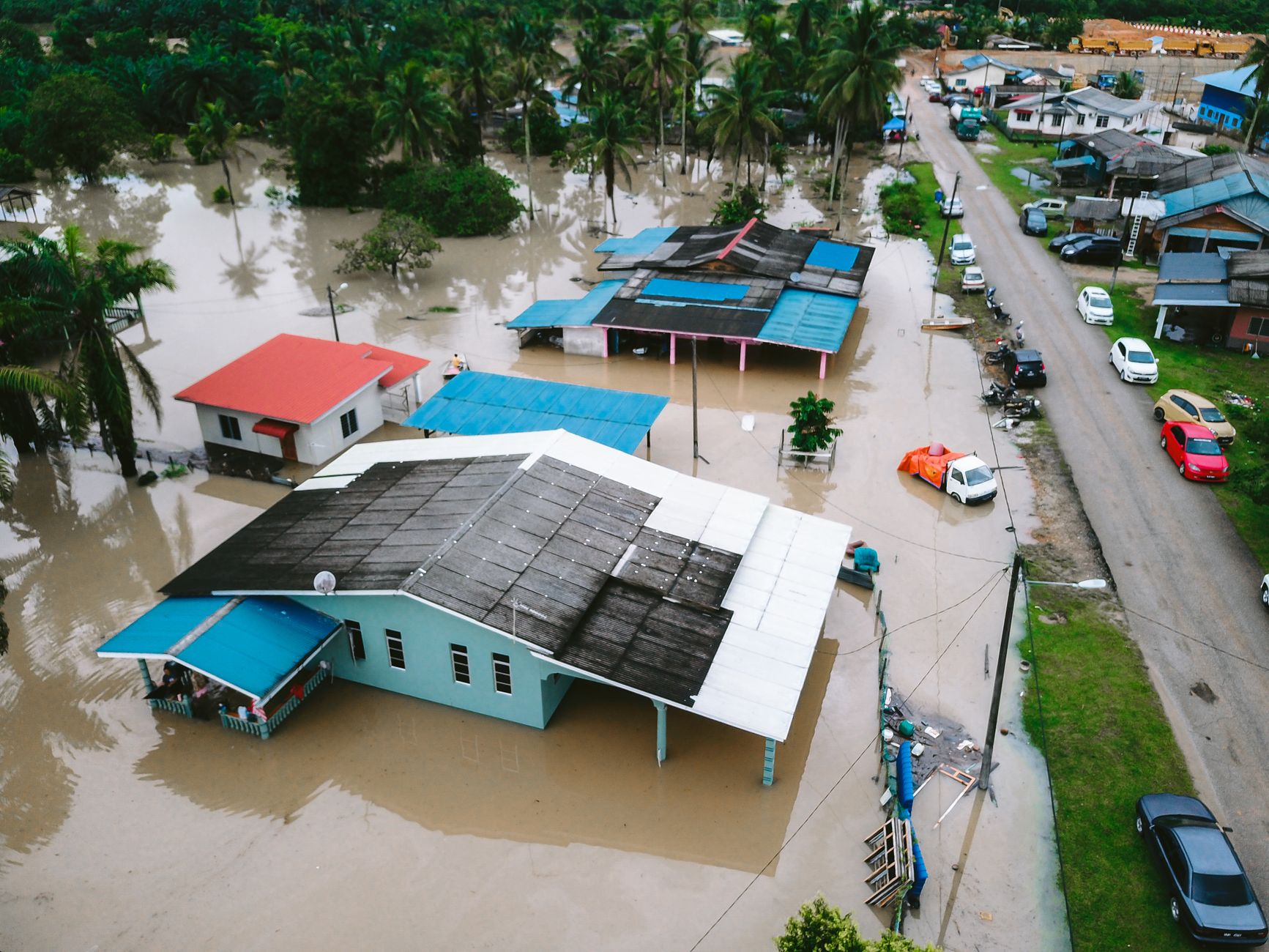
When Cyclone Hidaya tore through the East African coastline in early 2025, three Emirati family foundations had already moved. Within 72 hours, they had pledged a combined $40 million — no press conference, no extended deliberation. The funds moved through pre-established channels, reached verified partners on the ground, and were deployed before most multilateral agencies had finished their damage assessments. This was not an exception. It is becoming the defining signature of Gulf philanthropic capital in moments of global crisis: fast, structured, and almost entirely invisible to the audiences that track Western charitable giving.
The Architecture of Gulf Crisis Giving
Gulf donors have long written large cheques in humanitarian moments. What has changed — sharply, over the past five years — is the infrastructure behind those cheques. Giving that once flowed through informal religious obligation, zakat disbursed through mosque networks and personal relationships, now increasingly moves through professionally managed foundations, donor-advised vehicles, and blended finance structures that sit comfortably alongside institutional capital. That distinction matters enormously, for both impact and accountability.
The UAE, Saudi Arabia, and Qatar collectively channelled an estimated $8.7 billion in humanitarian and development aid in 2024, according to figures tracked by the OECD's Development Assistance Committee. A meaningful share of that did not originate from government ministries. It came from private family offices and foundations that have deliberately built the operational muscle to deploy in crisis windows. These entities are not replicating the slow machinery of international NGOs. In many cases, they are outpacing it.
The model reflects a genuine philosophical shift. Gulf donors are no longer content to write cheques to intermediaries and wait for annual reports. They want visibility into outcomes, governance over deployment, and hard evidence that their capital is producing measurable change. Those preferences track closely with how their peers in family offices managing $100 million or more in investable assets approach a co-investment decision.
Meem Foundation and the Evidence Standard
Muna Easa Al Gurg's recognition on the 2026 TIME100 Philanthropy list — one of a handful of Gulf-based philanthropists to receive the designation — signals something worth paying attention to. It legitimises a giving philosophy that prioritises evidence over sentiment, outcomes over optics. Al Gurg's Meem Foundation, established in 2024 following a formative engagement with the Gates Foundation's philanthropic leadership programme, has moved fast. Within two years of launch, the foundation has awarded 15 grants, including funding for AI-driven healthcare research at NYU Abu Dhabi's Clinical AI Lab, and has built partnerships with organisations including Anara Impact Capital and Every Pregnancy — entities that themselves operate at the intersection of development finance and measurable social return.
What makes Meem particularly relevant to the disaster response conversation is its structural positioning as both grant-maker and impact investor, with a specific mandate covering refugees and displaced populations. These are, by definition, the people that disaster events hit hardest. Foundations with pre-existing relationships, verified partners, and disbursement infrastructure already embedded in these communities can respond to acute crises far faster than organisations that must first establish operational presence from scratch. Al Gurg has, in effect, built a platform that functions as a standing rapid-response capability — even if that was not how it was originally framed.
Altérra and the Institutionalisation of Blended Capital
The January 2026 launch of Altérra's $1.2 billion co-investment vehicle with BBVA — structured through the Abu Dhabi Global Market and anchored by partners including BlackRock, Brookfield, and TPG — is instructive for reasons that extend well beyond climate finance. It demonstrates that Abu Dhabi's largest impact capital vehicles are now designed with institutional co-investment logic at their core. That is a significant shift. The blended finance architecture Altérra has built, drawing on its initial $30 billion COP28 mandate and its ambition to mobilise $250 billion by 2030, is directly transferable to humanitarian and disaster response contexts.
The logic is straightforward. Crisis events — climate-induced displacement, seismic disasters, health emergencies — generate capital deployment needs that no single donor class can meet alone. The Altérra model offers a pathway: anchor philanthropic capital from Gulf family offices and sovereign-adjacent vehicles, layer in development bank guarantees, and attract institutional investors through de-risked structures that offer both financial return and verified impact credentials. Several Gulf family offices with assets between $500 million and $2 billion are actively exploring whether this model can be adapted for health system resilience funds across sub-Saharan Africa and South and Southeast Asia — regions facing acute disaster exposure with limited domestic fiscal capacity to absorb it. Few outside the Gulf have noticed. They should.
Badr Jafar and the Governance Imperative
As the UAE's Special Envoy for Business and Philanthropy, Badr Jafar has been the most visible advocate for holding Gulf private capital to formal standards when it engages with global challenges. His stewardship of the Pearl Initiative — the Gulf-focused corporate governance platform — reflects a consistent thesis: philanthropic capital, like investment capital, demands rigorous transparency and accountability if it is to attract the scale and legitimacy required to address systemic problems.
In disaster response, governance is not a reputational nicety. It is operationally critical. Funds deployed in crisis environments are exposed to diversion, misallocation, and serious reputational damage. The families and foundations that have built robust governance frameworks — independent oversight, third-party verification, clear reporting obligations to ultimate donors — are precisely the ones that can deploy at speed without sacrificing accountability. The two are not in tension. Jafar's influence on the broader Gulf philanthropic ecosystem has pushed this expectation toward a de facto standard among serious giving families in the UAE and beyond. The numbers bear that out.
What Family Offices Should Be Building Now
The direction of travel is clear. Reactive giving in response to disasters — however generous — is giving way to something more sophisticated: pre-positioned capital, vetted partner networks, and governance structures that allow rapid deployment without procedural delay. The families that will define the next decade of Gulf philanthropy are those treating their humanitarian giving with the same analytical discipline they apply to a co-investment decision. That bar is higher than it used to be.
The tools exist. Blended vehicles structured through ADGM and comparable jurisdictions offer tax efficiency and institutional credibility. Meem Foundation is demonstrating that evidence-based grant-making and impact investment can coexist within a single entity. The governance standard set by figures such as Badr Jafar provides a template that protects both assets and reputation in the most demanding deployment environments. The question for Gulf donors and their advisors is not whether to engage with global crisis response — many already do, and have done for years. The question is whether the infrastructure behind that engagement is built to match the scale of what is coming.
Written by
Amara Osei
Africa & Emerging Markets Correspondent · Philanthropy & Next Generation
Amara covers the philanthropists, foundation founders, and next-generation leaders building wealth and influence across Africa, Southeast Asia, and Central Asia. She has a particular eye for the family businesses handing the reins to a generation educated abroad and building at home. Based in Nairobi. Reach out at amara.osei@theplatinumcapital.com.