Central Asia Between Powers: The Multi-Vector Investment Play
As Central Asia emerges as one of the final frontiers of untapped sovereign wealth, the region's five republics are executing a calculated balancing act between Beijing's infrastructure capital, Moscow's legacy influence, and a surging wave of Gulf and Western investment — creating rare asymmetric opportunities for sophisticated allocators who understand the geopolitical terrain. For family offices and institutional players willing to navigate the jurisdictional complexity, Kazakhstan's energy corridors, Uzbekistan's liberalizing economy, and the broader Trans-Caspian trade architecture represent a generational repositioning play that rewards early conviction with outsized exposure to the next decade's most consequential emerging market story.…
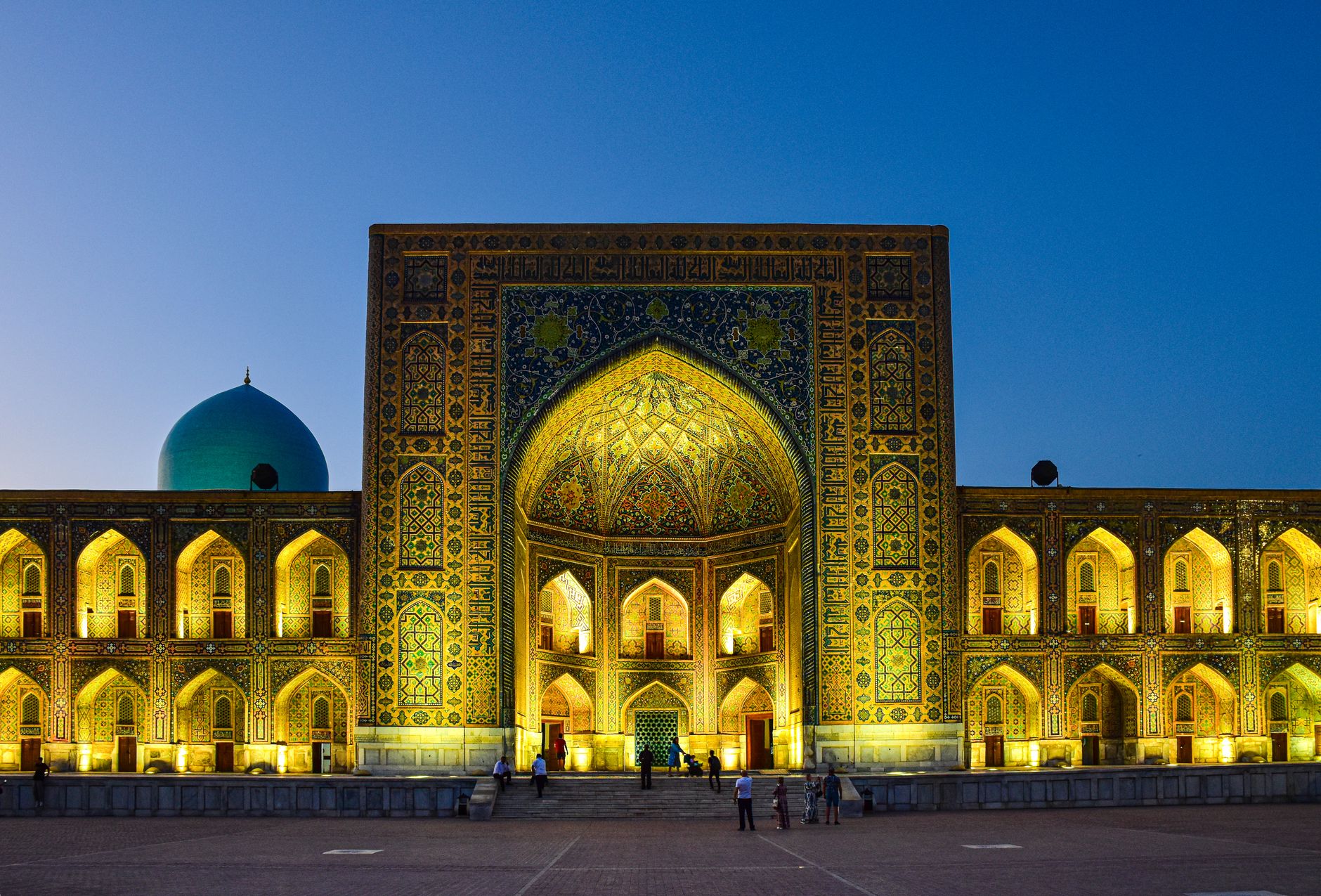
For the landlocked republics of Central Asia, geography has never been destiny — it has been leverage. Kazakhstan, Uzbekistan, Azerbaijan, and their neighbours have spent three decades quietly mastering what Tashkent's diplomats call "multi-vector" foreign policy: the art of being indispensable to everyone while being captured by no one. In 2026, that posture is generating serious capital flows. The world's most sophisticated sovereign wealth funds have begun to take notice — and their moves are reshaping the region's investment architecture faster than most private investors have registered.
The New Architecture of Gulf Capital Moving East
The most consequential signal came in May 2026. L'imad — Abu Dhabi's newly consolidated $300 billion sovereign investment powerhouse, formed after the government folded Abu Dhabi Development Holding Group into the fund in January — unveiled a $30 billion venture explicitly targeting energy, transportation, and logistics opportunities across the Middle East and Central Asia. The consortium includes BlackRock's Global Infrastructure Partners and Singapore's Temasek Holdings. That combination — Gulf petrodollars, American institutional infrastructure capital, and Asian sovereign patience — converging around a single regional thesis is not a minor allocation. It is a directional statement. Family offices and private investors who read sovereign behaviour as a leading indicator should be paying close attention.
The broader Gulf sovereign wealth picture reinforces the momentum. The five largest Gulf funds — Saudi Arabia's Public Investment Fund, Mubadala, ADIA, L'imad, and the Qatar Investment Authority — deployed nearly $26 billion in just three months between March and May 2026. Even as geopolitical pressures mounted across the wider region, capital kept moving. Central Asia, sitting at the intersection of the BRI corridor, Russian trade re-routing networks, and Gulf-financed infrastructure belts, is absorbing a meaningful share of that outward flow. Few outside the region have fully priced this. They should.
Kazakhstan and Uzbekistan: The Anchor Economies Attracting Strategic Attention
Kazakhstan remains the region's dominant prize. Its GDP is approaching $280 billion. It holds substantial hydrocarbon reserves. Its government has aggressively courted foreign direct investment through the Astana International Financial Centre — modelled partly on Dubai's DIFC — and positioned the country as the credible institutional entry point for capital seeking Central Asian exposure without frontier-market risk. Kazakh authorities reported FDI inflows of approximately $28 billion in 2025, with Gulf sources accounting for a growing share after PIF's earlier commitments to joint ventures in petrochemicals and green hydrogen.
Uzbekistan is the region's second anchor. Under President Shavkat Mirziyoyev's continued reform agenda, the country's economy expanded at approximately 6 percent in 2025, driven by manufacturing, agro-processing, and a liberalised trade posture that has drawn Turkish, South Korean, and increasingly Gulf capital. Saudi Arabia's sovereign funds have explored co-investment structures in Uzbekistan's textile and logistics sectors. Qatari sovereign entities have maintained quiet dialogue with Tashkent on agricultural infrastructure — an area of acute strategic interest given Gulf food security imperatives. These conversations are low-profile by design. That does not make them less serious.
The Geopolitical Realignment and Its Unintended Dividends
The emergence of a new Saudi-led diplomatic grouping — drawing in Turkey, Egypt, Pakistan, and Qatar following a June 21, 2026 meeting of foreign ministers in Cairo — carries implications that extend well beyond the Gulf. Turkey's Foreign Minister Hakan Fidan and Saudi Foreign Minister Prince Faisal bin Farhan have both invested significant diplomatic capital in deepening Ankara and Riyadh's influence in Central Asia. The reasons are not hard to identify: Turkic cultural affinity, shared Islamic heritage, and expanding trade corridors give both countries natural footholds in a region that Russia once considered its exclusive backyard.
Turkey's approach through the Organisation of Turkic States — which includes Kazakhstan, Uzbekistan, Kyrgyzstan, and Azerbaijan as full members — has been methodical and patient. Ankara has connected Central Asian exporters to Turkish logistics networks, facilitated cross-border trade financing through Turkish state banks, and positioned Istanbul as the regional financial relay between Central Asia and European markets. For the Gulf states in that new Cairo grouping, Turkey's institutional presence in Central Asia is not a rival architecture. It is a complementary channel — one that Gulf capital can deploy through without requiring direct bilateral frameworks to be built from scratch.
Qatar's rehabilitation as a regional diplomatic leader adds a further dimension. That is a striking reversal from its 2017 isolation. Doha's capacity for back-channel diplomacy, its existing relationships with both Iran and Central Asian republics, and QIA's increasingly active posture make Qatar an unlikely but effective facilitator for investments that demand political sensitivity. Wealthy investors with regional exposure should treat Qatari sovereign activity as an intelligence signal as much as a competitive force.
Russia's Diminished Role and the Corridor Opportunity
Russia's structural economic weakening since 2022 has produced the single largest shift in Central Asia's investment calculus. Moscow's traditional dominance over the region's export pipelines, financial systems, and labour markets is eroding — not collapsing overnight, but retreating in ways that are durable and measurable. The Trans-Caspian International Transport Route — connecting Kazakhstan and Azerbaijan across the Caspian to Georgia and onward to Turkey and Europe — has seen cargo volumes increase by more than 80 percent since 2022. That is an extraordinary number. Azerbaijan, chronically underdiscussed in international investment commentary, now functions as the critical node in this corridor. SOCAR and the state railway company BTK are expanding capacity to meet demand that would have seemed implausible five years ago.
This corridor shift matters enormously for private capital. Logistics, warehousing, cold chain infrastructure, and port facilities along this route represent early-stage opportunities that Gulf capital is beginning to price seriously. The L'imad-BlackRock-Temasek consortium's explicit mention of "transportation and logistics" in the context of Central Asia is not coincidental. It reflects due diligence on exactly these corridor assets. The sovereign funds got there first. The private market has not yet caught up.
What Sophisticated Investors Should Be Watching
For family offices, private investors, and fund principals with the capacity to act ahead of consensus, Central Asia's multi-vector positioning creates a specific opportunity set: assets that benefit from more than one geopolitical patron, in jurisdictions that have demonstrated institutional reform credibility, along infrastructure corridors experiencing durable volume growth rather than speculative demand. The distinction matters. This is not a frontier-market story built on a single thesis that unravels when one relationship sours.
The Astana International Financial Centre continues expanding its fund registration framework, offering a common law jurisdiction with English-language arbitration that Gulf and Asian counterparts are increasingly comfortable with. Uzbekistan's capital markets are earlier stage, but they are already attracting structured finance interest from regional development banks. Azerbaijan's position as a transit economy gives it leverage with both the EU — which signed an expanded energy partnership with Baku in 2022 — and the Gulf, which treats Azerbaijani infrastructure as a bridge asset worth holding.
The families and principals who generate the most durable returns from this region will be those who engage now — through direct co-investment with sovereign funds, through platform businesses in logistics and agro-processing, or through positioning in the AIFC's emerging fund structures — before Central Asia becomes the kind of consensus trade that no longer rewards early conviction. The numbers tell a complicated story, but the direction is not complicated at all. The sovereign wealth funds have already made their call. The only real question is how quickly private capital follows.

Written by
Sophie Aldridge
Global Economics Editor · Geopolitics
Sophie spent a decade advising governments on trade policy before deciding the story was more interesting than the memo. She covers global economics, geopolitics, and the power transitions reshaping emerging markets. Sharpest on sanctions, supply chains, and the politics behind the price of everything. Based in Washington, D.C. Reach out at sophie.aldridge@theplatinumcapital.com.