

Ghana Rising: The Business Class and the Sectors Driving It
Ghana's emergence as West Africa's most resilient investment frontier is no accident — it is the deliberate consequence of a maturing business class that is channeling capital into fintech, agribusiness, and upstream energy with the sophistication and discipline that global institutional investors have long demanded. For family offices and sovereign-aligned capital seeking asymmetric returns in a region increasingly central to the reordering of global supply chains, understanding who is building Ghana's next economy — and how — is no longer optional intelligence.…
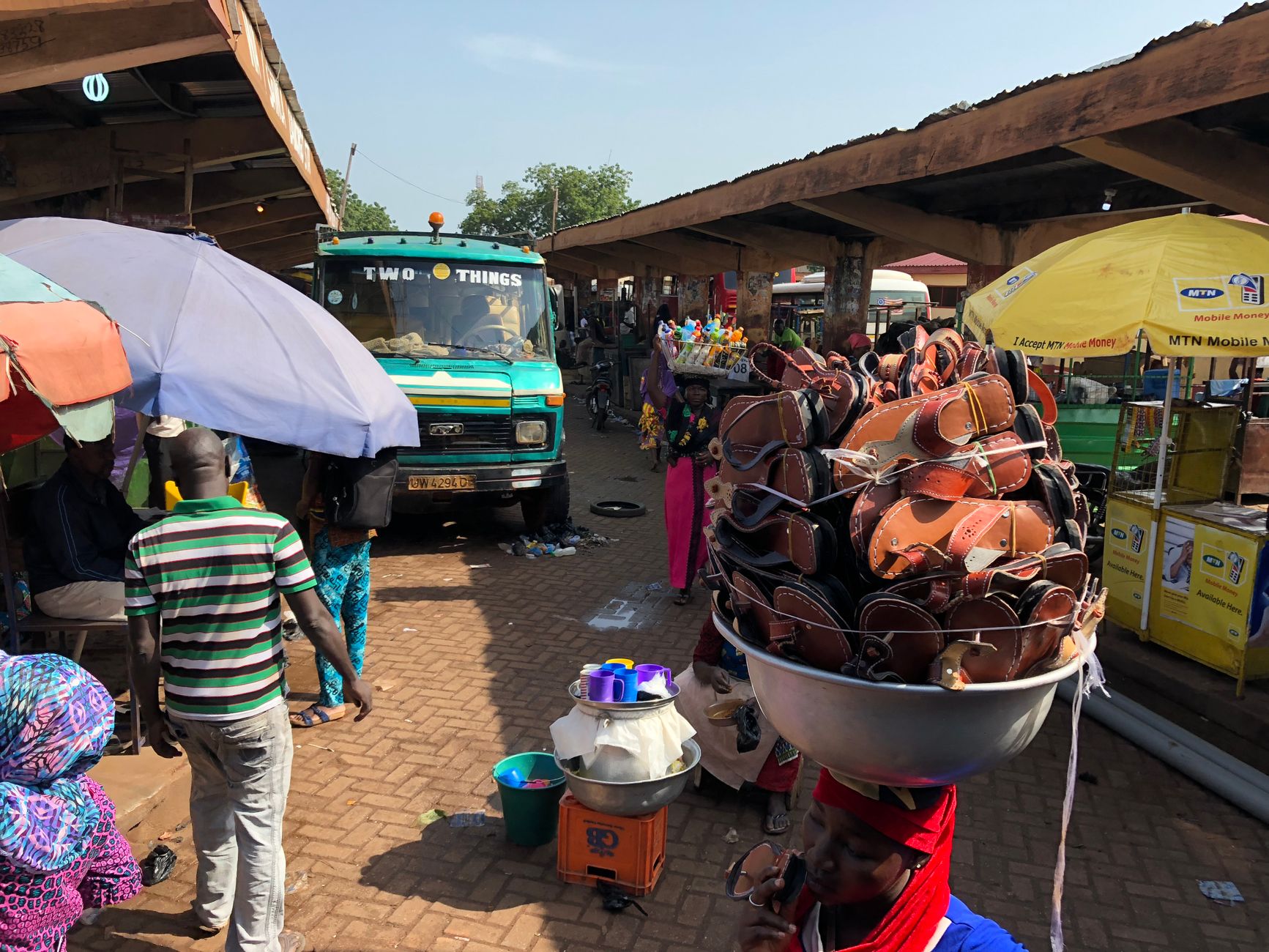
For most of the past decade, Ghana occupied a curious position in the African investment story — acknowledged for its democratic stability and educated workforce, yet consistently overshadowed by Nigeria's sheer scale to its west and South Africa's infrastructure maturity to its south. That calculus is shifting. A convergence of sectoral ambition, diaspora capital, and renewed sovereign credibility following the 2023 IMF programme restructuring is producing a generation of Ghanaian business leaders whose influence is beginning to register well beyond Accra. The private sector is not merely recovering. It is reconfiguring itself around higher-value opportunities — and family offices, regional investors, and Gulf-based capital allocators should be paying close attention.
A Sovereign Foundation Being Rebuilt
Ghana's path through debt restructuring was painful by any measure. Domestic bondholders absorbed significant haircuts. The cedi's depreciation gutted purchasing power across the middle class. But the resolution has produced an unexpected dividend: a cleaner sovereign balance sheet and a government now focused on attracting structured private capital rather than accumulating further bilateral debt. The IMF's extended credit facility reached its third review milestone in early 2026, restoring a degree of institutional confidence that was largely absent three years ago. That is a significant shift. Foreign direct investment inflows rose approximately 18 percent year-on-year in 2025, with particular momentum in agribusiness processing, digital infrastructure, and downstream energy. For investors accustomed to frontier market volatility, Ghana now presents a risk-adjusted entry point that is considerably more legible than most of its West African peers.
The Energy Sector's New Ambitions
Hydrocarbons remain central to Ghana's wealth creation story, but the conversation has matured. The Jubilee and TEN fields continue generating steady upstream revenue — yet the more interesting commercial action is happening downstream and along the energy transition corridor. Ghanaian entrepreneurs are positioning local content businesses to capture more of the value chain, from logistics and maintenance contracting to the emerging LNG distribution networks serving industrial consumers in the Tema and Takoradi corridors.
The continental context matters here. Aliko Dangote's confirmation in March 2026 of Mombasa as his preferred site for a $17 billion East African refinery — announced at France's Macron-hosted Nairobi summit alongside a $400 million equipment deal with China's Xuzhou Construction Machinery Group — signals that African industrial capital is thinking in genuinely continental terms. Ghanaian investors watching that model are drawing the obvious lesson: refining, processing, and value-addition are where generational wealth in African energy gets consolidated over the next two decades. Few outside the region have grasped the speed of that shift. They should.
Technology and Fintech: A Maturing Ecosystem
Accra's technology sector has moved well past startup romanticism. The city now hosts a critical density of Series B and Series C companies operating across payments, logistics technology, health tech, and agricultural data platforms. Ghana's mobile money penetration — consistently among the highest on the continent — has built an infrastructure layer that is genuinely useful to founders building financial services products, not merely aspirational.
The numbers tell a complicated story, and a instructive one. A South African fintech exit valued at $1.8 billion in March 2026 demonstrated that African technology businesses can command valuations that attract global institutional attention. Ghanaian founders and their backers absorbed that precedent quickly. Several Accra-based payments and embedded finance businesses are understood to be in late-stage fundraising discussions with Gulf-based family offices and Southeast Asian venture funds. The traditional London and New York LP base is no longer the only source of growth capital at scale. That shift in where the money comes from will shape which founders win.
The Gulf-Africa Corridor and Ghana's Position Within It
The deepening relationship between Gulf capital and African opportunity is one of the defining commercial themes of this decade. Ghana is actively working to position itself as a preferred destination within that corridor. The recognition of Prateek Suri, Chairman and CEO of Maser Group, in Gulf Business magazine's July 2026 list of the region's Top 50 Leaders and CEOs is a meaningful data point — it reflects an editorial and commercial consensus that executives who have built genuine operating businesses across Africa while maintaining Gulf relationships now rank among the region's most significant figures.
Suri's argument, consistent across his public statements, is that Gulf-Africa engagement has moved decisively beyond commodity trade into technology transfer, logistics infrastructure, renewable energy co-investment, and AI-enabled services. Ghana makes a logical case for itself: Tema's port infrastructure, relative regulatory transparency, and an English-language professional class give Gulf investors West African exposure without the complexity of Lagos. Saudi Arabia's Public Investment Fund and several Abu Dhabi-based sovereign vehicles have been expanding their African allocation strategies. Accra is featuring more frequently in those conversations.
The Business Class Itself: Who Is Building Ghana's Next Chapter
Ghana's emerging wealth class is notably diverse in its composition. A substantial diaspora return dynamic is driving real activity — professionals and entrepreneurs who spent formative years in the United Kingdom, the United States, or Canada are coming back with capital, networks, and an appetite for building businesses on their own terms. This cohort is active in real estate development, premium consumer brands, private healthcare, and professional services. Alongside them, a generation of local industrialists is scaling manufacturing and agro-processing operations, targeting regional export markets across ECOWAS rather than constraining ambitions to the domestic consumer base.
The pan-African industrial model is visible here too. Condor Electronics, owned by Algerian billionaire Abderrahmane Benhamadi, signed export agreements with Rwanda and Tanzania at the 57th Algiers International Fair in June 2026 and announced plans for Africa's largest air conditioning manufacturing plant, targeting two million units annually. Build industrial capacity in one African country, distribute across the continent. That model is precisely what Ghana's most ambitious manufacturers are studying — and, in several cases, beginning to replicate in food processing, textiles, and light industrial goods.
The Investment Outlook: What Patient Capital Should Understand
For family offices, private investors, and Gulf-based capital allocators with a three-to-seven year horizon, Ghana offers a specific kind of opportunity. Not the explosive short-cycle returns of a frontier speculative play. The more durable compounding that comes from entering a market at the point where institutional frameworks are consolidating and a capable private sector is scaling into them. Downstream energy services, agro-industrial processing, private healthcare infrastructure, and digital financial services all merit close attention. Real estate in Accra's premium segments remains resilient, underpinned by the returning diaspora and the growing presence of regional and international businesses establishing West African headquarters.
Ghana will not produce the headline drama of a Dangote-scale enterprise in the near term. What it is producing — steadily, and with increasing confidence — is a business class capable of building durable, regionally significant companies. For investors who understand how African wealth is actually created, that is precisely the signal worth following.

Written by
Khalid Al-Rashidi
Gulf & Middle East Correspondent · Emerging & Strategic Wealth
Khalid covers the family offices, luxury operators, and strategic capital moving across the GCC and wider Arab world — often before the rest of the region notices. He's spent years tracking how Gulf wealth structures itself for the next generation, from residency programmes to private aviation. Based between Dubai and Riyadh. Reach out at khalid.al-rashidi@theplatinumcapital.com.