
Commodity Trading Houses: Record Profits and Growing Scrutiny
As the world's largest commodity trading houses post unprecedented profit margins in the wake of sustained global supply disruptions, their concentrated market power and opaque operational structures are drawing intensifying regulatory attention from governments across Europe, Asia, and the Gulf. For sophisticated investors and sovereign wealth managers seeking exposure to this sector, understanding the delicate balance between extraordinary returns and the mounting compliance and geopolitical risks has never been more consequential.…
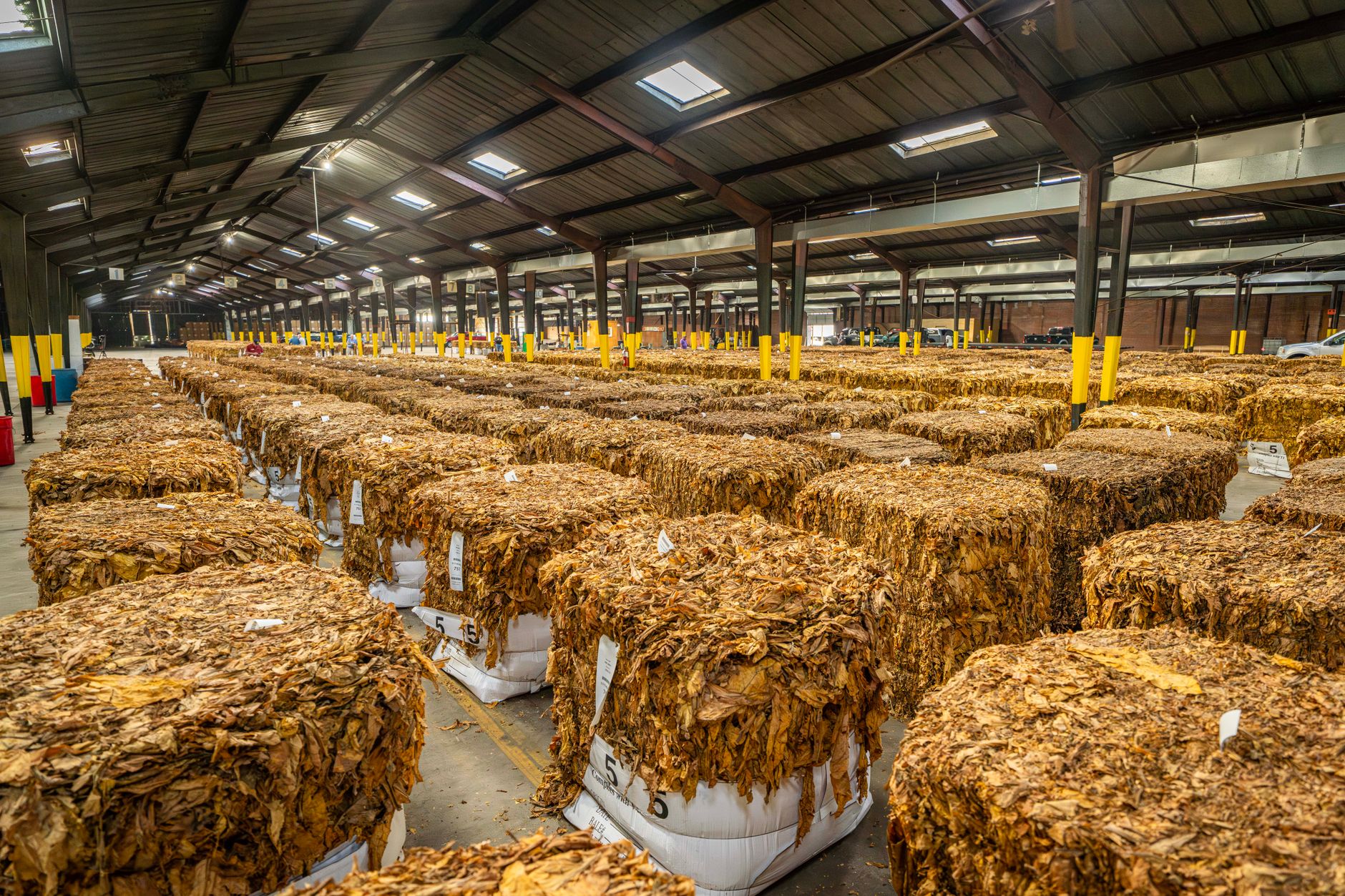
The great commodity trading houses — Vitol, Trafigura, Glencore, Gunvor, and Mercuria — have quietly put together a record of profitability over the past three years that would make most listed corporations uncomfortable to acknowledge. Now, as OPEC+ reshapes global supply dynamics and Saudi Aramco executes pricing moves not seen in decades, the trading desks sitting between producers and consumers find themselves at the centre of enormous capital flows once again. The question being asked in Geneva, Singapore, Dubai, and Houston is no longer simply how much money these firms are making. It is whether the political and regulatory tolerance that has allowed them to operate in near-total anonymity is starting to crack.
A Market Transformed by Hormuz and OPEC+ Strategy
The structural shift in global oil markets accelerated sharply through the first half of 2026. Global oil supply rebounded by 4.1 million barrels per day to reach 98.8 mb/d in June, following the resumption of flows through the Strait of Hormuz after months of severe disruption tied to the Iran war. The IEA's July 2026 report confirmed what many in the trading community already knew well before the data was published: the market was moving from scarcity to surplus faster than official forecasts had anticipated. Then, on July 6, OPEC+ formalised what has become a familiar pattern — a fifth consecutive output increase, this time adding 188,000 barrels per day from August. Saudi Arabia, Russia, Iraq, Kuwait, Kazakhstan, Algeria, and Oman collectively signed off on a production strategy that has added 940,000 barrels per day to quotas since the conflict began. That is a significant shift. For commodity trading houses, a high-volume, competitively priced market is not a crisis. It is an opportunity.
The same day OPEC+ announced its latest hike, Saudi Aramco published a price list that sent an unmistakable signal across Asian import markets: Arab Light crude for August was cut by $11 a barrel, landing at $1.50 below the regional benchmark. One of the sharpest crude price reductions in decades, it foreshadowed a new competitive posture from Riyadh that immediately activated trading desks at every major house with Asian exposure. China — notably absent from Middle Eastern crude purchases since the war began — has started re-entering the market, drawn by discounts that are simply difficult to ignore. These are exactly the conditions in which firms like Vitol and Trafigura generate asymmetric returns. They have done it before. They are doing it again.
The Anatomy of Record Profits
Commodity trading houses do not profit simply from price direction. They profit from volatility, arbitrage, and logistical complexity. When Saudi Aramco sold at least 6 million barrels in spot transactions across three supertankers bound for South Korea, Japan, and China in early July — an unusual departure from its standard term-contract model — it created precisely the kind of ad-hoc, high-margin opportunity that trading houses are built to exploit. Spot cargoes demand rapid credit assessment, vessel availability, and real-time price discovery. Firms with established relationships across the supply chain capture the spread. Others watch.
The numbers tell a complicated story. Industry insiders estimate that Vitol alone generated revenues exceeding $400 billion in 2023, a figure that few industrial corporations of any kind can match. Trafigura posted net profits of over $7 billion in fiscal year 2023. Even amid a more normalised pricing environment in 2025, the top five trading houses are estimated to have collectively distributed in excess of $15 billion to their partners and shareholders — none of whom appear on any public exchange.
The ownership structures of these firms remain deliberately private. Vitol is employee-owned. Trafigura is held by its managing directors and a small number of institutional co-investors. Glencore is the notable exception, listed in London, where its commodity trading arm sits alongside a substantial mining portfolio. This privacy has historically served as a buffer against regulatory and reputational pressure. That buffer is thinning.
Scrutiny From Governments and Multilateral Bodies
The European Commission has accelerated its review of commodity trading oversight frameworks in the wake of the energy crisis years. In the United States, the Commodity Futures Trading Commission has signalled renewed interest in physical market participants who move significant volumes outside regulated exchanges. Switzerland — home to the Geneva headquarters of Vitol, Trafigura, Glencore, and Gunvor — faces sustained pressure from the Financial Action Task Force and allied governments to tighten anti-money-laundering provisions applied to commodity trading intermediaries. Few outside certain policy circles have been paying close attention to how far that pressure has advanced. They should be.
Several jurisdictions across Sub-Saharan Africa and Southeast Asia — including Nigeria and Indonesia — have launched reviews of their own trading counterparty arrangements, motivated in part by concerns that national oil companies are systematically underperforming in direct negotiations with sophisticated private traders. The suspicion is not unfounded.
Kazakhstan, which sits within the OPEC+ agreement and recently expanded its Tengiz field output under a Chevron-led consortium, has its own questions to answer about how its crude reaches Asian buyers and at what effective netback price. The sovereign wealth fund Samruk-Kazyna controls KazMunayGas, but the marketing of its crude runs through intermediary structures now attracting serious domestic political scrutiny. Similar dynamics are visible in Azerbaijan and Oman, both of which have benefited from the current OPEC+ output cycle while retaining limited visibility into the downstream pricing their national producers ultimately achieve. That gap between production policy and realised value is where the trading houses live.
What This Means for Private Capital and Family Offices
For family office principals and private investors operating across the Gulf, Central Asia, and Southeast Asia, the commodity trading sector presents a genuine paradox: extraordinary profitability combined with concentrated private ownership and rising regulatory risk. Direct equity participation in the major trading houses is not available to outside investors in any conventional sense. Secondary exposure does exist — through Glencore's listed equity, through credit instruments issued by Trafigura and Mercuria in international bond markets, and through co-investment in mid-market trading operations that serve as regional counterparties to the large houses.
Increasingly, Gulf-based family offices and sovereign-adjacent funds are moving toward direct commodity origination — acquiring offtake rights, storage infrastructure, and tanker capacity rather than trading positions. This mirrors the model the trading houses themselves pioneered in the 1990s, and it places private capital closer to the physical supply chain, where pricing power actually sits. With Saudi Aramco competing aggressively on spot pricing and OPEC+ volumes continuing to rise, the structural opportunity in physical commodity intermediation is real and growing.
There is something else worth watching. The regulatory tightening now bearing down on legacy trading houses may well create space for capitalised private entrants with cleaner governance profiles to absorb business that the established firms find increasingly uncomfortable to conduct. The incumbents built their franchises in a different era. The rules of that era are changing.
The commodity trading industry sits at an inflection point defined by surplus supply, aggressive national pricing strategies, and the slow but unmistakable arrival of institutional oversight. The decade ahead may reward the patient and the well-connected as generously as the last decade rewarded the bold. For those with adequate capital and the right relationships, the question is not whether to engage. It is how quickly to move.

Written by
TPC Editorial Desk
The Platinum Capital editorial desk
Articles on The Platinum Capital are produced by the TPC editorial desk with the assistance of AI tools, and edited before publication. TPC Awards profiles are based on information provided in nominations and checked against public sources. Reach out at info@theplatinumcapital.com.