
Shipping Costs and Their Knock-On Effects on Global Inflation
As container freight rates surge to historic highs, the cascading pressure on consumer goods pricing is reshaping inflation forecasts across developed and emerging markets alike, forcing central banks to reassess the traditional boundaries of monetary policy intervention. For sophisticated investors and sovereign wealth managers, understanding the intricate transmission mechanism between port congestion, fuel surcharges, and retail price indices has become not merely an analytical exercise, but a critical determinant of portfolio resilience in an era of structurally elevated logistics costs.…
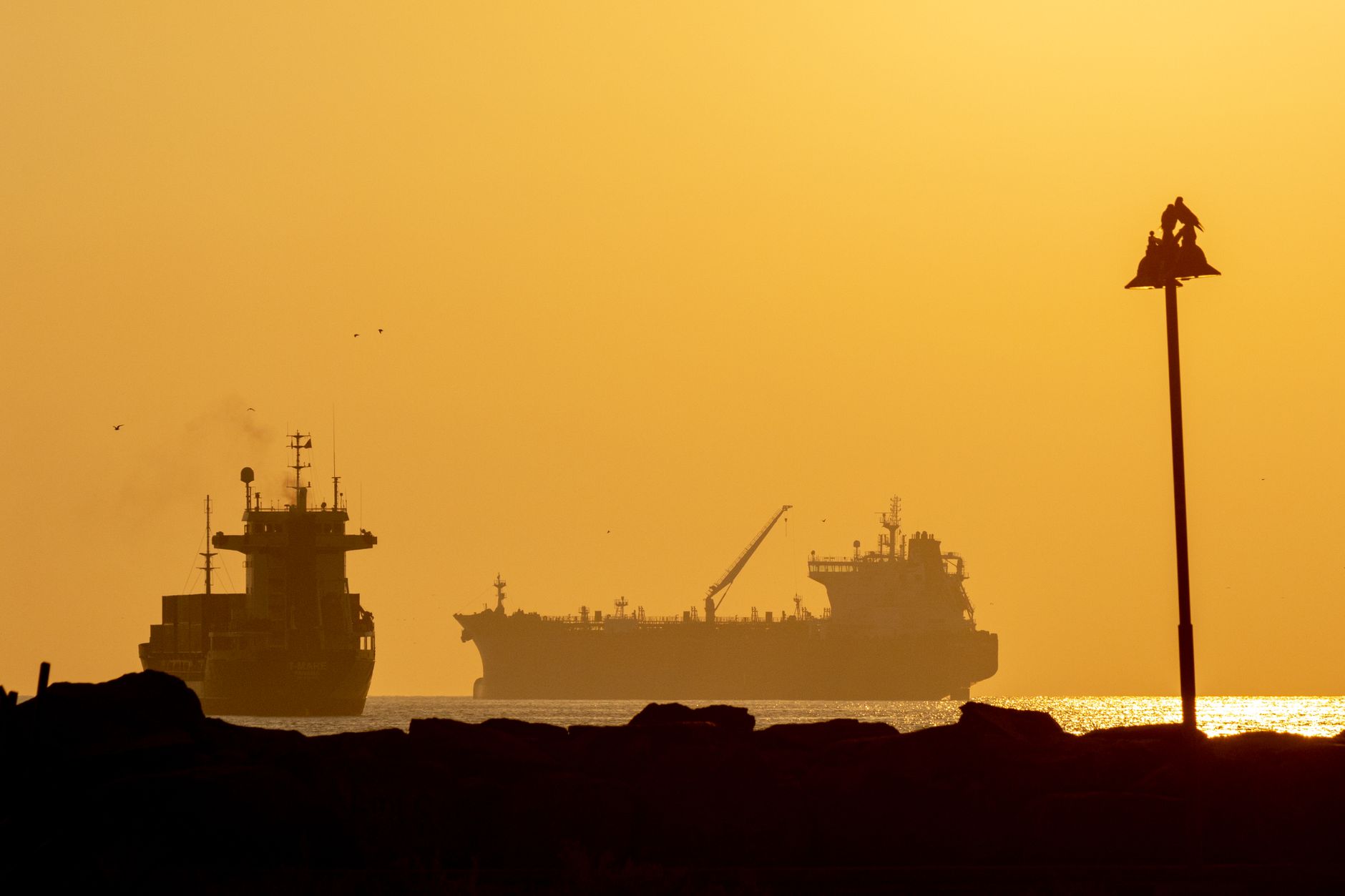
When a tanker changes course, the world pays more for breakfast. That is not hyperbole — it is the quiet arithmetic of global supply chains, and the events of August 2026 have made that arithmetic painfully legible to anyone managing real assets, real portfolios, or real businesses. The convergence of Houthi aggression in the Red Sea, renewed disruption in the Strait of Hormuz, and OPEC+ supply adjustments has produced a shipping cost environment that feeds directly into consumer prices across every region that matters to serious capital.
The Red Sea and Hormuz: A Double Chokepoint Crisis
On August 9, 2026, Houthi rebels claimed an attack on Saudi Aramco's Jazan refinery — a strategically critical crude processing facility on the Red Sea coast in southwestern Saudi Arabia. The Saudi Energy Ministry confirmed a dawn fire at the Aramco site, extinguished by on-site emergency teams. But the message that attack sent to maritime insurers, freight operators, and energy traders was unambiguous: the Red Sea is a contested corridor, not a commercial artery.
This landed against the backdrop of an already severe Strait of Hormuz disruption. Saudi Aramco CEO Amin Nasser had warned in prior months that the oil market would not normalise until 2027 if Hormuz remained effectively closed, estimating the market was losing 100 million barrels of supply per week during closure periods. By mid-July 2026, regional oil loadings had fallen from approximately 20 million barrels per day at the start of the month to roughly 12 million barrels per day. That is a compression of nearly 40 percent in throughput through one of the world's most consequential trade corridors. Few outside the industry have absorbed what that number actually means. They should.
For shipping operators and their clients, the consequences hit immediately. War-risk insurance premiums for vessels transiting the Gulf of Aden and Red Sea surged to levels unseen since the early months of the original Houthi campaign in 2023 and 2024. Rerouting via the Cape of Good Hope adds 10 to 14 days of transit time and significant additional fuel costs per voyage. Those costs do not evaporate at the port gate. They move forward through the supply chain until someone — usually the end consumer — absorbs them.
How Freight Costs Become Inflation
The transmission mechanism between shipping costs and consumer inflation is slower than currency moves. It is also more durable. When the Drewry World Container Index rises — as it did sharply across spot routes from Shanghai to Europe and from the Gulf to South Asia during this period — manufacturers and importers face a binary choice: absorb the margin hit or reprice their goods. Most reprice. Particularly in markets where currency depreciation compounds the pressure, there is simply no other viable option.
Across Southeast Asia, where Vietnam, Indonesia, and the Philippines depend heavily on imported energy and raw material inputs shipped through contested waters, the second-order effects are already filtering into producer price indices. In Nigeria and Kenya, the Jazan attack and Hormuz closures are being felt at the pump and in logistics costs for fast-moving consumer goods — because fuel import costs there connect structurally to freight availability and regional refinery output. Egyptian importers, reliant on Suez Canal traffic for European-manufactured goods, are absorbing both rerouting costs and reduced canal revenues that directly pressure Cairo's fiscal position. The numbers tell a complicated story, and most of it is still playing out.
Saudi Aramco's decision on August 6, 2026 to cut its Arab Light official selling price for Asia by 50 cents per barrel — to $2 below the regional benchmark, the fifth-lowest price set since 2000 — tells a parallel story. Aramco is protecting Asian market share precisely because elevated freight costs are already making Gulf barrels less competitive against alternatives. The price cut partially offsets the freight cost penalty buyers face. But it compresses Aramco's own revenue per barrel at a moment of significant operational strain. That tension will not resolve quickly.
OPEC+ Supply Policy in a Disrupted Market
The OPEC+ decision of July 5 to 6, 2026 to approve a combined output increase of 188,000 barrels per day for August — involving Saudi Arabia, Russia, Iraq, Kuwait, Kazakhstan, Algeria, and Oman — reads as an attempt to hold price stability through supply signalling rather than actual physical delivery. The gap between announced production targets and real export volumes has rarely been wider. At the peak of the Hormuz disruption, roughly 8 million barrels per day of would-be Gulf exports were stranded or rerouted. Paper quotas and physical reality were operating in entirely different registers.
Kazakhstan's inclusion in the OPEC+ adjustment group deserves attention from investors with Central Asian exposure. The country's Tengiz and Kashagan fields feed into the CPC pipeline to the Black Sea — a route that has itself faced periodic disruption — and Astana is managing a complex balancing act between its OPEC+ commitments and its own revenue requirements. For family offices with stakes in Kazakh energy infrastructure or regional logistics, the spread between paper quotas and real export volumes is the number that matters. Not the headline announcement.
Strategic Resilience and the New Route Premium
Aramco's internal examination of alternative export infrastructure — including expanded utilisation of the East-West pipeline running from the Eastern Province to Yanbu on the Red Sea, now itself adjacent to conflict — reflects a broader industrial logic that private investors should track carefully. The optionality Aramco is building into its operational architecture is not abstract. It represents real capital allocation decisions around pipeline capacity, storage facilities, and loading terminal diversification that will determine which routes and which assets carry premium value through 2027 and beyond. That is where the positioning conversation should start.
For ports in Oman, the UAE's Fujairah, and longer-term in Morocco and Egypt, the crisis is opening competitive ground. Fujairah's role as a bunkering and storage hub outside the Hormuz chokepoint has seen elevated activity. Sohar in Oman and Duqm — backed by significant Omani and international investment — sit as viable transshipment alternatives that bypass the strait entirely for certain cargo types. These are not speculative plays. They are infrastructure assets whose strategic value just repriced upward.
What Sophisticated Investors Should Monitor Now
The inflationary pressure from elevated shipping costs is not uniform. That non-uniformity is exactly where positioning opportunities exist. Commodities that travel short distances — intra-Gulf petrochemicals, West African crude delivered to European refiners, Southeast Asian palm oil to regional buyers — face different freight cost dynamics than long-haul containerised goods. Real estate in port-adjacent logistics zones across the UAE, Indonesia, and Morocco is attracting renewed institutional attention for precisely this reason. That trend has legs.
Family offices and private investors with commodity exposure should treat the Hormuz and Red Sea disruptions as a structural repricing of route risk — not a temporary geopolitical distraction that the next ceasefire will erase. Amin Nasser's projection that normalisation will not arrive before 2027 is a planning parameter. Build your cost models around it. Supply chain architects, shipping equity investors, and anyone holding consumer-facing businesses in import-dependent economies need to stress-test against a sustained elevated freight environment. The tankers are still changing course. The world is still paying.

Written by
Tom Whitmore
Senior correspondent · Real Estate & Private Companies
Tom has interviewed most of the operators reshaping the Gulf skyline — and a few of the ones who tried and didn't. His beat is real estate, commodities, manufacturing, and the founder-led private companies that never bother to list. He knows which buildings and balance sheets survive a downturn before the spreadsheet does. Based in Dubai. Reach out at tom.whitmore@theplatinumcapital.com.