

How Southeast Asia's Wealthy Families Are Structuring Global Wealth
As the region's ultra-high-net-worth dynasties navigate an increasingly complex global financial landscape, the most sophisticated family offices across Singapore, Jakarta, and Bangkok are quietly repositioning capital across multi-jurisdictional structures — blending private equity stakes, sovereign-adjacent assets, and offshore trust architectures to insulate generational wealth from regulatory headwinds and geopolitical volatility. What emerges from this strategic realignment is not merely a defensive posture, but a deliberate and disciplined pursuit of dynastic financial sovereignty that is reshaping how Asian capital engages with markets from the Gulf to Geneva.…

Across Southeast Asia, the families who built their wealth through trade, real estate, and manufacturing are now doing something their founders never anticipated: restructuring that wealth for a world without borders. From the Chinese-Indonesian conglomerates of Jakarta to the Thai industrial dynasties of Bangkok and the Filipino property empires centred on Makati, a quiet but decisive shift is underway. Second and third-generation principals are dismantling the traditional holding company model, replacing it with multi-jurisdictional structures, offshore family offices, and long-term residency anchors in markets actively competing for their capital — including, with increasing seriousness, the Gulf.
The Architecture of Modern Asian Family Wealth
The classic Southeast Asian family business structure — a domestic holding company controlling subsidiaries across sectors — served its founders well through the high-growth decades of the 1980s and 1990s. That model now carries concentration risk, regulatory exposure, and succession complexity that next-generation principals are no longer willing to absorb. The response has been deliberate disaggregation: separating operating businesses from investment assets, establishing offshore family offices in Singapore, the Cayman Islands, or the Channel Islands, and planting residency anchors for family members across multiple jurisdictions. This is not financial engineering for its own sake. It is risk management dressed in legal architecture.
Singapore remains the preferred hub for this restructuring. The Monetary Authority of Singapore reported that assets managed under the city-state's Variable Capital Company framework surpassed SGD 5.4 trillion in 2025. But Singapore is no longer treated as a standalone solution — it is increasingly paired with Gulf anchors. Families with USD 200 million or more in investable assets are now designing structures where Singapore holds the investment management function, a Gulf emirate provides the residency and regional access layer, and a European jurisdiction — Malta, Portugal, or increasingly Georgia — handles estate and succession planning at the beneficial owner level. Three nodes, not one. That is a significant structural shift.
The Gulf as a Strategic Anchor — Not Just a Tax Address
The Gulf's appeal to Southeast Asian family offices has moved well beyond tax neutrality. What the UAE, Saudi Arabia, and Kuwait now offer is structural permanence — long-term residency frameworks that allow families to plant a genuine flag rather than maintain a nominal address. Few outside the region have fully registered how much ground has shifted. They should.
The UAE's reforms of February 2026 have been particularly consequential. By removing the requirement for a 50 percent down payment on property and extending Golden Visa eligibility to any property with a title-deed value of AED 2 million — approximately USD 544,600 — the UAE made it materially easier for Southeast Asian investors to anchor family members without liquidating capital. Mortgaged and off-plan properties now qualify, provided the bank issues a no-objection certificate. Several Malaysian and Vietnamese family office advisers have described that single change as a structural tipping point in their clients' decision-making. When advisers start using that language, capital tends to follow.
Kuwait's introduction of a 15-year investor residency programme — formalised under Cabinet Resolution No. 651 of 2026 and announced on June 15 — adds another credible option to the Gulf residency menu. The qualifying threshold sits at a minimum investment value of 5 million Kuwaiti dinar, equivalent to approximately USD 16.2 million, through entities licensed by the Kuwait Direct Investment Promotion Authority. That threshold places it firmly in the family office segment, well above the retail investor tier. For Indonesian and Philippine family offices with capital already deployed across the Gulf through sovereign bond holdings or real estate, this framework offers a formalisation of presence that previously required either Emirati or Saudi entry points. Kuwait has effectively opened a third door.
Saudi Arabia's Real Estate Opening and What It Means for Asian Capital
Saudi Arabia's new foreign real estate ownership law deserves close reading by any family office principal with Gulf exposure — or ambitions toward it. The law took effect on January 21, 2026, following publication in the Official Gazette the previous July. For years, direct property ownership in the Kingdom was effectively closed to non-Saudis outside of specific investment zones. The new framework extends ownership rights to non-resident foreign individuals and entities. That classification encompasses the majority of Southeast Asian family offices operating through offshore holding structures.
The numbers tell a compelling story. Saudi Arabia's real estate market sits in the middle of a capital formation cycle, driven by Vision 2030 giga-projects, a rapidly urbanising population, and a domestic mortgage market that has grown at over 12 percent annually for three consecutive years. For a Vietnamese or Thai family office seeking both yield and a Gulf footprint, direct property ownership now offers a route that combines investment return with regulatory presence. The critical caveat is tax structuring. The interaction between Saudi ownership structures, withholding obligations, and the home jurisdiction's controlled foreign corporation rules demands specialist advice — particularly for families whose principal residence sits in a country with active tax treaties. Get this wrong and the structure works against you.
Succession Planning Across Borders — The Real Driver
Strip away the residency programmes and the real estate liberalisation, and the deeper force driving all of this is succession. Southeast Asian family businesses face a generational transition of extraordinary scale. A 2025 UBS report estimated that approximately USD 5.8 trillion in family business wealth across Asia will change hands between 2025 and 2035, with Southeast Asia accounting for a disproportionate share relative to its GDP weight. The families managing this transition most effectively are not simply writing wills. They are engineering structures that allow different family branches to hold interests in different jurisdictions — deliberately reducing the risk that a single legal event, whether a probate dispute or a regulatory change in the home country, can threaten the entire estate.
Family offices from the Philippines and Indonesia have been among the most active in building dual structures, with Singapore or Hong Kong as the operational hub and a Gulf or Central Asian jurisdiction as the holding layer for real assets. Advisers in Dubai and Riyadh report a measurable increase in inbound enquiries from Malaysian and Thai family principals seeking specifically to understand how Gulf residency and Saudi property ownership interact with their existing Singapore Variable Capital Company structures. These are not exploratory conversations. They are due diligence calls.
What Comes Next for Southeast Asian Family Capital
The convergence of Gulf residency liberalisation, Saudi real estate opening, and Southeast Asia's generational wealth transfer creates a set of conditions that will not hold indefinitely. Entry points will become more expensive. Competition for the best structures, the best advisers, and the best assets will intensify. The families acting with intention now — establishing Gulf residency anchors, deploying into Saudi real estate at an early stage of the ownership cycle, and pairing these moves with properly engineered offshore succession structures — are acquiring options that later entrants will pay a premium to replicate. The families watching from a distance are also making a choice. Just a different one.
Written by
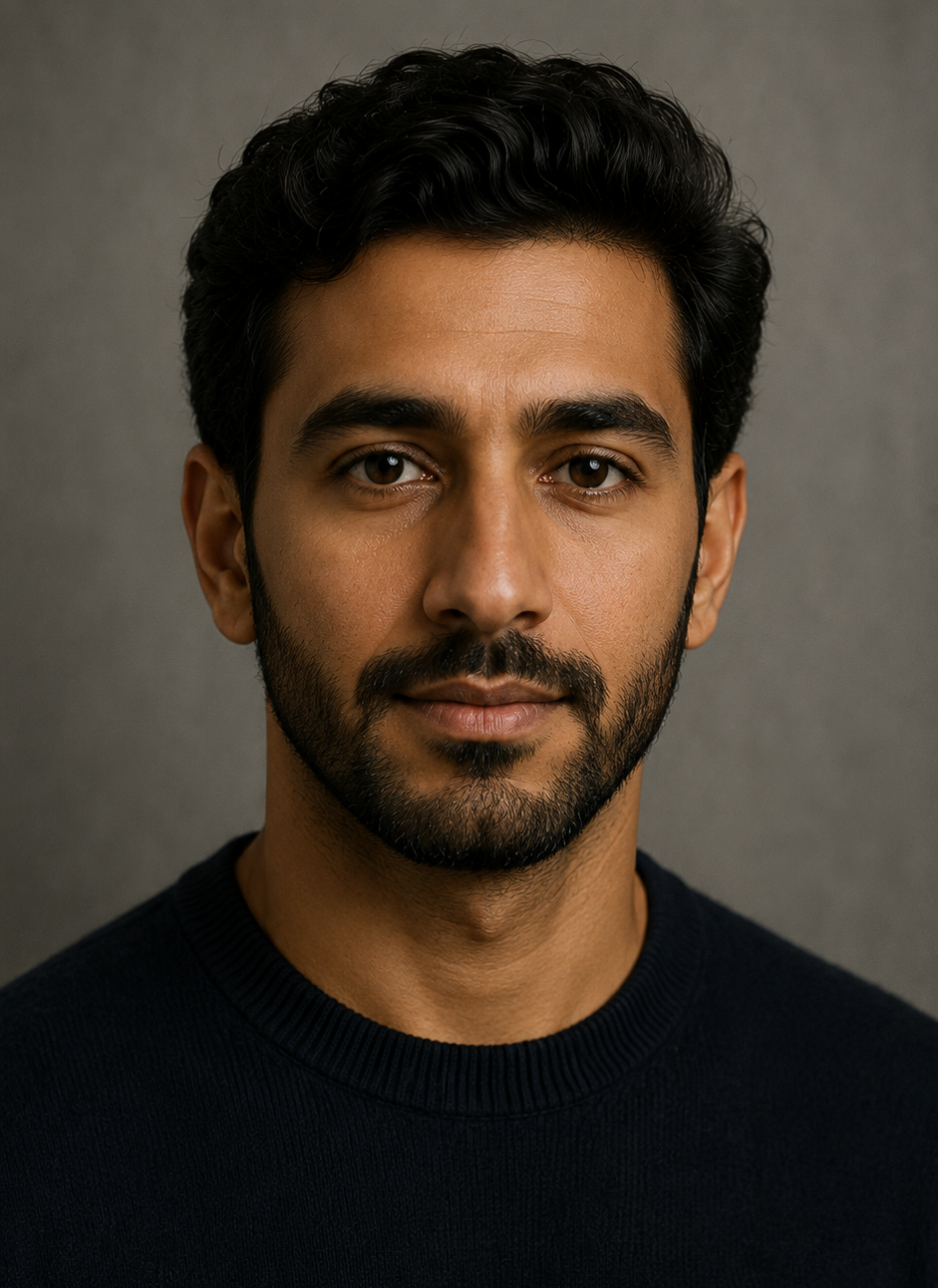
Khalid Al-Rashidi
Gulf & Middle East Correspondent · Emerging & Strategic Wealth
Khalid covers the family offices, luxury operators, and strategic capital moving across the GCC and wider Arab world — often before the rest of the region notices. He's spent years tracking how Gulf wealth structures itself for the next generation, from residency programmes to private aviation. Based between Dubai and Riyadh. Reach out at khalid.al-rashidi@theplatinumcapital.com.