

Southeast Asian Equities: Vietnam and Indonesia in Focus
As Vietnam and Indonesia emerge as the defining equity stories of the decade, their deepening capital markets, youthful demographics, and accelerating foreign direct investment flows are presenting sophisticated investors with a rare convergence of structural growth and valuation opportunity. For family offices and institutional allocators seeking meaningful exposure beyond saturated developed markets, understanding the distinct regulatory landscapes, sectoral catalysts, and currency dynamics shaping Hanoi and Jakarta has never been more consequential.…
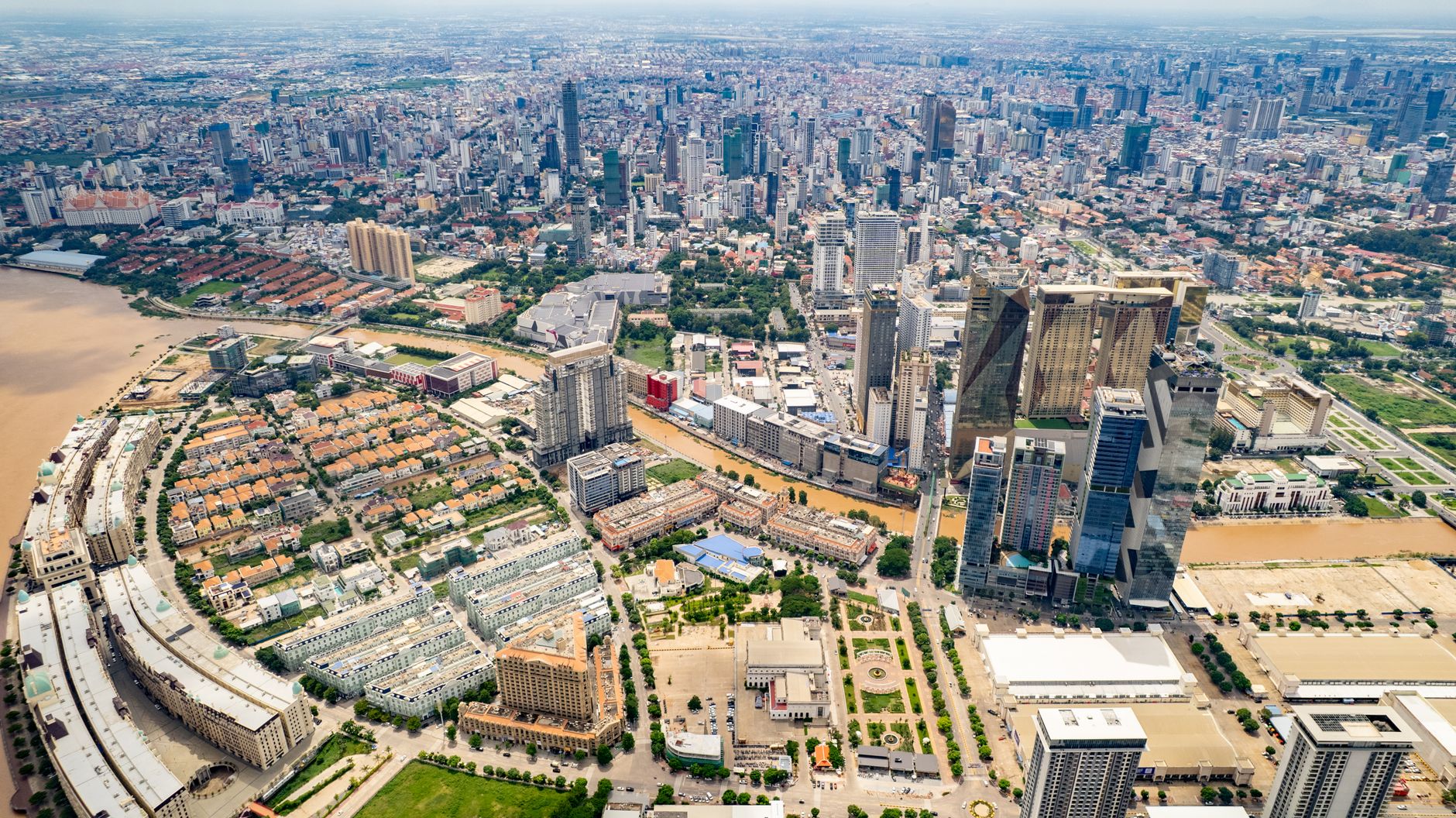
While global investors have spent much of 2026 recalibrating around the historic opening of Saudi Arabia's Tadawul and a resurgent wave of Gulf capital market activity, a quieter but equally consequential story has been taking shape across Southeast Asia. Vietnam and Indonesia — two economies whose combined nominal GDP now approaches $2 trillion — are drawing serious attention from family offices, sovereign-adjacent funds, and private investors who understand that durable returns rarely come from crowded rooms. For those with the patience and positioning to look beyond the GCC's immediate headlines, both markets present a differentiated and genuinely compelling case.
Vietnam: Manufacturing Momentum Meets Market Maturity
Vietnam's Ho Chi Minh Stock Exchange has had a quietly transformative first half of 2026. The VN-Index has outperformed most of its ASEAN peers — supported by record foreign direct investment inflows — with the country attracting over $18.6 billion in registered FDI in the first five months of the year alone. Multinational corporations keep accelerating their China-plus-one manufacturing strategies. Samsung, LG, and a growing cohort of Taiwanese semiconductor suppliers have all deepened their Vietnamese operations, and the downstream effect on listed industrial and logistics companies has been measurable and real.
The more structurally significant story is the anticipated MSCI Emerging Market reclassification. Vietnam has long sat in Frontier Market territory — a designation that limits institutional participation and suppresses valuation multiples relative to regional peers. Regulatory reforms introduced in early 2026, including relaxed pre-funding requirements for foreign investors and improved clearing timelines, have brought Hanoi meaningfully closer to clearing MSCI's thresholds. Analysts at regional brokerages estimate a successful reclassification — now widely expected within an 18-to-24-month window — could trigger between $1.5 billion and $3 billion in passive index-driven inflows. That is a significant number. For private investors already positioned in Vietnamese equities or private credit, the reclassification represents a rare and foreseeable liquidity catalyst. Those do not come along often.
Domestic consumption is the other pillar. Vietnam's middle class is expanding at approximately 1.5 million households per year. Listed consumer names — from dairy giant Vinamilk to fast-growing retail conglomerate Masan Group — are benefiting directly. Masan, in particular, has drawn attention from regional and Gulf-based family offices for its vertically integrated model, which spans branded foods, retail infrastructure, and financial services through its Techcombank stake. The structure is unusual. The growth profile is not.
Indonesia: Scale, Demographics, and a Commodity Backbone
Indonesia operates at a different scale entirely. A population of 280 million. An economy expanding at approximately 5.1% annually. The Jakarta Stock Exchange is the largest equity market in Southeast Asia by domestic investor base — and increasingly by institutional ambition. President Prabowo Subianto's administration has maintained the macroeconomic credibility of his predecessor while adopting a more assertive posture on resource nationalism and downstream industrialisation, particularly in nickel and critical minerals. That positioning carries direct implications for listed mining and smelting companies. Few outside the region have tracked it carefully. They should.
The IDX Composite has proven resilient through the volatility of early 2026, buoyed by domestic liquidity from the country's rapidly expanding retail investor base. Indonesia now counts over 13 million registered securities accounts — a figure that has nearly tripled since 2020. That deepening of local participation reduces the market's vulnerability to foreign capital outflows. The numbers tell a complicated story, but one thread runs clearly through them: the Indonesian market now has an internal shock absorber it simply did not have a decade ago. For external investors, that changes the risk calculus.
Bank Central Asia consistently ranks among Asia's best-managed financial institutions, and it commands premium valuations for good reason. Return on equity exceeds 23%. Its digital banking infrastructure — BCA Mobile processes over 30 million transactions daily — positions it squarely within the country's ongoing financial inclusion story. For family offices evaluating Southeast Asian financial exposure, BCA functions as a reference asset in the same way that certain Gulf banks anchor regional equity allocations. It earns that comparison.
The Gulf Connection: Capital Flows With Purpose
The connection between Gulf capital and Southeast Asian equities is not incidental. Abu Dhabi Investment Authority, Mubadala, and several Saudi sovereign vehicles have maintained and quietly expanded their ASEAN allocations over the past 18 months. The rationale is straightforward: demographic and industrial tailwinds in Vietnam and Indonesia operate on multi-decade horizons — exactly the time frames that align with sovereign wealth mandates and family office legacy thinking. Short-term noise is largely irrelevant at that horizon.
The June 2026 listing of Lunate's Chimera Solactive GCC Shariah Dividend ETF on ADX — the world's first multi-GCC Shariah dividend ETF, tracking 20 high-yield companies across Saudi Arabia, the UAE, and Qatar — illustrates a broader principle at work. Sophisticated Gulf investors are not simply consuming domestic yield. They are building frameworks for diversified, income-generating exposure across geographies. For Gulf-based family offices that have already adopted a core-satellite approach to public equity, Vietnam and Indonesia work as credible satellite allocations: higher growth, manageable risk, and increasingly liquid markets behind them.
Risks That Sophisticated Investors Price In
Neither market is without friction. Vietnam's corporate governance standards remain uneven outside the top tier of listed companies, and the legal infrastructure around foreign ownership limits — capping non-domestic stakes in many sectors at 49% — continues to constrain certain allocation structures. Currency risk is real. The Vietnamese dong has faced managed depreciation pressure during periods of dollar strength, and investors without local currency hedging capacity need to account for that in their return modelling. Ignoring it is not a strategy.
Indonesia carries its own complexities. Regulatory unpredictability in the resources sector, combined with a current account that remains sensitive to commodity price cycles, means the macro picture can shift faster than company fundamentals suggest. Political risk, while manageable under the current administration, is never fully absent in a country of Indonesia's geographic and ethnic complexity. None of this is a reason to avoid either market. It is a reason to enter both with local partnership and structural discipline — which is exactly how the best regional allocators are approaching it.
Positioning Before the Crowd Arrives
The parallel to what unfolded in Gulf markets ahead of Saudi Arabia's index inclusion is instructive. Early institutional movers built positions before the February 2026 full liberalisation of the Tadawul drew mass foreign participation — and they were well rewarded for that timing. MSCI's eventual upgrade of Vietnam and the continued maturation of Indonesia's capital markets are not speculative scenarios. They are directional certainties with uncertain timelines. The investors who benefit most will be those who build considered, well-structured positions before those events compress the entry opportunity. That window exists now. It will not stay open indefinitely.
For family offices and private investors operating between the Gulf, Central Asia, and Asia-Pacific — the cohort for whom capital has always moved across borders with more agility than conventional institutional money — Vietnam and Indonesia represent exactly the kind of asymmetric, under-institutionalised opportunity that has historically rewarded early conviction. The runway is long. The fundamentals are real. And the crowd has not yet arrived.

Written by
Charlotte Reeve
Senior correspondent · Capital Markets & Fintech
Charlotte cut her teeth on an equities desk before moving to the other side of the notebook. She covers capital markets, stock exchanges, and the fintech operators trying to disintermediate the banks that trained her. Sharpest on market microstructure and payments infrastructure; still reads a prospectus for fun. Based in Singapore. Reach out at charlotte.reeve@theplatinumcapital.com.