

Kenya's Business Leaders Investing in Community Infrastructure
Kenya's most influential business leaders are quietly reshaping the nation's economic landscape by channeling significant private capital into roads, schools, healthcare facilities, and energy grids — infrastructure that governments alone have struggled to deliver at the pace development demands. This strategic convergence of philanthropic intent and long-term investment thinking is positioning Kenya as a model for private-sector-led community development across sub-Saharan Africa, drawing growing interest from family offices and sovereign wealth funds seeking both social impact and durable returns.…

Along Kenya's major commercial corridors — from the industrial districts of Nairobi's Ruaraka to the port economy of Mombasa — something is changing. The country's most influential business families and corporate leaders have stopped writing annual cheques for branded CSR campaigns. They are now deploying structured, multi-year capital into roads, water systems, schools, health clinics, and digital infrastructure. The model increasingly resembles the kind of catalytic philanthropy being institutionalised at sovereign scale in the Gulf. The sums involved are beginning to reflect that seriousness.
From Charity to Capital Deployment
The distinction matters more than most outside the region appreciate. Kenya's most forward-thinking private wealth holders are starting to approach community infrastructure the way the UAE's Alterra approaches climate transition — not as a donation to be forgotten, but as a co-investment vehicle with long-term multiplier effects. Alterra, the UAE's $30 billion climate fund, made headlines in January 2026 when it launched a $1.2 billion co-investment vehicle with BBVA, part of a broader ambition to mobilise $250 billion globally by 2030. The structural logic — catalytic capital in underserved markets unlocking larger downstream returns — is precisely what Kenya's philanthropic infrastructure leaders are internalising. Quietly, methodically, and with growing conviction.
Nairobi-based family offices managing between $50 million and $400 million in assets are increasingly earmarking between 8% and 15% of their annual allocation for what some are calling "community infrastructure equity." These are investments in physical and social infrastructure that generate reputational, relational, and in some cases direct financial returns over a five-to-fifteen-year horizon. This is not altruism dressed in corporate language. It is a hard-nosed recognition that in markets where public infrastructure remains chronically underfunded, private capital that fills the gap accumulates significant social licence — the kind that smooths regulatory approvals, builds political goodwill, and secures generational loyalty from local communities. That is not a soft return. For a family office with a 30-year horizon, it may be the most durable return of all.
The Families Leading the Shift
Several Kenyan business dynasties have emerged as particularly active in this space. The Chandaria family, long associated with Comcraft Group's industrial manufacturing interests across Africa, has deepened its commitment to educational and healthcare infrastructure in Nairobi's Eastlands — a densely populated zone housing a significant portion of the city's working-class population. Their model combines direct construction grants with operational endowments, ensuring that schools and clinics do not merely open but function sustainably for decades. That last part is where most philanthropic efforts fail. The Chandarias have thought past the ribbon-cutting.
In the Rift Valley and Central Kenya, agribusiness families with landholdings exceeding 10,000 acres have begun co-funding rural road rehabilitation projects alongside county governments. The arrangement is straightforward: private capital covers 60% to 70% of construction costs, with county governments contributing land access, labour coordination, and long-term maintenance commitments. The roads improve logistics for the families' own agricultural operations while simultaneously opening market access for smallholder farmers within a 30-kilometre radius. Infrastructure philanthropy that is also infrastructure strategy. Few outside the region have noticed. They should.
On the coast, Mombasa's merchant families — many tracing trading relationships back three to four generations — are financing port-adjacent community upgrades including electrification projects and vocational training centres aligned with the logistics and marine services sectors. One family office principal put it plainly: "We need skilled workers. The government cannot produce them fast enough. So we build the institutions that will."
Digital Infrastructure as the New Frontier
The most significant evolution in Kenyan private philanthropy may be the growing investment in digital and connectivity infrastructure. Mobile internet penetration in Kenya already exceeds 45% of the population. Nairobi consistently ranks among Africa's top five technology hubs. And yet connectivity gaps in peri-urban and rural counties remain acute. Forward-looking business leaders are moving into that gap — funding fibre extension projects, community Wi-Fi networks, and digital literacy centres in areas where the state has not followed.
Several family offices with interests in fintech and agritech have co-funded last-mile connectivity projects in Kisumu, Nakuru, and Eldoret — cities that anchor regional economic activity but have historically lagged Nairobi in digital infrastructure. The logic compounds in both directions: better connectivity expands the addressable market for their own digital financial services platforms while building human capital in communities that will supply the next generation of employees, customers, and entrepreneurs. The investment serves the portfolio. The portfolio serves the community. That alignment is not accidental.
The same pattern has played out in Southeast Asia for years, where Indonesian and Philippine business families long understood that private investment in community digital infrastructure is simultaneously a philanthropic act and a market development strategy. Kenya's leading families are arriving at the same conclusion. They are doing so with increasing sophistication and considerably less fanfare than their Asian counterparts received.
The Governance Question
What separates the most credible Kenyan community infrastructure initiatives from their well-intentioned but poorly executed predecessors is governance architecture. The numbers tell a complicated story when you look at how many philanthropic vehicles across sub-Saharan Africa have launched with ambition and dissolved within a decade for lack of institutional rigour. Kenya's most serious players are structuring differently. Families and business leaders who have built relationships with Gulf-based sovereign funds, international development finance institutions, and Southeast Asian family office networks are constructing their philanthropic vehicles with independent boards, transparent reporting frameworks, and impact measurement protocols that can withstand external scrutiny.
Saudi Arabia's Public Investment Fund offers a useful reference point here. The PIF's board approved a sweeping 2026–2030 strategy in April of this year anchored in governance transparency and long-term value creation. Its evolution from rapid capital deployment to sustained, governance-led value creation — assets under management grew from $150 billion in 2015 to over $900 billion — demonstrates that disciplined governance does not constrain impact. It amplifies it. Kenya's most serious philanthropic infrastructure investors have absorbed that lesson. Legitimacy in the eyes of communities, regulators, and future institutional partners depends on how capital is governed, not merely how it is spent. That is a distinction the Gulf learned early. Kenya is learning it now.
A Model Worth Watching
Kenya's emergence as a reference point for private community infrastructure investment across sub-Saharan Africa did not happen by accident. A generation of business leaders inherited significant wealth, travelled widely, observed what Gulf and Asian family offices built over decades, and returned home with both the ambition and the frameworks to replicate it in an African context. That combination — capital, exposure, and intent — is rarer than it sounds.
For family office principals, private investors, and philanthropic foundations operating across emerging markets, Kenya in 2026 presents something increasingly scarce: a high-conviction opportunity to deploy capital where governance is improving, demographic growth is accelerating, and the infrastructure deficit is large enough that even relatively modest private investment produces measurable, visible, lasting change. The families moving with intention now are not simply building roads and schools. They are building the foundations of enduring influence — the kind that outlasts any single business cycle and defines a family's standing across generations.
Written by
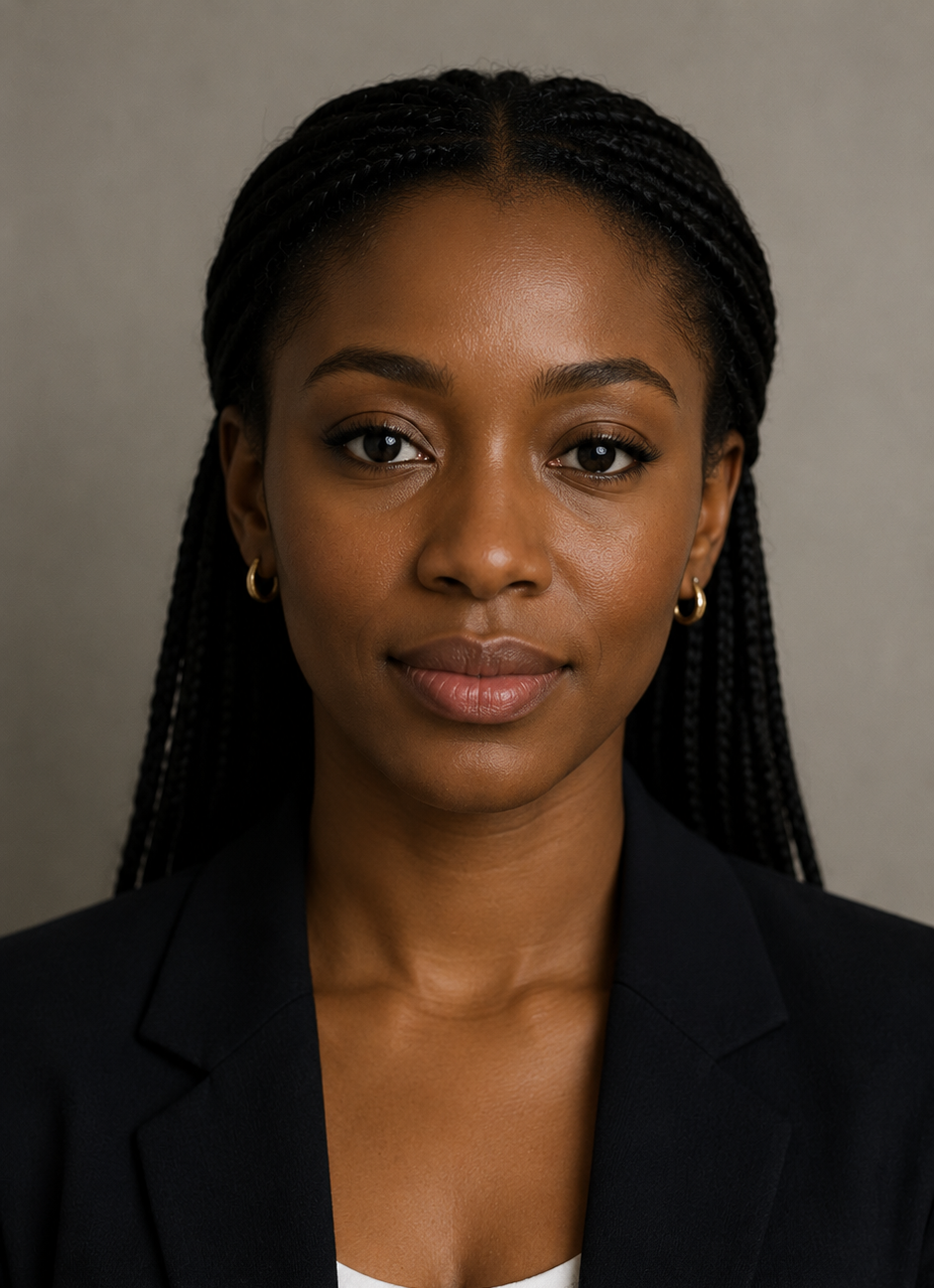
Amara Osei
Africa & Emerging Markets Correspondent · Philanthropy & Next Generation
Amara covers the philanthropists, foundation founders, and next-generation leaders building wealth and influence across Africa, Southeast Asia, and Central Asia. She has a particular eye for the family businesses handing the reins to a generation educated abroad and building at home. Based in Nairobi. Reach out at amara.osei@theplatinumcapital.com.