

Kenya's Rising Business Class and the Sectors They Are Dominating
Kenya's ascendant entrepreneurial class is reshaping the continent's investment landscape, channeling generational wealth and institutional capital into sectors ranging from fintech and agribusiness to real estate and renewable energy with a sophistication that commands serious attention from global family offices and sovereign funds. What was once dismissed as frontier-market speculation has matured into a structured opportunity set, driven by a business elite that increasingly combines Ivy League credentials with deep local market intelligence and political connectivity that translates directly into regulatory advantage.…

Kenya has quietly become one of Africa's most compelling wealth creation stories. Lagos commands the headlines. Johannesburg commands the balance sheets. But Nairobi is producing a generation of business builders who are accumulating serious capital, forging cross-continental partnerships, and reshaping entire industries from scratch. These are not inheritors of old money. They are operators, deal-makers, and founders who identified structural gaps in East Africa's fastest-growing economy and moved decisively to fill them.
The Sectors Where New Money Is Being Made
The clearest concentrations of emerging Kenyan wealth sit at the intersection of technology, agribusiness, financial services, and logistics — four sectors where Kenya holds genuine structural advantages over its neighbours. In fintech alone, the country processes over $50 billion annually through mobile money platforms. That figure has attracted institutional capital from London to Abu Dhabi and produced a layer of homegrown entrepreneurs who built businesses on top of that infrastructure. Names such as Kabage Karimi, co-founder of Cellulant, and the founding teams behind companies like Pezesha and Kwara represent a cohort that built real revenue before raising real capital — a discipline that sets Kenyan founders apart from many of their regional peers.
Agribusiness is equally significant, and an often-overlooked part of this story. Kenya sits at the agricultural heart of East Africa, and the ripple effects of Aliko Dangote's $7 billion fertilizer expansion — announced through his Greenview Fertiliser Corp in June 2026, backed by a $600 million facility from Africa Finance Corporation — are already reshaping the ambitions of Kenyan agri-entrepreneurs. With Ethiopia set to host East Africa's largest modern fertilizer production hub under that programme, Kenyan farmers and agri-processors are positioning to access competitively priced inputs that have historically arrived at significant import cost. For the emerging class of Kenyan agribusiness investors — from commercial farm consolidators in the Rift Valley to cold-chain logistics operators in Mombasa — this is a structural tailwind that will compound for a decade or more.
Finance and the Art of Patient Capital
Kenya's financial services sector has become the training ground for some of the continent's sharpest capital allocators. The Nairobi Securities Exchange, modest by global standards, has nonetheless produced a generation of fund managers, private equity operators, and family office principals who understand African risk in ways that external investors simply do not. Several of these individuals are now deploying capital regionally — into Uganda, Rwanda, Tanzania, and increasingly into Ethiopia and the DRC — using Nairobi as their base and their networks as their primary due diligence infrastructure. That is not a small thing.
The influence of Tony Elumelu's model has registered clearly in Kenya. When French President Emmanuel Macron appointed Elumelu to lead the Africa France Impact Coalition in early 2026 — a platform launched at the Africa Forward Summit in Nairobi in May — it placed Kenya at the centre of a renewed conversation about African entrepreneurship and European capital. Elumelu's simultaneous deployment of $16 million to 3,200 African entrepreneurs through his foundation's 2026 cohort includes Kenyan recipients, and the demonstration effect has catalysed local philanthropic capital in ways that government initiatives rarely manage. A number of Nairobi-based family offices have quietly increased their early-stage commitments to Kenyan founders in the wake of Elumelu's public advocacy. They watched, they calculated, and they moved.
Real Estate and the Infrastructure of Aspiration
Nairobi's skyline tells its own story. The Westlands corridor, Karen, Runda, and the newer developments around Two Rivers and Garden City reflect a domestic property market driven not by foreign speculation but by Kenyan wealth accumulation. High-net-worth Kenyans — many of whom built fortunes in telecoms, construction, healthcare, and logistics — are now the primary buyers of the country's premium residential and commercial product. Developments priced between $800,000 and $4 million are being consistently absorbed by local buyers. A decade ago, that pattern did not exist.
Beyond residential, the more sophisticated Kenyan capital is moving into data centres, student housing, and healthcare real estate — asset classes that combine stable yields with genuine social utility. Several family offices anchored in Nairobi have assembled portfolios across these sub-sectors that rival anything institutional players are putting together, with the added advantage of local operational expertise that external funds consistently underestimate. They pay for that underestimation eventually.
The Gulf Connection and Cross-Corridor Capital
The relationship between Kenya's emerging business class and Gulf capital is deepening fast. Abu Dhabi has established itself as the dominant Gulf hub for African investment, a positioning reinforced by Vista Equity's decision in May 2026 to open its first Middle East office there — a structurally significant move for a firm managing over $100 billion in assets with growing interest in African and developing-market opportunities. Few outside the region have fully absorbed what that signals. They should. For Kenyan entrepreneurs and family office principals, Abu Dhabi is increasingly the first stop when seeking growth capital, strategic partnerships, or co-investment for regional expansion.
Dubai, meanwhile, remains the operational hub of choice for Kenyan business families who maintain a GCC presence. The combination of DIFC's legal framework, Emirates' direct connectivity to Nairobi, and the UAE's position as a neutral commercial jurisdiction makes it an almost inevitable anchor for East African wealth that has crossed a certain threshold. Several Kenyan family offices now run structured vehicles out of DIFC while maintaining primary operations and tax residency in Nairobi. That dual-base model is becoming a template for the continent's rising business class — and the advisers who understand it are winning the mandates.
What Comes Next — and Who Should Be Watching
Kenya's emerging wealth class is at an inflection point. The first generation of post-liberalisation entrepreneurs — those who built their businesses in the 1990s and 2000s — are now entering succession conversations. That creates significant opportunities for the next generation to lead, restructure, or recapitalise established enterprises. Simultaneously, a younger cohort of founders, many of them educated internationally and operationally seasoned at global firms, are building businesses that are structurally global from day one. Two different waves, converging at the same moment.
For family offices, private investors, and institutional capital watching Africa from the Gulf, Central Asia, or Southeast Asia, Kenya offers something increasingly rare: a business class with institutional discipline, genuine regional ambition, and a demonstrated capacity to generate returns in an environment that most external allocators are still learning to read. The numbers support the thesis. The partnerships are there to be made. The capital that moves early — and moves with the right local partners — will find itself very well positioned when Kenya's next chapter gets written.
Written by
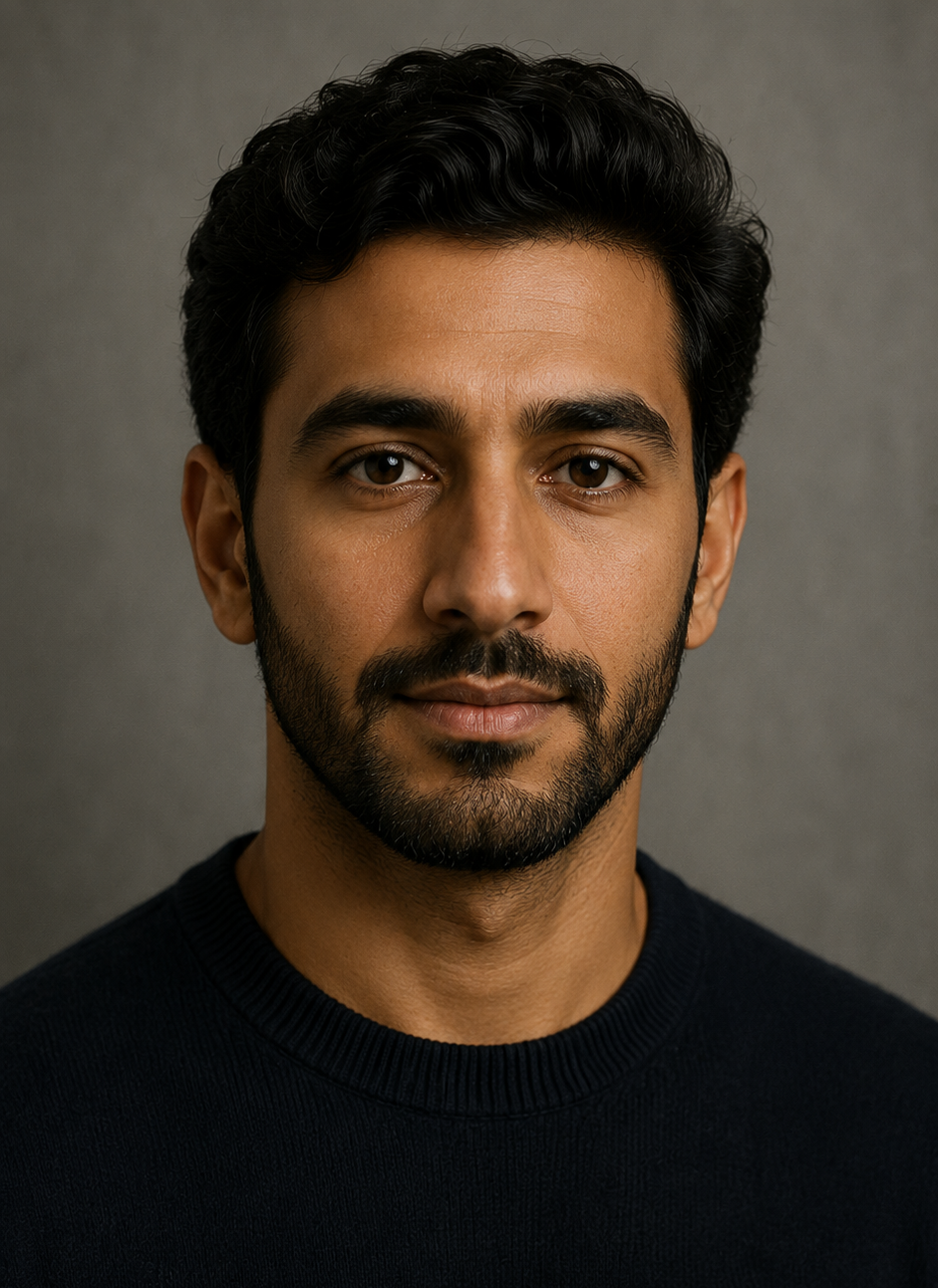
Khalid Al-Rashidi
Gulf & Middle East Correspondent · Emerging & Strategic Wealth
Khalid covers the family offices, luxury operators, and strategic capital moving across the GCC and wider Arab world — often before the rest of the region notices. He's spent years tracking how Gulf wealth structures itself for the next generation, from residency programmes to private aviation. Based between Dubai and Riyadh. Reach out at khalid.al-rashidi@theplatinumcapital.com.