

Oman's Business Diversification and Its Quietly Wealthy Families
Beneath Oman's measured public profile lies a constellation of dynastic merchant families whose diversified holdings span logistics, real estate, agribusiness, and financial services — wealth architectures built over generations and now quietly expanding into private equity and regional infrastructure. For discerning investors and family offices seeking exposure to Gulf markets beyond the headline volatility of larger neighbors, Oman's business landscape presents a compelling convergence of political stability, sovereign-backed diversification strategy, and deeply networked private capital with centuries of commercial instinct.…

While global capital markets fixate on Dubai's gleaming towers and Riyadh's Vision 2030 megaprojects, a quieter but equally consequential story is unfolding two hours' drive along the Arabian coastline. Oman is diversifying — deliberately, methodically, and with a confidence that its modest international profile does little to advertise. Behind this transformation stands a cohort of merchant families, entrepreneurial dynasties, and institutional investors whose influence extends far beyond what their names might suggest to outsiders. In 2026, with oil prices stabilising around $75–$80 per barrel and Oman's non-oil GDP growth tracking at an estimated 4.2%, the Sultanate's most sophisticated wealth holders are quietly repositioning for the next generation of prosperity.
A Nation Rewriting Its Economic Identity
Oman's Vision 2040 is not merely a government blueprint. It is a living contract between the state and the private sector — and Omani business families are increasingly holding up their end. The Sultanate's non-oil sectors — logistics, tourism, mining, manufacturing, and green energy — now collectively account for over 70% of GDP. Sohar Port and Freezone continues to pull in regional and international capital, with over $3.4 billion in new industrial projects announced in the past eighteen months alone. The Special Economic Zone at Duqm, long dismissed as an ambitious gamble, is emerging as a genuine industrial anchor. Petrochemical, shipbuilding, and food processing operations are creating real employment and real returns for the investors who backed the vision early.
That is a significant shift — and it is reshaping how the country's oldest money thinks about itself.
For Oman's established merchant families — many of whom built their wealth through trading, construction, and oil services contracts across three and four generations — this structural change is both a challenge and a generational opening. The families thriving in 2026 are those that moved decisively into new verticals: renewable energy concessions, logistics infrastructure, hospitality assets, and cross-border trade corridors connecting the Gulf to Africa and South Asia.
The Merchant Dynasties Quietly Leading the Charge
Oman's business establishment has always operated with a discretion that other Gulf markets rarely favour. Family conglomerates such as the Zubair Corporation, the Suhail Bahwan Group, and the Khimji Ramdas Group represent decades of diversified enterprise — from automotive distribution and retail to real estate and financial services. Their evolution into the current era offers a working template for emerging Omani wealth. The Zubair Corporation alone spans more than forty companies across energy, hospitality, and services, and has in recent years accelerated its push into Oman's tourism infrastructure, aligning directly with the government's target of welcoming 11 million visitors annually by 2040.
Watch the next generation. That is where the real story is in 2026.
Younger principals, many educated in the United Kingdom and United States — and increasingly at institutions in Singapore and the UAE — are steering family offices toward more sophisticated asset allocation strategies. Private equity co-investments, structured credit, and exposure to high-growth markets in Africa and Southeast Asia are no longer peripheral conversations; they are the main agenda. This mirrors a broader Gulf trend. When Vista Equity's Robert F. Smith opened his firm's first Middle East office in Abu Dhabi this year — bringing over $100 billion in assets under management into the region's orbit — Omani family offices suddenly found themselves with credible access to institutional-grade private equity that previously required going through London or New York intermediaries. Few outside the region have noticed. They should.
Green Energy as the New Oil: Oman's Wealth Creation Frontier
No sector better illustrates Oman's reinvention than green hydrogen and renewable energy. HYPORT Duqm — the large-scale green hydrogen project backed by ACWA Power and OQ, Oman's state energy company — ranks among the most significant clean energy commitments in the Arab world. But the headline project is only part of the picture. Beneath it, a secondary layer of private Omani capital is positioning itself across renewable energy supply chains: solar component logistics, water desalination technologies powered by renewables, and the infrastructure needed to move new commodities through old trade routes.
The numbers tell a complicated story — one where geography matters as much as capital.
Omani family offices managing between $50 million and $500 million are structuring direct investments into energy transition assets, often through co-investment arrangements with Gulf sovereign funds or alongside emerging market infrastructure specialists. The logic is direct: Oman's position as a transit corridor between Asia, Africa, and the Gulf — anchored by deepwater port infrastructure at Salalah and Sohar — makes it a natural hub for the commodities and technologies the energy transition demands. Copper, green ammonia, and hydrogen derivatives are the new trade flows. Omani merchant capital, historically adept at reading trade routes, is moving early.
Cross-Border Capital: Oman Looks to Africa and Beyond
Omani investors have long maintained cultural and commercial ties with East Africa — a legacy of the Sultanate's historical trade empire that once stretched from Zanzibar to the Malabar Coast. In 2026, those ties are being formalised into structured capital. As Nigeria's BUA Group chairman Abdul Samad Rabiu — whose net worth has surged to $18.6 billion according to Bloomberg's Billionaires Index, making him Africa's second-richest individual — pushes BUA Cement aggressively into new Nigerian states, Gulf investors including Omani family capital are watching the continent's infrastructure buildout with intensifying focus. Africa's cement, logistics, and consumer goods sectors are drawing sovereign and family capital from across the GCC. Oman's historically strong East African network gives its investors an intelligence and relationship advantage that purely financial Gulf players cannot easily replicate. That edge is real, and it compounds over time.
Several Omani family offices allocated between 8% and 15% of their portfolios to African markets in 2025 and into 2026 — primarily through Kenyan real estate, Moroccan industrial assets, and Nigerian consumer sector funds. For institutions that historically kept over 80% of assets within the GCC and in US dollar fixed income, that represents a genuine reorientation of strategic thinking.
What Forward-Looking Omani Wealth Looks Like
The signals coming out of Oman in 2026 are consistent. The Sultanate's most sophisticated capital is no longer content with passive returns from government bonds and domestic real estate. Governance is professionalising inside family structures — formal investment committees, independent trustees, and third-party advisors are becoming standard rather than exceptional. Tourism assets in Musandam, Salalah, and the Hajar Mountains are drawing both domestic capital and inbound interest from Gulf and European hospitality investors hunting authenticity at scale.
Oman's quietly wealthy families are not seeking headlines. They are building institutions — investment offices, philanthropic foundations, and multi-generational holding structures — that will define the Sultanate's private sector for decades to come. In a region that rewards patience and punishes hubris, that approach has rarely been wrong.
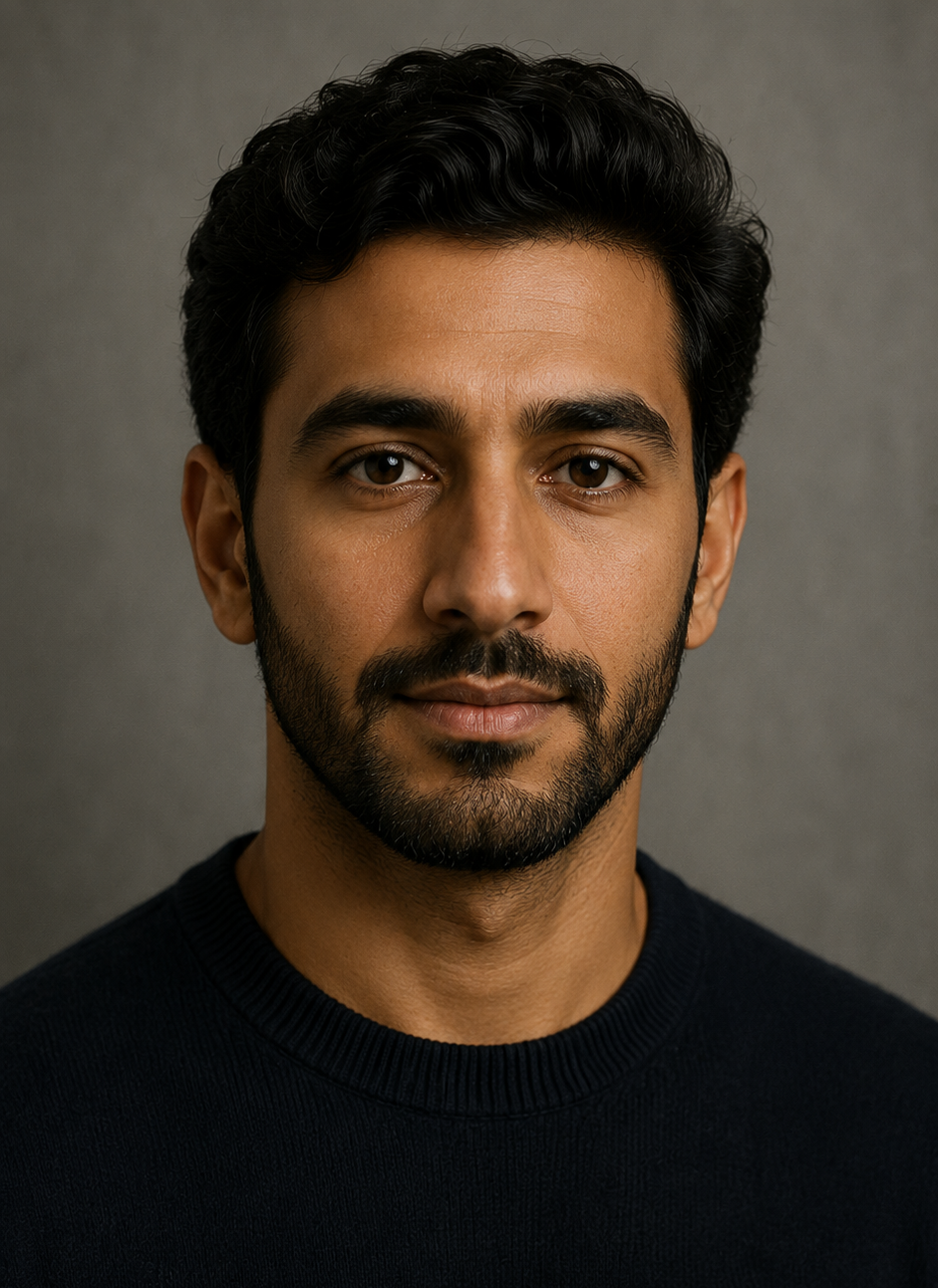
Written by
Khalid Al-Rashidi
Gulf & Middle East Correspondent · Emerging & Strategic Wealth
Khalid covers the family offices, luxury operators, and strategic capital moving across the GCC and wider Arab world — often before the rest of the region notices. He's spent years tracking how Gulf wealth structures itself for the next generation, from residency programmes to private aviation. Based between Dubai and Riyadh. Reach out at khalid.al-rashidi@theplatinumcapital.com.