
Patrick Mulvihill and the Rise of Data Centres as the Gulf's New Property Class
Patrick Mulvihill has positioned himself at the intersection of two powerful forces reshaping the Gulf's commercial landscape: the insatiable global demand for hyperscale computing infrastructure and the region's aggressive pivot toward digital sovereignty, turning what was once a niche industrial asset into the most sought-after property class in the Middle East. His trajectory illustrates a broader recalibration of real estate value in the Gulf, where proximity to subsea cable landing stations and access to reliable power now command the same strategic premium that waterfront plots and flagship retail corridors once did.…

The Man Behind the Gulf's Data Centre Moment
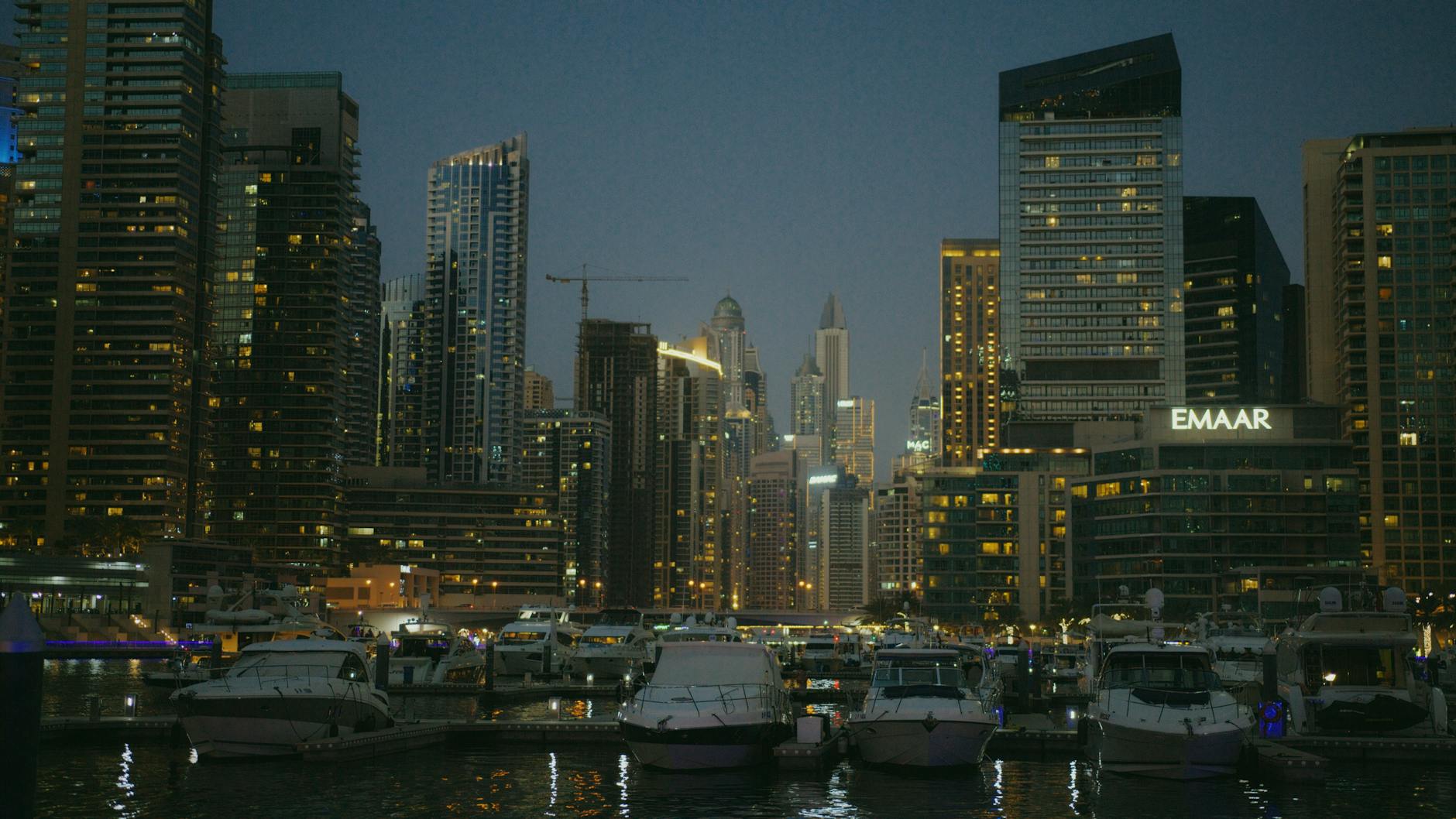
In a region where skylines have long served as the most visible expression of ambition, a quieter but arguably more consequential real estate revolution is taking shape beneath the surface. At the centre of it stands Patrick Mulvihill, a figure whose career has tracked the intersection of technology infrastructure and property development with a consistency that now looks remarkably prescient. Gulf states are racing to position themselves as global hubs for artificial intelligence, cloud computing, and digital services. Mulvihill has emerged as one of the most credible voices arguing that data centres represent not merely a niche asset class but the defining property opportunity of the coming decade.
From Property to Digital Infrastructure
Mulvihill's professional trajectory reflects a deliberate migration from conventional real estate into the specialised world of digital infrastructure. His background spans property development, investment, and advisory roles across multiple markets, and he built early expertise in understanding how physical assets underpin economic value chains. What set him apart from many of his contemporaries was a recognition — arrived at well before it became fashionable — that the explosive growth of data consumption would require a corresponding build-out of physical facilities on a scale that traditional property markets were poorly equipped to deliver.
That insight led him toward data centre development, a field that demands an unusual combination of competencies: deep knowledge of real estate fundamentals, sophisticated understanding of power and cooling engineering, fluency in the commercial requirements of hyperscale cloud providers, and the ability to work within complex regulatory environments. Mulvihill can operate across all of these domains. That has made him a sought-after figure in the Gulf's rapidly expanding digital infrastructure sector.
The Gulf's Strategic Bet on Data Sovereignty
To understand Mulvihill's relevance, you need to appreciate the forces reshaping the Gulf's economic priorities. The United Arab Emirates, Saudi Arabia, Qatar, and their neighbours have committed substantial national resources to economic diversification strategies that place technology and digital services at the core of post-hydrocarbon growth models. Saudi Arabia's Vision 2030 and the UAE's broader push to become an AI and fintech hub have created enormous demand for the physical infrastructure that makes such ambitions achievable.
Data centres sit at the heart of this equation. Without sufficient, reliable, and well-connected data centre capacity, the region's aspirations in cloud computing, AI model training, smart city development, and financial technology hit a wall. Governments across the Gulf have recognised this, and the result has been a surge of interest in attracting and developing data centre capacity at scale. Mulvihill has positioned himself squarely within this current, bringing operational knowledge and market relationships that few in the region can match.
Data Centres as a Distinct Property Class
One of Mulvihill's most important contributions to the regional conversation has been his articulation of data centres as a fully fledged property class — distinct from industrial warehousing, office space, or traditional infrastructure. This is not a semantic point. The classification matters because it determines how institutional investors, sovereign wealth funds, and developers allocate capital.
Globally, data centres have already achieved this recognition. Major real estate investment trusts focused exclusively on data centre assets have delivered some of the strongest returns in property markets over the past decade. Companies such as Equinix and Digital Realty have demonstrated that data centres can generate stable, long-duration income streams backed by creditworthy tenants on extended lease terms — characteristics that appeal strongly to institutional capital.
The Gulf, however, has been slower to make this conceptual leap. Few outside the region have noticed. Much of the region's data centre development has been led by telecommunications operators or government-linked entities rather than by specialised real estate players. Mulvihill has argued consistently that professionalising the sector — bringing the rigour of institutional property development to site selection, design, construction, and operation — will be essential if the Gulf is to compete credibly with established data centre markets in Europe, North America, and Southeast Asia.
Power, Climate, and the Engineering Challenge
Any serious discussion of data centres in the Gulf must confront the region's defining physical constraint: heat. Data centres generate enormous quantities of thermal energy that must be dissipated efficiently. Doing so in an environment where ambient temperatures regularly exceed 45 degrees Celsius presents engineering challenges of a completely different order than those faced in Northern Virginia or the Nordic markets.
Mulvihill has engaged directly with this reality, advocating for design approaches and cooling technologies adapted to Gulf conditions. The region's growing investment in renewable energy — particularly solar capacity — also creates potential synergies with data centre development, since power costs typically represent the single largest operational expense for any facility. The ability to co-locate data centres with abundant, competitively priced clean energy could, over time, give the Gulf a structural advantage that offsets its climatic disadvantages. That is a significant shift.
What Comes Next
The scale of what lies ahead is considerable. Industry analysts widely project that Middle Eastern data centre capacity will grow significantly over the coming years, driven by enterprise cloud adoption, government digitisation programmes, and the computational demands of artificial intelligence workloads. Several major hyperscale operators have announced or are exploring regional expansions, and sovereign wealth funds have signalled growing appetite for digital infrastructure as an asset class.
For Mulvihill, this expanding market represents both validation and opportunity. His years spent building expertise at the intersection of property and technology infrastructure have positioned him to play a meaningful role in shaping how the Gulf's data centre sector matures — whether through direct development, advisory work, or helping to bridge the gap between international operators and regional stakeholders. His influence on the sector's evolution appears set to deepen.
In a region that has always understood the power of building big, Patrick Mulvihill is making the case that the most important buildings of the next era may not be the tallest — but the most connected.
Written by
Tom Whitmore
Senior correspondent · Real Estate & Private Companies
Tom has interviewed most of the operators reshaping the Gulf skyline — and a few of the ones who tried and didn't. His beat is real estate, commodities, manufacturing, and the founder-led private companies that never bother to list. He knows which buildings and balance sheets survive a downturn before the spreadsheet does. Based in Dubai. Reach out at tom.whitmore@theplatinumcapital.com.