

Romania's New Business Elite and the Sectors They Control
Romania's new business elite have quietly consolidated power across energy, real estate, and technology sectors, leveraging post-EU accession capital flows and strategic political relationships to build fortunes that now rival those of Western European counterparts. For sophisticated investors and family offices seeking undervalued exposure in Central and Eastern Europe, understanding who controls Romania's most critical industries — and how they built that control — is no longer optional intelligence, it is foundational due diligence.…

Romania has long occupied an awkward position in the European imagination — acknowledged but underestimated, integrated but not yet fully understood. That gap between perception and reality has quietly created one of the most fertile environments for private wealth accumulation in Central and Eastern Europe. A new generation of Romanian business principals is not merely building companies. They are establishing dynasties, acquiring strategic assets across multiple sectors, and drawing the attention of Gulf family offices and Central Asian capital alike. This is, at its core, a story about what happens when entrepreneurial ambition meets structural opportunity — and moves faster than the headlines can follow.
The Sectors That Define the New Wealth
Four industries have produced the overwhelming majority of Romania's serious private fortunes over the past decade: technology and software outsourcing, retail and consumer goods, real estate development, and energy infrastructure. What distinguishes Romania's elite from their peers in Warsaw or Budapest is not the sectors themselves, but the speed at which vertically integrated conglomerates have emerged. A business principal who began in software services in Cluj-Napoca in 2005 may today control a portfolio spanning logistics, commercial property, and fintech — all without a single institutional investor on the cap table. That is not an accident. That is a deliberate ownership philosophy.
The tech corridor anchored in Cluj-Napoca, Bucharest, and Timișoara has generated what analysts at regional private equity firms conservatively estimate as USD 3 to 5 billion in privately held wealth since 2015. Romania's software sector exports exceeded EUR 7 billion annually by 2025. The individuals who built the infrastructure companies — not just the product studios — accumulated disproportionate capital. These are not unicorn founders chasing Nasdaq listings. They are owners of enterprise software firms, cybersecurity platforms, and managed service providers supplying clients across Germany, the Netherlands, and increasingly the UAE and Saudi Arabia.
Real Estate and the Bucharest Capital Corridor
Bucharest's commercial real estate market has become the quiet obsession of a specific class of Romanian family office. Office vacancy rates are tightening toward single digits in premium districts. Yields still run 200 to 300 basis points above comparable Western European markets. Several prominent families have repositioned themselves from developers into institutional-grade landlords. The Pavăl brothers — founders of Dedeman, Romania's dominant DIY retail chain with annual revenues approaching EUR 2 billion — have been the most visible example of this pivot, deploying capital across Romanian commercial property at a scale that rivals mid-tier REITs in Western markets.
What rarely gets discussed publicly is the growing interest from Gulf-based family offices in Romanian real estate as a portfolio diversification play. Abu Dhabi and Dubai family offices are increasingly active across emerging Europe — a trend that moves like Vista Equity Partners' new Abu Dhabi office in May 2026 have only accelerated — and Romania has begun appearing on allocation shortlists that would have seemed implausible five years ago. Few outside the region have noticed. They should. A market offering EU legal frameworks, improving infrastructure, and yields that Western Europe no longer provides is, for a family office managing USD 200 million to USD 500 million, an increasingly logical conversation.
Energy Transition and the Infrastructure Fortunes
Romania sits atop one of Europe's most consequential energy stories. The Black Sea gas fields — particularly the Neptun Deep development, in which OMV Petrom and Romgaz hold stakes — represent an estimated 100 billion cubic metres of reserves. The private wealth implications extend well beyond the listed companies involved. The construction, engineering, and logistics contractors servicing these developments are, in many cases, privately held Romanian firms whose principals are accumulating capital at a rate that will restructure the country's wealth rankings within a decade. The numbers tell a complicated story — and most of it stays off the record.
Romania has simultaneously become one of the most active solar and wind markets in the Balkans, with over EUR 4 billion in renewable energy investment committed or under development as of early 2026. A cluster of Romanian entrepreneurs who made their initial capital in construction or telecommunications have redeployed aggressively into energy infrastructure, often structuring assets through holding companies registered in Luxembourg or Cyprus before seeking European development bank co-financing. The sophistication of these structures reflects a generation of business principals who have moved well beyond domestic capital markets and now operate with the same intentionality as mid-market private equity firms.
The Family Office Moment
Perhaps the most significant structural shift in Romanian private wealth is the formalisation of family office structures among the country's top fifty wealth holders. Five years ago, a dedicated single-family office was largely theoretical among Romanian principals. Wealth moved informally through trusted advisors, accountants, and occasionally private banks in Vienna or Zurich. That model is changing — and changing fast. Several Bucharest-based families with net worth in the EUR 150 million to EUR 500 million range have, since 2023, established formal investment offices with dedicated CIOs, alternative asset mandates, and cross-border deal origination capabilities. That is a significant shift.
The reference points these families study are instructive. The Dangote model — concentrated industrial bets, vertical integration, and a willingness to challenge the state when market access comes under threat, as Aliko Dangote demonstrated in May 2026 with his fresh legal action against Nigerian fuel import permits — resonates strongly with Romanian principals who have managed their own complex relationships with state regulation. The lesson absorbed is not confrontation for its own sake. It is the strategic value of protecting structural competitive advantage through every available mechanism, including legal and political capital.
What Comes Next — and Who Is Watching
The forward trajectory for Romania's business elite runs along two parallel tracks. Domestically, consolidation is accelerating. The largest private companies in retail, logistics, and construction are acquiring smaller competitors at a pace that will produce three to five genuinely large conglomerates within the next decade. Internationally, the most ambitious Romanian principals have stopped treating the wider European Union as a regulatory framework to comply with and started treating it as a market to expand into — with acquisition targets in Bulgaria, Serbia, and Hungary already under evaluation by several Bucharest-based holding structures.
For Gulf family offices, Central Asian sovereign vehicles, and Southeast Asian conglomerates seeking European exposure without Western European pricing, Romania offers a specific and underappreciated entry point. The families who control it are private, discreet, and increasingly sophisticated. They are not seeking international media validation. But they are, without question, open to the right conversations — and for the most strategic among them, those conversations are already well underway.
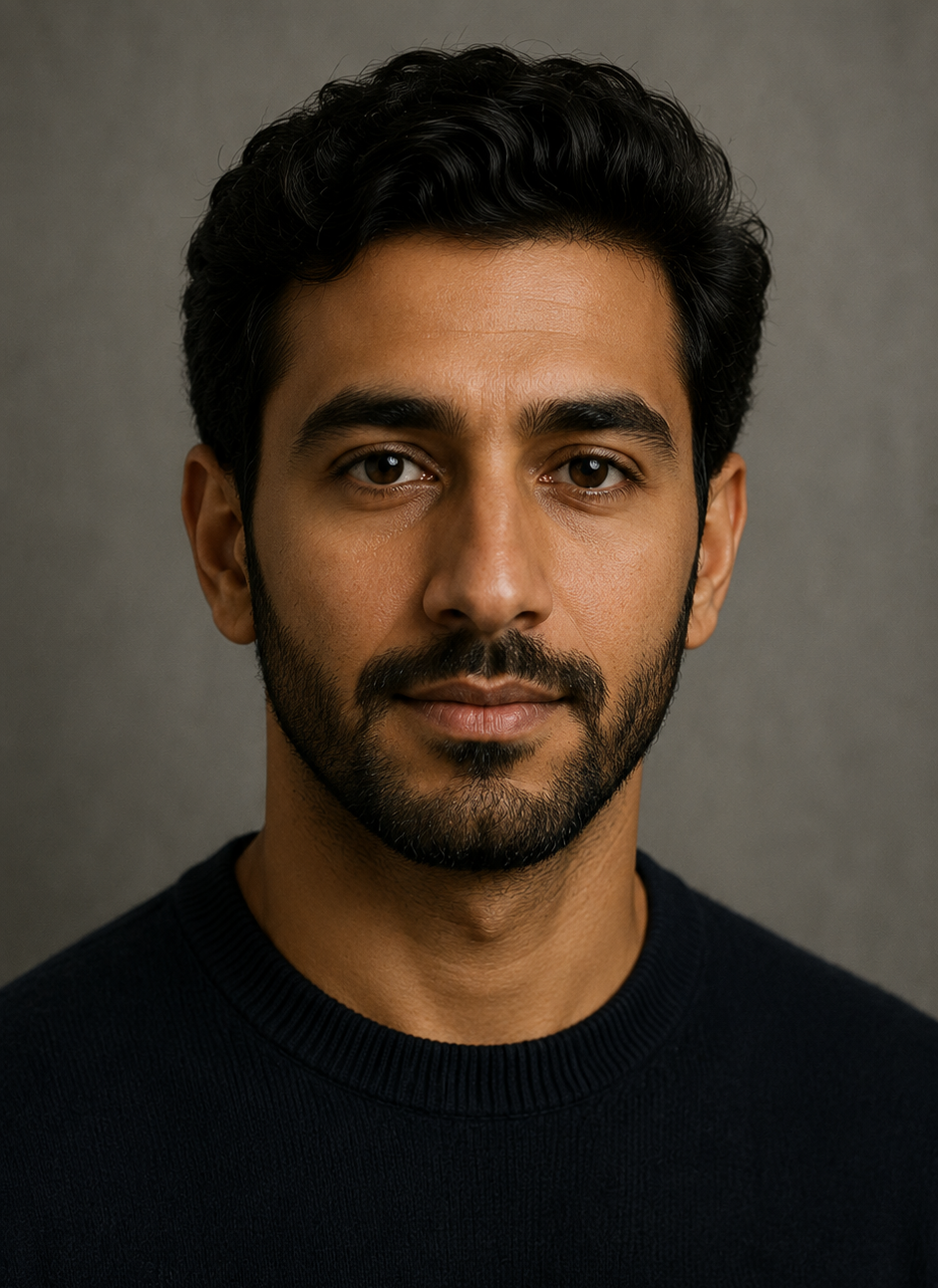
Written by
Khalid Al-Rashidi
Gulf & Middle East Correspondent · Emerging & Strategic Wealth
Khalid covers the family offices, luxury operators, and strategic capital moving across the GCC and wider Arab world — often before the rest of the region notices. He's spent years tracking how Gulf wealth structures itself for the next generation, from residency programmes to private aviation. Based between Dubai and Riyadh. Reach out at khalid.al-rashidi@theplatinumcapital.com.