

Serbia's Private Sector Boom and Its Wealthiest Builders
Serbia's private sector has emerged as one of Central Europe's most compelling growth narratives, driven by a convergence of strategic foreign direct investment, liberalizing trade frameworks, and a generation of entrepreneurial industrialists who have quietly built billion-dollar empires across energy, real estate, and telecommunications. For sophisticated investors and family offices seeking asymmetric returns in underexposed markets, understanding the architects behind Serbia's wealth creation is no longer a matter of curiosity — it is a matter of competitive advantage.…
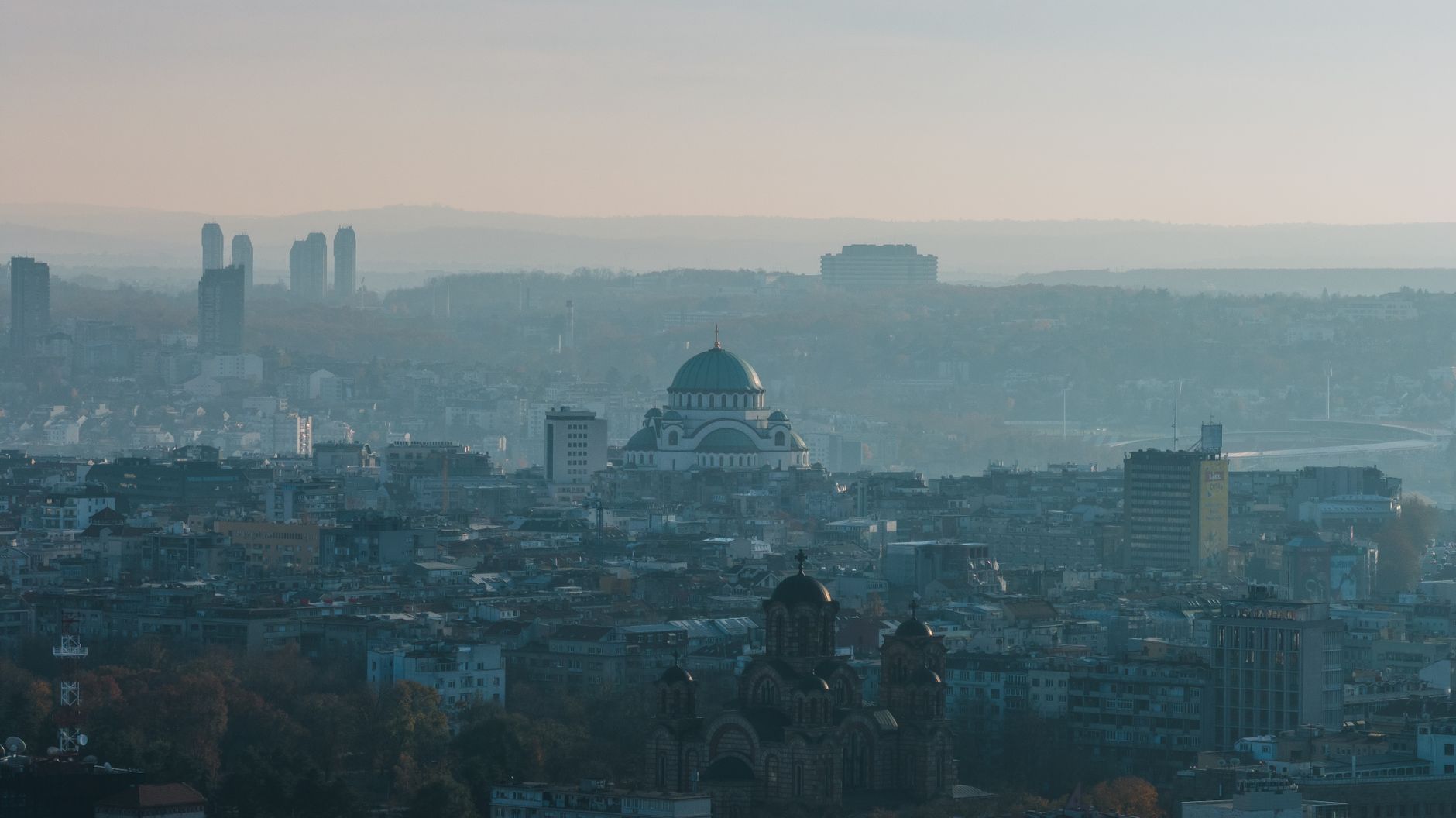
Global capital markets spent much of 2026 fixated on Abu Dhabi. That fixation made sense — when Robert F. Smith's Vista Equity Partners, which manages more than $100 billion in assets, opened its first Middle East office there in May, it confirmed what Gulf insiders already knew. But while that story dominated the business press, a quieter and structurally more interesting wealth story was taking shape along the Danube. Serbia has been producing a generation of private sector builders — operators with scale, cross-border ambition, and an appetite for capital partnerships — and family offices from Belgrade to Bahrain are starting to pay attention.
A Private Economy Built from Scratch
Serbia's private sector is, by any historical measure, young. The country's transition from a state-controlled economy began only in the early 2000s. That means the fortunes being built today — in real estate, telecommunications, retail, agriculture, and manufacturing — are almost entirely first-generation. No inherited industrial dynasties. No sovereign-linked patronage networks. These builders started with an economy that was, within living memory, largely closed to private enterprise, and they moved fast.
That context shapes everything about the character of Serbian wealth. These are operators. The timing helped too: two decades of European integration, infrastructure investment, and FDI inflows created the conditions for businesses of genuine scale to emerge. Serbia's GDP has grown steadily, and the IMF projects real growth of approximately 3.8% for 2026 — that outpaces most of Emerging Europe. Inflation has moderated. Foreign reserves are stable. EU accession remains protracted, but the candidacy itself lends the macroeconomic environment a degree of institutional credibility that most frontier markets simply cannot claim.
The Names Driving Private Capital Formation
At the apex of Serbia's private wealth sits Miroslav Mišković, founder of Delta Holding — a conglomerate spanning commercial real estate, agriculture, retail, and hospitality. Delta's origins are domestic, but its ambitions are increasingly regional, with assets extending across the Western Balkans and a food production platform that has drawn genuine interest from pan-European agribusiness investors. Mišković's arc — from a modest upbringing in Vojvodina to building one of the largest privately held groups in the region — is the classic emerging-market story: a first-generation builder who spotted structural gaps in a transitioning economy and moved before anyone else did.
The Koprivica family, behind the MK Group, tells a similar story. MK Group has made particularly assertive moves in agriculture — Serbia holds real comparative advantage here, with approximately five million hectares of arable land — as well as in tourism and banking. The group's agricultural operations have attracted quiet interest from Gulf sovereign funds and family offices seeking to diversify their food security exposure. That interest is only accelerating. Governments from Riyadh to Abu Dhabi are deepening their global agri-investment strategies, and Serbian producers are already in those conversations.
Telecommunications and digital infrastructure add another layer. Serbia's ICT sector has grown at double-digit rates in recent years, generating a cluster of technology businesses whose founders are beginning to register on the radar of Central European and Gulf-linked venture platforms. The pattern rhymes with Southeast Asia before its private equity surge — deal values there jumped 2.5 times year-on-year in Q1 2026, reaching $9.2 billion across 19 transactions, driven largely by digital infrastructure plays. Serbia is nowhere near that scale yet. But the structural preconditions are present: a young technical workforce, improving connectivity, and assets that remain meaningfully undervalued.
Real Estate and the Architecture of New Wealth
Walk the Belgrade waterfront and the transformation is hard to miss. The Belgrade Waterfront project — a multi-billion-euro mixed-use development on the Sava River anchored by Abu Dhabi's Eagle Hills — has reshaped the capital's urban core and, just as importantly, proved to Gulf investors that Serbian real estate can absorb serious institutional capital and generate credible returns. That demonstration effect matters. It has triggered a wider wave of domestic private investment in commercial and residential property, with family-backed developers now competing for prime land across Novi Sad, Niš, and the broader northern Serbia corridor.
The dynamic mirrors what is playing out in Egypt, where Hassan Allam Holding's recent acquisition of MetiPro — the engineering arm of water management group Metito — shows how domestic private capital in emerging markets is stepping into infrastructure roles that state entities and foreign contractors once monopolised. Serbia follows the same logic. Private builders have become the primary architects of the country's physical and commercial transformation, moving at a pace the public sector cannot match.
Cross-Border Capital and the Family Office Opportunity
What separates Serbia's wealthiest builders from their counterparts in smaller Balkan economies is a growing sophistication in how they manage capital. Serbian family offices — still largely informal by Gulf or Singapore standards — are beginning to structure their wealth with genuine intentionality. Holding company architectures in Luxembourg or Cyprus. Private equity co-investment mandates. And in several documented cases, capital deployed into African and Middle Eastern markets where Serbian construction expertise and agricultural know-how carry real transferable value. That last point tends to surprise people. It should not.
The philanthropic dimension is emerging too, if modestly. No Serbian private figure has yet approached the programmatic scale of Tony Elumelu — whose foundation deployed $16 million to 3,200 African entrepreneurs in March 2026, weeks before he was appointed to lead France's Africa Impact Coalition — but several Serbian family offices are beginning to formalise charitable giving through foundation structures, focused on education, healthcare, and rural development across Serbia and the wider Western Balkans.
What Investors and Family Offices Should Watch
For family offices and private investors based in the Gulf, Central Asia, or Africa, Serbia offers a specific and underappreciated proposition: a mid-sized European economy with functional institutions, assets priced well below their Western European equivalents, and a generation of private wealth builders who are actively seeking capital partners — not exits. The EU accession trajectory, however slow, places a structural floor under downside risk that most frontier markets cannot provide. That is not a minor consideration.
The sectors that warrant the closest attention: agriculture and food processing, where Serbian producers are already plugged into Gulf food security mandates; logistics and cold chain infrastructure; premium real estate in secondary cities; and an ICT sector where talent density is high and valuations have not yet run away from fundamentals. For investors who identified Southeast Asia before the Q1 2026 surge, or Gulf real estate before Abu Dhabi's institutional maturation, the window in Serbia will be recognisable. A market in the early stages of becoming something considerably larger than it currently appears. Those windows do not stay open indefinitely.
Written by
Khalid Al-Rashidi
Gulf & Middle East Correspondent · Emerging & Strategic Wealth
Khalid covers the family offices, luxury operators, and strategic capital moving across the GCC and wider Arab world — often before the rest of the region notices. He's spent years tracking how Gulf wealth structures itself for the next generation, from residency programmes to private aviation. Based between Dubai and Riyadh. Reach out at khalid.al-rashidi@theplatinumcapital.com.