

South Africa's New Wealth Builders Beyond the JSE
South Africa's most sophisticated investors are quietly redirecting capital away from the Johannesburg Stock Exchange toward a new constellation of high-yield opportunities spanning private credit, renewable energy infrastructure, and agribusiness ventures that are reshaping the country's wealth landscape. For family offices and institutional players navigating an era of currency volatility and global portfolio realignment, understanding these emerging asset corridors is no longer a matter of curiosity — it is a strategic imperative.…

South Africa's most consequential wealth creation story in 2026 is not being written on the floors of the Johannesburg Stock Exchange. It is being built in logistics corridors, renewable energy projects, private credit vehicles, and cross-border technology ventures — by a generation of entrepreneurs and capital allocators who are structuring their businesses, and their balance sheets, entirely outside the listed market framework their predecessors depended upon.
The Structural Shift Away from Listed Markets
The JSE has long served as both barometer and benchmark for South African prosperity. That relationship is fraying. The exchange still wrestles with thin liquidity, constrained institutional appetite, and a rand that forces every dollar-denominated ambition through a punishing conversion. The country's most ambitious wealth builders have drawn their own conclusions. They are routing capital through private structures, offshore holding companies, and continent-spanning operating businesses instead. The top ten counters on the JSE account for a disproportionate share of index weight — a concentration that leaves emerging private enterprises with little room to access growth capital domestically at any meaningful scale. The response has been entirely pragmatic: build privately, list selectively, internationalise early.
This is not a retreat. It is a deliberate recalibration of where and how wealth gets built. Family offices from Cape Town to Johannesburg are co-investing alongside Gulf sovereign capital with increasing regularity. South African entrepreneurs have quietly concluded that Abu Dhabi, Riyadh, and Nairobi are as relevant to their capital strategies as Sandton.
Renewable Energy and Infrastructure: The New Wealth Engine
South Africa's protracted energy crisis has been brutal for the broader economy. For private capital formation in renewables, it has functioned as a powerful accelerant. Independent power producers, battery storage developers, and grid infrastructure businesses have pulled in billions in private equity and development finance over the past three years. The 2026 pipeline reflects that momentum directly — several mid-market South African infrastructure groups are actively expanding into East and West Africa, leveraging relationships with multilateral lenders and, increasingly, Gulf-based family offices hunting yield-generating assets with genuine developmental credentials.
The regional signal worth reading carefully: Egypt's Hassan Allam Holding made headlines in April 2026 with its acquisition of MetiPro, the engineering and construction arm of water management group Metito. African infrastructure capital is consolidating into scaled platforms that operate across borders. South African infrastructure entrepreneurs are watching. Several are pursuing analogous strategies — acquiring technical capability in adjacent sectors, building managed service revenue streams, positioning for pan-African mandates that no single-country operator can credibly chase alone. The template is becoming clear.
Private Credit and Family Office Capital: Filling the Institutional Gap
What distinguishes South Africa's new wealth builders, more than anything else, is their sophistication around capital structure. Earlier generations relied on bank debt and JSE listings to fund growth. Today's cohort speaks fluent private credit, mezzanine financing, and structured equity — instruments that preserve operational control while unlocking real growth capital. Several Johannesburg-based family offices managing between USD 50 million and USD 300 million have quietly repositioned their portfolios away from listed equities toward direct private credit, real assets, and co-investment alongside international managers. Few outside the region have noticed. They should.
Robert F. Smith's Vista Equity Partners — managing over USD 100 billion in assets — opened its Abu Dhabi office in May 2026. That is a structurally significant signal for South African capital allocators, and it deserves more attention than it has received. Vista's Middle East operation is explicitly positioned to engage African deal-flow. A major American private equity firm operating through a Gulf hub creates a new channel through which South African private businesses could access institutional-grade growth capital without the friction of a domestic listing. For family office principals in South Africa who have spent the past decade building direct relationships in the Gulf, the convergence of American, Gulf, and African capital interests is a genuine opening.
Technology, Logistics, and the Continental Platform Play
South Africa's technology sector has consistently punched above its weight relative to the country's GDP, producing fintech, insurtech, and logistics businesses that have scaled successfully into broader African markets. In 2026, several of these businesses sit at genuine inflection points. They have built meaningful domestic revenues. They have established footholds in two or three adjacent markets. Now they face the harder question: how do you fund the capital-intensive step to continental scale?
The ecosystem around them is maturing fast. Tony Elumelu's foundation deployed USD 16 million to 3,200 African entrepreneurs in March 2026, with South African recipients forming part of a cohort that spans the continent. Elumelu's concurrent appointment to lead France's Africa Impact Coalition reflects a broader institutionalisation of African private-sector leadership in continental economic governance — one that is actively shaping policy environments more favourable to the cross-border commercial expansion that South African technology and logistics businesses are already pursuing. The message to South African founders is blunt: continental ambition is no longer exceptional. It is expected.
What Forward-Looking Investors and Family Offices Should Watch
The next 24 months will likely produce a cohort of privately-held South African businesses ready for significant institutional capital. They will approach Gulf co-investors, pan-African private equity, and international family offices long before they consider a domestic listing. Three sectors warrant close attention. Private healthcare infrastructure, where demand comprehensively outpaces public provision. Agribusiness and food security platforms, which are already attracting sovereign interest from Gulf states actively securing their food supply chains. And financial services businesses serving the mass-affluent and SME segments, where mobile penetration meets underbanked populations and the structural return profile remains compelling.
South Africa's currency risk is real. No serious capital allocator approaches this market without a clear view on offshore structuring and rand exposure management — and none should. But the entrepreneurs building outside the JSE are precisely those who have thought hardest about these constraints. They have not ignored the rand problem. They have engineered around it. The wealth being created is quieter than a stock exchange listing. It is also, increasingly, more durable.
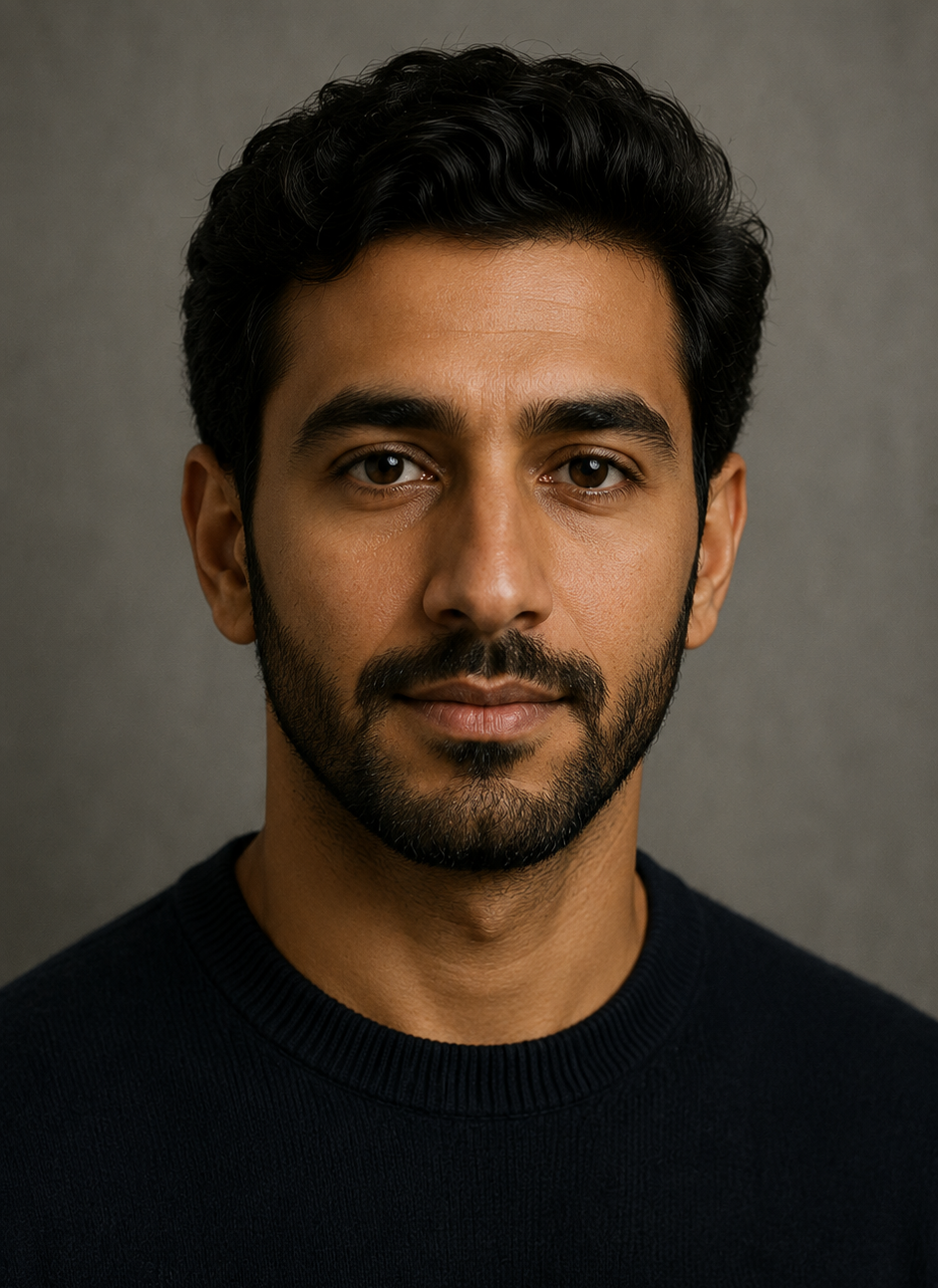
Written by
Khalid Al-Rashidi
Gulf & Middle East Correspondent · Emerging & Strategic Wealth
Khalid covers the family offices, luxury operators, and strategic capital moving across the GCC and wider Arab world — often before the rest of the region notices. He's spent years tracking how Gulf wealth structures itself for the next generation, from residency programmes to private aviation. Based between Dubai and Riyadh. Reach out at khalid.al-rashidi@theplatinumcapital.com.