

Uzbekistan Opens Up: The Entrepreneurs Seizing the Moment
As Uzbekistan accelerates its most ambitious economic liberalisation programme since independence, dismantling decades of state controls and throwing open its borders to foreign capital, a new generation of bold entrepreneurs is quietly building empires across sectors ranging from logistics and agriculture to fintech and luxury hospitality. For discerning investors and family offices with the conviction to move ahead of the consensus, the window to secure foundational positions in one of Central Asia's most undervalued and rapidly transforming economies is narrowing faster than most Western capital has yet recognised.…

For most of the past three decades, Uzbekistan barely registered on the radar of global capital — a landlocked post-Soviet republic with a closed economy, a restricted currency, and a business environment that kept outsiders out almost as effectively as it kept its own people down. That era is over. Under President Shavkat Mirziyoyev's reform agenda, which has systematically dismantled Soviet-era restrictions since 2017, Uzbekistan has become one of the most consequential frontier opportunities in Central Asia. The entrepreneurs who moved early are now building businesses of genuine regional scale.
A Reform Cycle That Has Reached Critical Mass
The numbers that matter most in Uzbekistan are not the headline GDP figures — though those tell a compelling story, with the economy expanding at roughly 6% annually through 2025 and into 2026. What matters more is the structural rewiring underneath. Currency convertibility, restored in 2017, unlocked foreign direct investment that had previously been impossible to repatriate. The privatisation programme, still ongoing, has transferred assets across textiles, chemicals, banking, and real estate from state hands into private ones. And a consumer class of 36 million people — young, urbanising, and increasingly connected — has generated demand that simply did not exist in any meaningful form a decade ago.
The IMF projects Uzbekistan's economy will reach $130 billion by 2028 at current trajectory. Not large by global standards. But for a market that was largely closed to private enterprise twenty years ago, it represents an extraordinary compression of development time. The entrepreneurs seizing this window understand they are not merely building businesses — they are building the institutional layer of a market economy that is still, in many sectors, being assembled from scratch.
The Sectors Where Uzbek Entrepreneurs Are Moving Fastest
Technology and fintech have attracted the most visible capital. Mobile penetration has outpaced traditional banking infrastructure — a dynamic anyone who watched Kenya or Indonesia a decade ago will recognise immediately. Local players including Humans.ai, the AI-driven neobank, and Uzum, the e-commerce and financial services group backed by private capital, have each built customer bases in the millions. The Gulf's own fintech trajectory is instructive here: the sector attracted $1.04 billion in venture capital in 2025 alone — a 164% increase year-on-year, according to recent regional data — and much of that momentum came from exactly the same dynamic: infrastructure deficit met by mobile-first entrepreneurship. Uzbekistan sits at an earlier point on that same curve. That is not a warning. That is the opportunity.
Beyond fintech, logistics and trade infrastructure have become a defining play. Uzbekistan borders Kazakhstan, Kyrgyzstan, Tajikistan, Afghanistan, and Turkmenistan, which places it squarely at the intersection of reviving trade corridors connecting China, Russia, the Gulf, and Europe. The Middle Corridor — the trans-Caspian route that gained strategic urgency after 2022 — runs directly through Uzbekistan's commercial orbit. Entrepreneurs in freight forwarding, warehousing, and cold-chain logistics are building businesses with regional ambition that would have been unthinkable under the pre-reform framework. Few outside the region have noticed. They should.
Gulf Capital and the New Axis of Emerging Market Investment
What has shifted most meaningfully for Uzbekistan in 2025 and 2026 is the direction of Gulf capital flows. Abu Dhabi, Riyadh, and Dubai have all deepened their engagement with Central Asian markets as sovereign wealth funds and family offices look beyond saturated Western markets for deployment. The UAE alone has committed billions in bilateral investment frameworks with Uzbekistan, with particular focus on agriculture, real estate, and renewable energy.
Vista Equity's decision to open its first Middle East office in Abu Dhabi in May 2026 — the $100 billion-plus AUM firm led by Robert F. Smith — says something about where sophisticated global capital is now positioning itself. Abu Dhabi has become the intermediary node between Western institutional money and frontier market deal flow. That architecture applies as directly to Uzbekistan as it does to Sub-Saharan Africa. Gulf family offices with Central Asian exposure are already running this model, quietly. The more public positioning of institutional capital makes the environment more legible — and more liquid — for the operators underneath.
Saudi Arabia's own trajectory reinforces the point. Knight Frank's Wealth Report 2026 identified the Kingdom as the country projected to lead the world in billionaire growth through 2031 — a direct consequence of Vision 2030's systematic creation of private-sector wealth through privatisation, IPOs, and the formalisation of industries that previously operated in grey zones. Uzbekistan is running an analogous, if less capitalised, version of the same playbook. The billionaires it produces over the next decade will emerge from the sectors being liberalised right now.
What Uzbek Entrepreneurs Are Getting Right
The most successful Uzbek entrepreneurs of this generation share something that sets them apart from peers in more developed markets: they have built tolerance for institutional ambiguity directly into their operating models. Regulatory frameworks are still evolving. Tax policy has been revised multiple times. Banking infrastructure, while improving, remains thin in secondary cities. The entrepreneurs who are scaling have done so by building businesses that do not require institutional perfection to function — they have created their own supply chains, trained their own workforces, and in several cases effectively built the market they then proceeded to dominate.
The pattern echoes what Tony Elumelu identified when he began systematically funding African entrepreneurship. His foundation's 2026 cohort deployed $16 million to 3,200 entrepreneurs across the continent — $5,000 each. Not because $5,000 transforms a business model, but because it signals legitimacy and unlocks the next layer of capital. The most resilient entrepreneurs in frontier markets are usually those who built before the infrastructure arrived. They understand the business at a level that later entrants, accustomed to functioning systems, never fully will.
The Window and What Comes After
First-mover advantage in frontier markets is real. It is also not permanent. Uzbekistan's reform cycle has now attracted enough attention that the next wave — regional private equity, Gulf family offices, development finance institutions — will arrive with capital, expertise, and competitive intensity that raises the bar significantly. The entrepreneurs who have spent the past five years building in textiles, agricultural technology, digital payments, and logistics will either be well-positioned to partner with incoming capital or displaced by it. There is no middle outcome.
For family offices and private investors watching Central Asia with serious intent, the question in 2026 is no longer whether Uzbekistan presents opportunity. That is settled. The question is which operators have built businesses durable enough to anchor a meaningful position. The answer lies with founders who treated the reform period not as a temporary arbitrage but as the foundation of something lasting. Those people exist. They are not yet on the international circuit. They will be.
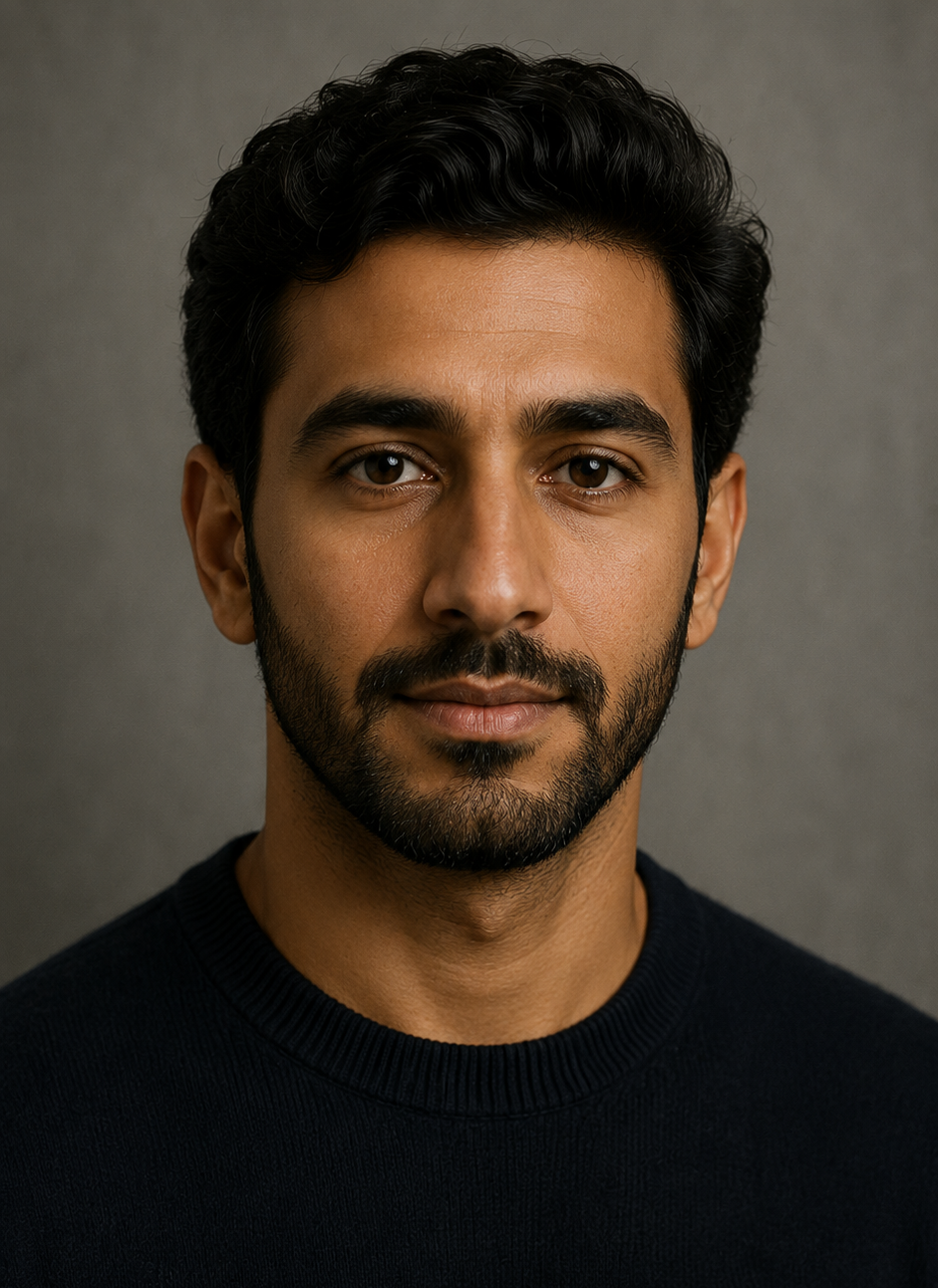
Written by
Khalid Al-Rashidi
Gulf & Middle East Correspondent · Emerging & Strategic Wealth
Khalid covers the family offices, luxury operators, and strategic capital moving across the GCC and wider Arab world — often before the rest of the region notices. He's spent years tracking how Gulf wealth structures itself for the next generation, from residency programmes to private aviation. Based between Dubai and Riyadh. Reach out at khalid.al-rashidi@theplatinumcapital.com.