

Climate Risk and the Growing Insurance Protection Gap
As climate-related disasters accelerate in both frequency and financial magnitude, the widening gap between insured and uninsured losses is quietly becoming one of the most consequential threats to global capital preservation and sovereign fiscal stability. For family offices, institutional investors, and policymakers navigating an era of compounding physical risk, understanding the structural failures within the insurance market is no longer a peripheral concern — it is a foundational imperative for long-term wealth protection and economic resilience.…
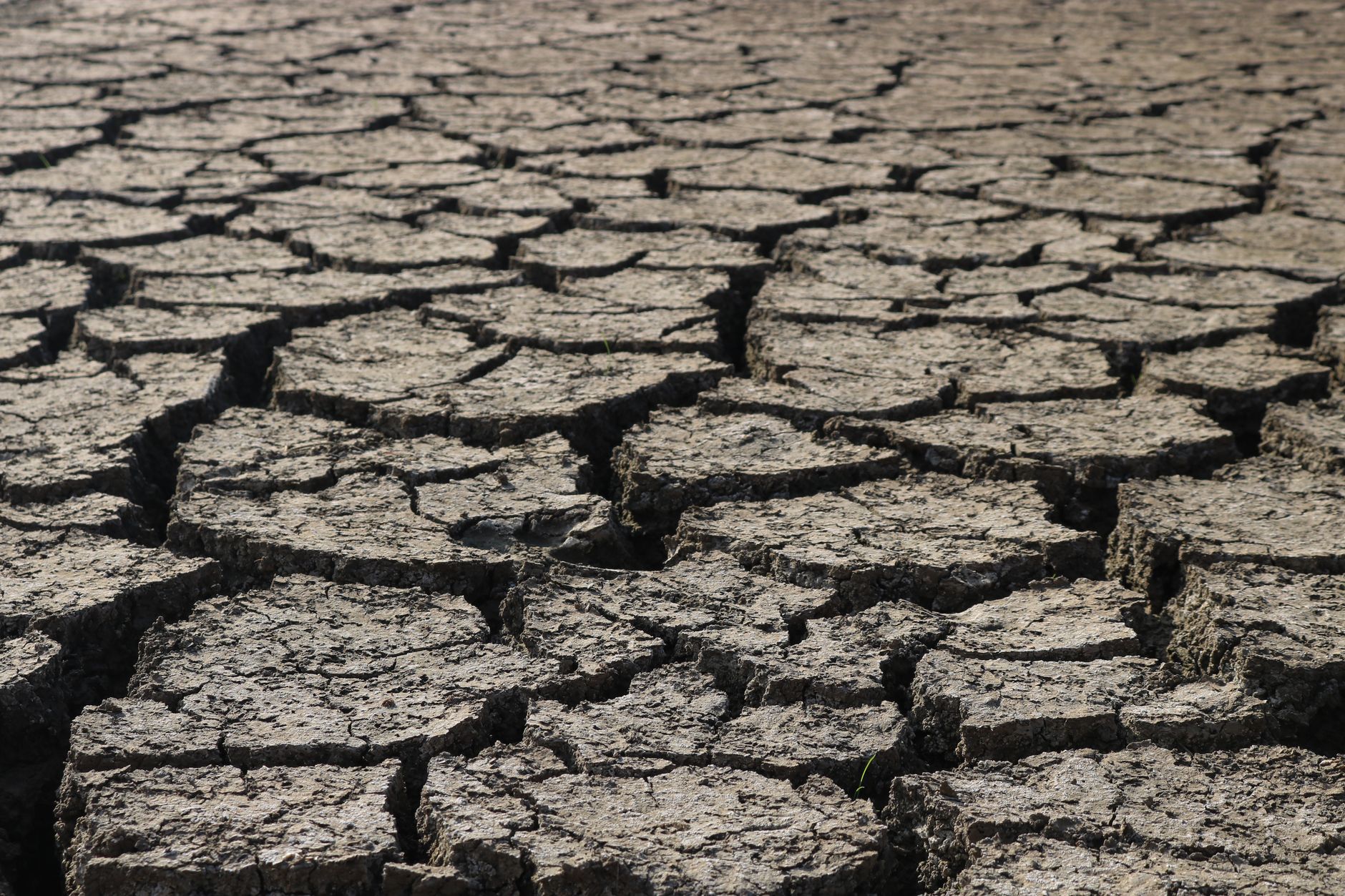
When Lloyd's Joint War Committee redesignated the entire Arabian Gulf as a conflict zone in March 2026 — within 48 hours of coordinated U.S.–Israeli airstrikes on Iran — it did not merely trigger a war-risk insurance crisis. It exposed something far more structural: the world's most strategically critical waterways, and the populations and economies that depend on them, are operating with a shrinking cushion of insurable protection at precisely the moment when physical and geopolitical risks are compounding fastest. The climate protection gap, long debated in technical forums, has become a live financial emergency.
A $352 Billion Warning Shot in the Gulf
The numbers from the Persian Gulf crisis are stark. JPMorgan energy analysts estimated that approximately 329 vessels were operating in the Gulf at the time of the February 28 strikes, each requiring hull, liability, and pollution coverage. The aggregate exposure: roughly $352 billion in insurance coverage that private markets were — within days — no longer willing to provide at any commercially rational price. War-risk premiums surged fivefold within 48 hours. Replacement coverage, where available at all, was quoted at approximately sixty times pre-crisis rates.
That is not a market correction. That is a market exit.
The Trump administration's response — directing the U.S. International Development Finance Corporation to partner with leading American insurers on a reinsurance facility offering up to $40 billion in revolving coverage across hull, cargo, and liability risks — stabilised some shipping flows through the Strait of Hormuz. But the facility covered barely a fraction of the total exposure, and it required government intervention to do even that. For family offices, sovereign wealth managers, and private investors with exposure to Gulf logistics, energy, or real estate, the episode delivered an unambiguous lesson in how quickly private insurance markets can withdraw — and how punishing that withdrawal becomes when your assets sit on the wrong side of the line.
Climate Risk Enters the Credit Rating Room
Against this backdrop, AM Best's Mahesh Mistry delivered what may prove to be one of the more consequential presentations of the year at the 14th International Takaful Summit in London this summer. Speaking on June 30, Mistry — Senior Director and Head of Analytics at AM Best's London office — outlined how the firm has embedded ESG and climate considerations directly into its Best's Credit Rating Methodology. The session, titled "Credit Rating View on Sustainability, Climate Change and Corporate Social Responsibility within (Re)Takaful," addressed markets spanning Africa, the Middle East, and Eastern Europe.
Read that again: climate events, social inequality, and governance failures are no longer contextual footnotes in a rating report. AM Best now treats them as material risks capable of moving an insurer's long-term financial strength rating. For takaful operators across the GCC and broader Islamic finance markets, this is a meaningful recalibration of the commercial environment. Operators that have not built credible climate risk frameworks into their underwriting and reserving will find their credit profiles under pressure — and that pressure translates directly into tighter reinsurance terms, higher capital costs, and reduced appetite from institutional investors.
The implications run deeper than any individual operator's balance sheet. Sovereigns and quasi-sovereign entities across the Gulf rely on takaful structures to cover infrastructure, public assets, and social programmes. A downgrade at a key takaful operator is not an abstract rating event — it ripples through procurement costs and coverage availability across entire economies. Few officials outside the sector have mapped this chain of consequence. They should.
Africa Builds Its Own Architecture
While Gulf markets absorb the acute collision of geopolitical and climate risk, a more constructive story is taking shape in West Africa. Riwe, a climate insurance and financial technology company headquartered in Abuja, Nigeria, secured funding and a partnership from the UNDP and the Islamic Development Bank in June 2026. The collaboration signals growing institutional conviction that Africa's climate protection gap requires purpose-built, Shariah-compliant financial infrastructure — not imported Western models retrofitted for markets they were never designed to serve.
The scale of the problem in Nigeria alone is arresting. Fewer than two percent of smallholder farmers carry any form of agricultural insurance. Urban flood losses in Lagos, Kano, and Port Harcourt are largely uninsured. The Riwe model — combining parametric triggers, mobile distribution, and Islamic finance principles — is built to close that gap at scale. The IsDB's involvement matters for reasons beyond the capital it brings. Its network spans 57 member states, from Senegal to Indonesia, and similar models could move through that network with multilateral credibility already attached.
For private investors and family offices with exposure to African agriculture, real estate development, or consumer finance, the emergence of institutionally backed climate insurance products changes the investment calculus. Insured assets attract better financing terms and carry lower default risk. Platforms that provide that insurance — particularly where multilateral de-risking reduces the first-loss exposure — are beginning to look less like development finance experiments and more like a serious asset class.
The Protection Gap as a Systemic Wealth Risk
Across the Gulf, Central Asia, and sub-Saharan Africa, the insurance protection gap is widening faster than GDP growth or urbanisation can explain. Swiss Re estimates the global uninsured natural catastrophe loss figure exceeded $280 billion in 2025, with emerging markets accounting for the majority of those uninsured losses. In the GCC specifically, insurance penetration has improved — the UAE now sits at approximately 2.7 percent of GDP — but that figure remains well below the global average of around 7 percent, and climate-related products are underdeveloped relative to the actual physical risk profile of the region. The numbers tell a complicated story about a region that has built extraordinary wealth on top of underwritten risk.
For ultra-high-net-worth families and private investors, this gap is not a social policy concern. It is a direct balance sheet exposure. Uninsured losses generate sudden shocks for operating businesses, suppress collateral values in real estate portfolios, and create fiscal pressure on governments that then pull capital away from development spending. In markets where family wealth concentrates in physical assets — land, commercial property, industrial facilities — the absence of credible climate coverage is a structural vulnerability sitting quietly inside otherwise sophisticated portfolios.
What Forward-Looking Capital Should Be Doing
The convergence of events in 2026 — the Gulf war-risk crisis, AM Best's formalisation of climate risk in takaful credit ratings, and the arrival of institutional-grade climate insurance platforms in Africa — collectively point in one direction. Reinsurance capacity in climate-exposed corridors, parametric insurance platforms with multilateral backing, and takaful operators with demonstrably strong ESG integration are all moving from niche consideration to strategic priority. That transition is happening faster than most allocation committees have registered.
Family offices and private investment vehicles that have historically treated insurance as a back-office cost centre need to reconsider the category entirely — both as a risk management tool and as an investment thesis. The protection gap will not close on its own. Those who move capital into closing it, with appropriate structures and credible partners, will find themselves well ahead of the regulatory, reputational, and commercial pressures now bearing down on every market that has chosen to look the other way.
Written by
Amelia Rowe
Senior correspondent · Banking & Economy
Amelia spent eight years inside a sovereign wealth fund before deciding she'd rather write about institutional money than allocate it. She covers central banking, insurance, and the macro decisions that quietly choose which markets get the next decade. Sharp on monetary policy; impatient with anyone who confuses noise with signal. Based in London. Reach out at amelia.rowe@theplatinumcapital.com.