

GCC Dividend Champions: The Stocks Family Offices Hold Forever
In the Gulf Cooperation Council's most resilient portfolios, a select tier of dividend-paying equities has quietly compounded generational wealth across decades, shielded by sovereign backing, commodity dominance, and regulatory moats that few global markets can replicate. For family offices navigating an era of monetary uncertainty and geopolitical recalibration, these GCC stalwarts represent not merely income streams but permanent capital allocations engineered to outlast market cycles, leadership transitions, and the inevitable turbulence of a world reordering itself around new financial powers.…
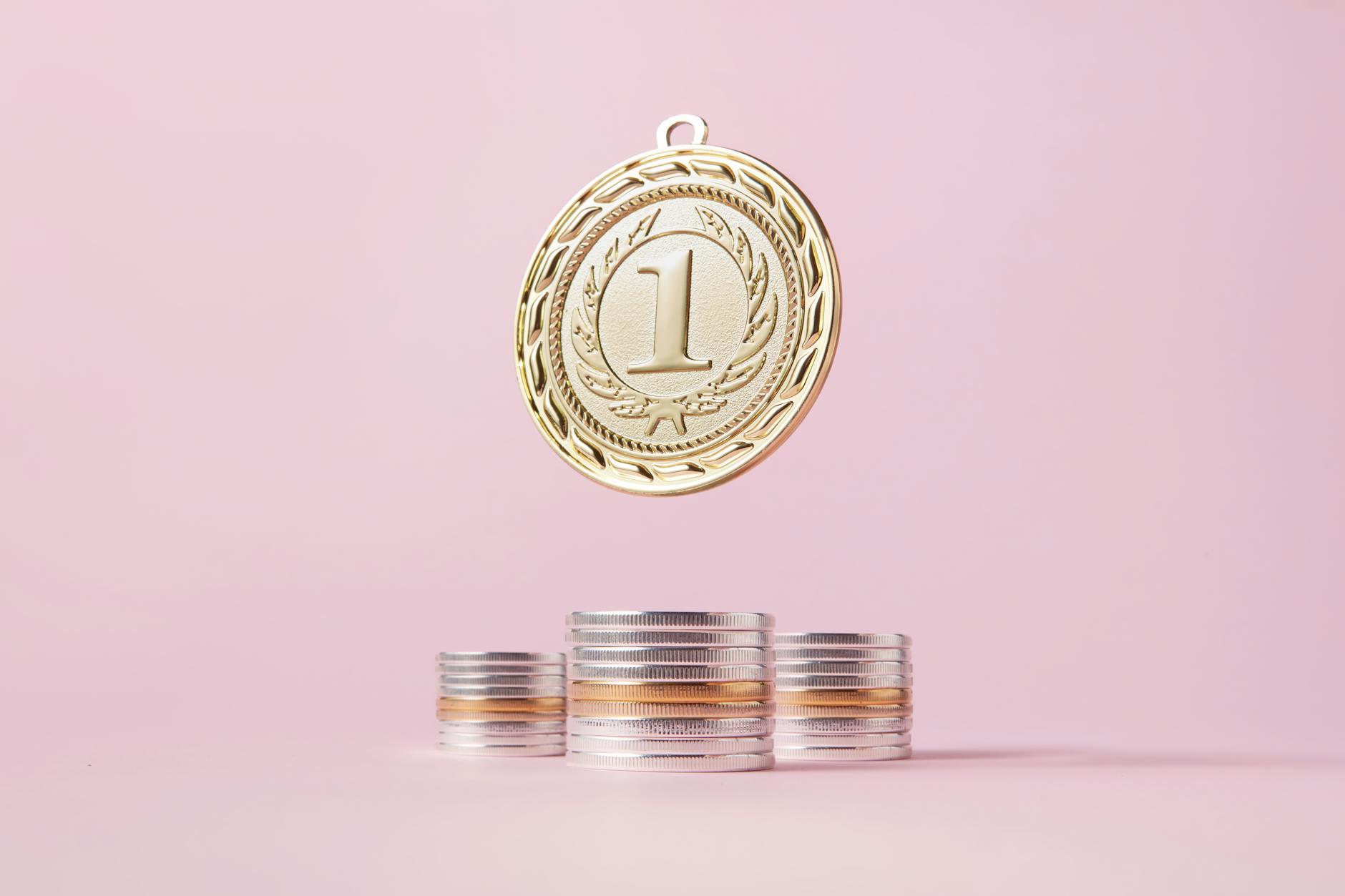
When markets panic, family offices buy. When central banks pivot, family offices hold. And when everyone else is watching yield curves and Fed minutes, the most sophisticated private wealth managers in the Gulf are quietly collecting dividends from the same dozen or so stocks they have owned for years — and in some cases, decades. The GCC has quietly produced a class of listed companies whose dividend consistency, state linkage, and structural dominance make them almost uniquely suited to the multigenerational investment philosophy that defines how old money in the region actually operates.
A Market at an Inflection Point
The backdrop has rarely been more complex — or more compelling. On February 1, 2026, Saudi Arabia's Capital Market Authority dismantled the Qualified Foreign Investor framework, eliminating the $500 million AUM threshold that had long restricted direct Tadawul access to the world's largest institutions. For the first time, smaller foreign investors and family offices from Lagos to Almaty can access Saudi equities without routing capital through expensive intermediary structures. That is a significant structural shift — and most of the world has not yet registered its implications.
Tadawul ended 2025 down nearly 8% in US dollar terms, lagging the FTSE Emerging Index by roughly 34%, according to Franklin Templeton analysts Dina Ting and Marcus Weyerer. For long-horizon investors, that underperformance reads less as a warning and more as an entry point. Jefferies analysts estimate that a potential lifting of the 49% foreign ownership cap — under review later this year — could trigger between $3.4 billion and $10.2 billion in passive index inflows alone. The family offices already positioned will benefit most from that re-rating. They usually do.
Meanwhile, UAE bourses surged in June 2026 as optimism around a US-Iran peace deal injected genuine risk appetite into regional equities. The ADX gained 0.3% to 9,996.20 while the DFM rose 1% to 6,115.97. On June 17, Dubai's DFM General Index broke through the one trillion dirham — approximately $272 billion — market capitalisation barrier. These are not speculative moves. They reflect a hard-nosed recognition by global capital that the Gulf's anchor equities are mispriced relative to their earnings quality and dividend track records. The market is correcting that. Slowly, then all at once.
The Banking Stocks That Pay Year After Year
No category better illustrates the GCC dividend thesis than regional banking. State ownership stakes, oligopolistic market structures, earnings streams largely insulated from the disruptions eating into bank profitability elsewhere — the sector offers a combination that Western private bankers struggle to replicate for their clients.
Qatar National Bank, the region's largest lender by assets, has held a dividend payout ratio above 40% for over a decade. Its yield currently approaches 4% — rare for a bank of this quality at this stage of a rate cycle. First Abu Dhabi Bank, majority-owned by Abu Dhabi sovereign structures, offers comparable consistency and draws directly from the emirate's sustained infrastructure and diversification spending. The sovereign backstop is not incidental. It is the entire thesis.
Emirates NBD deserves particular attention right now. On June 18, 2026, the Dubai-based lender completed its $2.75 billion acquisition of India's RBL Bank — the largest cross-border banking deal the UAE has executed in a generation. For family offices tracking dividend sustainability, this matters enormously. The India expansion diversifies Emirates NBD's earnings base across one of the world's fastest-growing consumer banking markets, while the parent bank's exposure to Dubai's surging property sector — Emaar Properties jumped 3% in the same week — creates a compounding feedback loop between real estate and credit demand. Gulf family offices have long held Emirates NBD not just for income, but because it functions as a proxy for Dubai's economic ambition. That ambition is accelerating.
Real Estate Champions: Built for Distributions
Aldar Properties and Emaar Properties sit at the core of nearly every serious GCC equity income portfolio. Aldar's 4.6% surge following the US-Iran peace deal optimism in June was notable — though experienced family office managers were unsurprised. Aldar has transformed from a pure Abu Dhabi developer into a regional platform with assets in Egypt, the UK, and Saudi Arabia. Its dividend policy has evolved accordingly, anchored to recurring revenue from its investment properties portfolio rather than lumpy project sales. That distinction matters enormously to a family treasurer managing distributions across three generations.
Emaar is the more visible name globally, but its dividend history is arguably the more instructive. The developer behind Downtown Dubai and the Burj Khalifa has delivered consistent cash distributions through multiple cycles, including the 2020 pandemic contraction — when most developers elsewhere suspended payments entirely. Its hospitality and retail subsidiaries, partly listed separately, provide earnings diversification that pure property developers in other markets simply cannot match. For a family office principal in Riyadh or Manama evaluating their listed equity sleeve, Emaar offers something almost impossible to find in Western real estate equities: genuine yield anchored in assets with permanent scarcity value.
Telecoms and Utilities: The Quiet Compounders
The least glamorous names are often the most reliable. Few outside the region have fully appreciated this. They should.
Saudi Telecom Company — STC — has grown from a domestic monopoly into a regional digital infrastructure player with stakes across the Middle East and Africa. Its dividend yield has remained consistently above 3.5% even as the stock has re-rated upward. Etisalat, rebranded as e& and headquartered in Abu Dhabi, has extended its presence across Africa and Central Asia, bringing roughly 160 million subscribers under its umbrella. e& now operates in markets that directly overlap with the investment interests of Gulf family offices — from Egypt to Pakistan — making it simultaneously a dividend vehicle and a strategic intelligence asset for families with regional business exposure. The numbers tell a complicated story, but the income line stays clean.
Saudi Electricity Company and Qatar's Kahramaa-linked listed entities occupy similar roles: state-backed, structurally protected, and obligated to distribute earnings in markets where tariff reform is proceeding carefully and predictably rather than disruptively. Family offices from Kazakhstan to Nigeria that have diversified into GCC equities frequently cite these utilities as their first allocation — low volatility, hard currency yield, and implicit sovereign backing. A boring entry point that tends to age well.
The Long Game in a Reopening Market
The convergence of Tadawul's full foreign opening, the UAE's geopolitical re-rating, and Emirates NBD's cross-border expansion signals something that deserves a hard look from any serious private wealth allocator: the GCC equity market is maturing into a genuine asset class for global private wealth, not merely a regional trade for specialists.
For family offices managing capital across the Gulf, Central Asia, and Africa, this structural moment calls for a deliberate review of listed equity income allocations. The families that entered Saudi banking and UAE real estate names during the 2025 underperformance are already sitting on re-rating gains alongside their dividend streams. Those tracking the Jefferies passive inflow estimates — potentially exceeding $10 billion if ownership caps are lifted — understand that being early in a re-rating cycle while collecting a reliable dividend is one of private wealth's most durable advantages. It compounds quietly. Then it compounds loudly.
The stocks family offices hold forever tend to be boring. In the GCC right now, boring is exactly where the opportunity is.
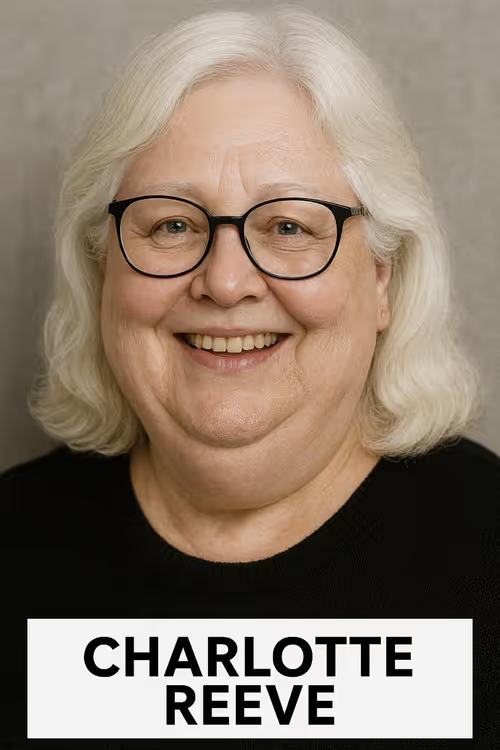
Written by
Charlotte Reeve
Senior correspondent · Capital Markets & Fintech
Charlotte cut her teeth on an equities desk before moving to the other side of the notebook. She covers capital markets, stock exchanges, and the fintech operators trying to disintermediate the banks that trained her. Sharpest on market microstructure and payments infrastructure; still reads a prospectus for fun. Based in Singapore. Reach out at charlotte.reeve@theplatinumcapital.com.