

India's Economic Ascent: Momentum, Risks, and Global Implications
India stands at a rare inflection point in economic history, where a convergence of demographic strength, accelerating digital infrastructure, and strategic geopolitical repositioning is compounding at a pace that few emerging markets have sustained across multiple cycles. For sophisticated capital allocators and policymakers, the question is no longer whether India warrants serious attention, but whether the window to engage on optimal terms is beginning to close.…
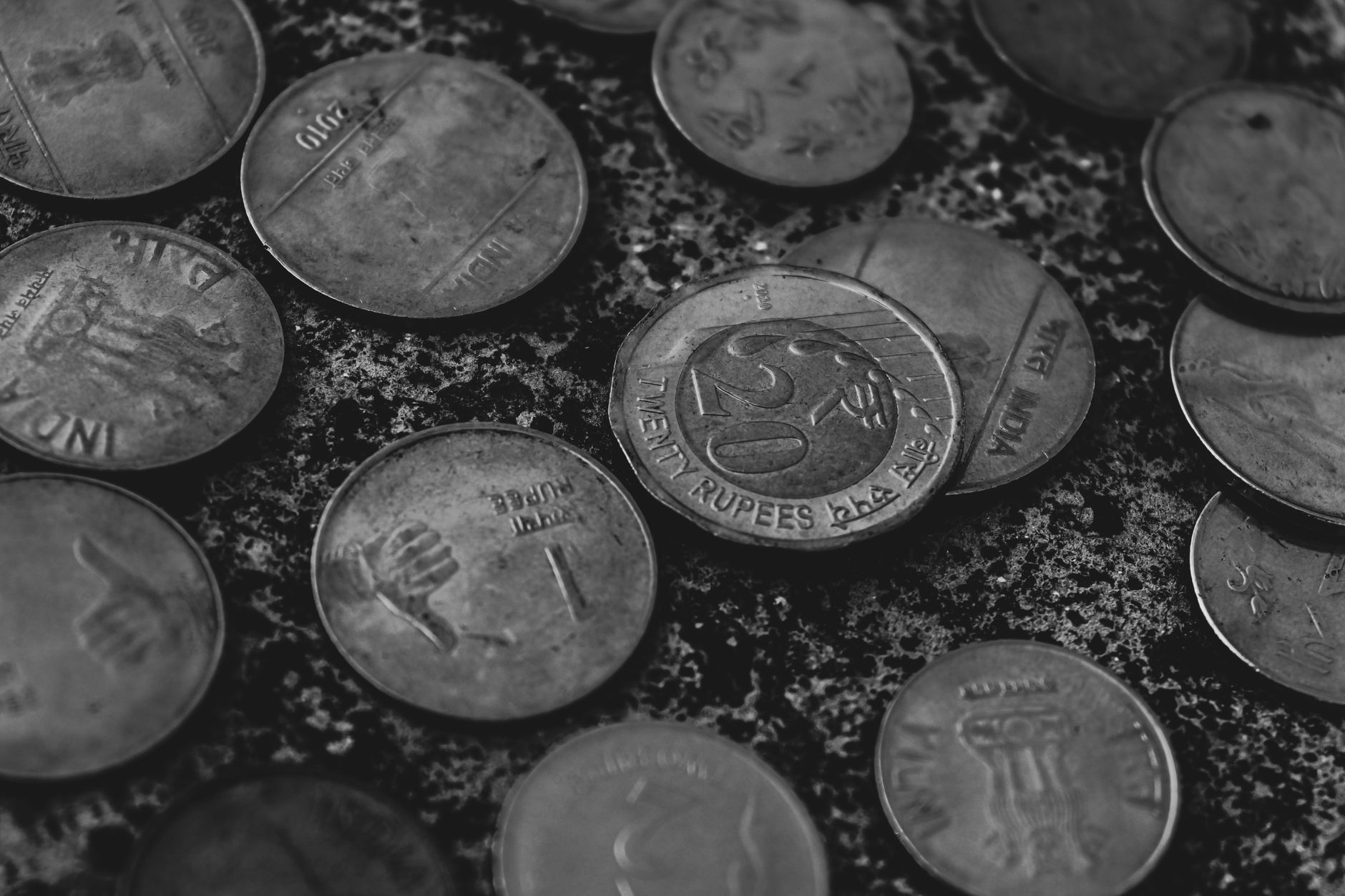
India is no longer a market that patient investors watch from a distance. With its economy set to cross the $4 trillion threshold in nominal GDP by the close of 2026, the country has moved decisively from aspiration to execution — and the reverberations are reshaping capital flows, supply chains, and geopolitical alignments across every region that matters to serious private wealth.
The Scale of the Shift
India's GDP growth held above 6.5% annually through 2025 and into 2026, outpacing virtually every major economy. Manufacturing output has expanded sharply as the Production-Linked Incentive scheme pulls in foreign direct investment across electronics, pharmaceuticals, and renewable energy. Apple now assembles approximately 14% of its global iPhone production in India. Five years ago, that figure was near zero. The country's goods exports crossed $450 billion in the 2025–26 fiscal year. Its services export engine — anchored in technology and financial processing — added a further $380 billion.
These are not projections. They are reported actuals. For family offices and private investors assessing long-duration positioning, that distinction matters enormously.
The domestic consumption story anchors the structural case. India's middle class — conservatively estimated at 300 million people — is growing in number and in purchasing sophistication. Luxury goods sales in India rose approximately 20% year-on-year in 2025, with international houses including LVMH and Richemont accelerating their retail footprints across Mumbai and Delhi. The UPI payments infrastructure now processes over 18 billion transactions per month, producing a data-rich consumer ecosystem with no precise parallel anywhere in the emerging world.
Gulf Capital Finds Its Indian Moment
The relationship between Indian economic growth and Gulf sovereign capital has deepened considerably over the past eighteen months. Abu Dhabi Investment Authority holds substantial positions across Indian public equities and infrastructure debt. Bilateral trade between the UAE and India — formalised and accelerated through the Comprehensive Economic Partnership Agreement — surpassed $85 billion in 2025, driven by energy, gold, and technology services.
Saudi Arabia's posture is equally telling. The Public Investment Fund has identified Indian infrastructure, logistics, and digital economy assets as priority deployment zones within its global diversification mandate. That is a significant shift — and it fits a pattern. The same institutional logic that drove SALIC's acquisition of an 80% controlling stake in Olam Agri — a $3 billion transaction completed across two tranches in late 2024 and early 2025 — reflects a Gulf that is no longer content to hold financial assets passively. It wants productive assets, supply chain positions, and long-term influence. India, with its deep agricultural value chain, port infrastructure, and industrial capacity, sits squarely within that ambition.
Connecting the Corridors: Central Asia and Southeast Asia
India's economic ascent cannot be separated from the broader reordering of emerging market connectivity. The India-Middle East-Europe Economic Corridor, announced in 2023 and now advancing through bilateral implementation agreements, builds a physical and financial architecture linking Indian ports through the Gulf and on to European markets. For investors operating across Central Asia, this matters more than most have registered.
Few outside the region have paid close attention to Uzbekistan's emergence as a serious investment destination. They should. The 2026 Tashkent International Investment Forum convened companies representing $42 trillion in combined assets and drew delegations from 100 countries — a signal of regional reconfiguration in which India functions as a gravitational anchor, not merely a participant.
India's trade with Southeast Asia through the ASEAN Free Trade framework has also expanded materially. Bilateral trade with Vietnam, Indonesia, and Malaysia collectively exceeded $130 billion in 2025. Indian pharmaceutical companies now supply approximately 60% of Vietnam's generic drug imports. Technology service firms based in Bangalore and Hyderabad run substantial delivery centres across the Philippines and Malaysia. These relationships are bilateral in trade terms but increasingly multilateral in investment structure — which creates real openings for third-country capital, including from Gulf and Central Asian family offices, to participate in intermediary financing, logistics infrastructure, and joint ventures.
The Risks That Serious Investors Do Not Dismiss
The numbers tell a complicated story when you look past the headline figures. India's infrastructure execution, while improving, remains uneven. Project timelines in roads, ports, and urban transit continue to slip against original schedules. The rural-urban income divergence has widened even as aggregate GDP strengthens, and the agricultural sector — which still employs over 40% of the workforce — remains exposed to monsoon variability and commodity price cycles in ways that can generate rapid social and political pressure.
Geopolitically, India's strategic autonomy posture — sustaining relationships with both Washington and Moscow while deepening Gulf partnerships — is a deliberate balancing act. It served New Delhi well through the Ukraine conflict period. It also introduces complexity for foreign investors who require clear regulatory and political risk frameworks. The rupee, while more stable than many emerging market peers, is not freely convertible, and capital account restrictions remain a structural constraint for institutional investors who need full flexibility.
None of these factors invalidate the India thesis. They define the terms on which it must be engaged.
Where Forward-Looking Investors Should Focus
For private investors, family offices, and sovereign-adjacent capital operating across the Gulf, Africa, and Central Asia, India offers specific entry points that align with the macro trajectory without requiring undifferentiated index exposure. Green energy infrastructure is one of the clearest. India has committed to 500 gigawatts of renewable capacity by 2030 and is actively seeking private capital to close the financing gap. The investment logic mirrors what is driving ACWA Power's $4 billion green hydrogen commitment in Egypt's Suez Canal Economic Zone — productive assets, long-duration cash flows, and strategic positioning in economies that will matter structurally over the next two decades.
Data centre infrastructure, logistics and cold chain investment, and premium consumer brands with genuine Indian market localisation strategies represent additional high-conviction areas for investors willing to move beyond public market allocations. India's private credit market — historically thin relative to the size of the economy — is expanding fast. Family offices with flexible capital structures are finding risk-adjusted returns in structured financing that institutional funds simply cannot reach.
India's ascent does not peak in a single cycle. The demographic dividend runs for another fifteen years. Reforms underway in insolvency law, financial regulation, and tax administration are compounding in their effect — quietly, cumulatively, and in ways that reward those already inside the market. For those who move now — with the right local relationships, the right sectoral focus, and a clear-eyed view of the genuine risks — the cost of waiting is measured not in basis points but in access that, once foregone, is rarely recovered.

Written by
Sophie Aldridge
Global Economics Editor · Geopolitics
Sophie spent a decade advising governments on trade policy before deciding the story was more interesting than the memo. She covers global economics, geopolitics, and the power transitions reshaping emerging markets. Sharpest on sanctions, supply chains, and the politics behind the price of everything. Based in Washington, D.C. Reach out at sophie.aldridge@theplatinumcapital.com.


