
Oil Price Outlook: Supply Discipline vs Demand Uncertainty
As OPEC+ walks a tightening rope between defending price floors and risking market share erosion, the cartel's unprecedented supply discipline has introduced a structural premium into crude benchmarks that many institutional portfolios remain dangerously underweight to capture. The deeper threat to this fragile equilibrium lies not in producer strategy but in the compounding signals of demand fragility emerging from China's property-sector paralysis and the uneven industrial recovery across the eurozone, forces that could rapidly unwind the carefully engineered supply calculus that has sustained Brent above critical support levels.…

The global oil market entered July 2026 carrying a tension it has not known since the fractured OPEC negotiations of 2020. On one side: a dramatic supply rebound as Persian Gulf exports resume through the Strait of Hormuz following months of effective closure. On the other: demand signals from Asia and Europe that refuse to resolve into anything legible. For family offices, sovereign wealth vehicles, and private investors with exposure to energy assets, commodities derivatives, or GCC-linked equities, the next twelve months will demand active judgment — not watchful waiting.
The Hormuz Recovery: Relief, Not Resolution
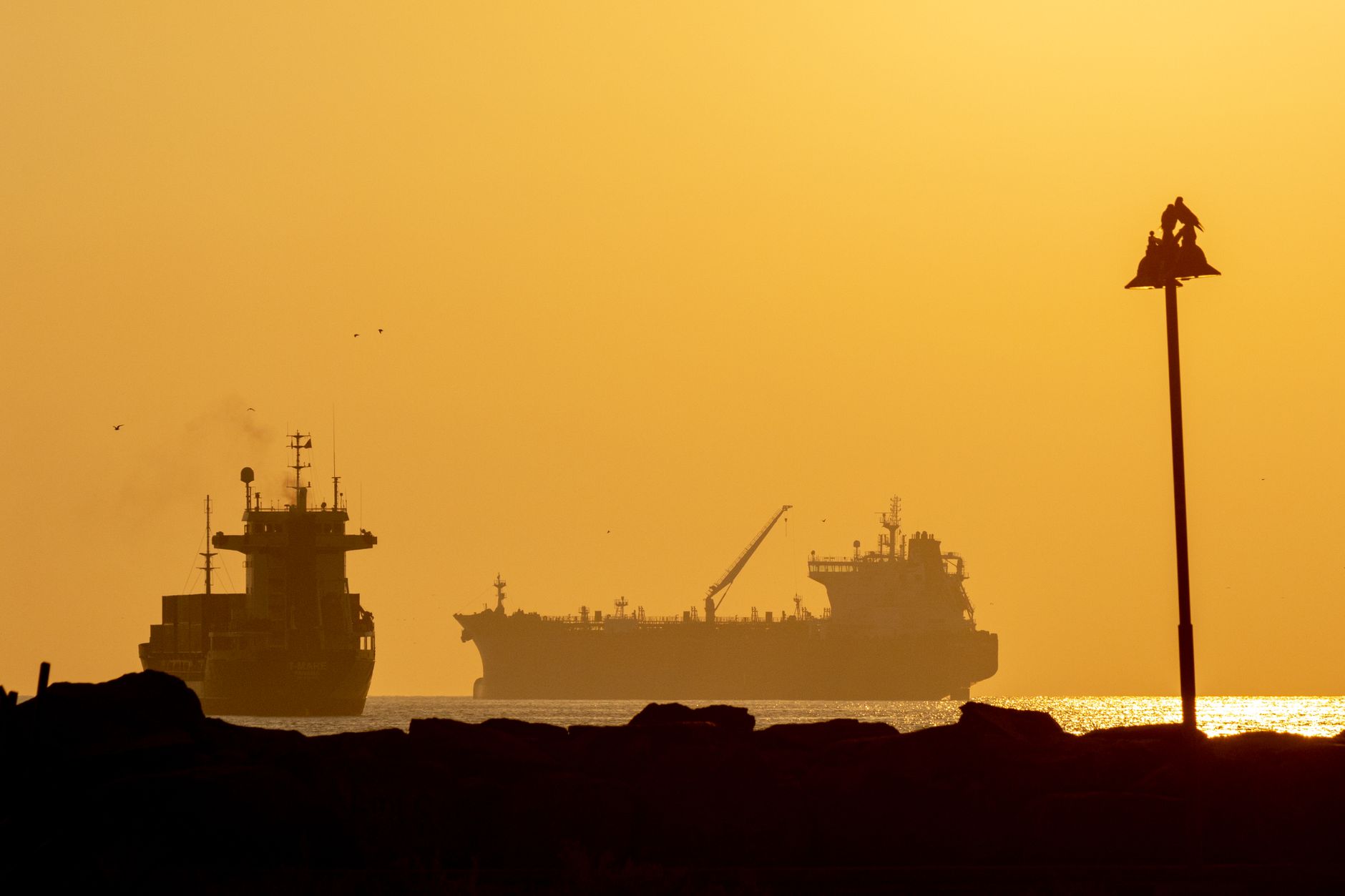
Flows through the Strait of Hormuz are moving again. The US-Iran peace accord ended a period of military disruption that began on February 28, and crude has returned to market with considerable speed. OPEC output surged by 2.34 million barrels per day in June alone, reaching 18.75 million b/d — Kuwait, Saudi Arabia, and Iran all contributing meaningfully, according to Bloomberg survey data. That is a remarkable recovery in absolute terms. But production still sits materially below pre-war levels, and the operational infrastructure around Hormuz — insurance premiums, tanker availability, cargo scheduling — has not normalised anything like as fast as the political headlines imply.
For three months, global energy supply chains ran expensive workarounds: longer routing through the Cape of Good Hope, elevated freight costs, spot premiums that handed North Sea, West African, and US Gulf producers a windfall they did not expect. Some of those advantages will erode quickly. Others — particularly the positioning of Nigerian and Angolan crude in Asian refinery slates — may prove stickier than current market pricing suggests. Traders who assume a clean reset are making a bet, not a reading.
The UAE's Departure from OPEC: A Strategic Pivot With Lasting Consequences
On April 28, the United Arab Emirates formally announced its withdrawal from OPEC after 59 years of membership, effective May 1. It was the single most consequential shift in global oil governance since Russia joined the OPEC+ coalition in 2016. Emirati officials framed it as economic logic — production flexibility, optimised investment returns — rather than political rupture. That framing is credible. It also understates what Abu Dhabi was actually signalling.
Within days, ADNOC announced it would award AED 200 billion — approximately $55 billion — in upstream and downstream contracts over the next two years, mobilising capital to support its five-year $150 billion expenditure programme. ADNOC CEO Dr. Sultan Ahmed Al Jaber described the organisation as entering "a defining execution phase in its strategy, driven by scale, pace and a laser focus on delivery." Those words were chosen carefully. ADNOC is no longer managing production inside a collective quota framework. It is building capacity as fast as capital and contracting pipelines will allow. For investors in GCC industrial supply chains, engineering procurement and construction firms, and Emirati industrial conglomerates, that contract wave is a multi-year revenue opportunity — and it has barely registered outside the region.
Saudi Aramco's Pricing Signal: Reading the Asia Discount
While Abu Dhabi accelerates, Riyadh has moved on price. Saudi Aramco cut the official selling price of Arab Light crude loading for Asia in July by $6 per barrel, setting it at a premium of $9.50 per barrel over the average of Oman and Dubai benchmarks. One price move, several messages. It reflects competitive pressure from resurgent Iranian barrels re-entering Asian markets, the volume ambitions of a UAE now operating outside quota discipline, and the subdued pace of Chinese industrial demand — where property sector weakness and manufacturing PMI softness continue to constrain refinery throughput. Aramco read the room and responded accordingly.
Simultaneously, Aramco is pursuing a reported $10 billion real estate transaction. The Kingdom's flagship energy institution is deploying capital across asset classes with a sophistication that extends well beyond upstream hydrocarbons. Family offices and private investors with exposure to Saudi real estate, infrastructure, or sovereign-linked vehicles should track this cross-sector capital deployment closely. It is not a distraction from Aramco's core business. It is a signal about where long-duration value is being placed.
Demand Uncertainty: Asia's Mixed Signals and the African Wildcard
The demand side is where the real uncertainty lives. China's oil imports have been inconsistent through the first half of 2026 — strategic reserve filling has partially masked underlying consumption softness, flattering the headline numbers. India tells a different story. Refinery expansion at Jamnagar and new capacity coming online along India's western coast is absorbing incremental barrels that would otherwise pressure the price floor. India is now the more reliable demand growth engine. Southeast Asian demand — Vietnam, Indonesia, the Philippines — remains structurally positive as middle-class vehicle ownership and industrial activity expand, though the pace is uneven across markets.
Then there is Africa. Few outside the commodity trading desks have paid close attention. They should. Nigeria's Dangote Refinery is now processing meaningful volumes of domestic crude and beginning to reshape West African product flows in ways that reduce the continent's import dependency and create new pricing dynamics for Mediterranean and Atlantic Basin producers. Morocco and Egypt, both deepening energy infrastructure investment, are similarly recalibrating their import and transit strategies. Sub-Saharan and North African developments deserve more analytical attention than mainstream commodity coverage currently gives them.
What Sophisticated Investors Should Be Watching
The market entering the second half of 2026 is better supplied than it was six months ago — and more politically complex than the post-Hormuz relief rally implies. Brent crude will be pulled in competing directions: the volume discipline, or deliberate lack of it, from a UAE operating independently of OPEC quotas; the pace of Iranian production normalisation; and the trajectory of Asian industrial demand, which remains the single largest variable in any twelve-month price model. None of those three forces are moving in a tidy, coordinated direction.
For private investors and family offices with meaningful commodity or energy exposure, the most actionable insight here is structural rather than directional. The ADNOC contract wave, Saudi Aramco's cross-sector capital deployment, and the gradual maturation of African refining capacity all point toward value creation in midstream, downstream, and industrial services — segments that carry energy exposure without the full price volatility of raw crude positions. In a market where the headline number can move $15 per barrel on a single geopolitical development, the businesses servicing production rather than betting on its price may offer the more durable allocation for capital that values both return and discretion.

Written by
Tom Whitmore
Senior correspondent · Real Estate & Private Companies
Tom has interviewed most of the operators reshaping the Gulf skyline — and a few of the ones who tried and didn't. His beat is real estate, commodities, manufacturing, and the founder-led private companies that never bother to list. He knows which buildings and balance sheets survive a downturn before the spreadsheet does. Based in Dubai. Reach out at tom.whitmore@theplatinumcapital.com.