
Southeast Asia as the New Manufacturing Hub: Who Benefits
As global supply chains undergo their most significant structural realignment in decades, Southeast Asia has emerged not merely as an alternative to Chinese manufacturing but as a sophisticated industrial ecosystem capable of commanding premium positioning across electronics, pharmaceuticals, and precision engineering. For capital allocators and sovereign wealth strategists, the critical question is no longer whether to establish exposure to this region, but which markets, sectors, and governance frameworks will separate generational wealth creation from costly misallocation.…
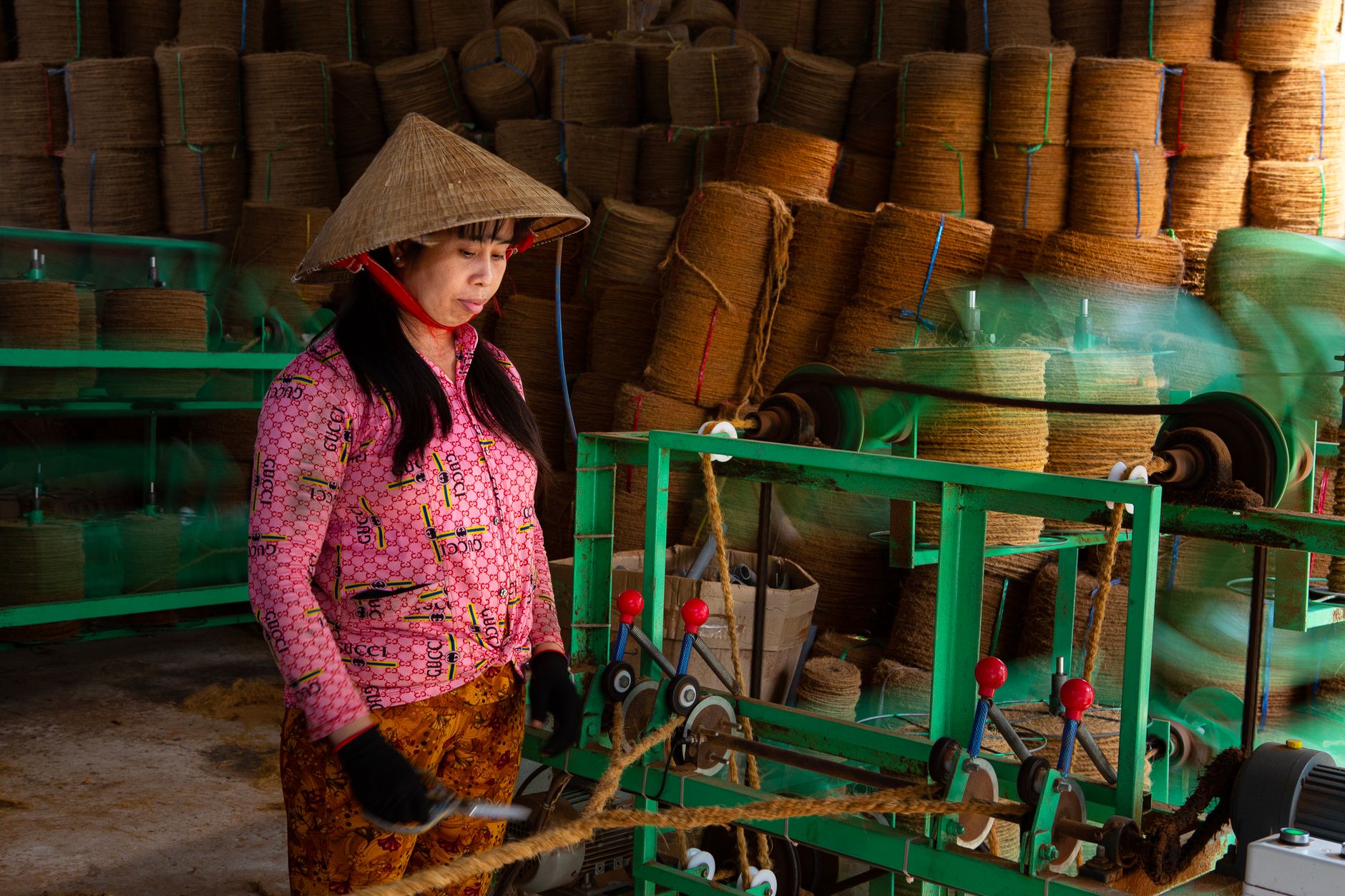
The factories have moved. Not all at once, and not without friction — but the structural shift that began as a whisper during the first US-China trade tensions has become one of the defining economic stories of the mid-2020s. Southeast Asia is no longer simply an overflow valve for Chinese manufacturing capacity. It has become a primary destination for capital, logistics infrastructure, and industrial policy. The investors, family offices, and sovereign-adjacent funds paying closest attention stand to capture returns that may define the next decade of wealth creation across the Asia-Pacific.
The Shift Is Structural, Not Cyclical
What separates this manufacturing migration from previous cycles is the permanence of the underlying drivers. US tariffs on Chinese goods — now averaging above 30% across key categories under the extended trade framework — have made cost arbitrage in Southeast Asia not merely attractive but operationally necessary for multinational supply chains. Vietnam, Indonesia, Malaysia, Thailand, and the Philippines have all recorded double-digit growth in foreign direct investment inflows over the past 24 months. Electronics, semiconductors, textiles, and precision engineering are leading the charge.
Vietnam alone attracted over USD 38 billion in registered FDI in 2025, with South Korean, Taiwanese, and Japanese conglomerates accounting for the bulk of new commitments. Indonesia's industrial estates in Karawang, Batam, and Kendal are running at near-capacity. Malaysia's Penang corridor has quietly rebranded itself as Southeast Asia's answer to Taiwan's Hsinchu Science Park. These are not projections. These are facilities under construction, orders placed, and contracts signed.
Energy Infrastructure Follows Capital — The ENEOS Signal
One transaction above all others captures the institutional confidence now being placed in Southeast Asia's long-term industrial trajectory. In May 2026, ENEOS Holdings announced a USD 2.17 billion acquisition of Chevron's downstream fuels and lubricants operations across Singapore, Malaysia, the Philippines, Indonesia, and Australia, together with Chevron Lubricants Vietnam. The largest overseas acquisition in ENEOS's history. A direct bet that a manufacturing-intensive Southeast Asia will require world-class energy infrastructure for decades to come.
Tomohide Miyata, President and CEO of ENEOS Holdings, has been explicit about the rationale. Overseas sales currently account for approximately 16% of total group revenue in fiscal year 2024–25. That figure is expected to reach 30% immediately following the acquisition, and approximately 50% by fiscal year 2030–31. That is a significant shift — and Miyata is engineering it deliberately. ENEOS also gains a 50% non-operated interest in Singapore Refining Company, which operates a 290,000 barrel-per-day refinery, one of the most strategically positioned downstream assets in the entire Asia-Pacific region. For family offices and private investors seeking infrastructure-adjacent exposure, the ENEOS move telegraphs precisely where patient capital is being deployed at scale.
The Gulf Connection: Trade Corridors Are Being Rewired
Southeast Asia's rise as a manufacturing hub does not exist in isolation. It is accelerating in part because Gulf capital, Gulf logistics players, and Gulf-linked trade corridors are being restructured at the same time. The landmark GCC–UK free trade agreement, signed in May 2026 and valued at an estimated USD 4.9 billion in annual economic benefit to the UK alone, signals that Gulf states are actively diversifying their trade relationships well beyond traditional commodity corridors. The GCC removed an estimated £580 million in annual duties on UK exports — £360 million on day one alone.
Few outside the region have mapped the downstream implications. They should. Bahrain's Industry Minister Abdulla bin Adel Fakhro described the agreement as reflective of the scale of existing bilateral investment and trade, stating publicly that he expects both investment volumes and cooperation areas to expand significantly. For Southeast Asian manufacturers with Gulf distribution ambitions — particularly in halal consumer goods, petrochemicals, and industrial equipment — this rewiring of trade architecture creates new corridors worth identifying now, before the competition does.
Who Actually Benefits: A Map of the Winners
The beneficiaries of Southeast Asia's manufacturing ascendancy are not uniformly distributed. Investors and family offices that understand the segmentation will position more precisely than those chasing broad regional exposure.
The numbers tell a complicated story, country by country. In Vietnam, the immediate winners are industrial real estate developers and logistics operators. Demand for Grade A warehouse space in Ho Chi Minh City and Hanoi has outpaced supply for three consecutive years running. In Indonesia, the opportunity is more complex but potentially larger. President Prabowo's administration has doubled down on downstream resource processing mandates — nickel, bauxite, and copper cannot leave the country unprocessed. That creates structural demand for smelting, refining, and battery precursor manufacturing, all of which need capital partners willing to take a longer view. In Malaysia, semiconductor packaging and testing is simultaneously attracting Tier 1 players from the US, Europe, and Japan, backed by an industrial policy that has been unusually coherent and genuinely business-friendly.
The Philippines, often underestimated in this conversation, is emerging as a credible nearshore electronics assembly destination. Its English-speaking workforce and established BPO infrastructure provide a talent base that pure manufacturing nations like Vietnam cannot easily replicate. Thailand, meanwhile, is positioning as the EV assembly hub of the region. BYD, SAIC, and Great Wall Motors have all established or committed to Thai production facilities. The Chinese automakers are not hedging — they are building.
What This Means for Private Capital in 2026 and Beyond
For family offices, private investors, and high-net-worth individuals across the Gulf, Central Asia, and Africa who have historically allocated to Southeast Asia through public equities or real estate, the manufacturing shift opens more nuanced entry points. Pre-IPO positions in industrial logistics platforms, co-investment in special economic zone development, direct participation in energy infrastructure — the kind of assets ENEOS just paid USD 2.17 billion to control — these carry a fundamentally different risk-return profile than listed equity exposure. The upside is less liquid. The conviction required is greater. So, typically, are the returns.
The macro tailwinds are as well-aligned as they have been in a generation. US-China decoupling pressure is not easing. Gulf capital is actively seeking productive deployment outside commodity cycles. A cohort of Southeast Asian governments has learned, from previous cycles, how to attract and retain sophisticated foreign capital with credible regulatory frameworks. The investors who move with deliberate speed — not rushed, but not passive — will find that the factories have indeed moved. The returns are moving with them.

Written by
Sophie Aldridge
Global Economics Editor · Geopolitics
Sophie spent a decade advising governments on trade policy before deciding the story was more interesting than the memo. She covers global economics, geopolitics, and the power transitions reshaping emerging markets. Sharpest on sanctions, supply chains, and the politics behind the price of everything. Based in Washington, D.C. Reach out at sophie.aldridge@theplatinumcapital.com.


