The BRICS Expansion and Shifting Economic Power
As BRICS expands its membership to encompass economies commanding a combined share of global GDP that now rivals the G7, the architecture of international trade, currency reserve systems, and cross-border capital flows faces its most consequential realignment since the Bretton Woods era. For sophisticated investors and sovereign wealth allocators, understanding the fault lines of this shift — from commodity pricing mechanisms to the gradual erosion of dollar-denominated settlement dominance — is no longer a matter of geopolitical curiosity but an urgent portfolio and policy imperative.…
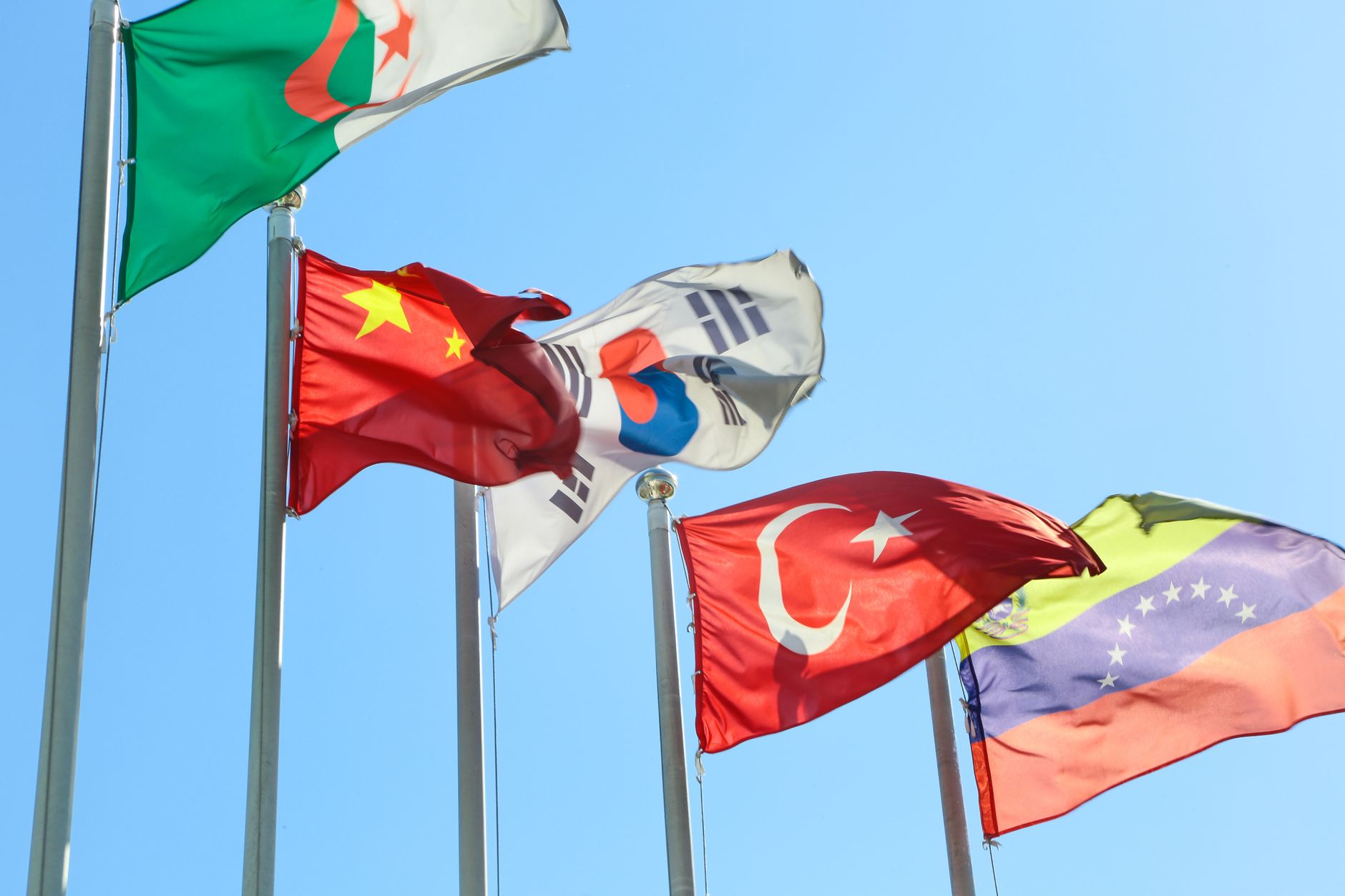
The world's economic centre of gravity has been shifting for years. But 2026 may be the year that shift becomes permanent. The BRICS bloc — now expanded to include Saudi Arabia, the UAE, Egypt, Ethiopia, Indonesia, and Iran alongside its founding members — represents a combined GDP of over $28 trillion and more than 45% of the global population. What began as an academic acronym coined by a Goldman Sachs economist has become one of the most consequential geopolitical and financial reconfigurations of the twenty-first century. For sovereign investors, family offices, and private wealth holders across the Gulf, Africa, and Southeast Asia, the question is no longer whether this shift matters — it is how fast to move ahead of it.
From Concept to Coalition: What BRICS Expansion Actually Means
The admission of Gulf states into BRICS was never purely political. Saudi Arabia and the UAE joined a framework that gives them institutionalised leverage across trade settlement, multilateral lending, and commodity pricing — without cutting ties to their Western partners. That dual positioning is deliberate. Riyadh continues deepening its engagement with Washington and London, even as it builds parallel infrastructure through BRICS channels. Abu Dhabi is doing the same, and doing it with remarkable precision.
The UAE's recent Comprehensive Economic Partnership Agreement with South Korea — the first trade pact between Seoul and any Gulf or MENA nation — makes the strategy concrete. By eliminating or reducing tariffs on 91.2% of goods traded between the two countries, with non-oil bilateral trade already sitting at $6.9 billion in 2025, Abu Dhabi is constructing a trade web that reaches BRICS partners, Western allies, and East Asian economies at the same time. UAE Minister of Foreign Trade Thani bin Ahmed Al Zeyoudi has been explicit: the CEPA programme is about building durable economic corridors. Not choosing sides.
The Gulf as the Axis of New Trade Architecture
No single development in 2026 better illustrates the Gulf's emerging centrality than the historic UK–GCC Free Trade Agreement, concluded on 20 May in London between Sir Chris Bryant, the UK's Minister of State for Trade Policy, and Jasem Mohamed Albudaiwi, Secretary General of the GCC. The deal removes tariffs on approximately 93% of UK exports to the GCC — worth an estimated £580 million per year — with £360 million in duties eliminated on the first day alone.
For British exporters in financial services, advanced manufacturing, and life sciences, the numbers are significant. But for GCC investors watching from Riyadh, Dubai, Doha, and Muscat, the more telling signal is structural. The Gulf now holds FTA relationships with the UK, Singapore, India, and South Korea simultaneously, while remaining central to BRICS economic diplomacy. That is a remarkable position. The commercial equivalent of holding every seat at every table.
Qatar's parallel engagement with Seoul reinforces that this is a coordinated GCC strategy, not individual opportunism. Minister of State for Foreign Trade Ahmed bin Mohammed Al Sayed led a delegation to South Korea focused squarely on AI and semiconductors. The Gulf is not waiting to be invited into the technology supply chain. It is writing itself in.
Africa: The Continent BRICS Is Competing For
Africa's inclusion in the expanded BRICS framework — through Egypt and Ethiopia — is not incidental. The continent holds the world's largest reserves of cobalt, lithium, manganese, and platinum: the materials every major power needs to win the green energy transition and secure semiconductor supply chains. Everyone has noticed. Not everyone has moved.
Saudi Arabia's ACWA Power has. In December 2025, ACWA signed a cooperation framework with the African Development Bank to finance a $5 billion pipeline of clean energy and water projects through 2030, spanning Egypt, Morocco, and South Africa. Hashim Ghabashi, ACWA's President for the Africa region, called it a step toward energy and water security for the continent. That framing is accurate. It is also incomplete.
These are strategic capital deployments that generate long-term returns. The Saudi Agricultural and Livestock Investment Company — SALIC — has been expanding its agricultural footprint across East and North Africa in parallel, securing food supply chains that feed directly into Saudi Vision 2030's food security objectives. Neither ACWA nor SALIC is operating on goodwill. They are executing with a discipline that multilateral institutions have rarely managed. For African governments and private investors on the continent, BRICS-aligned Gulf capital has become the most competitive source of project finance on offer.
Central Asia and Southeast Asia: The Quiet Beneficiaries
Two regions that rarely dominate BRICS headlines are, in practice, among its most significant winners. Few outside the region have noticed. They should.
Kazakhstan, Uzbekistan, and Azerbaijan have all deepened trade and investment ties with BRICS members over the past 24 months, leveraging their positions along the Trans-Caspian International Trade Route — the so-called Middle Corridor — which bypasses Russia and connects China to Europe through Central Asia and the Caucasus. Cargo volumes on this route grew by over 60% in 2024 and kept accelerating into 2025. That is a serious number. Astana and Tashkent are now active targets for Gulf sovereign wealth and private capital, particularly in logistics, agriculture, and energy infrastructure.
In Southeast Asia, Indonesia's accession to BRICS carries particular weight. As the world's fourth most populous nation and a commodity superpower in nickel, palm oil, and coal, Jakarta enters the bloc with genuine leverage — not as a passenger but as a player. For Malaysian, Vietnamese, and Philippine investors watching from the sidelines, Indonesia's membership recalibrates regional trade dynamics and raises pointed questions about investment routing, currency settlement, and where to locate regional manufacturing hubs over the next decade. Those questions will not wait for a convenient moment to be answered.
What This Means for Private Capital and Family Offices
The BRICS expansion is not an abstract geopolitical story. It has direct, measurable implications for where private capital allocates over the next five to ten years.
Currency diversification away from USD-denominated instruments is already accelerating among family offices in the Gulf and Southeast Asia — with renewed interest in gold-backed instruments, bilateral currency swap frameworks, and direct investment in hard assets across BRICS-member jurisdictions. Infrastructure and energy transition assets across Africa and Central Asia are attracting premium valuations precisely because BRICS-aligned multilateral capital is flowing into the same sectors, effectively de-risking co-investments for private players who move early.
The families, foundations, and private offices repositioning into these corridors are not speculating. They are responding to a documented, institutional realignment of global trade and finance — one already reflected in signed agreements, deployed capital, and infrastructure under construction. The BRICS bloc will not dismantle the existing international order in the near term. But it is building a parallel one, methodically and with serious money behind it. The most consequential financial decisions of the next decade will belong to those who understand both systems well enough to operate across both.

Written by
Sophie Aldridge
Global Economics Editor · Geopolitics
Sophie spent a decade advising governments on trade policy before deciding the story was more interesting than the memo. She covers global economics, geopolitics, and the power transitions reshaping emerging markets. Sharpest on sanctions, supply chains, and the politics behind the price of everything. Based in Washington, D.C. Reach out at sophie.aldridge@theplatinumcapital.com.


