

The Geopolitics of Data Centres: Where the Cloud Touches Ground
As sovereign governments awaken to the strategic reality that data infrastructure is as critical as ports, pipelines, and power grids, the race to control where the world's information lives has become the defining industrial competition of our era. For family offices and institutional investors who understand that the next great concentrations of wealth will be built not on what nations produce, but on where they process, store, and transmit data, the geography of the cloud is no longer a technical footnote — it is the investment thesis.…
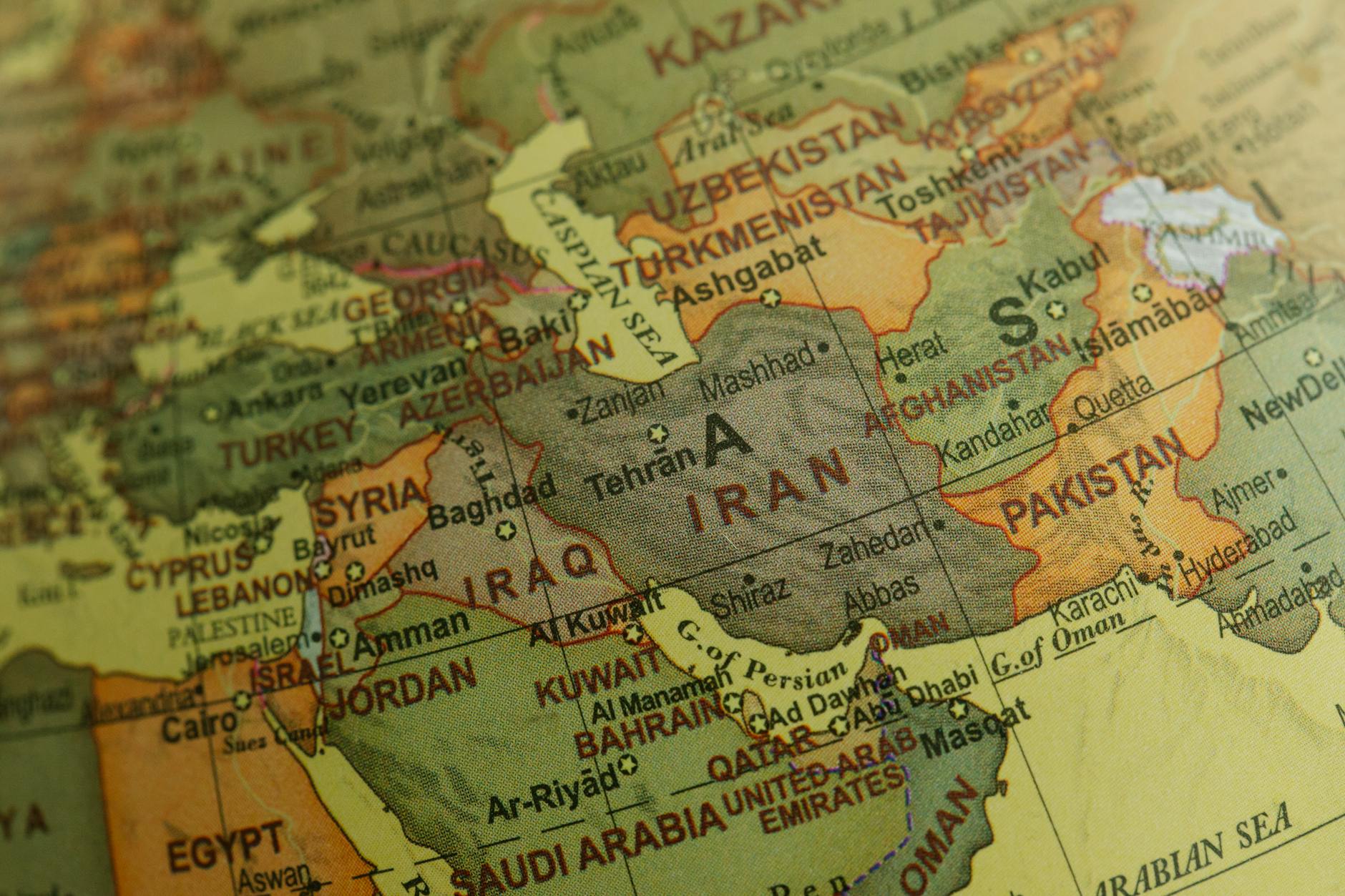
When Microsoft announced a $1.5 billion investment in Abu Dhabi-based AI firm G42 in April 2024, most coverage chased the artificial intelligence angle. The more consequential detail barely made a paragraph: sovereign data infrastructure was quietly becoming one of the most strategically contested assets on the planet. Two years on, as the Gulf undergoes its most dramatic geopolitical realignment in a generation, the race to control where data lives, who processes it, and under whose legal jurisdiction it operates has become a defining contest — one with profound implications for private capital, sovereign wealth, and the next generation of emerging market power.
The Cloud Has a Physical Address
Data centres are real estate. But real estate with geopolitical passports. Every hyperscale facility requires land, power infrastructure, fibre connectivity, and a regulatory framework. It requires a sovereign host. As artificial intelligence workloads intensify and governments from Riyadh to Jakarta move to assert digital sovereignty, the question of who hosts whose data has become inseparable from questions of political alignment. The global data centre market is projected to exceed $500 billion in annual capital expenditure by 2030, with the Middle East, Africa, and Southeast Asia absorbing a disproportionate share of new capacity. These are not neutral infrastructure investments. They are bets on which countries will anchor the next phase of the digital economy — and which governments will trust which partners to do it.
The Gulf Fracture and Its Digital Dimensions
The UAE's withdrawal from OPEC on May 1, 2026 — announced pointedly on the same day Mohammed bin Salman was presiding over a GCC summit intended to project unity — signalled something far larger than an energy policy dispute. The fracture between Abu Dhabi and Riyadh, which crossed a threshold with Saudi air strikes targeting an Emirati weapons convoy at the Yemeni port of Mukalla in December 2025, is now reshaping investment flows across the region. Data infrastructure sits squarely inside that divergence.
The UAE has moved aggressively to position itself as the Gulf's digital capital. G42, backed by Abu Dhabi's sovereign wealth architecture, has established data centre partnerships across Africa, Central Asia, and Southeast Asia at a pace that reflects explicit state direction. Microsoft, Google, and Oracle have all committed to UAE-hosted cloud regions, drawn by regulatory clarity, sovereign backing, and geographic centrality between Europe and Asia.
Saudi Arabia is running its own play. The axis that took shape at the Cairo meeting on June 21, 2026 — bringing together the foreign ministers of Saudi Arabia, Qatar, Egypt, Turkey, and Pakistan — carries digital infrastructure implications that have received almost no serious coverage. Few outside the region have connected the dots. They should. Egypt's data centre market is growing at over 15% annually, driven by its position as the landing point for multiple undersea cable systems connecting Europe, the Gulf, and South Asia. Turkey controls critical routing infrastructure for data flows between Central Asia and Western Europe. Pakistan, with 240 million people and a dramatically underpenetrated digital economy, represents one of the largest untapped cloud markets anywhere in the world. If this Saudi-led grouping coheres into a coordinated investment bloc, it produces a rival digital infrastructure ecosystem to the UAE's. That is a significant shift — and private capital in the region has been slow to price it.
Syria, Reconstruction Capital, and the Data Opportunity
Syria's re-entry into the regional economy following the removal of US sanctions has attracted predictable attention for construction and energy contracts. What gets far less discussion is the digital infrastructure dimension of a $216 billion reconstruction effort. Qatar, which has committed approximately $7 billion to Syrian reconstruction, and Saudi Arabia, which has moved quickly to restore diplomatic and commercial ties with Damascus, both understand what building a country in 2026 actually means: you build its physical infrastructure and its digital infrastructure simultaneously. Fibre networks, data centre hubs, and cloud service agreements negotiated now will define Syria's digital sovereignty for decades. For Gulf family offices and private investors with exposure to construction, telecoms, or logistics in the region, the Syria opportunity extends well beyond steel and cement.
Central Asia and Africa: The Quiet Battlegrounds
Kazakhstan has become one of the most significant data centre markets outside Western Europe and North America, and it has done so with little fanfare. Cheap energy, a relatively stable regulatory environment, and a geographic position between Russia, China, and the Gulf have made it attractive for operators seeking jurisdictional diversification. Uzbekistan and Azerbaijan are following with their own digital infrastructure ambitions, partly driven by the recognition that hosting regional data gives smaller states real geopolitical leverage. The numbers bear that out.
In Africa, Nigeria and Kenya have emerged as the continent's primary data centre hubs. Nairobi-based operators are pulling in investment from Gulf sovereign funds, European development finance institutions, and US hyperscalers — often simultaneously. The strategic competition playing out here mirrors, at smaller scale, the broader contest between Abu Dhabi and Riyadh for regional digital influence. African governments have grown increasingly sophisticated about playing multiple partners against each other to extract better terms. They have watched how the game is played. Now they are playing it.
Southeast Asia presents perhaps the sharpest example of data centre geopolitics in action. Indonesia passed a data localisation law requiring certain categories of data to be stored on Indonesian soil, triggering a construction boom across the Jakarta metropolitan area and forcing global hyperscalers to commit billions in local infrastructure. Malaysia's Johor state has attracted over $30 billion in data centre commitments from Microsoft, Google, and ByteDance in the past 18 months alone — making it one of the fastest-growing digital infrastructure markets anywhere on earth. Vietnam and the Philippines are running parallel paths, each using data sovereignty legislation as both a developmental tool and a geopolitical signal about alignment.
What This Means for Private Capital
For family offices, private investors, and sovereign-adjacent capital pools operating across the Gulf, Central Asia, and emerging markets, the data centre opportunity demands a framework that most infrastructure investors have not yet built. The returns are real. Stabilised data centre assets in the UAE and Saudi Arabia trade at yields between 5.5% and 7%, with long-term contracts from investment-grade tenants delivering cash flow visibility that rivals prime commercial real estate. But the risk matrix is genuinely different from anything this capital has historically priced.
Geopolitical alignment risk, regulatory change risk, and energy infrastructure risk interact here in ways specific to this asset class. The UAE-Saudi divergence means capital deployed through Abu Dhabi-linked vehicles and capital deployed through Riyadh-linked vehicles now carries different regional exposure — in ways that simply were not true 24 months ago. That distinction matters enormously for how a Gulf family office or a government investment official should be thinking about portfolio construction today.
The investors who generate durable returns in this space will be those who grasp a basic truth: they are not simply buying infrastructure. They are choosing jurisdictions. In the Gulf of 2026, that choice carries more weight than at any point in recent memory.

Written by
TPC Editorial Desk
The Platinum Capital editorial desk
Articles on The Platinum Capital are produced by the TPC editorial desk with the assistance of AI tools, and edited before publication. TPC Awards profiles are based on information provided in nominations and checked against public sources. Reach out at info@theplatinumcapital.com.