

Emerging Market Equities: Risks and Opportunities in 2026
As emerging market equities enter 2026 amid shifting monetary cycles, recalibrating supply chains, and intensifying geopolitical realignments, discerning investors who move beyond surface-level volatility will uncover asymmetric return potential that developed markets simply cannot replicate at this stage of the global economic cycle. Charlotte Reeve examines the structural catalysts, sovereign risk gradients, and sector-level opportunities across Southeast Asia, the Gulf, and Sub-Saharan Africa that are quietly redefining where serious capital should be positioned in the years ahead.…
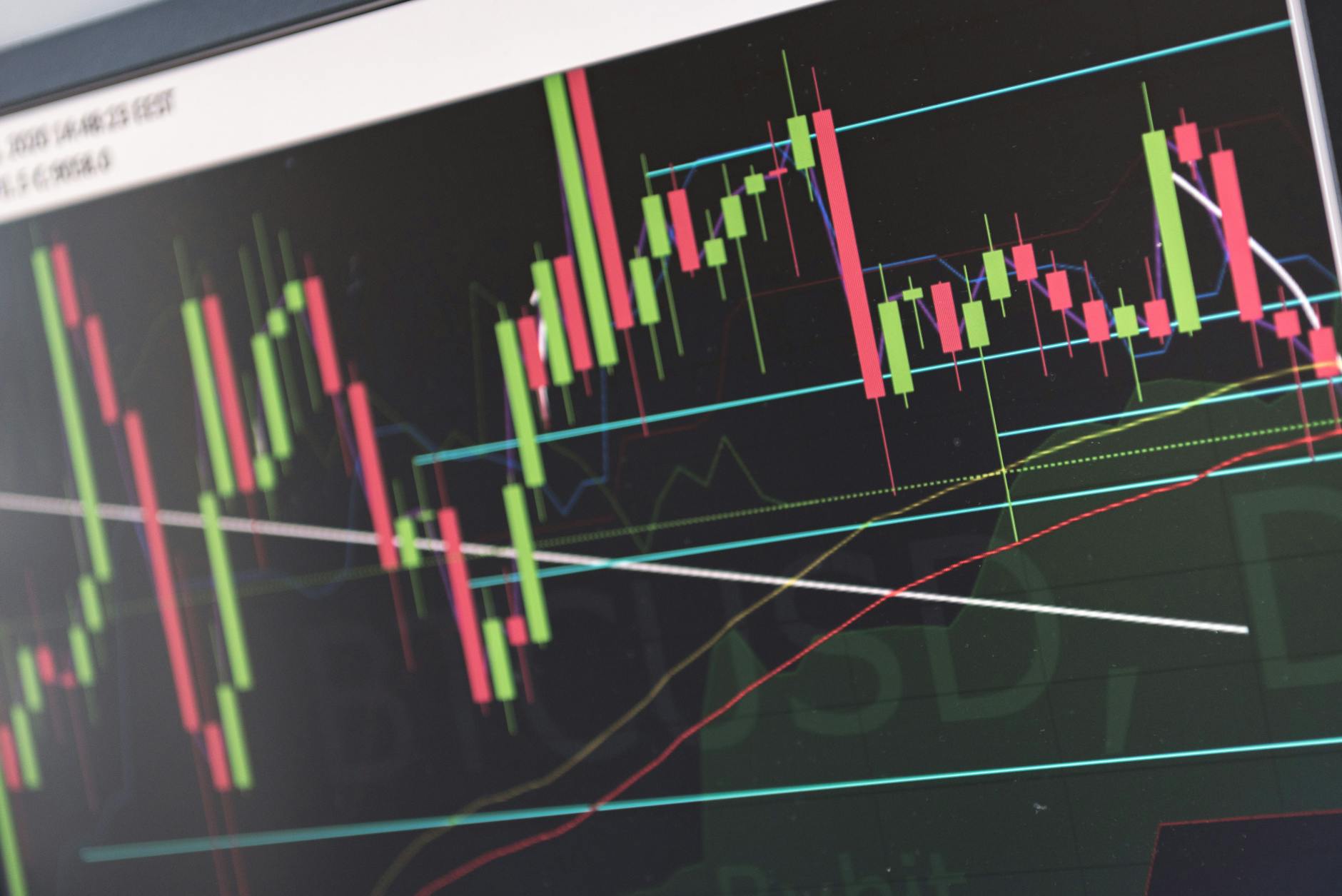
The opening months of 2026 have handed experienced capital allocators a reminder they did not ask for: emerging market equities reward those who read structural shifts early, and they punish those still running last cycle's playbook. From Riyadh to Jakarta, from Nairobi to Tashkent, the forces reshaping equity markets this year are simultaneously policy-driven, geopolitical, and generational. The window to position ahead of institutional consensus is closing.
Saudi Arabia's Historic Market Opening Changes the Calculus for Foreign Allocators
The single most consequential regulatory development in Gulf capital markets this year arrived quietly. On January 6, 2026, the Saudi Capital Market Authority announced the elimination of the Qualified Foreign Investor framework — a restriction that had, since 2015, effectively reserved direct Tadawul access for institutional managers commanding at least $500 million in assets under management. From February 1, the Saudi Exchange opened to all categories of foreign investors. That includes retail traders and the smaller private family offices that bureaucratic gatekeeping had locked out of one of the world's largest emerging market exchanges for the better part of a decade.
The practical implications run deep. Saudi Arabia currently carries a weighting of approximately 3.3% to 4.2% in the MSCI Emerging Markets Index. With access now broadened, a wider base of global capital — including regional family offices in the UAE, Bahrain, and Kuwait — can participate directly in names like Saudi Aramco, Al Rajhi Bank, and SABIC without the friction of derivative structures or ETF wrappers. Analysts at Jefferies have modelled the more ambitious scenario: if the CMA proceeds with a review of the existing 49% aggregate foreign ownership cap later this year — a review formally scheduled — passive inflows alone could range between $3.4 billion and $10.2 billion. To put that in perspective, it would rank among the largest single-market re-rating events in GCC capital markets history.
Ownership limits remain in place for now. No single foreign investor may hold more than 10% of any listed company absent a strategic investor carve-out. But the directional signal from Riyadh is clear. Saudi Arabia is engineering deeper foreign participation with deliberate sequencing. This is not an open floodgate. It is something more calculated — and, for that reason, more durable.
Reading the TASI's 2025 Underperformance as a Contrarian Entry Signal
Context matters here, and the numbers tell a complicated story. The Tadawul All Share Index posted the weakest annual performance among Gulf stock markets in 2025, declining 13% across the full year. Set that against Oman's MSX, which gained 28.2% over the same period. Dubai rose 17.2%. Abu Dhabi added 6%. For momentum-driven allocators, those figures argued decisively for the UAE. For value-oriented family offices and longer-horizon private investors, the TASI's underperformance raises a structurally different question entirely: what does a market look like when institutional re-rating begins from a suppressed base?
By end of May 2026, total foreign holding value on the Saudi Exchange had reached SAR 457.18 billion — approximately $121.9 billion — with average daily traded value running at SAR 5.73 billion, roughly $1.53 billion, for the month. Those are not the figures of a market in distress. They describe a market in transition, one where foreign participation deepens even as domestic sentiment stays cautious. Depressed valuations relative to regional peers, a freshly liberalised access framework, and a potential ownership cap revision: that combination is creating an entry dynamic that sophisticated allocators are actively mapping. Few are talking about it loudly. That is precisely the point.
Gulf ECM Pipeline: HSBC's 45 Mandates Signal a Q4 Recovery
The equity capital markets pipeline across the Gulf is not dormant. It is deferred. HSBC's Middle East, North Africa and Turkey unit currently holds 45 active M&A and IPO mandates across the region — a figure that speaks to the sheer volume of capital formation waiting for the right moment to surface publicly. Selim Kervanci, the bank's MENAT chief executive, has stated clearly that Gulf listings are expected to resume in the fourth quarter of 2026, contingent on geopolitical conditions stabilising enough to restore investor confidence in deal timing and pricing certainty.
Kervanci's qualification deserves attention. Equity capital markets, in his assessment, will need at least a full quarter to recover meaningfully once regional stability holds. That implies a Q4 window that could carry into 2027 for the most complex or high-value transactions. For family offices managing concentrated positions in pre-IPO Gulf companies — a common structure across Saudi Arabia, the UAE, and Qatar — this timeline has direct implications for liquidity planning and secondary market positioning. The deals are coming. The real question for private investors is whether their exposure is structured to capture the IPO premium, or merely the post-listing drift.
Beyond the Gulf: Selective Opportunities Across Emerging Market Tiers
The Gulf's institutional evolution does not exist in isolation. Across the broader emerging market universe, 2026 has introduced a sharper divergence between markets benefiting from structural reform and those still absorbing the residual effects of dollar strength and commodity cycle volatility. Indonesia has attracted renewed attention following Bank Indonesia's more accommodative rate signalling in the first half of the year, with consumer and digital infrastructure names drawing capital from Singapore-based family offices seeking regional diversification. In Morocco, the ongoing development of Casablanca Finance City as a genuine African capital markets hub has brought Egyptian and West African institutional capital into the Moroccan bourse in volumes not seen since the pre-pandemic era.
Central Asian markets — Kazakhstan's KASE in particular — continue to benefit from the region's positioning as a neutral trade corridor. Cross-listed equities are drawing interest from Gulf sovereign vehicles looking to diversify beyond petro-linked assets. Then there is Uzbekistan. Its privatisation programme, now in its third active year, is generating equity exposure opportunities that sit well below the radar of global index providers. Few outside the region have noticed. They should. Private family offices and direct investment arms operating out of Dubai and Abu Dhabi are already there.
What Sophisticated Allocators Are Watching Through Year-End
For private investors and family office principals weighing emerging market equity allocations into the second half of 2026, three dynamics deserve sustained attention. First, the trajectory of Saudi Arabia's foreign ownership cap review. Any signal of liberalisation will move fast, and the initial leg of the re-rating will favour those already positioned — not those scrambling to enter after the announcement. Second, the pace of Gulf IPO activity as HSBC and competing banks begin executing their mandated pipelines in Q4. Deal quality across that cohort will be uneven. The differentiation will matter enormously, and separating strong franchises from opportunistic floats will require more than a cursory read of the prospectus. Third, the dollar. Its medium-term trajectory remains the single variable most capable of disrupting the entire emerging market thesis. A sustained reversal of dollar strength would catalyse disproportionate flows into the asset class across every geography simultaneously.
Emerging market equities in 2026 are not a monolithic bet. They are a collection of distinct structural stories, each with its own access dynamics, reform timelines, and institutional catalysts. The investors who have consistently extracted alpha from this asset class treat it precisely that way — not as an index allocation, but as a series of targeted, well-researched positions built before consensus arrives. That edge does not last forever. It rarely does.
Written by
Charlotte Reeve
Senior correspondent · Capital Markets & Fintech
Charlotte cut her teeth on an equities desk before moving to the other side of the notebook. She covers capital markets, stock exchanges, and the fintech operators trying to disintermediate the banks that trained her. Sharpest on market microstructure and payments infrastructure; still reads a prospectus for fun. Based in Singapore. Reach out at charlotte.reeve@theplatinumcapital.com.