
Vietnam's Private Industrial Groups Building the Next Factory Floor
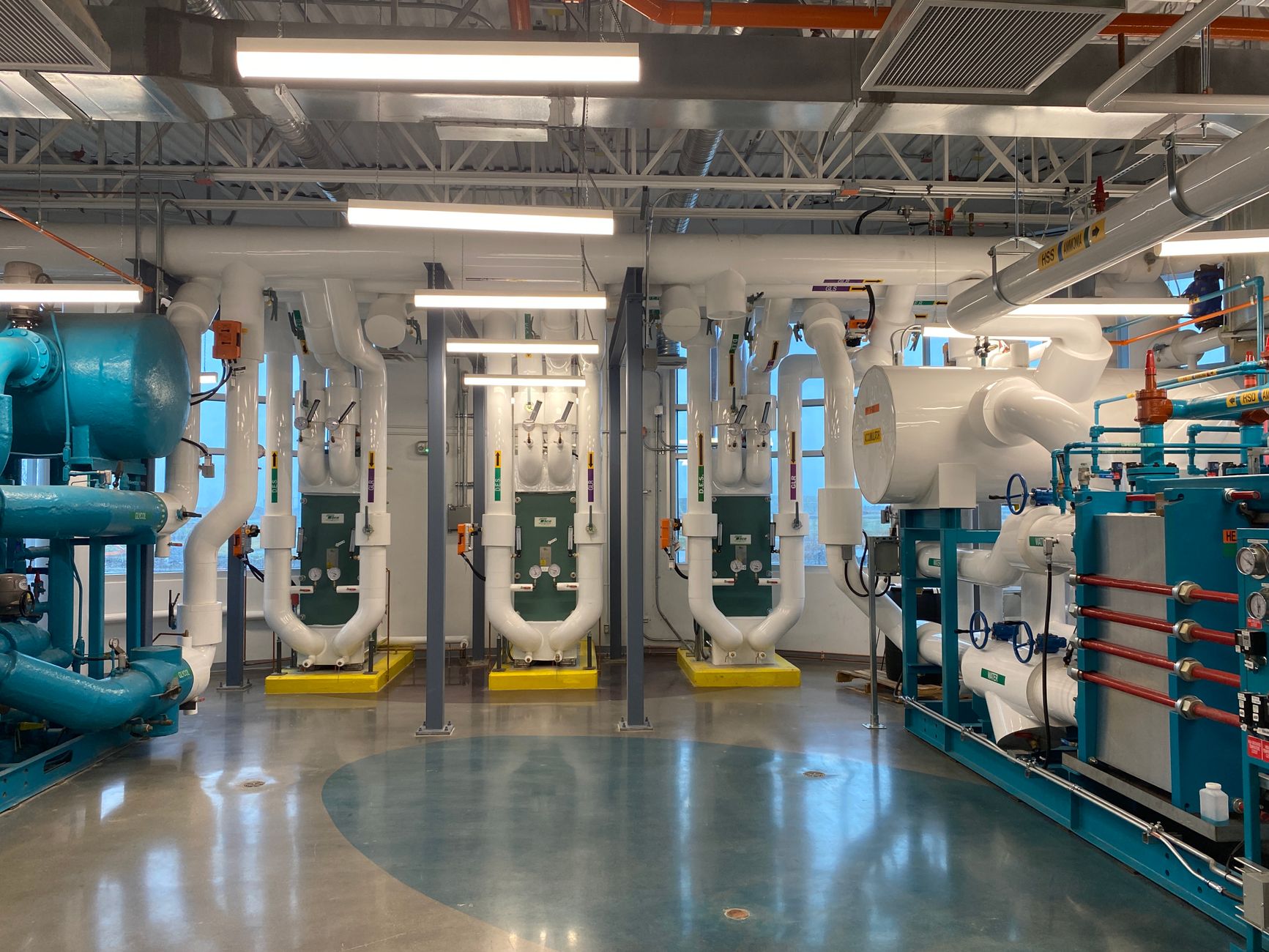
Vietnam's private industrial conglomerates are quietly engineering one of Southeast Asia's most consequential economic shifts, channeling billions into advanced manufacturing infrastructure that positions the country as the premier alternative to China's increasingly costly factory dominance. For discerning capital allocators and sovereign stakeholders, the emergence of homegrown industrial titans such as Hoa Phat and Truong Hai represents not merely a regional story but a structural realignment of global supply chains with durable, long-horizon return potential.…
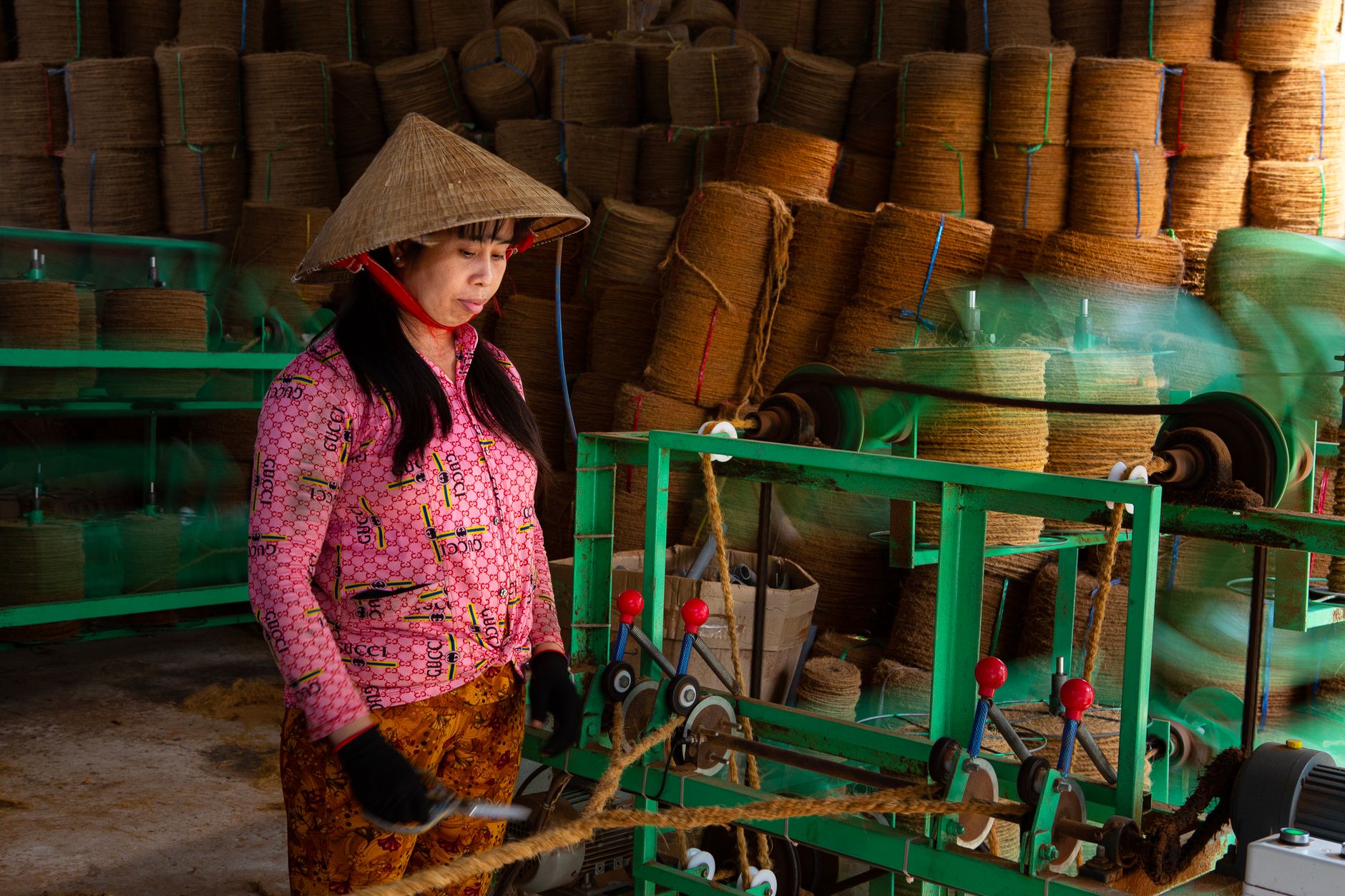
Quietly, and without the fanfare that typically accompanies billion-dollar industrial ambitions, a generation of Vietnamese private conglomerates is reshaping the country's manufacturing identity — and positioning themselves as the preferred production partners of a world reconfiguring its supply chains. Global brands are accelerating their China-plus-one strategies. Multinationals are scouting credible alternatives from Hanoi to Ho Chi Minh City. And the groups leading that charge are not state-owned enterprises. They are founder-led private conglomerates, many still little known beyond Southeast Asia, quietly assembling the land banks, building the infrastructure, and signing the anchor tenant agreements that will define Vietnam's industrial economy through the 2030s.
The Private Groups Redefining Vietnamese Industry
Among those who track capital flows into Vietnam's industrial sector with genuine precision, a handful of names dominate the conversation. Kinh Bac City Development Corporation — listed but closely held by founding shareholders — has assembled one of the largest industrial park land banks in the northern corridor, with properties spanning Bac Ninh, Bac Giang, and Hai Phong. Those three provinces collectively attracted over USD 8 billion in registered foreign direct investment in 2024 alone. That is not a rounding error. Then there is VSIP Group, the Vietnamese-Singaporean joint venture now operating eleven industrial parks across nine provinces, threading together logistics, housing, and commercial zones around each manufacturing hub. These are not speculative plays. VSIP's parks house Canon, Nestlé, and Lego's flagship Southeast Asian facility — a USD 1 billion factory that began full production in 2024 and ranks among the largest single manufacturing investments in Vietnamese history.
Viglacera sits in a different category — an industrial park developer with deep state roots that has steadily privatised and is increasingly running with the discipline of a private real estate investment platform. Its Dong Van and Yen My complexes in Ha Nam and Hung Yen provinces have drawn a wave of South Korean electronics suppliers relocating out of China. What connects these groups is not ownership structure. It is operating philosophy: long-term land control, integrated utility provision, and a deliberate focus on serving foreign tenants who need certainty above all else.
Infrastructure Investment as the Decisive Variable
Vietnam's leading industrial groups no longer compete primarily on cheap land or low labour costs. Both are compressing as demand intensifies. The real edge now sits in infrastructure quality — specifically, the ability to deliver bonded warehousing, cold-chain logistics, and last-mile connectivity within the industrial park boundary itself.
The numbers tell a complicated story. In the UAE, AD Ports Group completed the AED 295 million sale of KEZAD Logistics Park to Mair Group in early 2026 — a move explicitly designed to streamline its balance sheet and redeploy capital into higher-yield assets. In the same period, Agility Logistics secured investment to develop a new multi-commodity bonded warehouse complex at Jebel Ali Free Zone. The signal is clear: even in one of the world's most mature free zone ecosystems, integrated logistics capacity remains undersupplied relative to demand.
Vietnamese industrial developers are drawing the same conclusion. Nam Long Group and TTC Land have both announced logistics-integrated industrial park concepts — in the Mekong Delta and the Southeast region respectively — targeting the food processing and agricultural export sectors that still suffer from Vietnam's chronic cold-chain deficit. Morocco offers a useful reference point here. A.P. Møller Capital closed its USD 243 million APM Capital Morocco Fund in early 2026, specifically to back logistics infrastructure. Patient capital targeting this gap generates returns that pure manufacturing real estate cannot match alone.
The Foreign Tenant Equation and What It Demands
Ask a multinational manufacturer what it actually requires when selecting a Vietnamese industrial park, and the answer will surprise those who still think this is a cost-per-hectare conversation. CJ Logistics, the South Korean logistics giant, opened its new Global Distribution Centre in Riyadh's Special Integrated Logistics Zone in February 2026 — a facility processing over 20,000 parcels daily. That is the benchmark of operational sophistication its clients now expect wherever they operate globally. When a company of that calibre evaluates a Vietnamese industrial zone for its client's factory footprint, it is assessing power reliability, wastewater treatment capacity, customs facilitation infrastructure, and workforce accommodation. The per-square-metre lease rate is almost secondary.
Vietnam's leading private developers have internalised this. Becamex IDC, the dominant player in Binh Duong province, operates its own urban township, technical university, and hospital network alongside its industrial parks. That model effectively subsidises tenant recruitment by eliminating the friction of relocating thousands of skilled workers. Capital-intensive and genuinely difficult to replicate — that is exactly the kind of durable competitive moat sophisticated investors recognise as a barrier to entry rather than a cost burden.
Geopolitical Tailwinds and the Regional Capital Connection
The tailwinds here extend well beyond Southeast Asia. Africa Global Logistics committed to invest nearly €1 billion in 2026 to address inland corridor deficiencies and digital tracking gaps — announced by Deputy CEO Mohamed Diop at Biashara Afrika 2026. The pattern it reflects is global: production-linked infrastructure attracts institutional capital at scale wherever it can demonstrate anchor tenant demand. Vietnam has that demand in abundance. Samsung, Intel, LG, and Apple's Foxconn-linked supply chain represent hundreds of billions in committed production value sitting inside Vietnamese industrial zones. Few outside the region have fully absorbed that figure. They should.
Gulf family offices and sovereign-adjacent capital from Central Asia have begun paying attention. Conversations that previously centred on Singaporean REITs or Australian logistics assets now routinely include Vietnamese industrial platforms as credible allocations. The question for incoming capital is not whether Vietnam's manufacturing story is real — it demonstrably is — but which private groups carry the governance, the land pipeline, and the operational depth to compound that advantage across a ten to fifteen year horizon.
What Sophisticated Investors Should Watch
For family offices and private investors evaluating exposure to Vietnam's industrial build-out, the most relevant opportunity set sits outside listed equities. Private co-investment structures alongside established developers, industrial logistics joint ventures targeting the cold-chain deficit, and the secondary market for completed industrial assets — where stabilised yield profiles are beginning to attract REIT-style valuation frameworks — are where the real decisions are being made. Vietnamese regulations on foreign ownership in industrial real estate remain complex, but structures routed through Singapore-holding entities with Vietnamese joint venture partners have become increasingly standardised. The developers who will define Vietnam's next industrial decade are already known to those operating at this level of the market. The window for patient, informed capital to participate alongside them — rather than after them — remains open. But it narrows with every major tenant announcement and every new free zone hectare that moves from available to committed.
Written by
Tom Whitmore
Senior correspondent · Real Estate & Private Companies
Tom has interviewed most of the operators reshaping the Gulf skyline — and a few of the ones who tried and didn't. His beat is real estate, commodities, manufacturing, and the founder-led private companies that never bother to list. He knows which buildings and balance sheets survive a downturn before the spreadsheet does. Based in Dubai. Reach out at tom.whitmore@theplatinumcapital.com.